
Young people report a stronger intention to travel sustainably, but older generations seem more likely to turn these intentions into concrete actions. New research opens a reflection on the relationship between intentions and behaviours
Sustainability is increasingly present in travellers’ choices. But there can be a gap between what we say we want to do and what we actually do.
This is one of the most interesting aspects to emerge from Booking.com’s Travel & Sustainability Research 2026, the annual research study exploring travellers’ attitudes towards the environmental and social impact of tourism.
Based on 32,500 travellers across 35 countries and territories, the research reveals a curious generational paradox: while younger generations report a stronger intention to travel sustainably, older generations show a greater tendency to adopt certain concrete behaviours.
But perhaps the most interesting finding is not which generation is “more sustainable”. It is understanding how to turn intentions into behaviours and how to make these choices easier, more transparent and more concrete. And this is precisely where we can also start from when sharing what we observe every day at Ecobnb.
The paradox between intentions and behaviours

85% of travellers surveyed by Booking.com consider more sustainable travel important or very important.
However, when different generations are asked whether they intend to travel more sustainably over the next 12 months, significant differences emerge: 75% of Gen Z and 71% of Millennials respond positively, compared with 60% of Gen X and 47% of Baby Boomers.
When, instead, we look at some concrete actions among people who intend to travel more sustainably, the picture changes.
For example, 67% of Baby Boomers say they intend to reduce waste while travelling, compared with 56% of Gen X, 52% of Millennials and 48% of Gen Z. For reducing energy consumption, the figures are 60%, 51%, 46% and 42%, respectively. The choices to buy more from local and independent shops and to travel off-season are also reported more frequently by older generations.
For other behaviours, it is Gen Z and Millennials who show greater participation. For example, they are more likely to have taken part in activities focused on learning about local or Indigenous cultures, as well as activities that contribute to the protection of ecosystems and wildlife.
Sustainability, therefore, takes different forms across generations. And this seems important to us: there is no single behaviour that defines a sustainable traveller.
Sustainability is more than a statement
One of the issues highlighted by Booking.com’s research is the difficulty travellers face in understanding which options are genuinely more sustainable. How, for example, can we distinguish an accommodation that communicates concrete environmental practices from one that simply uses generic terms such as “green” or “sustainable”?
Ecobnb seeks to respond to this need through a system based on concrete criteria and transparent information. To join the Ecobnb network, hosts declare which sustainability practices they adopt and must declare compliance with at least 5 of the 10 Ecobnb criteria. The criteria cover specific aspects of the accommodation’s operations, such as using electricity from renewable sources, organic food, water saving, separate waste collection, rainwater recovery, efficient lighting and accessibility without a car.
Compliance with the Ecobnb criteria is based on information provided by the host and does not constitute an environmental certification or verification by an independent organisation. In some cases, the host may provide documentation or images to support the declared practices.
This information is made available to travellers, who can learn about it before booking and use it to guide their choice. During their stay, guests can also directly experience some of the aspects communicated by the accommodation.
After their stay, the community can leave feedback on their experience, including in relation to the sustainability practices communicated by the accommodation. This feedback is a community participation tool that allows travellers to share their experience and provide additional information to future guests.
Some accommodations listed on Ecobnb hold environmental certifications or labels issued as part of third-party certification systems. When present and indicated on the platform, these certifications represent information that is distinct from the Ecobnb criteria.
The Ecobnb model therefore provides travellers with specific information about the practices declared by the accommodation, any third-party certifications and the experiences shared by other travellers.
The aim is not to replace an environmental certification or to assign the accommodation an overall assessment of its environmental impact, but to make information about declared sustainability practices clearer and more accessible, helping travellers navigate the different options available in tourism.
Climate change is already changing the way we travel

Booking.com’s research also shows that sustainability is no longer only about choices related to accommodation or consumption.
74% of travellers consider the risk of extreme weather events when choosing their destination and when to travel. In addition, 31% say they had to modify or cancel a trip in the past year because of extreme weather events or natural disasters.
Climate change is therefore becoming a concrete part of holiday planning.
And it is also changing where and when we travel.
43% of respondents say they want to avoid overly crowded tourist destinations, 42% intend to travel outside the peak season and 25% are looking for destinations with cooler temperatures.
Among those choosing less crowded destinations, 44% do so in part to avoid contributing to overtourism. Among those who want to travel outside the peak season, 37% say they do so to reduce pressure on destinations.
These choices connect environmental sustainability, quality of the experience and the wellbeing of destinations.
Tourism can also distribute its benefits more widely
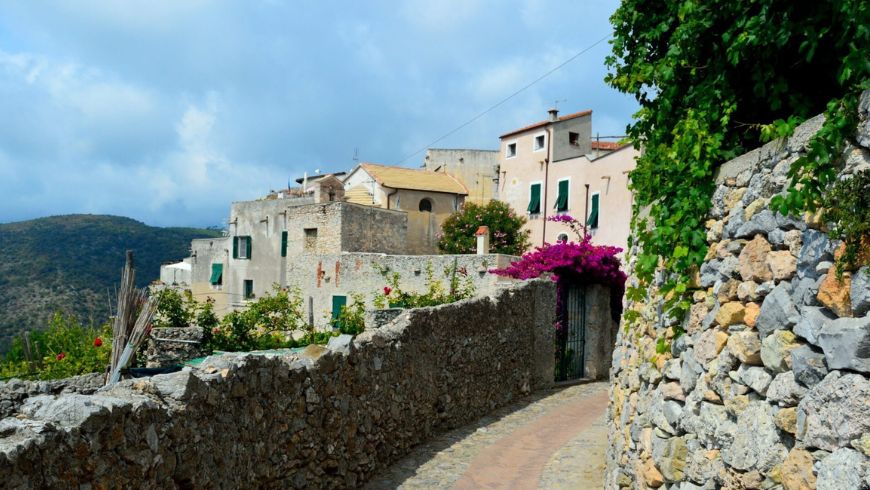
Travelling off-season, choosing a lesser-known destination, using public transport, buying from local producers or choosing a small independent accommodation are not necessarily revolutionary actions.
But together, they can change the way tourism distributes its impact.
The research we analysed shows that this awareness is growing: avoiding overcrowding and travelling off-season are no longer simply strategies for finding a quieter holiday, but are increasingly associated with the desire to reduce pressure on destinations.
It is a perspective that feels particularly close to Ecobnb’s philosophy.
For more than ten years, we have sought to give visibility to small accommodations, lesser-known areas, villages, rural areas and destinations where travel can create a more direct connection with the place and the people who live there.
Not a competition between generations
Perhaps, then, the most interesting finding of the Booking.com research is not the generational paradox itself. It is the confirmation that intentions and behaviours do not necessarily coincide and that sustainability can take many different forms.
Younger travellers may be more inclined to seek experiences connected to local culture, communities and nature conservation. Older generations may be more likely to put everyday behaviours into practice, such as reducing waste, saving energy or travelling off-season.
There is therefore no need to establish who the most sustainable traveller is. What matters is to make it easier for each person to turn their intentions into a concrete choice.
And this is also where travel platforms have a responsibility: to provide clear information, avoid vague definitions and help people understand what practices actually lie behind a “sustainable” offer.
From sustainability to regeneration
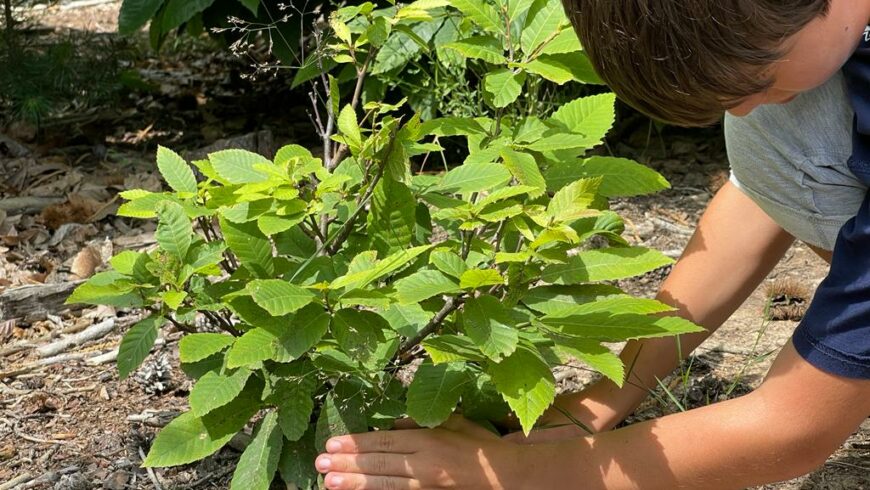
For Ecobnb, this is also the starting point for looking beyond. Reducing the negative impact of travel is essential. But we can ask ourselves a further question: can a journey leave a place better than we found it?
This is the perspective of regenerative tourism: not simply consuming fewer resources, but seeking to generate value for nature, communities and local economies.
The research shows us that travellers are already changing some of their choices: they avoid overcrowded places, consider the time of year and pay attention to their impact on destinations.
The challenge for the future will be to create the conditions for every journey to become an opportunity to better understand a place, support the people who live there and contribute, in our own small way, to taking care of it.
Cover image: photo via Canva PRO


