
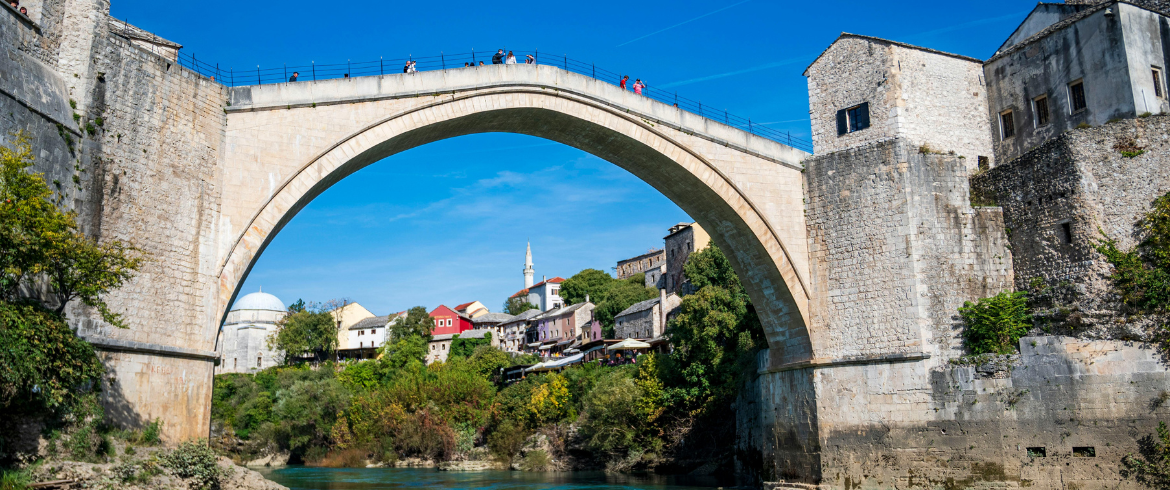
Nel cuore dell’Erzegovina, Mostar è una città attraversata da incontri e contrasti. Qui le tracce dell’epoca ottomana si intrecciano con l’architettura austro-ungarica, le tradizioni balcaniche e le testimonianze di una storia contemporanea ancora molto presente.
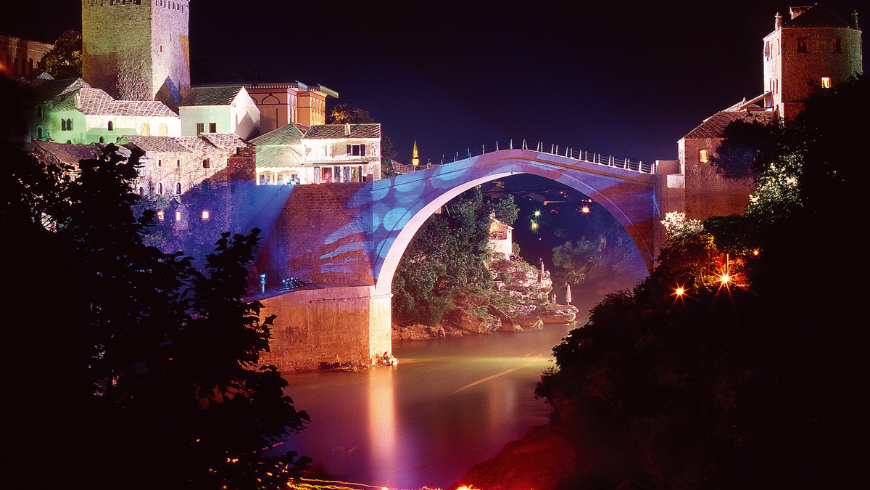
Connecting the two banks of the Neretva is Stari Most, the famous Old Bridge, which has become a symbol of the city and its ability to rebuild connections after the war. Around the bridge lies Stari Grad, the old town, with its cobbled lanes, mosques, historic Ottoman houses and craft shops.
Mostar is easy to explore on foot, but it deserves more than a quick visit. Staying at least one night gives you the chance to experience its quieter moments, observe everyday life in its neighbourhoods and spend time at the places that tell its story.
Here are 10 places and experiences not to miss, along with a few tips for exploring Mostar and its surroundings more thoughtfully.
What to See in Mostar: 10 Places You Shouldn’t Miss
1. Stari Most, the Old Bridge
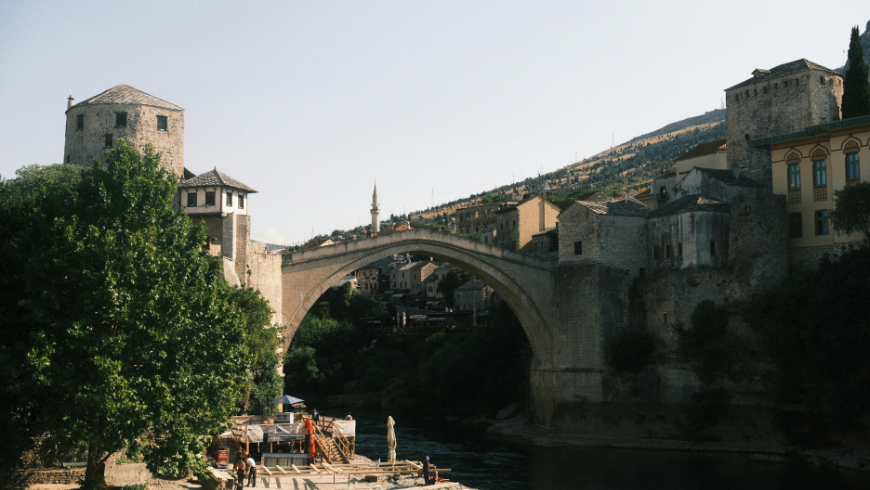
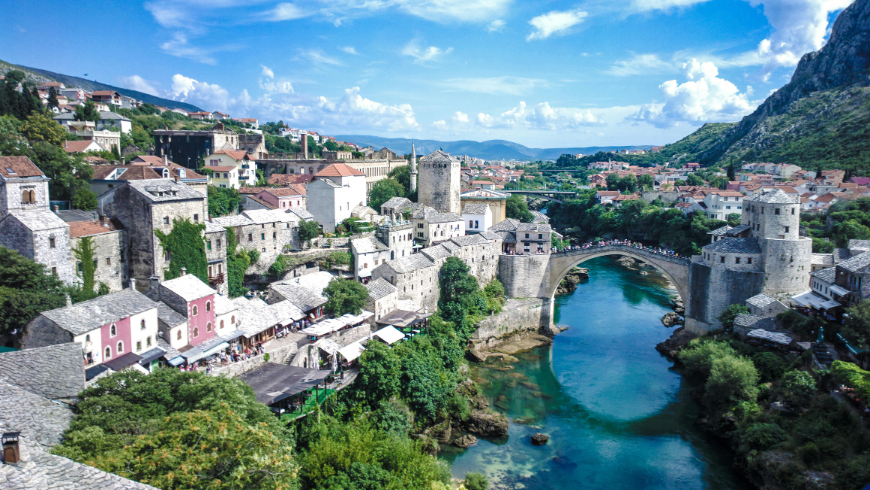
Stari Most is Mostar’s best-known landmark and one of the most important historic bridges in the Balkans. Built in the 16th century during Ottoman rule, to a design attributed to architect Mimar Hayruddin, it spans the Neretva with a large stone arch around 24 metres above the river.
For centuries, it connected the two sides of the city, becoming a meeting point for different cultures, trade, and communities.
In November 1993, during the war in Bosnia and Herzegovina, the bridge was destroyed. Its reconstruction, completed in 2004, used traditional techniques and stones recovered from the river, restoring one of the city’s most important symbols. Since 2005, the Old Bridge area and the old town have been part of the UNESCO World Heritage Site.
Today, residents and visitors cross the bridge every day. In the warmer months, you may see members of the local Mostari diving club leap from the bridge. This tradition requires training and experience: it should not be attempted without the proper skills.
A tip: cross the bridge at different times of day. The old town is usually quieter early in the morning, while in the evening the light on the Neretva changes the colour of the stone and offers a different view of the bridge.
2. Kujundžiluk, the Craftsmen’s Bazaar
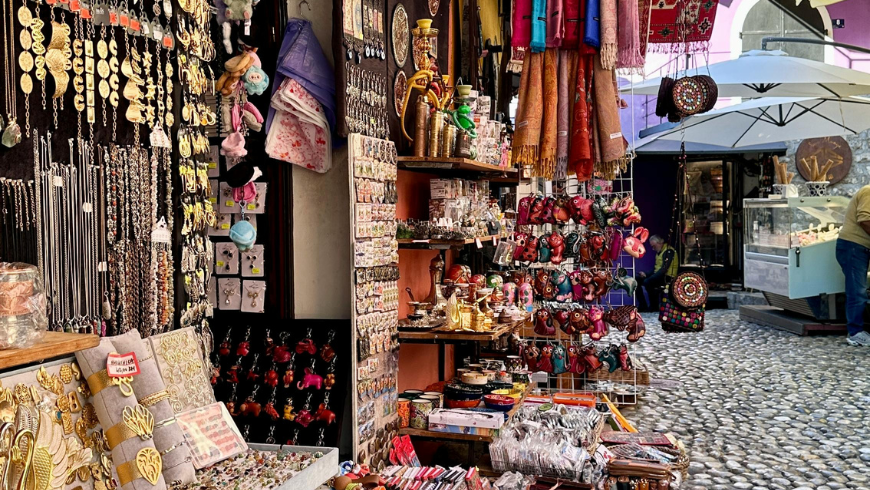
On the eastern side of Stari Most lies Kujundžiluk, the old Ottoman bazaar. Its name recalls the work of the coppersmiths, who for generations crafted decorative objects and utensils from metal.
As you wander along its stone-paved lanes, you’ll come across craft workshops, shops selling textiles, ceramics and copperware, as well as small traditional cafés. Some artisans still use techniques passed down through generations.
It is one of the best places to discover the city’s material culture. Rather than simply browsing the shop windows, take the time to step inside the workshops, ask about the techniques and find out how the objects are made.
A break at a traditional café is also a chance to try Bosnian coffee, prepared in a džezva and served in small cups, often accompanied by rahat lokum (Turkish delight).
A tip: if you would like to buy a souvenir, look for an item made locally and ask where it comes from. This is a way to learn more about the artisans’ work and help keep the old town’s workshops and businesses alive.
3. Koski Mehmed Pasha Mosque
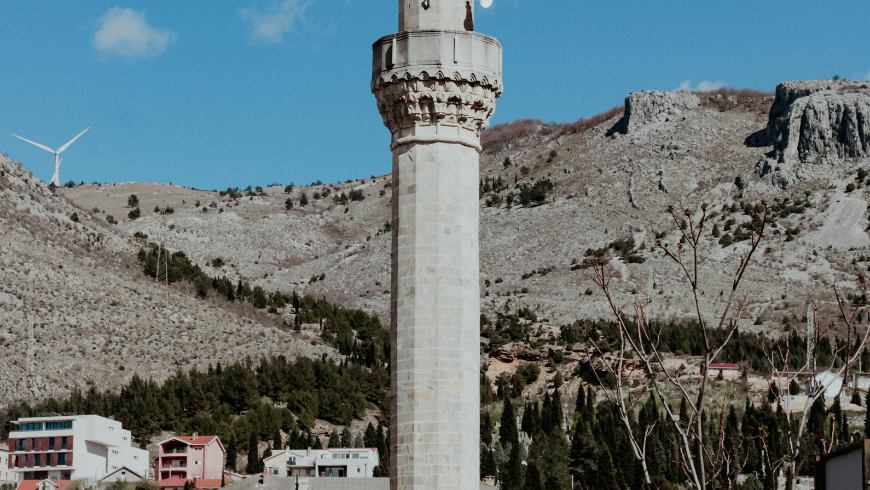
Just a short walk from Stari Most stands Koski Mehmed Pasha Mosque, one of Mostar’s most recognisable religious buildings.
Built in the early 17th century, the mosque has an intimate interior decorated with floral motifs and delicate colours. Its courtyard features a fountain for ablutions, a traditional element of mosque architecture.
A visit also offers insight into the role religious buildings have played in the city’s urban and social history.
Many visitors come here for the chance to climb the minaret. From the top, you can see the Old Bridge, the rooftops of the old town and the course of the Neretva.
The climb is up a narrow, steep staircase and is not suitable for everyone. There may be an admission fee, so check the current ticket price on site.
A tip: when visiting a mosque, respect prayer times and dress-code requirements. Remember that it is first and foremost a place of worship, not simply a tourist attraction.
4. Kriva Ćuprija, the Crooked Bridge
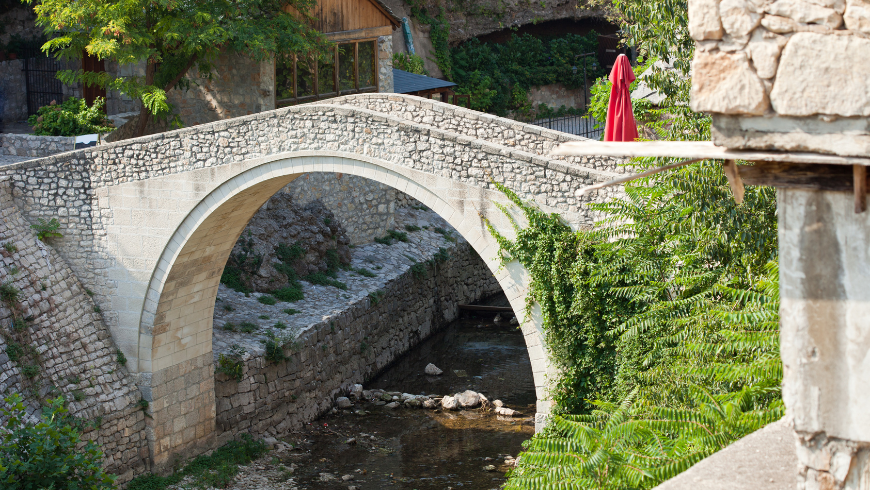
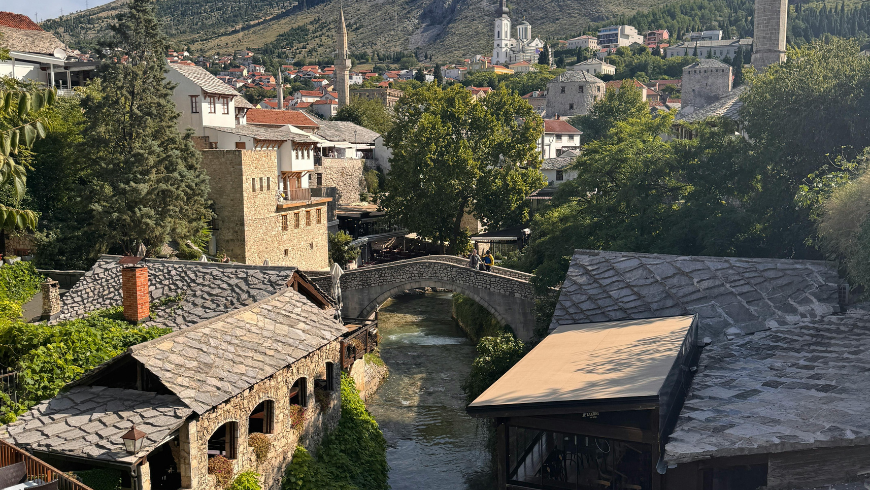
A few minutes’ walk from the Old Bridge, over the Radobolja stream, you’ll find Kriva Ćuprija, also known as the Crooked Bridge.
Smaller and more intimate than Stari Most, this stone bridge has a single arch spanning the stream between the houses of the old town.
Its construction is traditionally associated with the building of Stari Most, although the connection between the two projects is not entirely certain.
The surrounding area offers a different perspective on the city, away for a moment from the busiest visitor routes. Here you can take in the narrow streets, stone houses and stream running through the neighbourhood.
A tip: take the time to explore the lanes around the bridge, too. These less monumental corners, closely connected to everyday life, are part of what makes a walk through Mostar so rewarding.
5. Bišćevića Ćošak, a Traditional Ottoman House
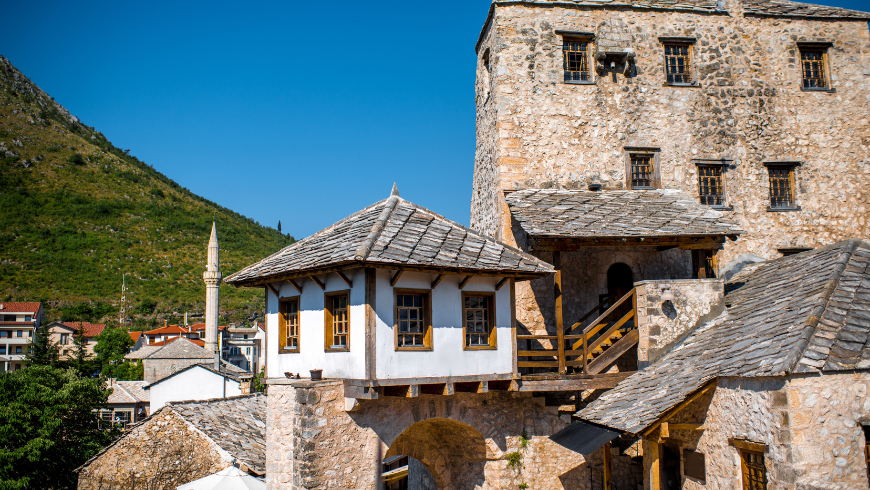
To get a sense of domestic life during the Ottoman period, a visit to Bišćevića Ćošak is particularly interesting.
This historic residence preserves features typical of traditional Herzegovinian homes: inner courtyards, rooms set aside for different domestic functions, wooden furnishings and windows overlooking the river landscape.
One of its most distinctive features is the divanhana, a space for family life and conversation, furnished with low seating and views of the river.
Visiting a historic house takes you beyond monumental architecture and reveals more everyday aspects of local culture: how spaces were organised, family life, hospitality and the relationship between homes and their surroundings.
A tip: take a close look at the wooden architectural details and the features designed to protect rooms from the summer sun. Domestic architecture, too, tells the story of how people adapted to the climate and landscape.
6. Muslibegović House
Another remarkable example of Ottoman residential architecture is Muslibegović House, a historic residence with courtyards, traditional rooms, period decorations and furnishings.
The building offers a glimpse into the life of a wealthy family during the Ottoman period and shows how the house was organised, with private areas separated from those intended for guests.
Today, the property is also known as a place to stay, in addition to its historical and architectural significance.
A visit offers the chance to appreciate details that are often overlooked: carved doors, textiles, household objects, decorative features and small inner courtyards.
A tip: if you would like to learn more about Mostar’s traditional architecture, compare this residence with Bišćevića Ćošak. Together, the two houses offer a better understanding of Ottoman homes and their relationship with social life.
7. Karađoz Bey Mosque
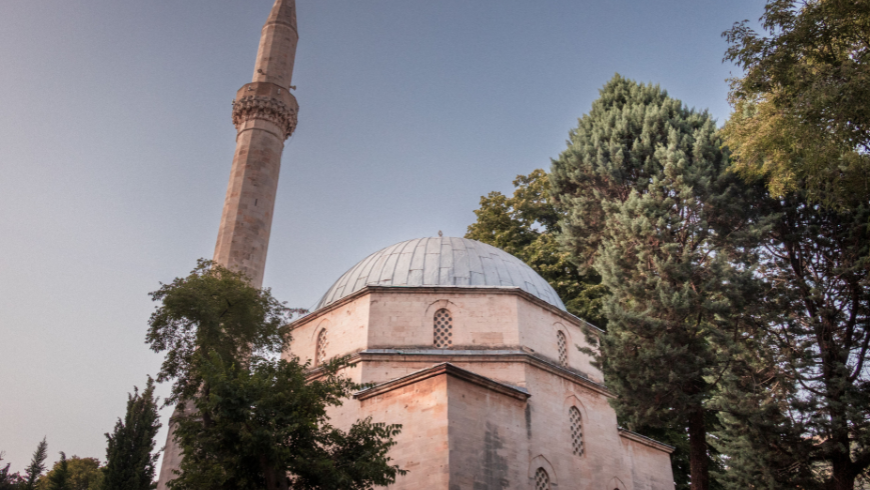
Built in the 16th century, Karađoz Bey Mosque is one of the most important Islamic religious buildings in Bosnia and Herzegovina.
Located a short distance from the busiest part of the old town, it is an important example of Ottoman architecture in the region. The building is characterised by a large central dome, a portico and a minaret.
The mosque is part of Mostar’s religious and cultural history and offers insight into an architectural tradition that has left a deep mark throughout Herzegovina.
A visit is also an opportunity to explore the surrounding neighbourhood, where the city reveals a side less shaped by the main tourist routes.
A tip: include this stop as part of a longer walk rather than focusing only on the monument. Looking at the nearby streets and buildings helps you understand how the historic heritage remains part of the living city.
8. The Banks of the Neretva and the Beach Below Stari Most
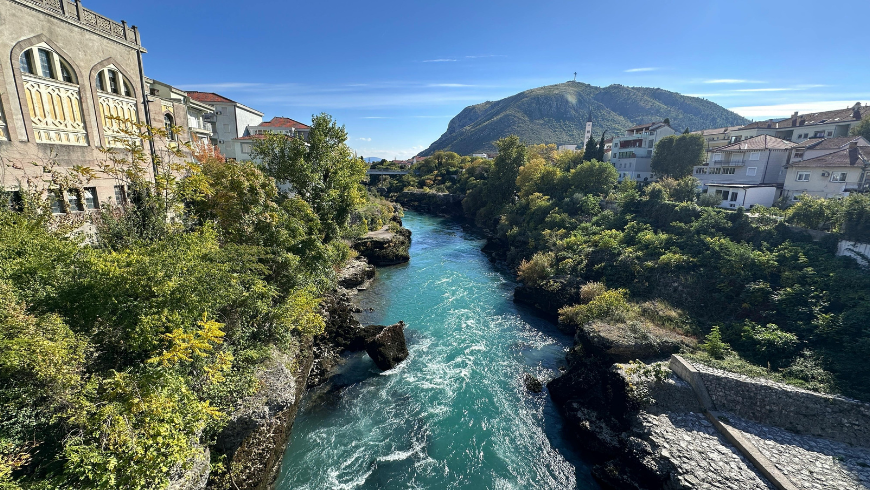
For a different view of the Old Bridge, make your way down to the banks of the Neretva.
From above, the bridge looks like an elegant stone arch; from below, you can better appreciate its height, structure and relationship with the river landscape.
In some places, small rocky and pebbled areas along the river are accessible. The clear water and the Neretva’s intense colour make this stretch particularly striking.
The area is very popular in summer, but bear in mind that the river can be cold and deep, with strong currents. Not all spots are suitable for swimming: follow local advice and never attempt improvised dives or crossings.
A tip: even if you don’t plan to swim, it is worth walking down to the riverbank and taking in the scenery. It is one of the best ways to appreciate the connection between the city and its river.
9. Spanish Square and Places of Remembrance
To truly understand Mostar, it is important to spend time exploring its more recent history.
During the war in Bosnia and Herzegovina in the 1990s, the city was deeply affected by the conflict. The destruction, the division of the population and the loss of numerous buildings left marks that are still visible in the urban landscape.
A walk towards Španski trg (Spanish Square) and along Bulevar offers a chance to encounter some of these reminders. The boulevard was one of the main dividing lines during the conflict and remains an important place for understanding the divisions that shaped the city.
Another building that tells this story is the former bank tower, known as the Sniper Tower, which can be viewed from the outside today but is not open as a regular tourist attraction.
To learn more about the war, you can visit the War and Genocide Victims Museum (War and Genocide Victims Museum ) and the War Photo Exhibition, which document the violence of the conflict and its consequences through photographs and testimonies.
This part of the visit calls for a respectful approach. These are not simply attractions, but places connected to the suffering of many people and to collective memory.
A tip: before your visit, take time to learn about the historical context. Understanding what happened makes it possible to experience the city more thoughtfully and to appreciate why the reconstruction of the Old Bridge carries such profound meaning.
10. Blagaj Tekke, the Dervish Monastery at the Source of the Buna
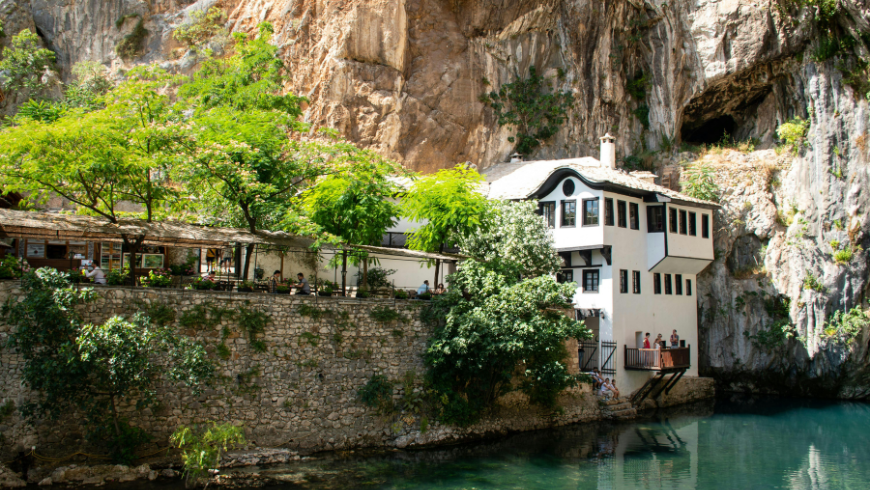
About 12 kilometres from Mostar lies Blagaj, a small town in Herzegovina best known for the source of the Buna River.
Here, water emerges from a towering rock face, forming a clear, fast-flowing river. Right beside the spring stands Blagaj Tekke, an ancient religious complex associated with the Sufi tradition and dervishes.
Dating back to the Ottoman period and restored several times, the building sits in a distinctive landscape where rock, vegetation and water create an atmosphere very different from that of Mostar’s old town.
A visit offers insight into another aspect of the region’s religious culture and the relationship between human settlements and natural resources.
There are also small restaurants and cafés around the spring where you can sample traditional dishes.
How to get there: Blagaj can be reached by car, taxi or bus from Mostar. Check the available services before setting off, as timetables may vary. If you have time, allow at least half a day for this trip.
A tip: don’t just stop for a photograph outside the monastery. Take time to learn about the site, its religious history and the landscape around the spring.
FAQ: 5 Things to Know Before Visiting Mostar
Spring and early autumn are generally the most pleasant times to visit Mostar.
Between April and June, temperatures are milder and the Herzegovinian landscape is particularly green. September and October are also good months to visit, with pleasant days and generally fewer visitors than during the peak season.
Summer, especially July and August, can be very hot, with temperatures frequently exceeding 35°C. The old town is also busier during these months, particularly in the middle of the day.
Winter is quieter, but it can be cold and rainy.
If you can choose, opt for spring or autumn and plan your visits to the sights for early morning or late afternoon.
There are several ways to reach Mostar, combining flights, buses and trains.
Mostar Airport (OMO) has limited services, which vary depending on the season. For this reason, many travellers choose to fly to Sarajevo, Split or Dubrovnik and continue overland.
One of the most appealing options is to travel to Sarajevo and take the train from there to Mostar. The railway crosses spectacular scenery, following the Neretva through mountains, gorges and valleys.
The journey offers a chance to take in the landscape, turning the transfer itself into part of the experience. Services and timetables may vary by season, so check the official railway websites before travelling.
There are also bus connections between Sarajevo, Mostar and several cities in Croatia.
If you are travelling by car, allow time for border crossings and check the vehicle’s insurance and documentation requirements in advance.
Bosnia and Herzegovina is not part of the European Union and is therefore not automatically covered by European free-roaming agreements.
Before travelling, check your mobile operator’s rates. Alternatively, consider an international eSIM or buy a local prepaid SIM card.
Wi-Fi is available in many accommodation facilities, cafés and restaurants, but it is useful to have internet access while travelling around as well.
Downloading offline maps and transport information in advance is a useful precaution.
You can explore Mostar’s old town in a day, but staying at least one night gives you a better feel for the city.
If you only have a few hours, focus on Stari Most, Kujundžiluk bazaar, and the main mosques and historic houses.
With two days, you can also visit places of remembrance, spend more time in the craft workshops, and take a trip to Blagaj.
With three days or more, you can explore other parts of Herzegovina and discover small towns, natural landscapes and the region’s food traditions.
A longer stay also gives you more opportunities to discover local businesses, rather than cramming everything into a rushed visit.
Practical Tips for Exploring Mostar
Before you set off, a few simple tips can make your trip easier and more enjoyable.
- Carry some cash. The official currency is the convertible mark, abbreviated as BAM or KM. It is pegged to the euro at a fixed rate of approximately €1 to 1.96 BAM. Some businesses accept cards, but cash is useful in small shops, markets and cafés.
- Wear comfortable shoes. The old town’s streets are often paved with smooth stones and can be slippery, especially when it rains.
- Visit the old town early in the morning. Quieter hours are ideal for browsing the workshops, photographing the landmarks, and getting to know the neighbourhood.
- Respect places of worship and remembrance. Find out about access rules and behave appropriately, especially at sites connected with the war.
- Choose local businesses whenever possible. Eating at small restaurants, buying directly from artisans, and meeting the people who live and work in the city are simple ways to enrich your trip and support the local economy.
Mostar: A City to Discover Beyond the Old Bridge
Mostar is much more than its famous bridge. It is a city where architecture tells the story of centuries of cultural encounters, workshops preserve traditional crafts, and the Neretva landscape is part of everyday life.
The Old Bridge is certainly the starting point, but it is the quieter streets, traditional houses, places of remembrance, and conversations in small local businesses that reveal more of the city’s identity.
Visiting Mostar also means engaging with a complex history of coexistence, conflict, loss and reconstruction. It is a story that invites visitors to look beyond the familiar images and take time to understand the area.
If you can, stay at least one night, travel to the city on the scenic train from Sarajevo and set aside a few hours to explore the surrounding area. You will discover not only one of the Balkans’ most recognisable cities, but also a region rich in landscapes, traditions and cultural heritage.
To plan your visit and find out about local events and initiatives, visit the official Mostar tourism website: https://exploremostar.ba/en/.
Cover photo source: Canva Pro


