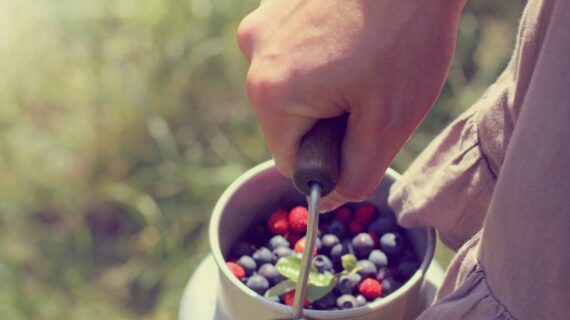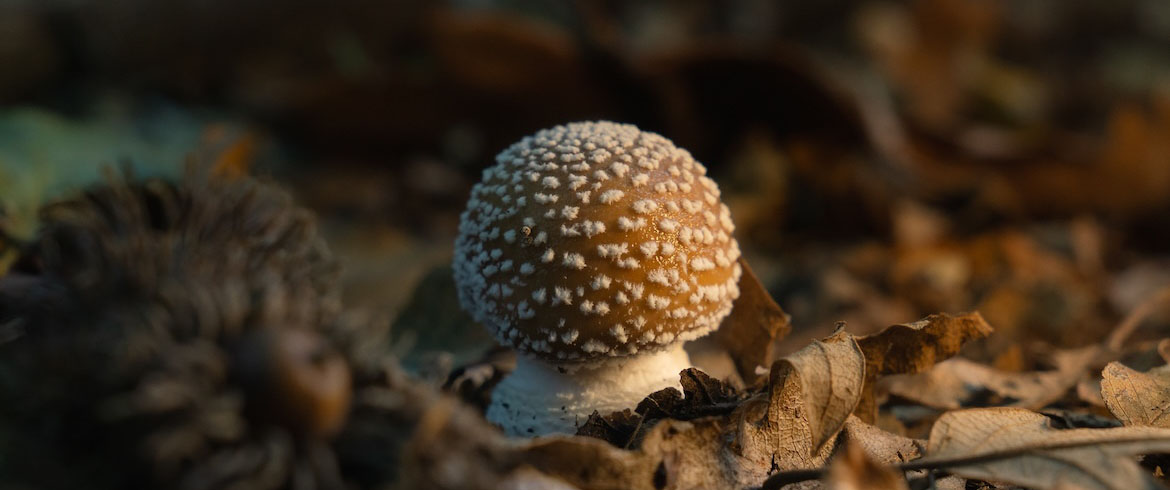
Every autumn in the Apennine woods above Pistoia I meet people carrying baskets, and most of them are worried about the wrong thing.
The question always arrives in the same form. Should I cut the mushroom at the base, or twist it out of the ground? People ask it anxiously, as though one answer spares the forest and the other wounds it.
It is close to the wrong question. The real damage happens elsewhere, and almost nobody asks about that.
What you are actually picking
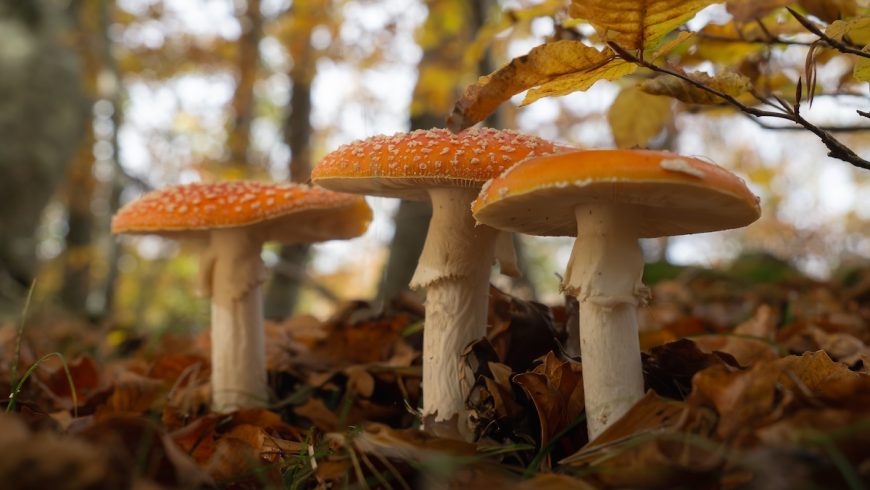
A mushroom is not the organism. It is the fruit of one.
The living thing sits underground: a network of fine threads called mycelium, running through soil and leaf litter, frequently older than the person standing on it. For porcini, chanterelles and most of what people come to Tuscany to collect, that network wraps around the roots of trees, passing them water and minerals and taking sugars in return. Fungus and tree work as one system. Picking the mushroom is nearer to picking an apple than to pulling up a plant.
What thirty years of watching showed
A Swiss experiment ran on the same forest plots for close to three decades. On some, mushrooms were cut. On others they were pulled. The difference in what fruited afterwards was negligible.
The researchers found something else. Where the ground was walked over repeatedly, fewer mushrooms came up. Compacted soil did, season after season, what neither knife nor thumb managed.
Your feet matter more than your hands.
The ground, not the mushroom
A few habits follow from that.
Stay off soft, wet ground where you can, and stop circling the same productive patch week after week. Leave the leaf litter alone: raking through it to uncover what is hidden tears the surface mycelium and dries out the layer it depends on. If nothing is showing, the honest answer is that there is nothing there this week.
Walk in one line rather than fanning out across a slope. Ten people spread across a hillside compress far more of it than ten people following each other.
You are not the only one eating
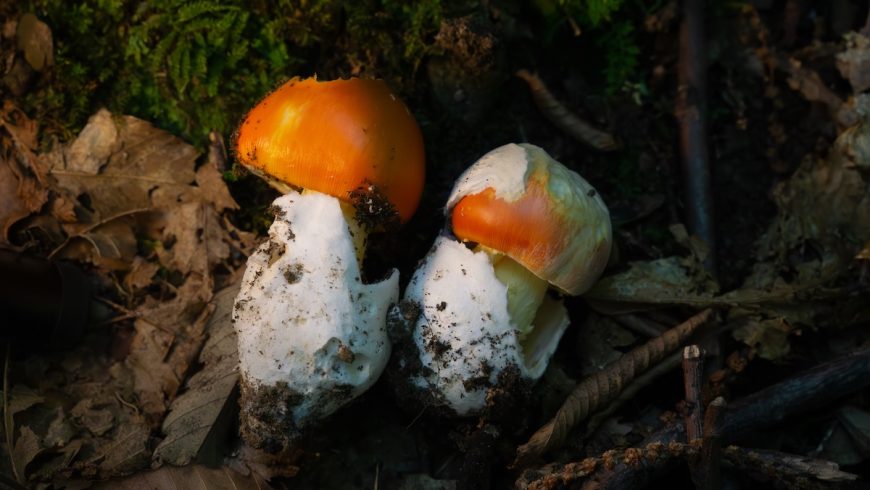
A mushroom left standing is not wasted. Slugs and beetles are already in it, deer eat them, wild boar dig for them. In a good year that hardly matters. In a poor one, a wood stripped clean by weekend visitors takes food from animals with nowhere else to go.
Italian regional law sets daily limits for a reason, and taking less than you are allowed is not a sacrifice. Nobody needs four kilos of porcini.
Taking too much is not only a basket problem
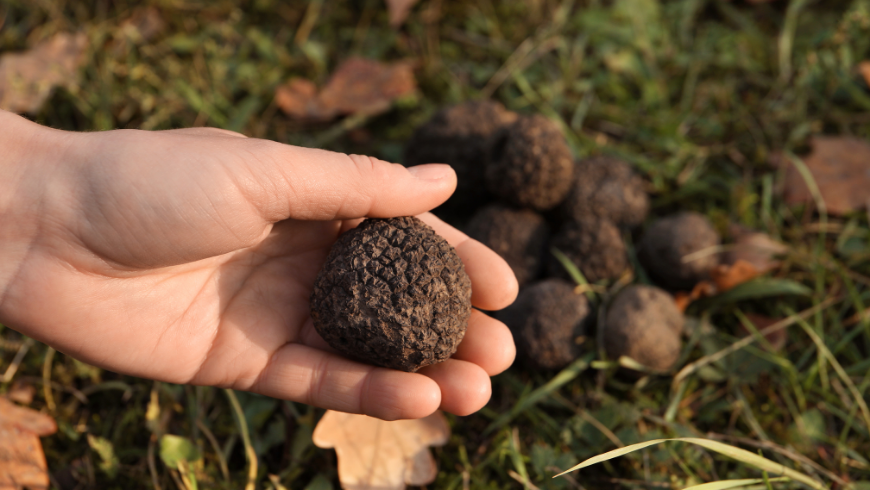
The same thing happens commercially, and it is harder to see.
Truffle outings are sold all over Tuscany. Some are the real craft, held by families who have read the same woods for generations. Others are performances. Truffles need loose, calcareous soil with a high pH, which in Tuscany means the Crete Senesi, the Val Tiberina and the hills around San Miniato. On acidic sandstone, which is most of the Apennines, there are none at all. A visitor watching a dog work has no way of telling which kind of outing they have booked, and that is precisely why the staged version survives.
What that takes is not mushrooms. It is the living of the people who genuinely hold the knowledge.
I am not a truffle hunter, and my mountains are the wrong ground for it. What I run is mushroom identification days, in woods I have walked for years, during the weeks when things are actually fruiting. Some days we find very little. That is the honest version of it.
Take less than you could
Foraging here is an old shared practice, and the rules attached to it exist because the resource is common property. A visitor who fills a basket on one hillside has taken from the families who will still be picking that slope in November.
Watch where you put your feet. The wood will still be producing long after all of us.
Cover image: photo by Stefano Gabryel
Author: Stefano Gabryel is a hiking guide in Tuscany, certified under Italy’s national GAE qualification. He leads private walks and seasonal mushroom identification days in the Apuan Alps and the Tuscan Apennines, and works as a nature photographer. He writes at stefanogabryel.net