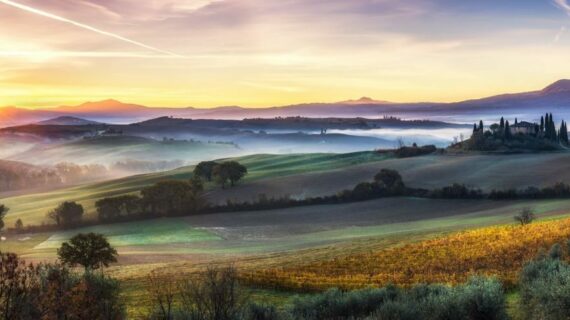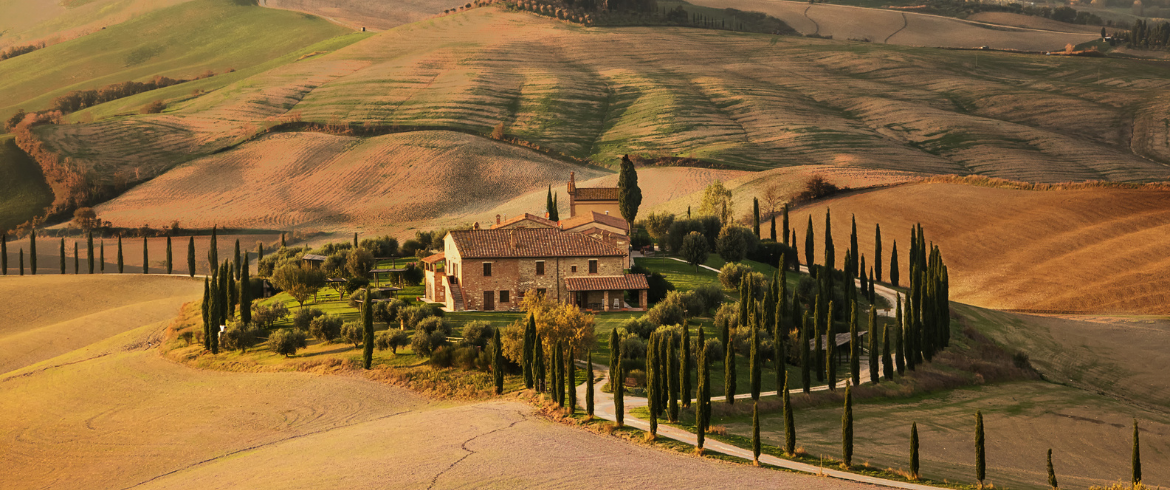
Some places invite you to slow down and savour every moment. Val d’Orcia is one of them. Here, roads wind through rolling hills, rows of cypress trees and stone villages seem frozen in time. And it’s no coincidence that it was recognised as a UNESCO World Heritage Site in 2004. It is the result of a unique balance between nature, agriculture and history, shaped over centuries.
Val d’Orcia is not just a picture-postcard landscape. It’s a destination to be discovered slowly, following the rhythm of the seasons, of the walks through the vineyards and the conversations with those who have long called this place home.
From the trails of the Via Francigena to the small villages best explored by bicycle, from the hot springs of Bagno Vignoni to sunsets over the Crete Senesi. In this article, you’ll discover authentic slow experiences in Val d’Orcia to uncover its most genuine and sustainable side.
Cycling through Tuscany’s most beautiful villages
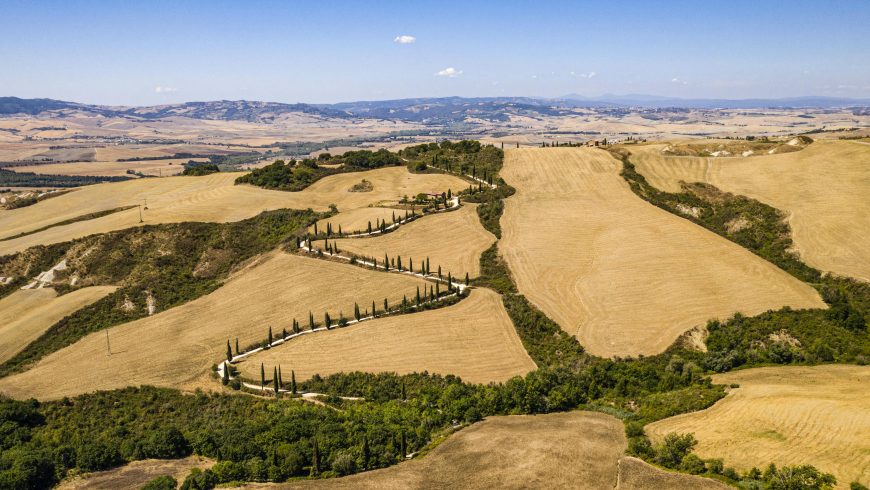
Val d’Orcia seems made to be explored on a bicycle. Rolling hills, Rows of cypress trees, stone farmhouses nestled among golden fields: every pedal stroke reveals breathtaking scenes. The network of signposted routes allows you to explore the area at a leisurely pace, fully immersed in the Tuscany countryside.
One of the most iconic routes connects Pienza, a Renaissance ideal city and UNESCO World Heritage Site, to San Quirico d’Orcia. It also passes through the thermal pools of Bagno Vignoni. It’s a moderately challenging route with constant ups and downs that call for a reasonable level of fitness, but reward you with stunning panoramas.
Those who prefer to admire the scenery without much effort can hire an e-bike at many points throughout the valley. The shortest and most photogenic route of all? The one from Pienza to the Chapel of Madonna di Vitaleta, along one of the most photographed roads in the world.
Natural thermal baths in Val d’Orcia
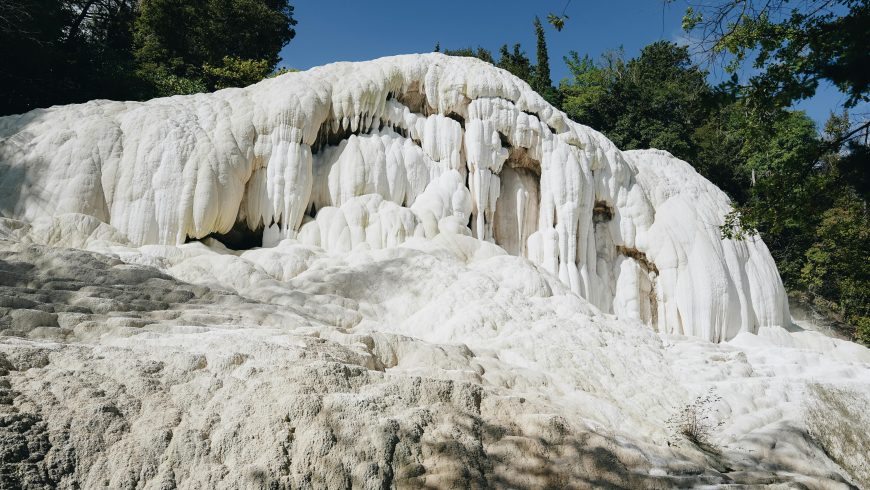
At Bagni San Filippo, a small village at the foot of Monte Amiata, lies the Fosso Bianco. It is a thermal stream that over time has created spectacular white limestone formations, natural pools and waterfalls. You can bathe here for free, in any season.
Just a few kilometres away, Bagno Vignoni is truly one of a kind. A small thermal village known for the large sixteenth-century pool at the centre of its main square. Thermal waters flow naturally from underground and run towards the River Orcia, where further natural pools with free access have formed. Strolling among the historic channels and ancient basins offers a glimpse of a side of Tuscany deeply rooted in wellbeing and local history.
On foot along the Via Francigena
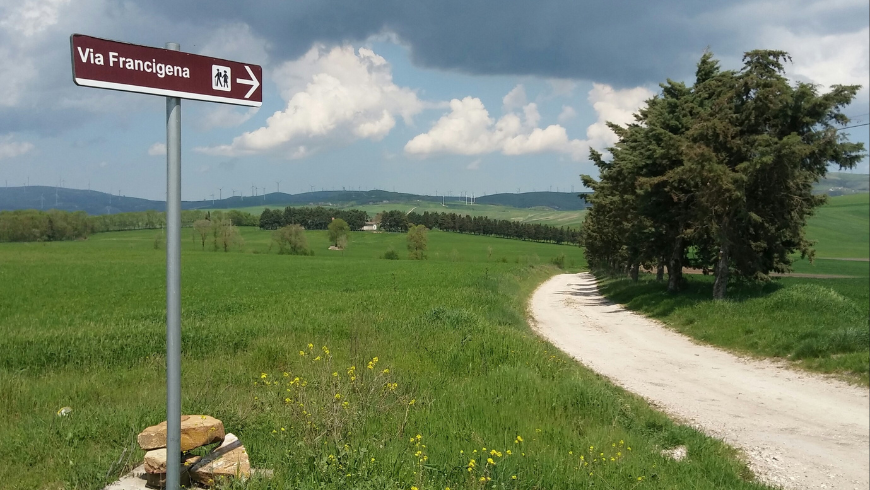
Walking the Via Francigena through Val d’Orcia changes the way you perceive both the landscape and yourself. This ancient pilgrimage route, connecting Canterbury to Rome, passes through Val d’Orcia in stages 35 and 36. From San Quirico d’Orcia to Radicofani, a stretch of 32 km, the path crosses gentle hills and ancient villages. UNESCO considers the presence of the Via Francigena one of the key elements of the valley’s cultural significance. Walking even a short section of this route means stepping into a thousand-year-old legacy.
Golden hour over the Crete Senesi
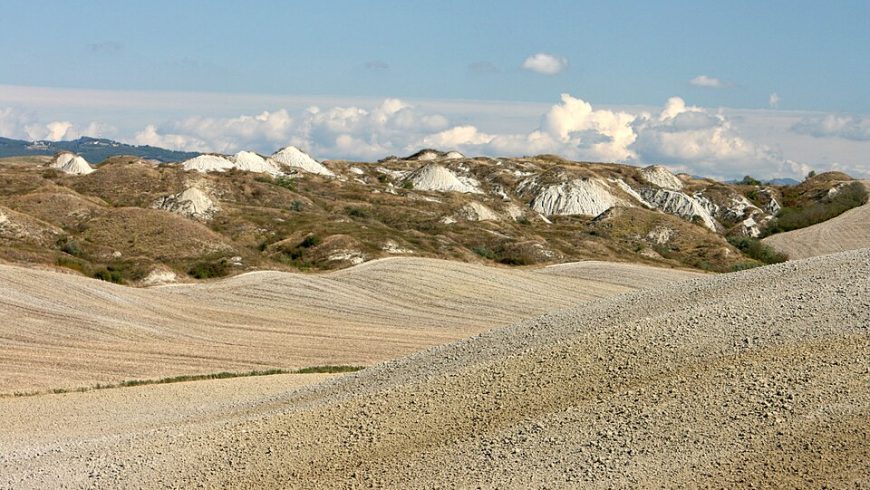
At sunset, when the light turns the hills to waves of gold and shadows, the landscape looks as if it was painted. North of Val d’Orcia, the Crete Senesi unfold: undulating hills carved by gullies and clay mounds known as biancane.
The name comes from the clay-rich soil, which gives the landscape its distinctive and often otherworldly quality. You will see grey-blue tones shifting into a terrain, and a landscape sometimes described as “lunar“. At sunset the hills take on pink hues that have inspired artists and photographers from around the world. The most photographed spots in the valley are the cypress trees of San Quirico d’Orcia with the Chapel of Vitaleta in the background, or the panoramic terrace of Pienza looking out towards Monte Amiata.
Following the footsteps of films shot in Val d’Orcia
The landscapes of Val d’Orcia are protagonists of international cinema. The extraordinary beauty of the area has been chosen as a natural setting for numerous film productions. Travelling through the valley, it’s easy to recognise the scenic roads and isolated farmhouses that have become famous on the big screen.
Among the most celebrated films shot here: The Gladiator by Ridley Scott, The English Patient by Anthony Minghella, and Romeo and Juliet by Franco Zeffirelli. An original way to explore the area is to follow itineraries leading to the locations of the film sets.
Meet local producers: wine, olive oil and stories to tell
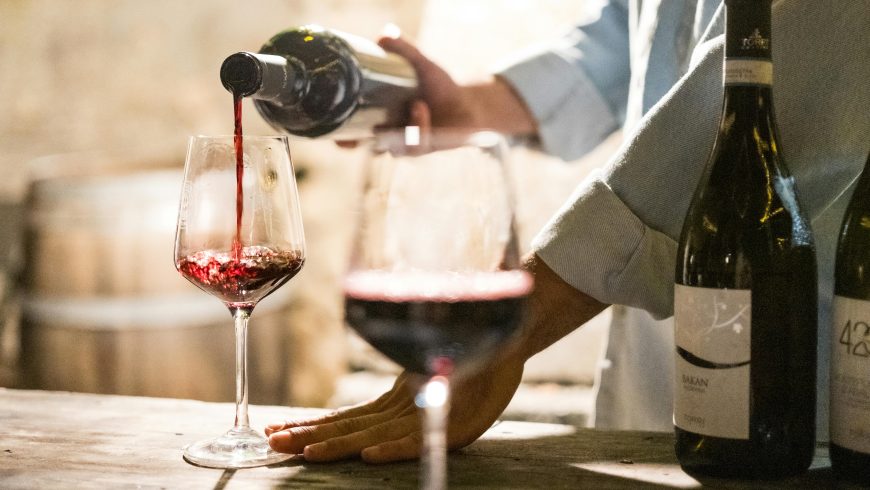
Food and wine culture is an important part of Val d’Orcia’s identity. Among the hills of Montalcino and the surrounding countryside, you’ll find farms and wineries. Here you can get to know the producers, admire the vineyards and take part in guided tastings. Wine, olive oil and local produce tell the story of the bond between the land and the agricultural traditions that have shaped the landscape for generations. Visiting these areas means living an authentic experience and supporting local producers.
Montalcino is the home of Brunello, one of the most celebrated and age-worthy red wines in the world. In Montepulciano, cellars are carved into the medieval historic centre and the underground rooms where the wine rests are open to visitors. Equally worth exploring is the Orcia DOC Wine Road, which connects independent producers across the UNESCO-listed countryside. The extra virgin olive oil from Castiglione d’Orcia is another local excellence not to be missed. You can also try the Pienza pecorino cheese in its various stages of ageing.
Sleeping under the stars at an organic Agriturismo
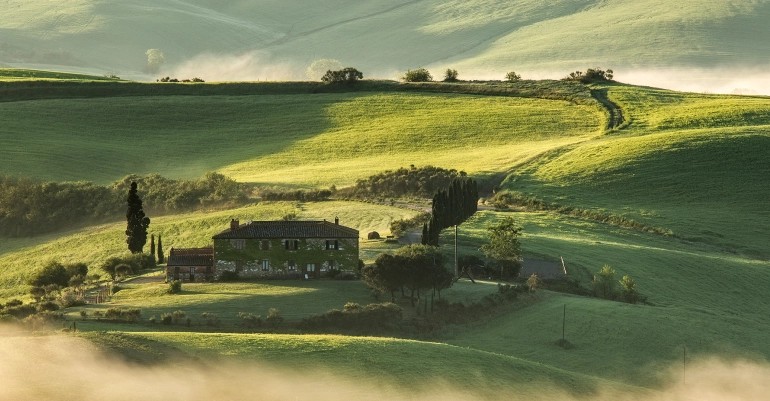
To truly embrace the slow pace of Val d’Orcia, it’s worth spending at least one night in the countryside. Far from the light pollution of cities, the Val d’Orcia countryside offers spectacular starry skies. Farm stays nestled among vineyards and hills allow you to experience the area away from the crowds, surrounded by silence and nature.
Staying at an organic agriturismo means waking up to the sound of birds, sitting down to breakfast with locally sourced produce and taking a genuine break from frantic routines and screens. On Ecobnb, you can find eco-friendly accommodation throughout Val d’Orcia. They are carefully selected for their environmental commitment and quality of hospitality.
Val d’Orcia is waiting for you
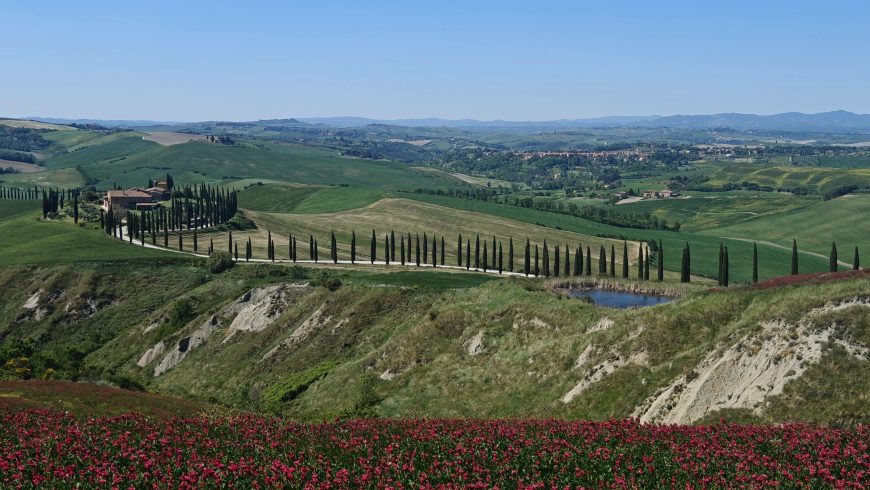
Val d’Orcia rewards those who take their time: an extra day, a side road taken out of curiosity, an unplanned stop. Visiting it slowly also means choosing agriturismi and sustainable accommodation. Here you can savour local products and rediscover a genuine connection with the land. Come and explore every corner without rushing, and live authentic experiences that you will forever remember. It might feel like magic, but that’s what happens when a place is truly beautiful and you give yourself the time to notice it.
Cover Image: Photo via Canva Pro
 Casaletto in Val d'Orcia – Green Holiday Home in Sarteano, Province of Siena, Tuscany, IT
  Borgo Tepolini country house B&B – Green Bed & Breakfast in Castel del Piano, Grosseto, Toscana, IT
  Agriturismo Il Rigo – Green Farm house in San Quirico d'Orcia, Siena, Tuscany, IT
  Sarna Residence San Quirico d'Orcia – Green Accommodation in San Quirico d'Orcia, Siena, Tuscany, IT
  La Casa al Castello – Green Apartment in Arcidosso, GR, Toscana, IT
  Agriturismo Bonello – Green Farm house in Pienza, Siena, Toscana, IT