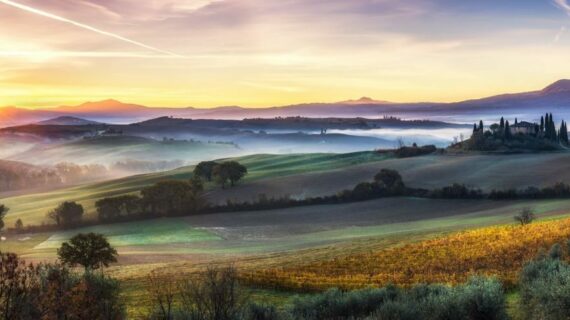
Beside being one of Italy’s most famous and evocative UNESCO World Heritage Sites, Val d’Orcia is a natural setting that has captivated film directors from all over the world. Gentle hills, cypress-lined avenues and medieval villages steeped in history and frozen in time. This corner of Tuscany is the backdrop for some of the most iconic scenes in the history of cinema. From The English Patient to Gladiator, from Romeo and Juliet to Twilight: the cinema in Val d’Orcia has created unforgettable moments. If you’re passionate about film tourism, in this article you’ll find the perfect itinerary for you.
The monastery that fascinated Hollywood: Sant’Anna in Camprena and The English Patient
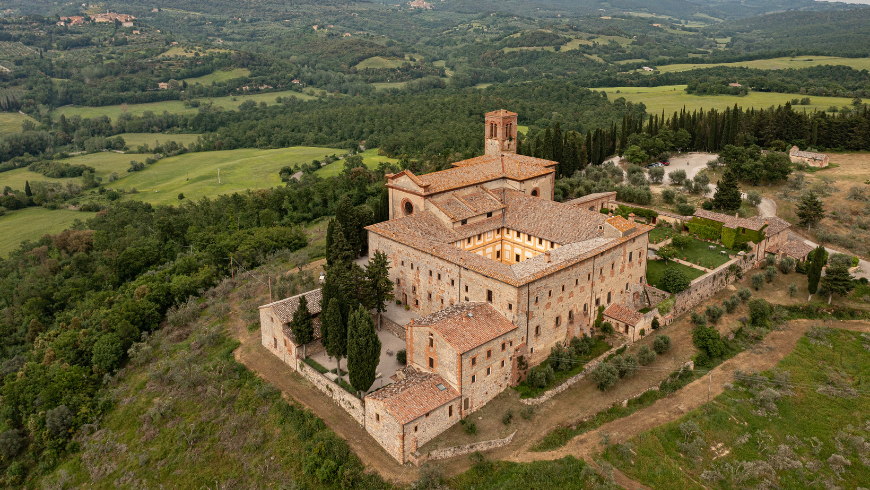
Few places in the world evoke melancholy and beauty with the same intensity as the Monastery of Sant’Anna in Camprena, just a few kilometres from Pienza. Anthony Minghella set here the most moving scenes of his masterpiece, The English Patient (1996), winner of nine Oscars. With its medieval cloister, chapel and imposing bell tower, it is one of the most iconic film locations in the Val d’Orcia.
The monastery was chosen to represent the convent where the nurse Hana cares for the mysterious Count Almásy. Filming took place both inside and outside the building, which has now been converted into a farmhouse. Visitors to the monastery will immediately recognise the large pool in the garden, which appeared several times on screen. The complex is still open to visitors today and offers accommodation in a setting of great historical and scenic value.
Renaissance glimpses in Pienza: from Romeo and Juliet to I Medici
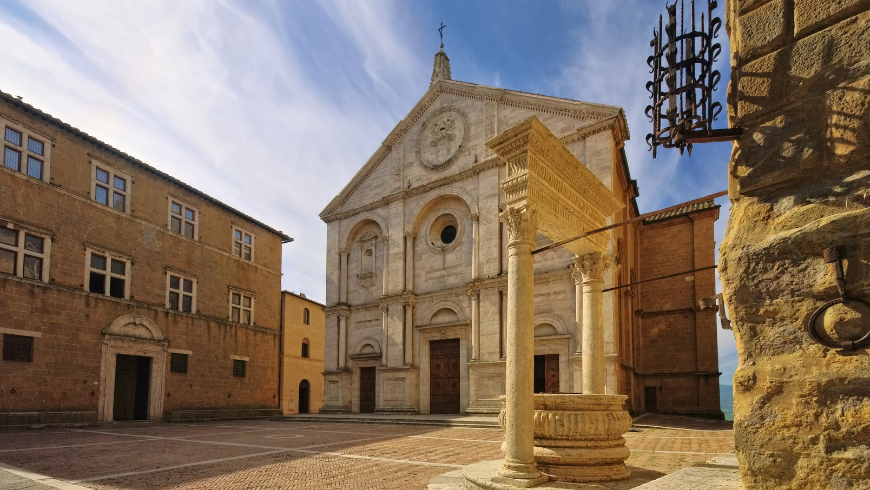
Pienza is one of Tuscany’s gems and one of the most photogenic spots in the Val d’Orcia. The ‘ideal city’ envisaged by Pope Pius II, with its harmonious Renaissance architecture, has been chosen as a film set on numerous occasions. It has become one of the Val d’Orcia’s favourite locations for filmmaking.
In 1967, Franco Zeffirelli chose Pienza as the setting for Romeo and Juliet (1968). The scenes were filmed in unforgettable locations, such as Palazzo Piccolomini and the central square. Decades later, Palazzo Piccolomini featured again in the filming of the TV series I Medici. Its façade stood in for the Palazzo Medici in Florence, and its Renaissance courtyard hosted scenes featuring the powerful Florentine family. Montepulciano’s Piazza Grande also played a prominent role, serving as a stand-in for Florence’s Piazza della Signoria.
In the footsteps of Gladiator
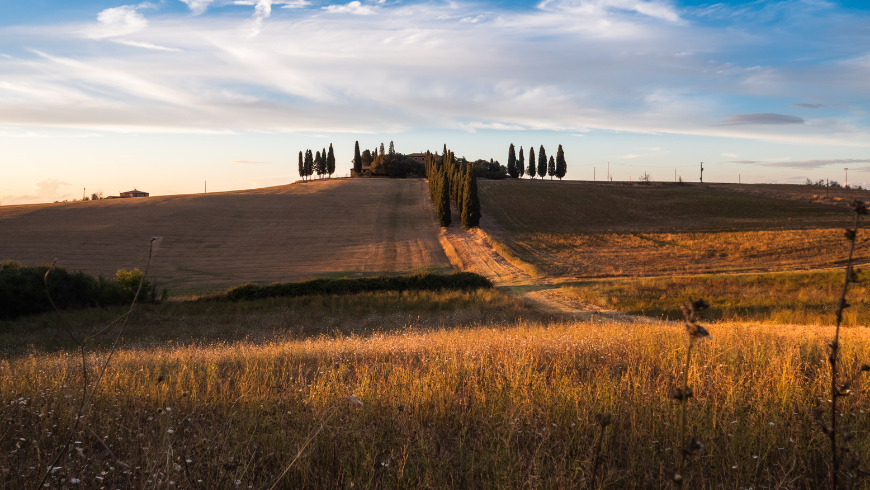
“At my signal, unleash hell.” Russell Crowe’s voice still echoes through these countryside landscapes. Ridley Scott’s Gladiator (2000) transformed the Val d’Orcia into the setting for two of the most thrilling sequences in the history of epic cinema.
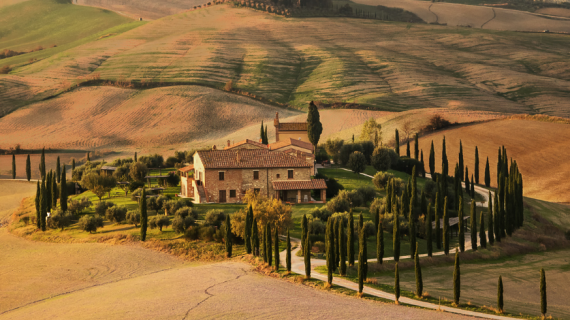
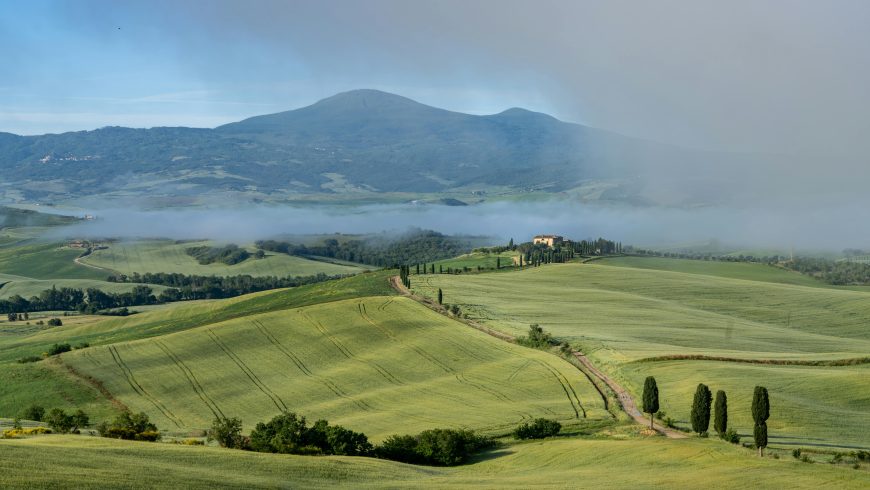
The first is the opening scene: Maximus Decimus Meridius’ house is located at Podere di Poggio Manzuoli, in San Quirico d’Orcia. A rural farmhouse nestled in a valley that seems to have remained unchanged for centuries. Here, the line between reality and legend becomes incredibly thin. The villa is clearly visible as you drive along the scenic road famous for its avenue of cypress trees.
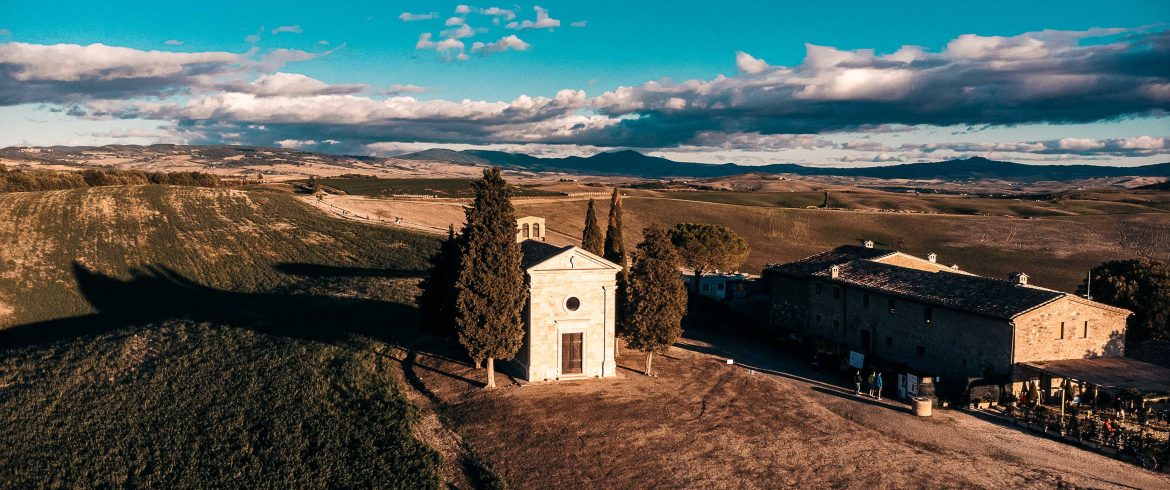
The second is the final sequence set in the Elysian Fields. A landscape suspended between dream and death where Maximus walks amongst the poppies for the last time. Filming took place near Terrapille, about three kilometres south of Pienza. Simply park near the Pieve dei Santi Vito e Modesto in Corsignano and walk along the narrow dirt track to find yourself literally inside the film. These are places that demonstrate how cinema inVal d’Orcia has managed to transform a real landscape into a universal myth.
Vampires in Montepulciano – Twilight: New Moon
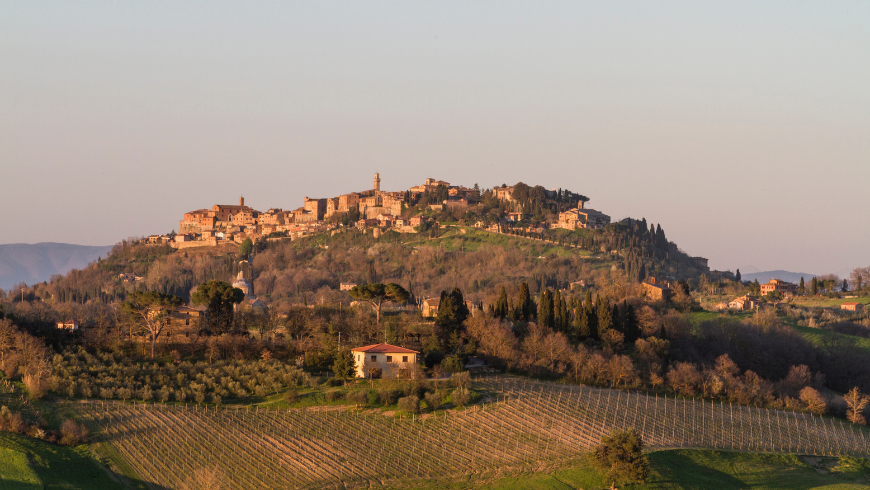
Who would ever have imagined that the Volturi vampires would find their home in Tuscany? And yet that is exactly what happened. In 2009, director Chris Weitz chose Montepulciano as the location for scenes in The Twilight Saga: New Moon, the second instalment of Stephenie Meyer’s famous saga.
In the original novel, the Volturi’s city is Volterra. But for the film shoot, the production team opted for the historic centre of Montepulciano, with its medieval alleyways and Renaissance palaces. It is here that Bella runs desperately through the crowd to reach Edward before he is exposed to sunlight in front of the Volturi. Even today, fans from all over the world flock to Montepulciano to relive those moments, and the local tourist office offers dedicated tours.
Cypress trees, hills and Dolce Vita: Monticchiello and Under the Tuscan Sun
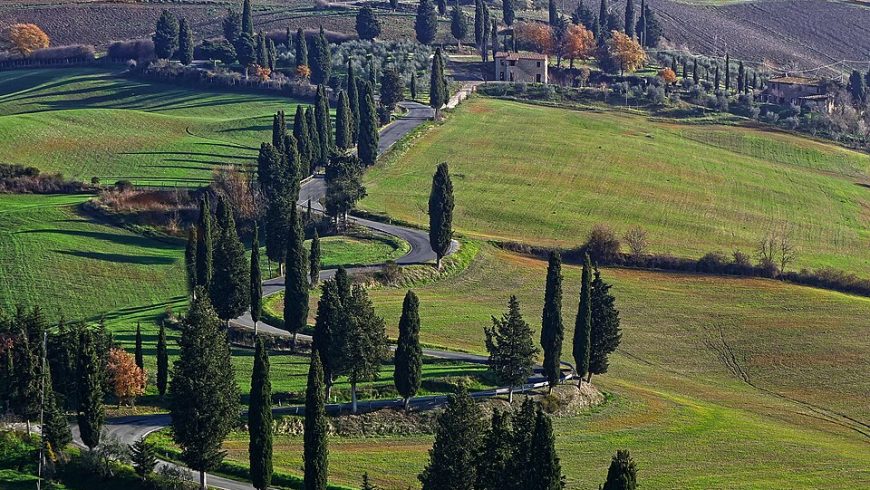
The protagonist of Under the Tuscan Sun (2003) is an American writer who, following a personal crisis, buys a villa in Tuscany and starts life afresh. The filming took place mainly in Cortona (Arezzo). But the famous cypress-lined paths in Monticchiello feature in the film’s most iconic and recognisable scenes.
The panoramic views of the Val d’Orcia with the Crete Senesi and the rows of trees create an atmosphere of suspended enchantment. Monticchiello is an authentic place, where time seems to be frozen. It is precisely this medieval village that has captivated audiences from all over the world.
As mentioned earlier, the film has also brought fame to the picturesque village of Cortona. Strolling through its cobbled alleyways and with views of the olive groves, you’ll feel as though you’re right inside the film.
A slow-paced cinematic tour of Tuscany
Visiting the film sets in Val d’Orcia will allow you to relive those magical cinematic moments. It’s not just an experience to tick off your bucket list. It allows you to truly understand the enchantment that directors felt when choosing these locations to tell their stories.
The ideal approach is that of slow travel: discovering the villages at a leisurely pace, allowing yourself spontaneous detours along scenic dirt tracks. A slow film-themed itinerary in Val d’Orcia could begin in Pienza, exploring Palazzo Piccolomini and Piazza Pio II. These are the settings for Romeo and Juliet and The Medici. You can then continue towards the Pieve di Corsignano to follow the Terrapille path leading to the Elysian Fields from Gladiator. And then, you can admire the silhouette of Poggio Manzuoli from afar near San Quirico d’Orcia. The next stop is the Monastery of Sant’Anna in Camprena to soak up the atmosphere of The English Patient, before rounding off the day amongst the historic alleyways of Montepulciano.
Staying in organic farmhouses amongst the film locations
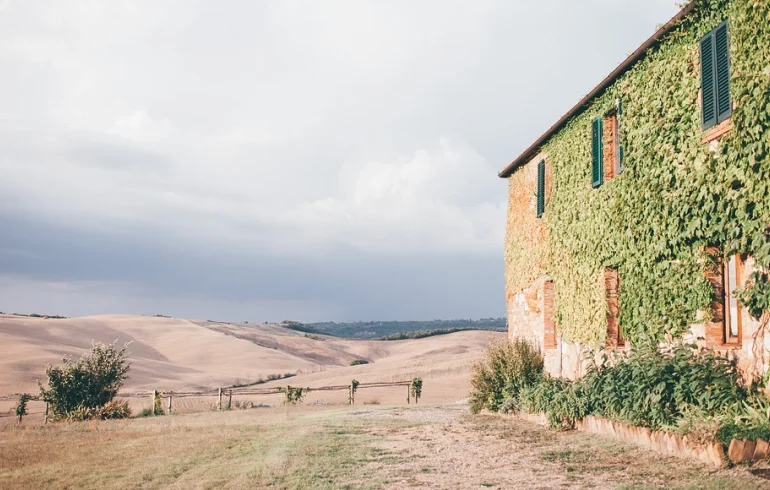
After a day of film tourism, you can spend the night in an organic farmhouse nestled amongst the very same landscapes that have enchanted the world of cinema. Val d’Orcia offers an extraordinary variety of eco-sustainable accommodation options: farmhouses surrounded by nature, where you can savour organic and homemade delicacies whilst admiring some of Italy’s most beautiful views.
Staying at an organic farmhouse amidst the landscapes of the silver screen means transforming a cinematic journey into a complete sensory experience. The very same golden light that Ridley Scott immortalised and the silence that Minghella turned into emotion. You can experience all this.
Discover all the eco-friendly accommodation options in the area on Ecobnb and combine the cinema in Val d’Orcia with a slow, green break. This way, you can explore the valley whilst respecting the local environment, which is a real masterpiece, as the big screen has taught us.
Cover Image: San Quirico d’Orcia – Photo by Andrea Mosti via Pexels