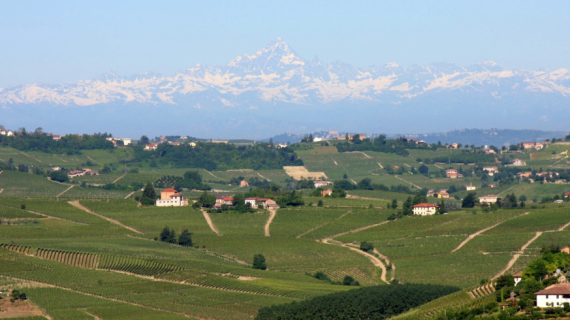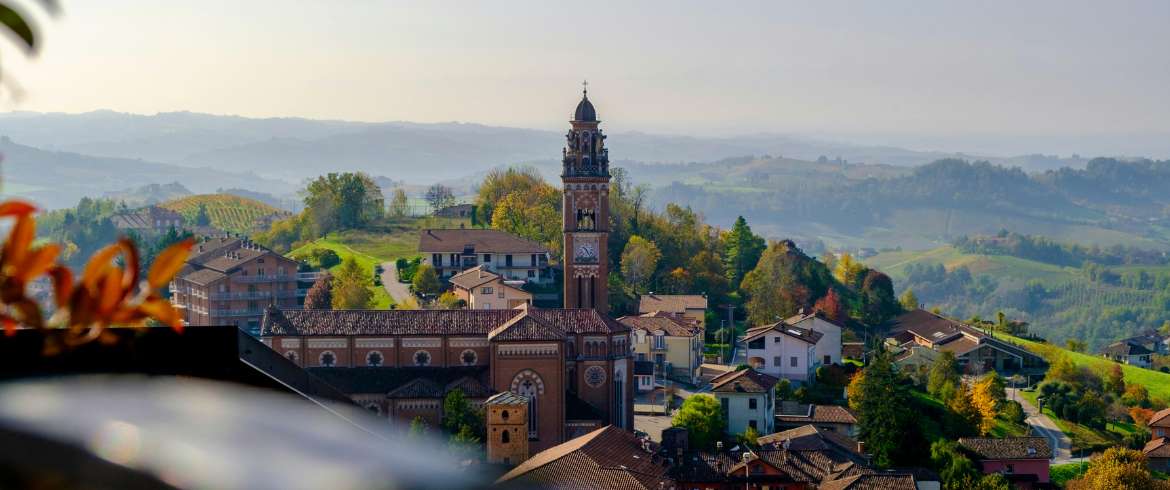
Who said that to take an unforgettable journey you need to go far? Sometimes all it takes is a train, a bicycle, and the desire to explore at a slow pace. Alessandria, in the heart of Piedmont, is a surprising destination for those who love sustainable tourism. A human-scale, flat city easily explored on two wheels, where history and traditions intertwine along accessible and charming routes.
Popular throughout the world for being the home of the famous Borsalino hat, Alessandria also hosts a profound cycling culture. In fact, it is home to one of the most interesting museums dedicated to this vehicle, a symbol of gentle mobility.
Arriving by train, getting on your bike and forgetting your cares: this is the best way to experience the city and its surroundings. Let yourself be guided by elegant squares, museums, historic architecture, and cycle paths that tell the authentic soul of the area.
Ready, set … go!
What to see in a weekend in Alessandria
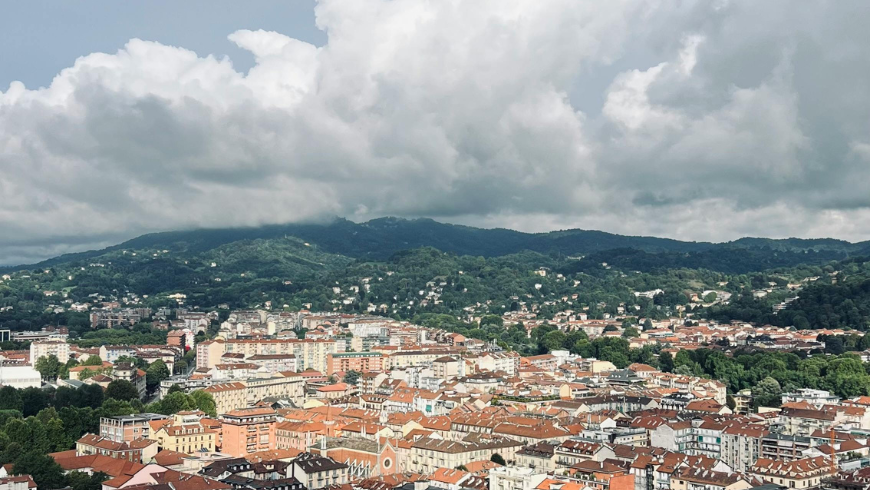
Piazzetta della Lega Lombarda
Piazzetta della Lega Lombarda is the true “good living room” and beating heart of Alessandria.
Characterized by an unprecedented triangular shape, this charming pedestrian area is the ideal meeting point. In fact, here the city’s main streets converge.
The famous 19th-century obelisk stands in the center, erected in memory of the fallen of the Risorgimento uprisings. In addition, all around are elegant historic buildings, which host historic cafes and ice cream shops.
Galleria Guerci
The heart of the city’s shopping, the Galleria Guerci was inaugurated on November 1st, 1895. It still retains all the charm of its elegant 19th-century architecture today.
Even though it was damaged during the Second World War, it was restored and reopened in 1948. Therefore, it became once again one of the city’s symbolic places.
The Synagogue
The Synagogue of Alessandria stands in the area that once housed the city’s Jewish ghetto. It was inaugurated in 1871 after four years of work, and it represents an interesting example of eclectic architecture with Neo-Gothic references.
The facade also shows elegant arched windows and pinnacles that accentuate its verticality.
Arco di Trionfo
At the end of Via Dante Alighieri, you come across the Arco di Trionfo, built in 1768 on the occasion of the visit of Vittorio Amedeo III, Duke of Savoy, and his wife.
Piazza della Libertà
Piazza della Libertà is one of Alexandria’s most important squares, and it’s home to some of the city’s most iconic historic buildings.
Palazzo Rosso and its three clocks
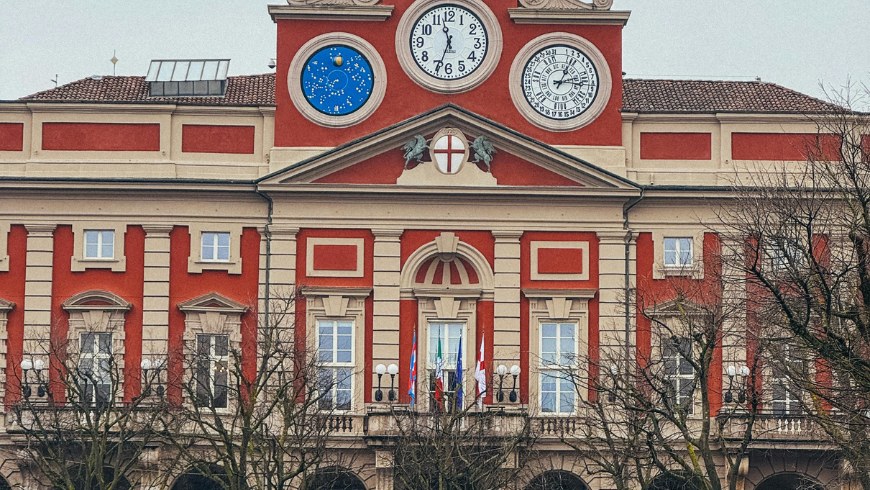
The first unmissable stop in Piazza della Libertà is Palazzo Rosso. This is a splendid 18th-century building that now hosts the Municipality and was once the city’s ancient theatre.
Looking at it, you’ll immediately understand the origin of its name: it derives precisely from the unmistakable and historic brick red color of its facade. Therefore, it is one of the most photographed and easily recognizable spots in Alessandria.
The real peculiarity that will make you roll your eyes, however, lies in the three clocks that adorn the top and form a true astronomical computer from another era. The central dial marks the time, the left dial indicates the phases of the moon, and the right dial functions as a date display, indicating the day and the month.
Palazzo delle Poste and Palazzo Ghillini
Right in front of Palazzo Rosso, however, on the opposite side, there is the Palazzo delle Poste e del Telegrafo (Post and Telegraph Building), with its “detail” futurist-style facade. It is a mosaic almost 40 meters long, by Severini, who wanted to draw on the history of telecommunications.
On the right of Palazzo Rosso, there is Palazzo Ghillini.
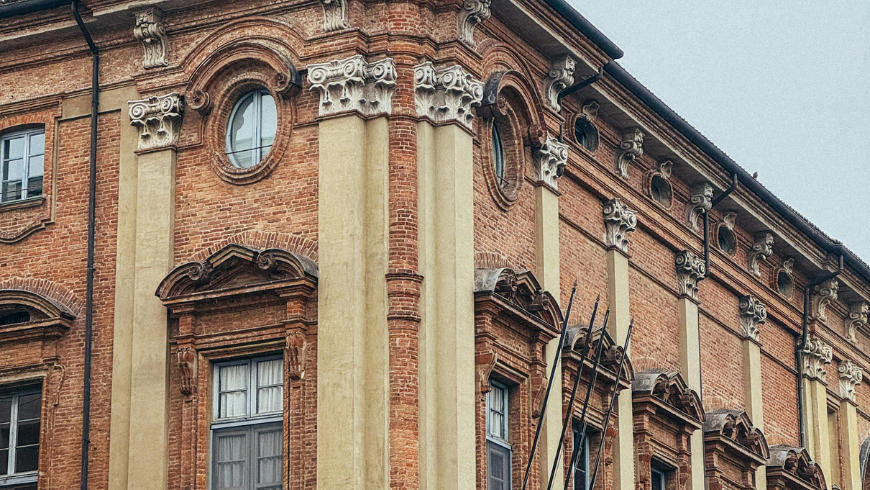
This is undoubtedly one of the most important examples of 18th-century Baroque. It dates back to 1732 on commission from the Maquis Tommaso Maria Ghillini.
Today, it is the seat of the Provincial Administration and the Prefecture.
Palazzo Cuttica
Next to Palazzo Ghillini is Palazzo Cuttica, which dates back to the first half of the 18th century. It was built at the order of the Marquis Luigi Cuttica of Cassine. Here you can see a great variety of styles such as, for example, Baroque and Neoclassical. Today it is home to the Vivaldi Observatory and the Civic City Museum.
Cathedral of St. Peter
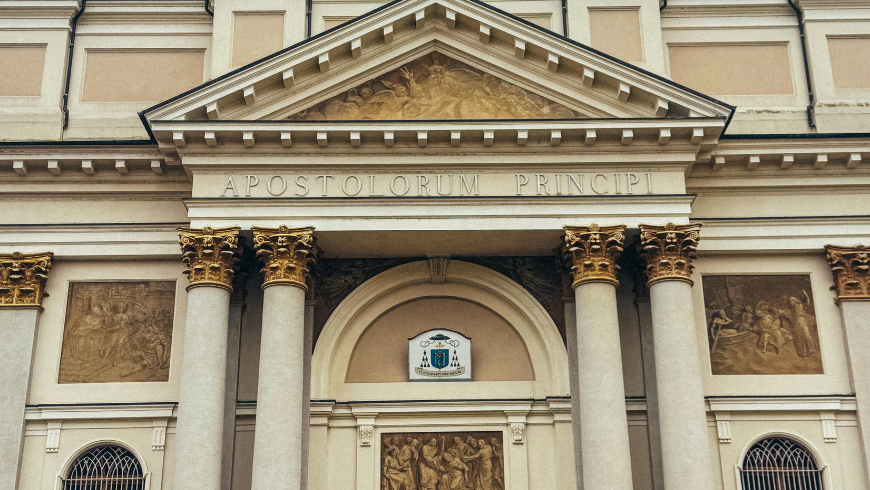
St. Peter’s Cathedral, also known as the New Cathedral, was built in the 19th century on the ruins of the ancient medieval church. Its bell tower is among the tallest in Italy, and inside, there are works of great value.
In the presbytery, however, you can find 5 stained glass windows (1954) representing the immaculate Virgin, Saint Pius V, Saint Baudolino, Saint Paul of the Cross, and Blessed Gregorio Maria Grassi.
Furthermore, the organ (1929) shows facades that decorate the 4 women’s galleries that overlook the presbytery.
Behind the main altar, you can see the 18th-century inlaid wooden choir, on which is the painting by Callisto da Lodi (1546). It depicts Saint Peter between Saint Paul and John the Baptist.
Borsalino Museum
Alessandria is inextricably linked to the Borsalino name, a historic brand that has been producing hats since 1857. The museum chronicles the evolution of costume, fashion, and design through a collection of over 2.000 hats.
Gambarina Museum
In an ancient 18th-century barracks, there is the Ethnographic Museum “Once Upon a Time”. It recounts the peasant, artisan, and popular life of the province between the 19th and the 20th century.
Personally, I really appreciated the reconstructions of the domestic environments and, in particular, the classroom from the 1930s.
The Art rooms
The Art rooms of Alessandria are a perfect destination if, like me, you love art. It consists of four exhibition sections ranging from the Middle Ages to the 20th century.
The Gallery of Modern and Contemporary Art
You can find the Gallery of Modern and Contemporary Art in the former Hospital of the Sick. It offers temporary exhibitions of both international and national artists.
Bicycle Museum
Alessandria is considered one of the Italian cycling capitals. It was here that one of the first bicycles seen in our country arrived, brought by the entrepreneur Michel after discovering it at the Universal Exhibition in Paris in 1867.
The Acdb Museum, in Palazzo Monferrato, recounts this extraordinary tradition through vintage bicycles, historical memorabilia, dedicated also to cycling great figures like Coppi and Girardengo.
The Citadel
The Citadel of Alessandria was built in 1728 by order of Victor Amedeus II, and it is one of the most important European fortifications still preserved.
With its characteristic star plan, the six bastions and moats that surround it, it represents one of the symbols of the city. To reach it, you need to cross the Tanaro passing over the evocative Meier Bridge.
Marengo Museum
A few kilometers from the center is the Marengo Museum, dedicated to the famous Battle of Marengo
It lies in the historic Villa Delavo, and it preserves artifacts, memorabilia, and contemporary works related to the event that changed European history. Furthermore, outside there is a large park with a war memorial.
The museum is easily accessible by bicycle thanks to the approximately 6-kilometer cycle/pedestrian path that connects the city center to the Marengo area.
I recommend you take a look at the site to see if it has reopened, as it is currently closed pending a new operator.
Alessandria: a city to discover slowly
Alessandria is the perfect destination for those who want to slow down and discover Piedmont sustainably. From the bicycle museum to elegant historic architecture, cycling routes, and symbolic places of local culture, the city offers an authentic and surprising experience.
Here, the journey is not measured in kilometers traveled. It is measured in the pleasure of moving slowly, observing the details, and letting yourself be told the stories of a territory rich in traditions. If you love cycling and off-the-beaten-path destinations, Alessandria could be your next getaway for a green weekend.
Cover photo: via Canva PRO