Most tourists come to Bilbao for the Guggenheim. We came for the coast. More precisely, we came to Sopelana, a small seaside town north of Bilbao, drawn by its beaches, spectacular cliffs and Atlantic waves, perfect for surfing. As passionate surfers, it felt natural to choose a place where the sea could take center stage.
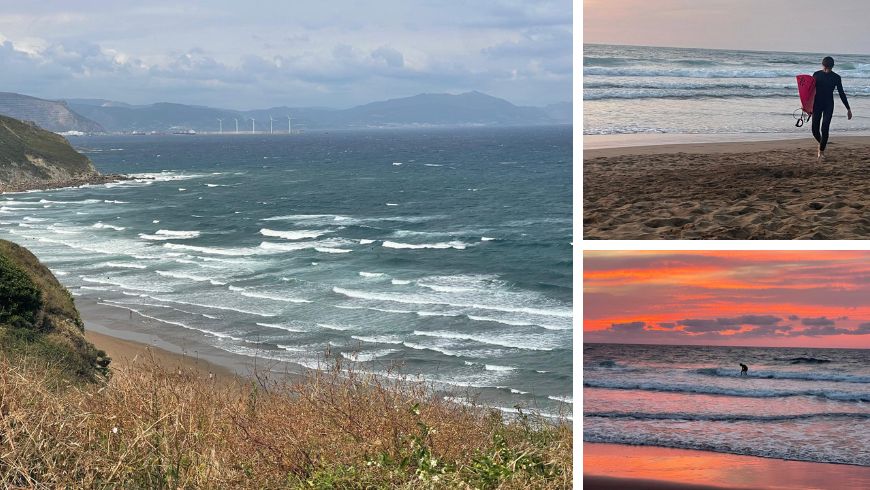
What we hadn’t expected was just how perfect Sopelana would become as a base for exploring not only the coast, but also Bilbao. We stayed for almost three weeks, with our dog, and never ran out of things to do. Every day could be different: a morning on the beach, a hike along the cliffs, a bike ride, a new cove to discover, or a day in Bilbao. And getting to the city didn’t require a car: the metro connects Sopelana with Bilbao in about 35 minutes, with very frequent services (every 10 minutes during the day and every 20 minutes at night on weekends).
It was precisely this combination that made us realize how interesting this part of the Basque Country is for a slower, more sustainable holiday: you can enjoy the sea and nature without giving up culture and urban life, using public transport to move between these two worlds.
Instead of visiting Bilbao in a weekend, rushing from one attraction to another, why not stay longer and let the landscape set the pace of your journey?
Sopelana: Surfing, Beaches and Cliffs
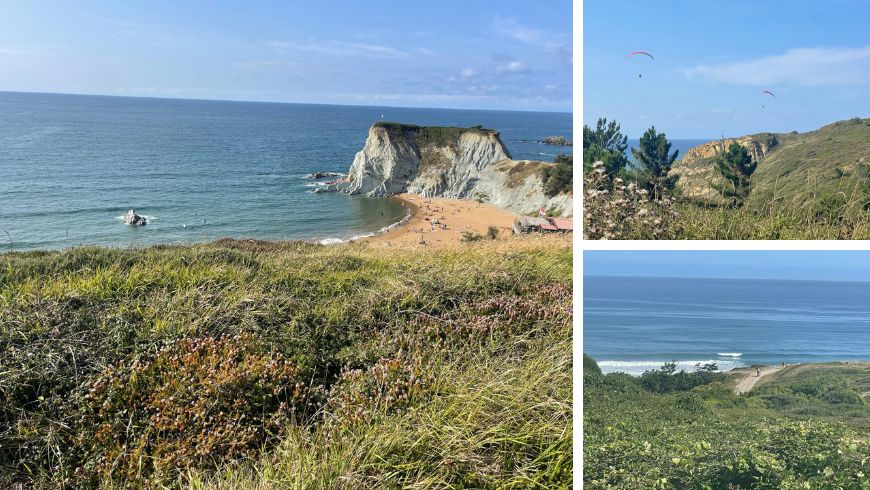
Sopelana is very different from Bilbao, and that is precisely its strength.
The beaches of Arrietara–Atxabiribil, Barinatxe-La Salvaje and Menakoz are surrounded by high cliffs and green meadows and attract surfers from all over Europe.
For us, surfing was naturally one of the main attractions. But you don’t have to be a surfing enthusiast to appreciate the landscape. You can walk along the cliffs, cycle between the coastal viewpoints, watch seabirds or simply stop and gaze out at the Atlantic.
One of the things I loved most was having the chance to return to the same places again and again. The coast is constantly changing with the tides, wind and light. A beach visited in the morning can look completely different in the evening. This is one of the reasons why a longer holiday can be so enjoyable: there is no need to see everything at once.
Walking Along the Coast to Getxo
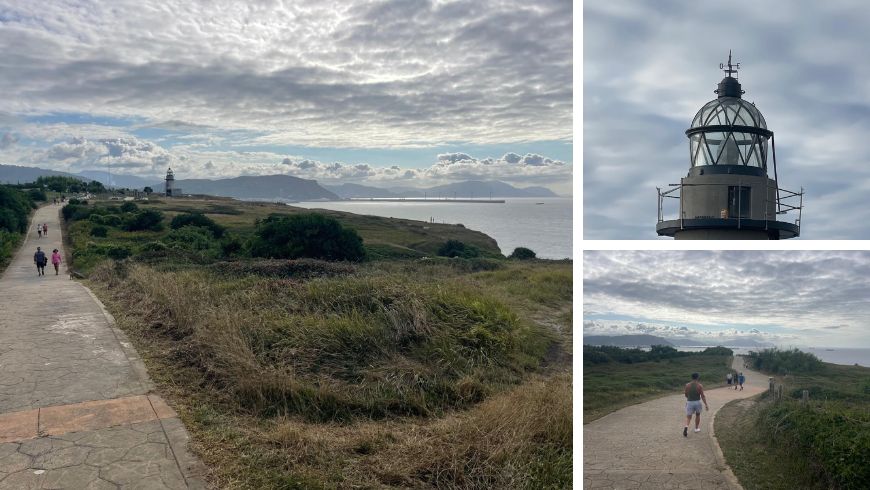
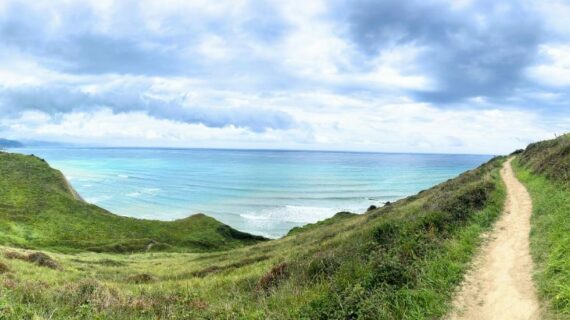
One of the most beautiful routes starts from the beaches of Sopelana and follows the coast towards Punta Galea and Getxo. In around two hours, depending on how often you stop, you can reach Molino Aixerrota, the historic windmill overlooking the sea.
Along the way, you’ll find spectacular cliffs, coastal meadows, panoramic viewpoints, birds to watch and beaches where you can go down to the water.
It is a route to experience slowly, stopping whenever the landscape invites you to.
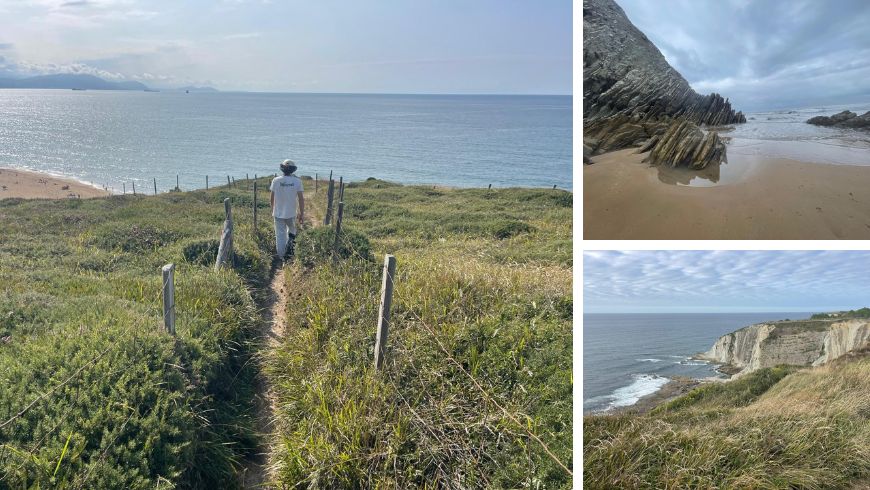
The coast then continues towards Getxo, from where you can either return to Sopelana or continue towards Bilbao by public transport.
These trails are part of the route of the Northern Way to Santiago de Compostela. You don’t need to walk hundreds of kilometres to experience the spirit of the Camino: even a few hours on foot can become a small exercise in slow travel.
A Surprisingly Dog-Friendly Coast
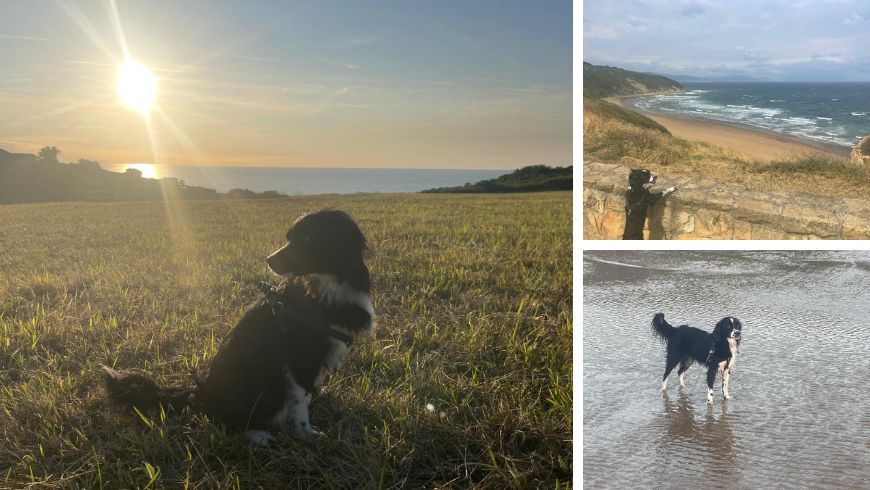
Travelling with a dog can sometimes make choosing a destination more complicated. In Sopelana, it was exactly the opposite.
Dogs are everywhere, and many of them are remarkably well behaved. It is quite common to see some off-leash, always under their owners’ control.
There are more secluded dog-friendly beaches, such as Meñakoz hondartza. These are wilder, quieter corners where you often encounter very few people and can easily find an atmosphere completely different from that of the better-known beaches.
But even on the main beaches, you can access the shore with your four-legged friend after 8 pm. At sunset, Sopelana’s long stretch of sand comes alive with dogs running, playing, padding along the water’s edge and diving into the waves alongside their owners.
A simple image, but one that perfectly captures the spirit of Sopelana: sporty, informal and deeply connected to the outdoors.
San Juan de Gaztelugatxe: Discovering the Coast at a Slower Pace
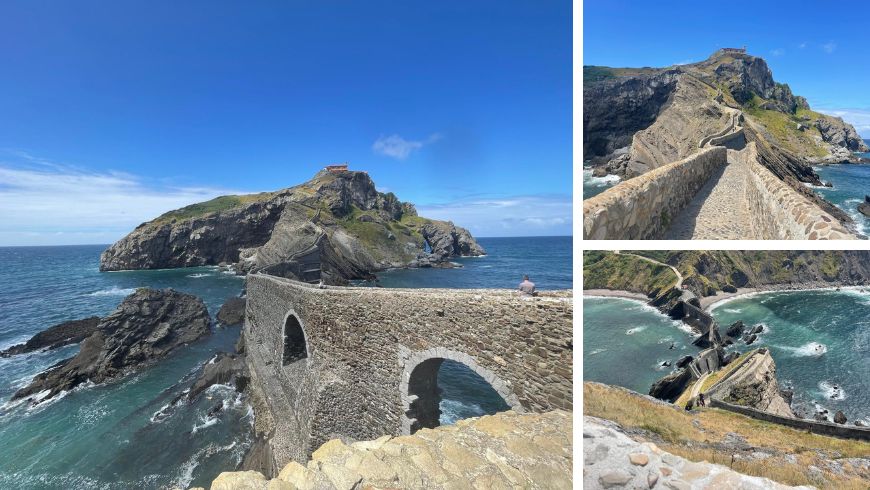
A longer stay also gives you the chance to explore other places along the Basque coast.
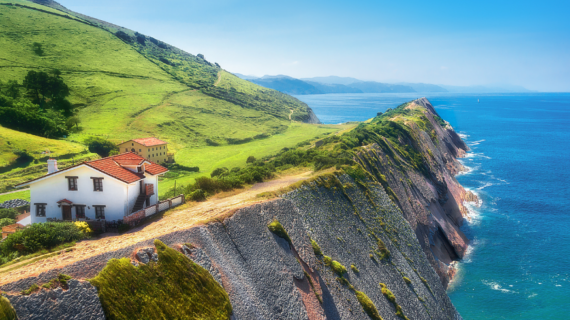
Among the most spectacular is San Juan de Gaztelugatxe, the rocky islet connected to the mainland by a stone bridge and crowned by a small hermitage.
Its international fame also grew thanks to Game of Thrones, but the real appeal of the place lies in its landscape: cliffs, waves, rocks and a spectacular staircase leading up to the hermitage.
The high number of visitors has led to measures being introduced to manage visitor flows and, during the busiest periods, free access must be booked in advance.
This is another example of how sustainable tourism is not only about choosing how to travel, but also about learning to visit fragile places while respecting their limits.
From the Coast to Bilbao Without a Car
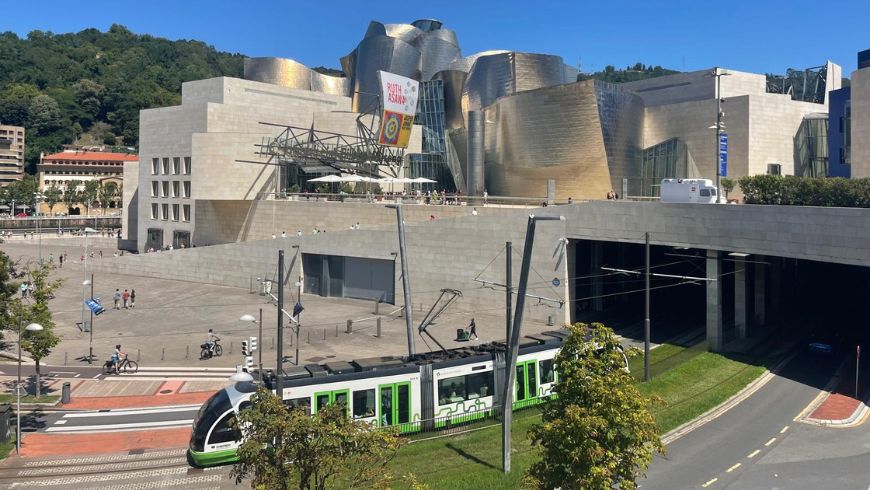
At some point, after days spent between beaches and trails, the time naturally comes to take the metro. From Sopelana, Bilbao can be reached in around 35 minutes, and the frequency of the trains makes it possible to plan your day without having to follow a rigid schedule.
A practical tip: if you plan to use the metro several times, it is worth buying an anonymous, rechargeable Barik card. You can purchase one directly from the ticket machines at metro stations: the card costs €3 and the minimum top-up is €5. You can load the Creditrans wallet onto the card, and the cost of each journey is automatically deducted. In 2026, the discounted metro fares are €1.02, €1.19 or €1.30, depending on the zones crossed, compared with €2.00, €2.20 or €2.25 for a single-use ticket.
There is another particularly useful advantage for families: an anonymous Barik card can be used by the same person for multiple travellers travelling together, up to a maximum of 10 people. You simply make consecutive validations both when entering and leaving the metro.
In practice, a single card can be enough for the whole family, making getting around not only more affordable but also easier. Metro Bilbao itself recommends using a Barik card and topping it up in advance to avoid queues at the ticket machines, especially during busy periods.
This way, a morning at the beach can turn into an afternoon at the museum. A walk along the cliffs can be followed by dinner in the city. And there is no need to look for parking or deal with traffic.
Arriving in Bilbao after spending days on the coast also gives you a different perspective on the city. Because this is not simply a city famous for one museum. It is a city that has profoundly transformed its relationship with its surroundings over the past few decades.
Bilbao: The City That Reinvented Its Estuary
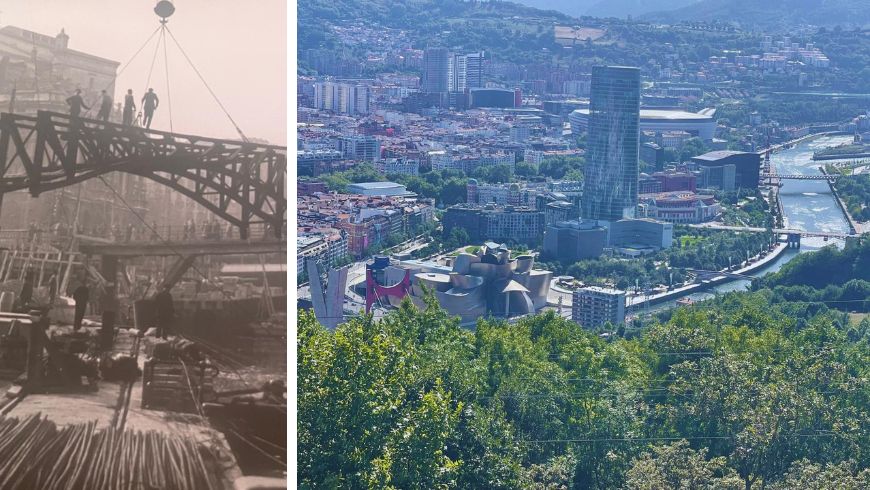
For generations, the Bilbao estuary was at the heart of a major industrial economy.
Shipyards, factories, warehouses and port infrastructure occupied the riverbanks, while industrial activity profoundly shaped the landscape and everyday life of the city. When traditional industries went into decline, Bilbao faced an enormous challenge: how could it reinvent itself without erasing its industrial identity?
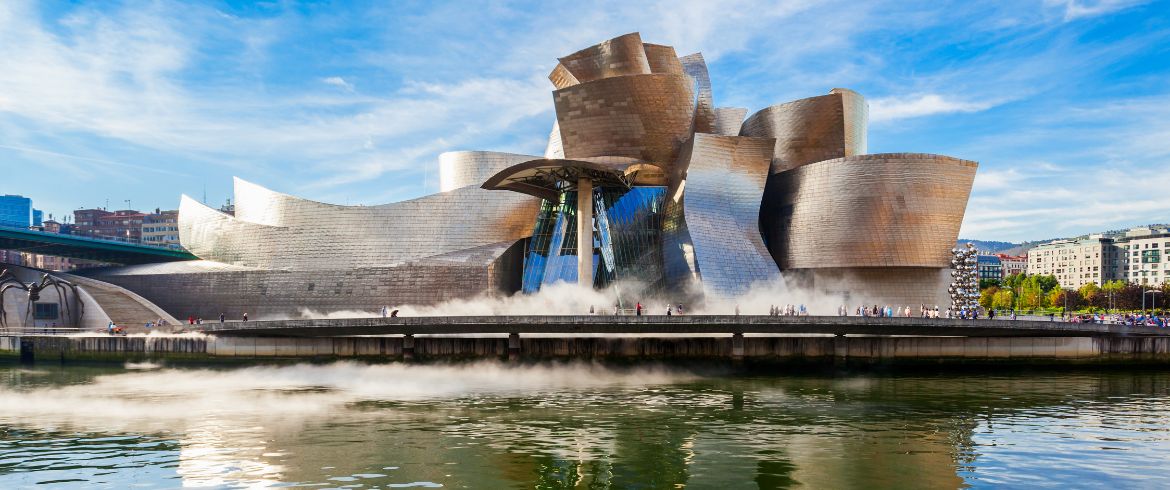
The answer came through a long process of urban regeneration. The opening of the Guggenheim Museum Bilbao in 1997, designed by Frank Gehry, became its most famous symbol.
The so-called “Bilbao Effect” describes precisely the ability of a major cultural and architectural project to contribute to a city’s transformation and international visibility.
But stopping at the Guggenheim would mean telling only part of the story.
The Guggenheim: Architecture, Light and Matter
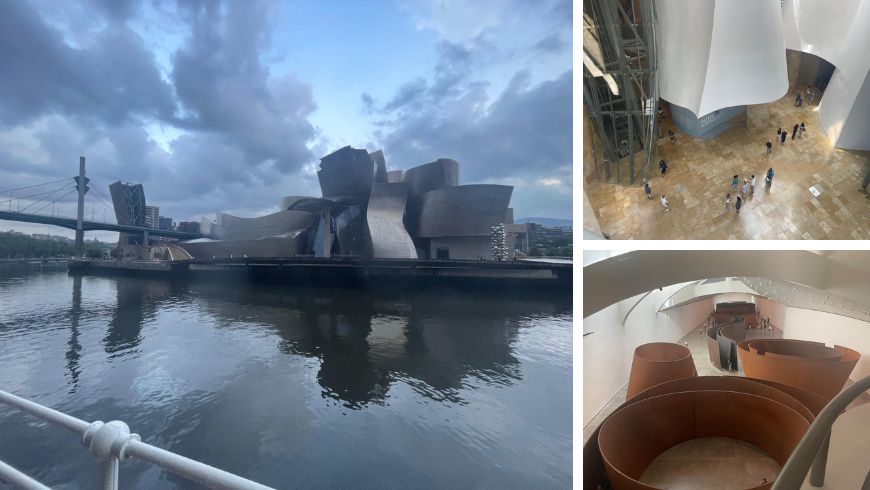
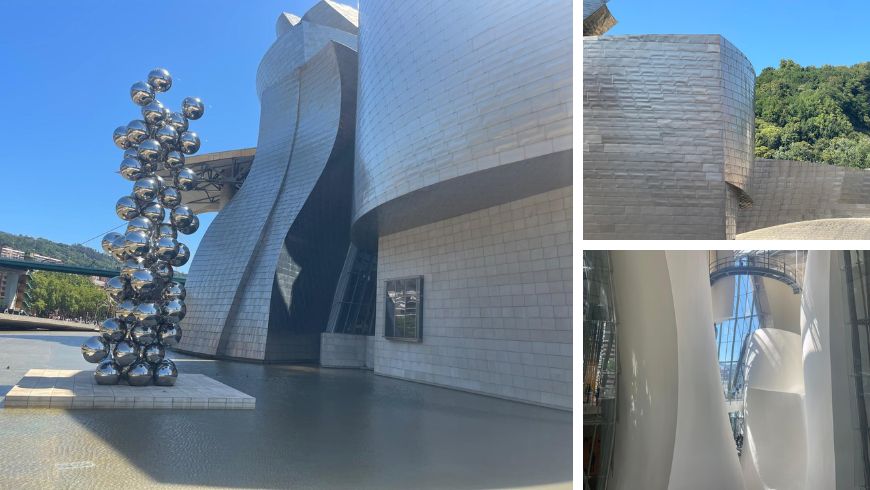
The museum was conceived as an inhabitable sculpture. Its titanium surfaces, made up of thousands of thin curved panels, reflect the Atlantic light differently throughout the day: cool and silvery in the morning, warmer and more golden at sunset.
The building, designed by American architect Frank Gehry, has no single main façade. Instead, it is designed to be explored and viewed from every angle, particularly from the Ría.
Inside, the exhibition spaces are deliberately flexible and monumental, designed to accommodate large-scale installations.
One of the most fascinating features is the constant relationship between inside and outside: some of the works engage directly with the urban landscape and the water surrounding the museum.
The Guggenheim and Sustainability
The Guggenheim has naturally become the city’s most famous landmark. But today, the museum is also interesting for the work it is undertaking in the field of environmental sustainability.
The Guggenheim has developed a strategy aimed at achieving climate neutrality by 2030, focusing on energy, renewable sources, waste management, exhibition materials, logistics, conservation and environmental education.
In 2024, 300 solar panels were installed on the museum’s roofs, helping to generate renewable energy and reduce consumption. Since June 2024, moreover, all the electricity used by the museum has come from sustainable sources. Other measures include LED lighting, optimised climate-control systems and greater attention to the circularity of exhibition design and materials.
The museum also offers a Green Tour, exploring the relationship between selected works in the collection and environmental issues. And it is through art that these themes become particularly compelling.
The Guggenheim Green Tour: Seeing Art Through Different Eyes
The Green Tour is a roughly 60-minute route that invites visitors to look at selected works from the permanent collection through the lens of environmental sustainability.
It is a self-guided itinerary that takes you through different areas of the museum, introducing a question, a curiosity or a different connection between art and nature at each stop.
It is not a technical tour about the museum’s own sustainability practices, but rather a way of discovering how themes such as water, vegetation, the atmosphere, climate and our relationship with the planet can become part of the artistic experience.
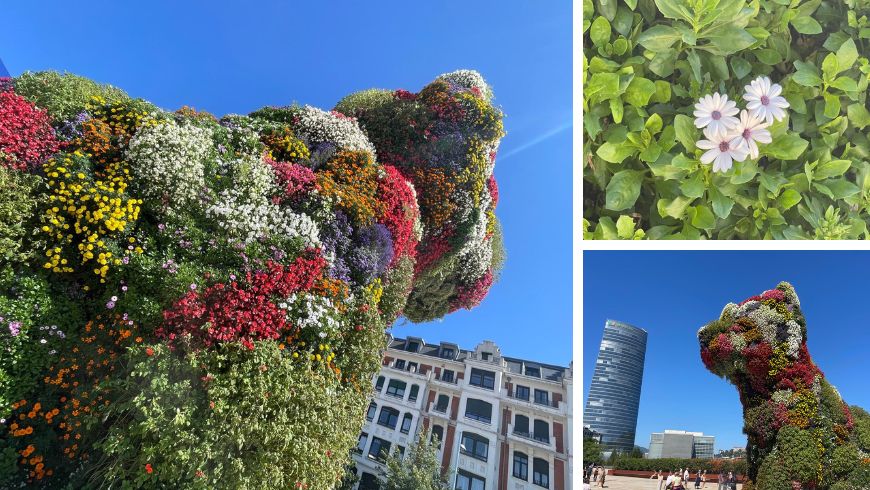
The tour begins outside, in front of Puppy, Jeff Koons’ gigantic floral dog. It is difficult to imagine it as a “living” work of art, yet it literally is: the structure is covered with around 35,000 flowering plants, which change with the seasons. Begonias, petunias, lobelias and other varieties form a kind of living skin that continually transforms the appearance of the sculpture.
Inside the Atrium, you encounter Jenny Holzer, who uses light and words to convey messages connected to society, politics, war and the human condition. The tour invites you to reflect on how even something seemingly immaterial, such as light, can become a powerful artistic and communicative medium.
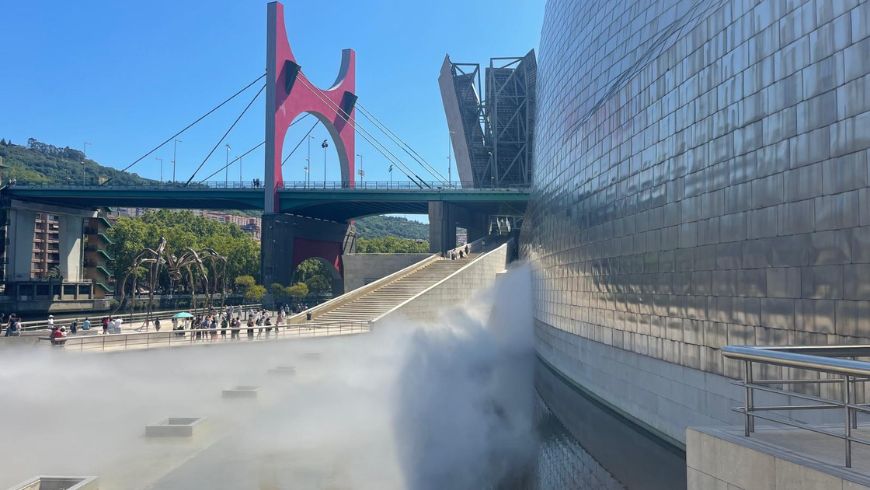
But one of the stops I found most intriguing is dedicated to Fujiko Nakaya’s fog. On the terrace overlooking the Ría, the Japanese artist transforms water and atmosphere into a true sculptural material.
The fog is produced by a system of pumps hidden beneath the edge of the pond and constantly changes according to the conditions of the air and the surrounding environment.
You step inside the artwork itself. The fog appears, moves, changes shape and disappears according to the weather conditions. Every encounter is different.
It is an artwork that is almost impossible to truly “photograph”: you have to be there, wait and observe as water, air and light transform before your eyes.
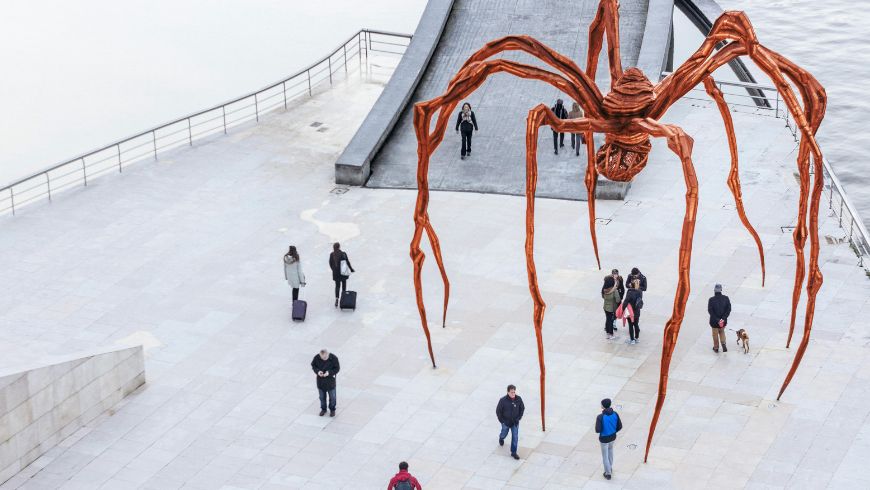
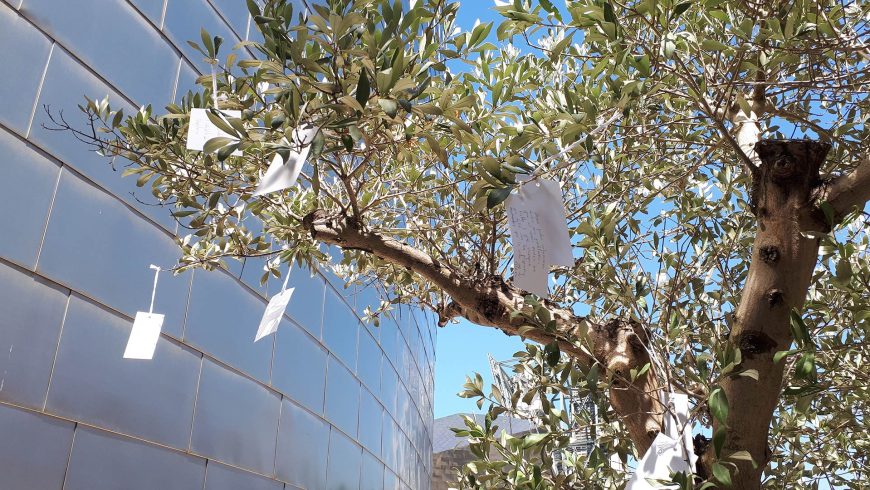
From here, the route also leads to Maman, Louise Bourgeois’ enormous spider, almost nine metres tall, and to Wish Tree for Bilbao by Yoko Ono, a participatory artwork inviting visitors to express a wish for peace.
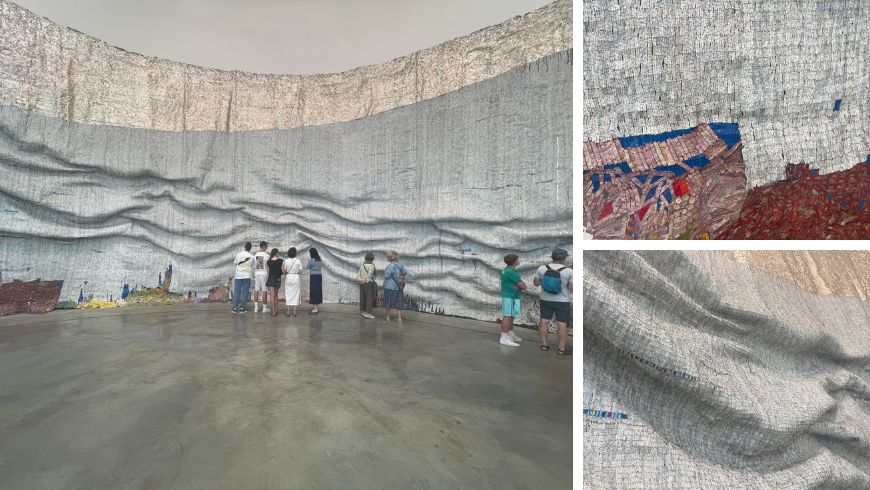
But it is in the final part of the tour that the environmental theme becomes more direct, with Rising Sea by Ghanaian artist El Anatsui. His large metal sculpture, created by assembling countless small elements, draws on African artistic traditions while taking on a contemporary and global dimension.
From a distance, it looks almost like an enormous precious textile. As you move closer, however, individual fragments emerge, assembled by the artist into a shimmering, fluid surface.
Rising Sea by El Anatsui is in fact a large installation made from thousands of metal fragments and discarded materials. The title, Rising Sea, evokes rising sea levels and climate change.
After spending days watching the waves from the cliffs of Sopelana, suddenly the sea is there inside the museum. Visiting the Guggenheim can therefore become an opportunity to reflect on water, vegetation, the atmosphere and climate change, revealing a surprisingly natural thread between the landscape outside and the world of art.
Azkuna Zentroa: Philippe Starck’s Cultural Centre
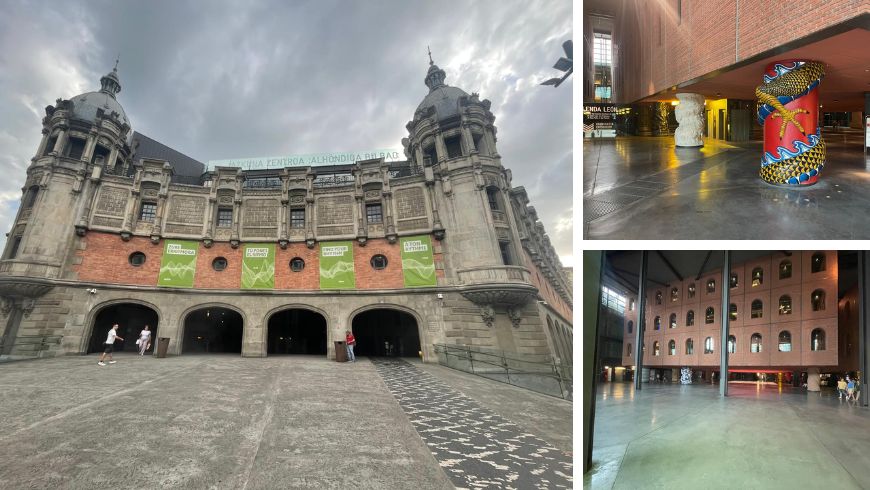
Another important example of urban regeneration can be found in the heart of Bilbao. Azkuna Zentroa – Alhóndiga Bilbao, redesigned by French architect Philippe Starck, is one of the city’s most interesting examples of adaptive reuse.
The original building was a large wine warehouse, constructed at the beginning of the 20th century. Starck chose to preserve the historic brick exterior, elegant and monumental, maintaining the building’s connection with its past.
Inside, however, the space was completely transformed and divided into three independent volumes: a media library, a sports centre with a swimming pool and a large space dedicated to art and exhibitions. Below the main level, there are also numerous exhibition rooms, cinemas and cultural spaces.
One of the most striking features is the large covered square, a kind of contemporary agora surrounded by 43 columns, each one different, designed by Italian artist Lorenzo Baraldi. No two are alike: together they create the impression of being inside an artificial forest made up of different shapes, colours and materials.
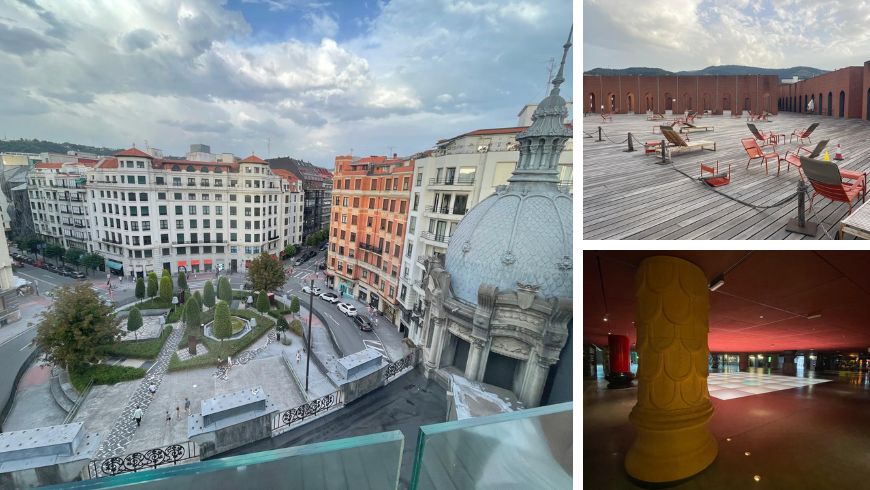
Above the complex is a large public terrace, open and filled with light, offering surprising views over Bilbao’s rooftops. It is a suspended urban space designed as a place to meet, relax and pause, fully integrated into the city.
Azkuna Zentroa shows how sustainability can also take the form of intelligent reuse of existing buildings, transforming them into vibrant, multifunctional places that are open to everyone.
Zorrotzaurre: Bilbao’s Next Chapter
To see how Bilbao’s transformation is still unfolding, simply leave the Guggenheim and follow the Ría towards Zorrotzaurre.
Once an industrial and port district, the area is now undergoing a major transformation into a new neighbourhood with homes, cultural spaces, public areas and green spaces.
What makes Zorrotzaurre particularly interesting is that the transformation is still underway and therefore remains visible. Old industrial buildings coexist with new architecture. The traces of the area’s productive past have not disappeared; instead, they are becoming part of a new urban landscape.
The project also includes measures related to flood protection, water management and the creation of new public and green spaces, while looking towards the future through smart city solutions.
Renewable energy, highly energy-efficient buildings, electric mobility, intelligent energy management and storage systems, as well as geothermal and hydrothermal technologies, are all part of the vision for Zorrotzaurre as a new low-emission neighbourhood. The goal is to experiment with an urban model in which architecture, technology and sustainability work together, transforming a former industrial area into a more resilient, liveable and connected place.
Bilbao to Be Experienced at a Slower Pace
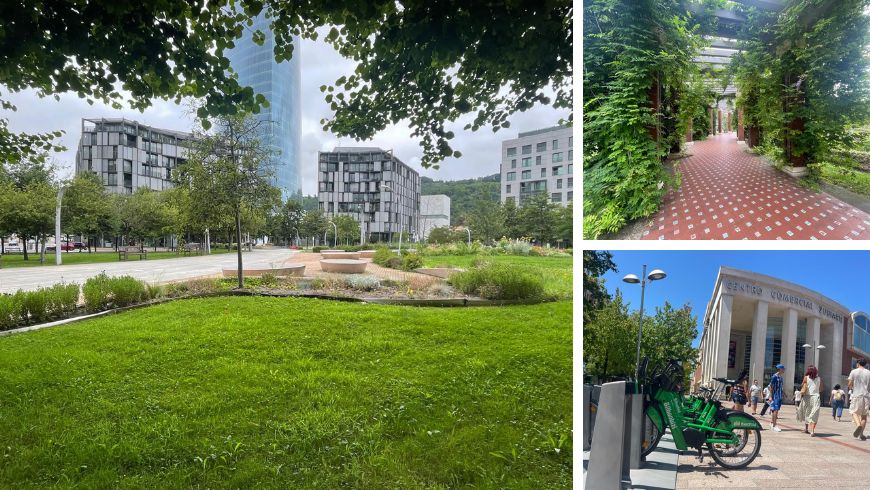
Once you arrive in the city, many of the most interesting places can be reached on foot. Following the Ría allows you to observe Bilbao’s urban transformation almost as if it were an open-air journey.
From the Guggenheim, you can continue towards Doña Casilda Park, walk on towards the city centre and reach Azkuna Zentroa. If you prefer to move faster or cover longer distances, there is also Bilbaobizi, the city’s public bike-sharing service, with stations across Bilbao. You can pick up a bike and return it at another station elsewhere in the city.
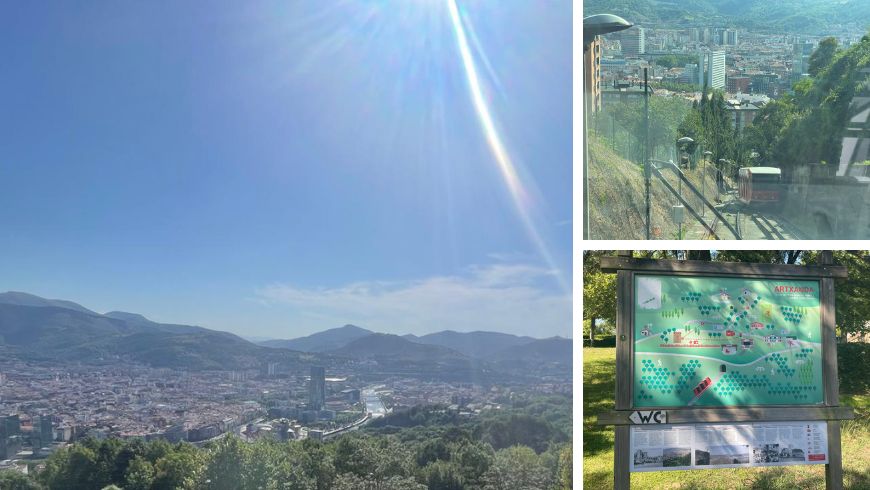
Or you can change perspective and head up to Artxanda, where Bilbao appears surrounded by green hills. It is an important image for understanding the city: Bilbao is not simply a transformed industrial metropolis, but an urban centre embedded in a natural landscape. It is precisely this relationship between the city, the water and the surrounding hills that makes its regeneration so fascinating.
Bilbao Beyond the Guggenheim
The Guggenheim changed Bilbao forever. And perhaps it is worth remembering that, during the years of industrial crisis, no one could have imagined that Bilbao would one day become a destination capable of attracting visitors from all over the world. The museum, inaugurated in 1997, helped change that perception and became the symbol of a much broader urban transformation.
After spending almost three weeks in Sopelana, I began to see the Guggenheim as part of a much bigger story: that of a city that is still reinventing itself today, between culture, nature and new ways of experiencing its surroundings.
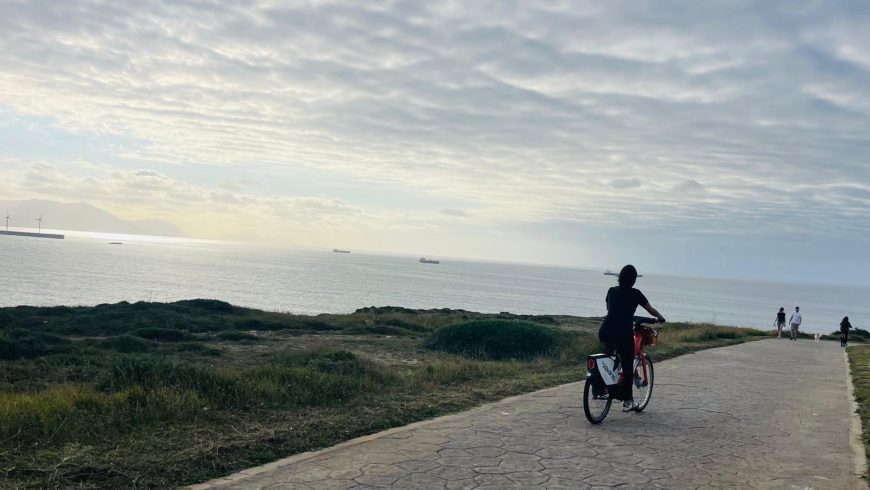
Walk along the cliffs from Sopelana towards Punta Galea. Watch the surfers. Explore the beaches. Take your dog for a run on the sand in the evening. Follow the coastal paths by bike. Let the weather shape your plans.
Then take the metro to Bilbao. Follow the Ría. Explore Zorrotzaurre. Step inside Azkuna Zentroa. Discover how an industrial city has learned to reuse its spaces and reinvent itself. And then, finally, visit the Guggenheim.
Admire its architecture, of course. But also look beyond it: the museum’s environmental commitment and the way artists can help us rethink our relationship with nature.
Stand in front of Rising Sea and think about the ocean you have just left behind. Look at Puppy and the living plants covering its enormous structure. Step into Nakaya’s fog and experience water and air as artistic materials.
At that point, the Guggenheim will no longer feel like the destination. It will become a chapter in a much broader journey, from the Atlantic coast to the heart of a city that continues to reinvent itself.
And perhaps this is the best way to understand sustainable travel. Not seeing more in less time, but staying long enough to see a place through different eyes.
Cover image: photo via Canva PRO