
A breath of fresh air in Southeast Asia’s motorbike capital… discover how green transportation in Hoi An Vietnam is reshaping mobility in this UNESCO heritage town.
Vietnam’s Motorbike Nation Meets a Quiet Revolution
The numbers speak for themselves: Vietnam is home to over 77 million registered motorbikes, roughly 770 bikes per thousand people. It is the world’s highest motorcycle ownership rate! In major cities like Hanoi and Ho Chi Minh City, scooters and motorbikes dominate the streets all day long. But Hoi An, a small town next to the third largest city in Vietnam, Da Nang, is showing a different way to embrace green transportation in Vietnam.
This two-wheeled Vietnamese culture has its unique energy, but at the environment’s cost. Indeed, air pollution, noise, and emissions have become impossible to ignore. Yet change is coming. And it’s starting in the heritage town of Hoi An, which is lighting the way toward a greener future.
Nestled along the Thu Bon River in central Vietnam, this UNESCO-listed town isn’t just preserving its ancient architecture. It’s also pioneering a transformation in green transportation that could help reshape how Vietnam moves. One pedal stroke and an electric motor at a time.

From Urban Chaos to Coastal Calm
My first encounter with Vietnam’s motorbike culture came on Lunar New Year’s Eve in Ho Chi Minh City. The scene was spectacular: fireworks exploding overhead, crowds gathering in festive anticipation, and thousands of motorbikes moving through the streets in synchronized flow. There’s something hypnotic about it, the way riders navigate tight spaces with confident precision.
However, beneath this energy lay something else.
The constant noise can become a distraction. The thick, grey sky exposed the pollution. My partner and I, having arrived with intentions to stay long-term in Vietnam and build sustainable practices, found ourselves wanting something different: quieter streets, cleaner air, and spaces where life moved at a more natural human pace.
That search led us to discover how Hoi An, Vietnam is embracing green transportation. What we found there surprised us.
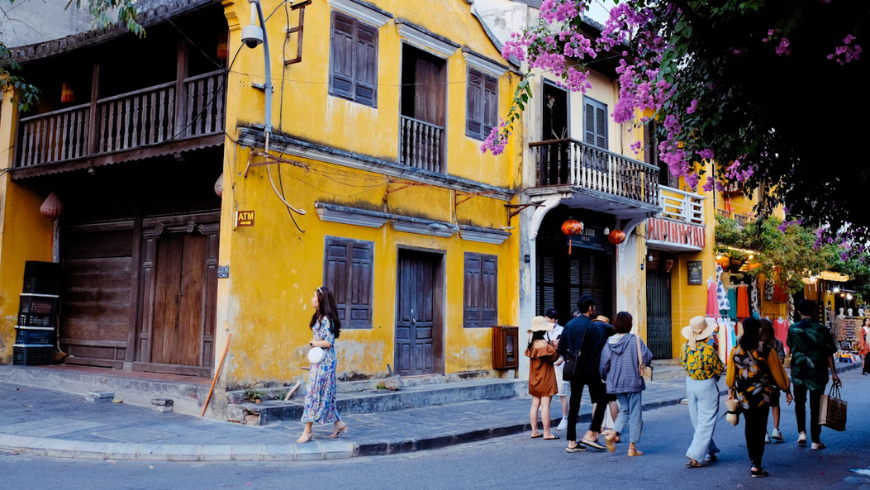
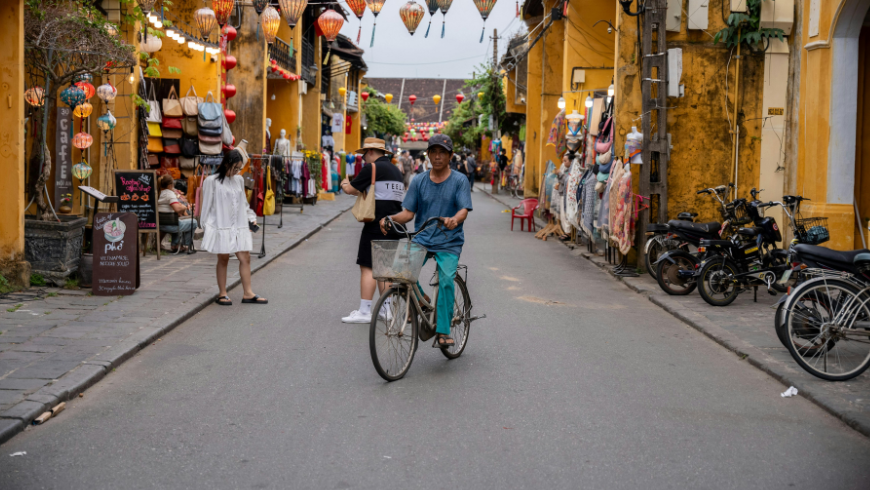
The difference was clear from the moment we arrived. Narrow streets invited exploration rather than intimidation. Pedestrian-friendly lanes replaced motorbike-choked roads. The central heritage zones, protected by thoughtful urban planning, offered a taste of what Vietnamese countryside urban life could become: calmer, cleaner, and more breathable.
Green Transportation in Hoi An Vietnam: How the City Is Leading the Change
While Vietnam’s government pushes electric vehicle incentives nationwide, transforming major cities like Hanoi (where registered motorcycles exceed six million) presents enormous challenges.
However, Hoi An has discovered an advantage in its size. This small town is using its manageable scale to implement effective measures. How? By transforming itself into a living laboratory for sustainable urban mobility.
Pedestrian Zones and Car-Free Streets in Hoi An Vietnam
The Old Town now has pedestrian-only zones during peak hours, serving two purposes. First, it protects the fragile heritage architecture from constant vibration and pollution. Second, it gives visitors and residents the gift of relative silence.
When evening falls, and locals head out for dinner or drinks, they increasingly choose to walk rather than ride. It unlocks a discovering experience that’s richer, healthier, and more socially connected.
The Old Town, with its peak-hour vehicle restrictions and compact layout, is perfect for foot or pedal exploration. The experience is best in the soft light of early morning. Or during the evening when the lanterns light up. Walking or cycling during these hours transforms sightseeing into something closer to meditation.
Electric Motorbikes and Battery Swaps (VinFast)
The electric motorbike revolution has arrived in Hoi An, with e-scooter rental services throughout the town. During our extended stay, my partner and I rented an electric bike instead of a traditional petrol-powered one. The difference was eye-opening. Our e-bike offered a maximum speed of 50 km per hour – more than enough for navigating Hoi An’s roads and surrounding countryside.
But here’s what made it brilliant: there was no need for daily charging. Instead, we simply visited one of the rental branches (there was one literally next door to our gym) whenever the battery ran low and swapped it for a fully charged one. The entire exchange took less than two minutes, working exactly like refilling a soft drink at a fast-food restaurant, except we were refuelling our transportation.
The experience proved cheaper, faster, and dramatically better for the environment. We could explore the rice paddies at dawn, ride to hidden beaches without guilt, and return to town without contributing to air pollution. We haven’t looked back since.
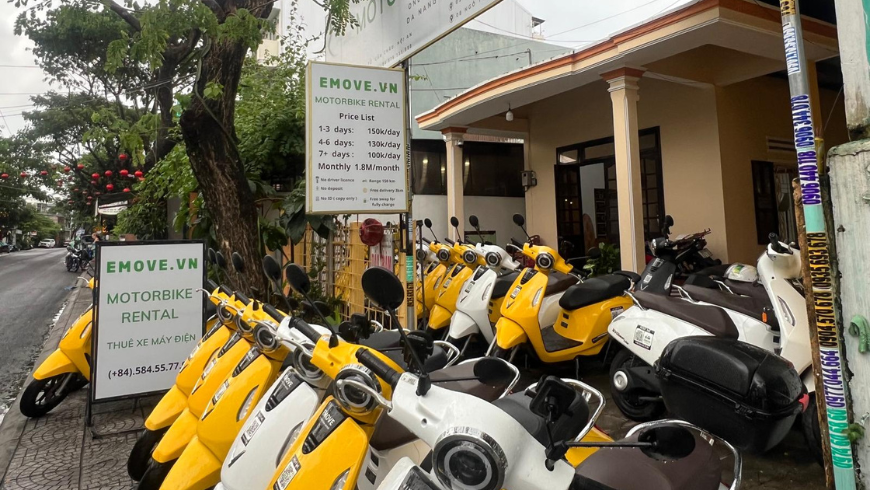
Several rental services throughout town now promote e-scooters and electric bikes as their premium offerings. Local companies partnering with VinFast’s battery-swap model make electric motorbike rental as convenient as traditional petrol bikes, with the added benefit of zero emissions (and zero money towards fuel).
Electric Shuttle Services
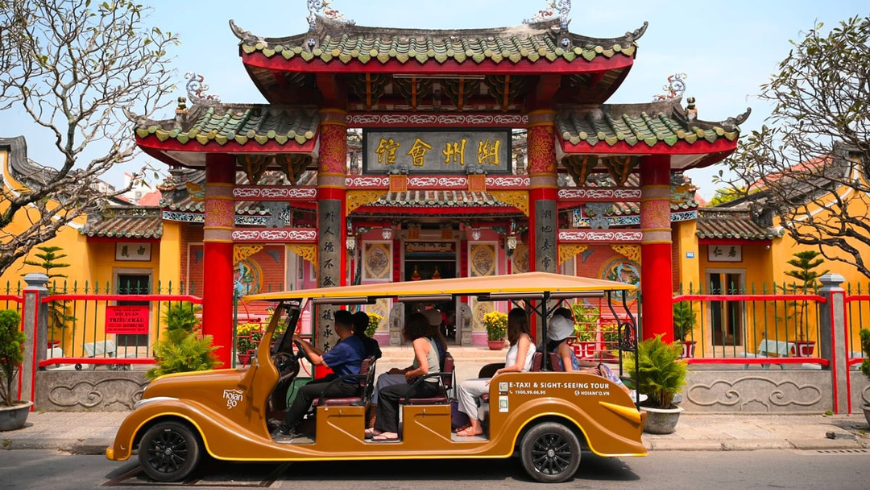
Another amazing transportation in Hoi An, are the small electric shuttle services through the town. They are battery-powered buses that links major attractions without the noise and emissions of petrol-fuelled alternatives. These quiet vehicles glide smoothly between hotels and heritage sites, showing visitors what clean public transit can look like in a tourism-dependent economy.
Traditional Boat Transport Along the Thu Bon River
No visit to Hoi An is complete without experiencing the iconic wooden boats that glide along the Thu Bon River. These traditional vessels, many family-owned and operated for generations, offer one of the most sustainable and culturally authentic ways to explore the town’s waterfront.
Whether taking a sunset cruise past the Japanese Covered Bridge or crossing to An Hoi Peninsula, boat travel eliminates road traffic entirely while connecting you to Hoi An’s maritime heritage.
The gentle rhythm of oars through water, the reflection of lanterns on the river’s surface, and the stories shared by local boat operators create an experience that’s both environmentally gentle and deeply memorable. Many boat operators now use cleaner engines or rely entirely on manual rowing, making this centuries-old mode of transport surprisingly aligned with modern sustainability values.

The Bicycle Renaissance
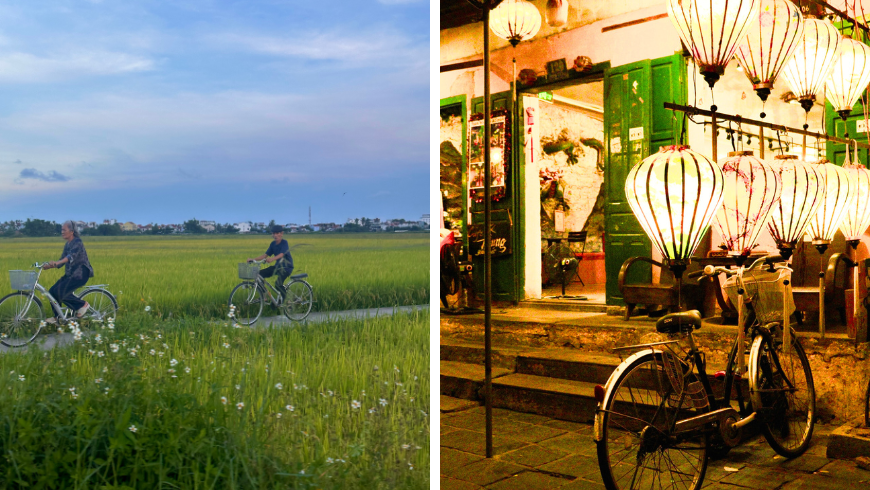
Hoi An’s hospitality sector has embraced bicycles in a big way. Many hotels and guesthouses now provide complimentary or low-cost bicycle rentals, actively encouraging guests to explore on two wheels. It’s an Amsterdam-style approach adapted to Southeast Asian terrain, and it’s working remarkably well.

These initiatives are part of Hoi An’s deliberate ambition to become an “eco-city”: a commitment to balancing tourism growth with environmental responsibility, building sustainable infrastructure that serves both visitors and residents, and proving that economic prosperity and ecological wisdom can coexist.
Hotel Bicycle Programs
Many accommodations have made bicycle access central to their guest experience, supplying bikes either free or included in the room rate. When booking, look specifically for properties that highlight bike-friendly amenities or complimentary guest bicycles. These details signal a deeper commitment to environmental values.
Benefits of Green Transportation for Eco-Conscious Travellers
For eco-conscious travellers who seek out sustainable accommodation and carbon-neutral travel options, Hoi An, Vietnam’s embrace of green transportation offers real, tangible rewards.
Quieter, More Peaceful Travel
The quieter streets create space for genuine observation and calm reflection. Without the constant assault of motorbike engines, you begin to notice subtler sounds. Vendors selling fresh bread from bicycle carts, children laughing in narrow alleyways, the evening call to prayer from distant pagodas. The sensory experience of travel deepens when noise pollution fades.
Deeper Connection with Local Culture
Cycling or walking through Hoi An encourages a different kind of engagement. On a bicycle, you move at a pace that matches human attention – fast enough to cover ground, slow enough to notice details. The rice-field pathways become accessible adventures rather than distant scenery. Riverside lanes transform into opportunities for non-planned stops and conversations with local farmers. The Old Town alleys reveal their secrets gradually, one pedal rotation at a time.
Reduced Environmental Footprint
Choosing bicycle or e-bike transportation means traveling with a dramatically lower environmental footprint. Fewer carbon emissions, less noise pollution, reduced strain on local infrastructure, and a more meaningful connection to the landscape. There’s an intimacy to bicycle travel that enclosed vehicles simply cannot replicate.
Heritage Preservation
The heritage architecture benefits directly from these choices. When motorised vehicle traffic is reduced, centuries-old buildings suffer less structural stress from constant vibration. Pollution that accelerates decay on wooden facades and stone carvings diminishes. What travellers gain in enhanced experience, the town gains in preserved cultural value.
Planning Your Sustainable Trip to Hoi An
For travellers who seek sustainability alongside meaning, understanding how Hoi An, Vietnam is embracing green transportation offers practical guidance for planning your visit.
Best Time to Visit
The dry season from February to May offers ideal conditions for cycling and walking, with comfortable temperatures and minimal rain. Early mornings and evenings provide the most pleasant conditions for exploring by bicycle, while avoiding the midday heat.
Your Journey Toward Sustainable Travel Starts Here
Every time you choose a bicycle over a motorbike taxi, you participate in the transformation. When you choose to walk the lantern-lit streets rather than riding through them, you experience the town as it was meant to be encountered: at human speed, with open senses, present to the moment.
Learn more about planning a truly immersive and eco-friendly journey across Vietnam in our Slow Travel in Vietnam: A Sustainable Journey Beyond the Highlights guide.
If you decide to select eco-friendly accommodations that prioritise sustainable transport options, you send signals that shape how the industry develops.
So when you’re planning to visit Hoi An, consider this: Pick up a bicycle. Ride through the rice-field paths at sunrise when the light turns everything golden. Stroll the lanes of the Old Town as dusk settles and the lanterns begin to glow. Feel the difference in your body, your breathing, your awareness when travel becomes not just about where you go, but how you choose to move through the world.
This is what sustainable travel looks like when it works. It’s not a sacrifice, but an enhancement. Not an obligation, but a gift to yourself and the places you visit. Hoi An, Vietnam’s embrace of green transportation is showing us the way. All we have to do is follow.
The success of green transportation in Hoi An Vietnam proves that quieter streets, cleaner air, and people-focused mobility are possible in Southeast Asia.