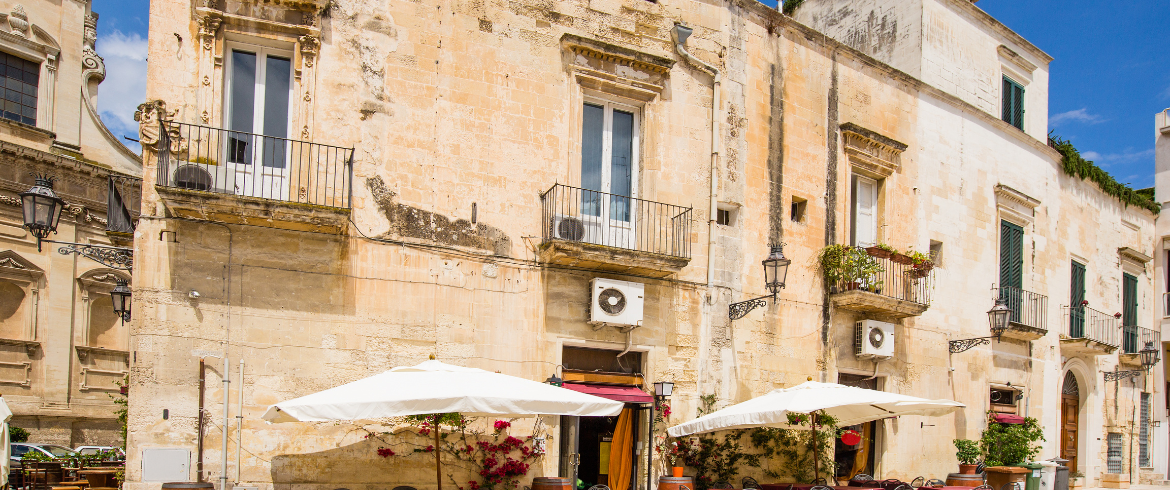
Lecce wins you over at first sight with its honey-coloured stone, richly decorated Baroque façades and squares that look almost like theatrical sets. But step away from the most photographed routes for a few hours and you’ll discover another side of the city, just as beautiful and surprising.
It is the Lecce of archaeological layers, hidden gardens, ancient underground passages, traditional neighbourhoods and natural landscapes on the outskirts of the city centre. A less monumental and more unexpected Lecce, where you might find a river flowing beneath a house, a Roman sanctuary hidden under a Renaissance palace or an amphitheatre surrounded by olive trees.
If you are looking for an unusual Lecce, here are 10 places to add to your itinerary to discover the Salento capital from a different perspective.
What to See in Lecce Beyond the Baroque?
Beyond its magnificent churches and Baroque palaces, Lecce offers archaeological museums, historic neighbourhoods, hidden gardens, underground sites and natural areas. Among the lesser-known places to discover are the Faggiano Museum, Palazzo Castromediano Vernazza, the Giravolte neighbourhood, the garden of Sant’Anna, Belloluogo Park and the nearby Archaeological Park of Rudiae.
These places tell the story of a different Lecce, made of Messapian and Roman traces, underground water, ancient gardens, stone, Mediterranean vegetation and rural landscapes.
To explore these and the city’s many other sides, start with our Lecce Travel Guide and then create your own itinerary, combining the city’s famous monuments with a few lesser-known detours.
1. Faggiano Museum and the Lecce Beneath Your Feet
At first glance, it looks like an ordinary house in the historic centre. In reality, beneath the floors of this building on Via Ascanio Grandi lies a remarkable stratification of history.
The Museo Faggiano was born almost by accident in 2001, when the owners began work to repair the building’s old sewage pipes. The excavations revealed cisterns, tombs, wells, granaries, passageways and other evidence from different historical periods, starting with the Messapian era.
One of the most fascinating discoveries is water: in the underground rooms, visitors can see the water of the Idume River, the underground watercourse that flows beneath the city and resurfaces many kilometres away, near Torre Chianca.
2. Palazzo Castromediano Vernazza and the Temple of Isis
In a small square not far from the heart of the city lies one of the most surprising corners of hidden Lecce: Palazzo Castromediano Vernazza.
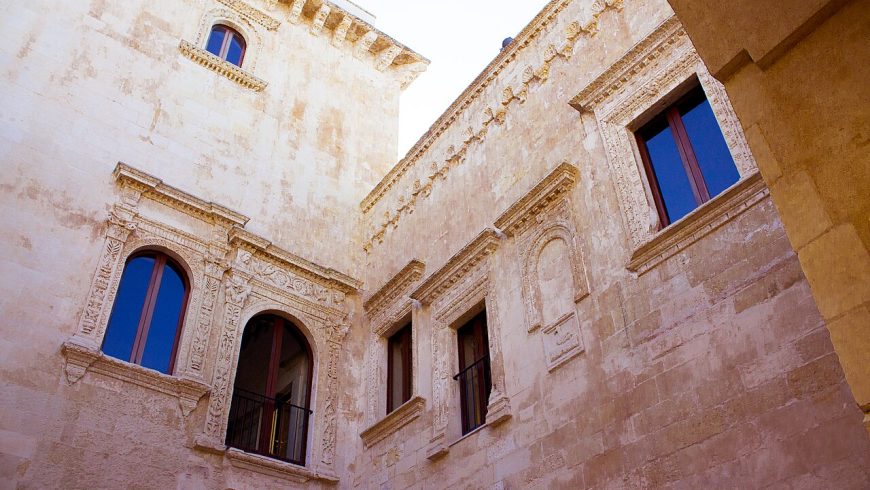
The 16th-century building, recognisable by its tower and almost fortified appearance, hides an even older history. During restoration works, archaeologists uncovered a Messapian road with a pavement, cisterns and, most remarkably, the remains of a Roman sanctuary dedicated to Isis.
The sanctuary also included a purgatorium, a basin used for purification rituals, and provides evidence of the worship of the Egyptian goddess in Roman Lecce.
It is one of those places that changes the way you read the city: above, a Renaissance palace; below, traces of an even older world.
3. The Giravolte: a Neighbourhood That Changes Perspective
To experience a more everyday side of Lecce, leave the large squares behind and enter the maze of the Giravolte.
The neighbourhood unfolds through narrow lanes, small courtyards and houses built closely together. Here, monumental architecture gives way to a more intimate atmosphere, made of narrow passages, stone walls and corners that seem to belong to another era.
Among its streets you will also find the former Conservatory of Sant’Anna and, a little further on, the curious Vico dei Sotterranei. Archaeologists have discovered here the remains of a richly decorated domus dating back to the 5th century, with mosaic floors preserved underground.
4. The Giant of the Sant’Anna Garden
Among Lecce’s most unexpected surprises is a tree. In the small garden of the former Conservatory of Sant’Anna, on Via Santa Maria del Paradiso, grows a magnificent Ficus macrophylla, also known as Ficus magnolioides. Its aerial roots develop into new trunks, creating a spectacular, almost architectural structure.
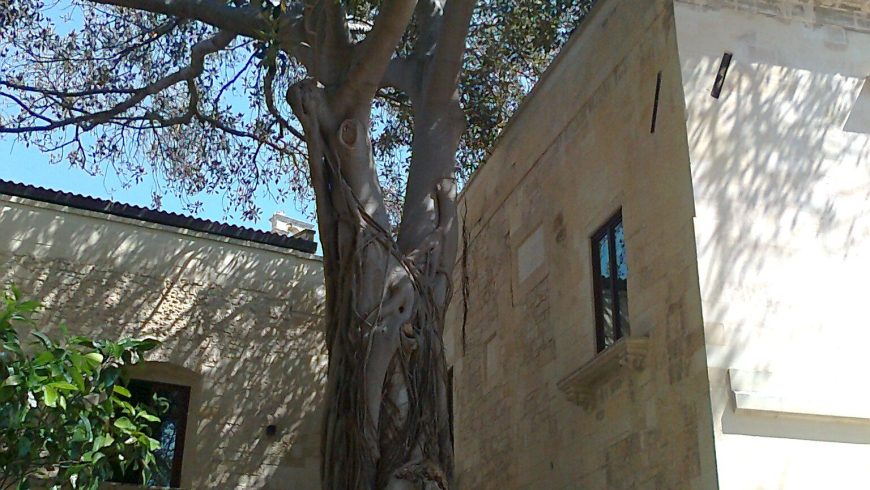
The tree has become one of the symbols of the restoration of the former conservatory. When the building was abandoned, its lush presence almost seemed like a sign of resilience. The restoration project received the Centocittà Award in 1998, awarded by a jury chaired by Renzo Piano.
5. Giardino Ognibene: a Small Green Mosaic
Another surprising green space can be found inside the former Augustinian Convent. The Giardino Ognibene was restored and returned to the city as part of a project that brought a rich variety of plants back to the complex. The garden includes an orchard, aromatic plants, ornamental vegetable gardens and a small vineyard with native Salento grape varieties such as Malvasia Nera, Negroamaro and Primitivo.
It is a place to experience slowly, where the vegetation tells the story of the relationship between the convent and the land and reveals a botanical and agricultural side of the city.
6. The Parco delle Mura Urbiche, Where the City Turns Green
Lecce’s ancient walls can also be experienced from a different, less monumental perspective. The Parco delle Mura Urbiche is a contemporary green space built around the remains of the city walls and archaeological layers accumulated over more than two thousand years. Here, history has not been separated from the landscape: trees, aromatic plants and places to rest alternate with archaeological remains.
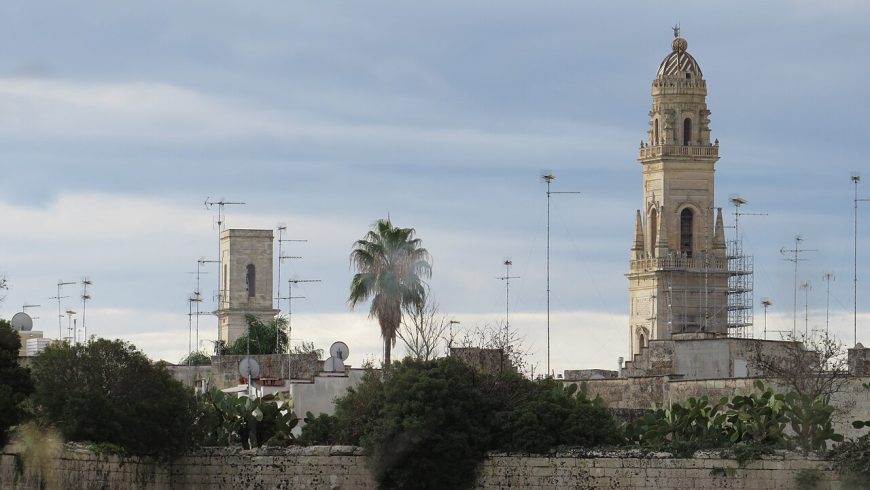
The park also connects to other green spaces, including the garden of Palazzo Giaconia, Giardino Ognibene and Belloluogo Park, creating a genuine green mosaic in the northern part of Lecce.
7. Belloluogo Park: a Medieval Tower Among Olive Trees and Springs
Just a few minutes from the centre, the landscape changes completely. Belloluogo Park surrounds a medieval tower built between the 13th and 14th centuries and has an almost rural atmosphere, with olive trees, fig trees, almond trees, dry-stone walls and stone buildings. But the most surprising part lies underground once again.
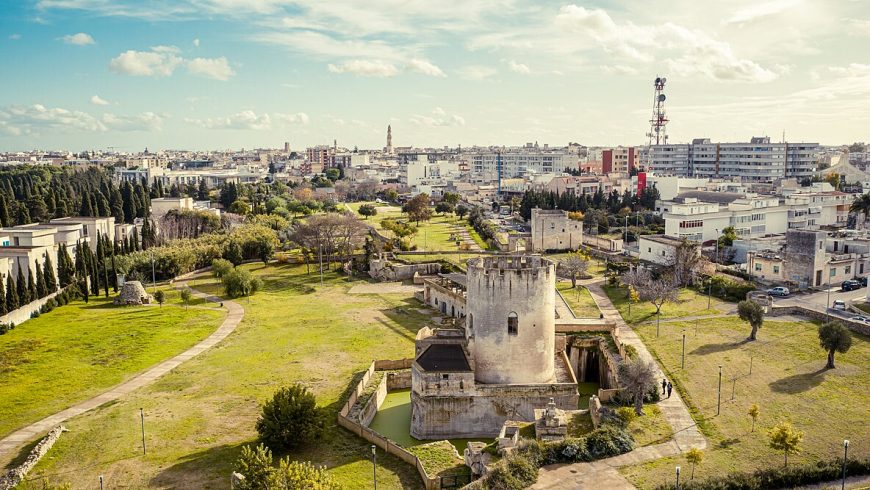
Next to the tower is a large underground complex carved into the rock and divided into several rooms. Its characteristics suggest the existence of an earlier rock settlement. Here you’ll ifnd Byzantine graffiti on the walls, probably left by Basilian monks who lived in Salento during the period of the Byzantine Iconoclasm. The tower itself also preserves a small chapel decorated with 14th-century frescoes depicting the story of Mary Magdalene.
8. Rudiae, the Other Roman Lecce
If the amphitheatre in Piazza Sant’Oronzo is one of the symbols of Lecce, just outside the city lies another amphitheatre that many visitors never discover.
It is located in the Archaeological Park of Rudiae, along the road to San Pietro in Lama. This was once the ancient Messapian city of Rudiae, traditionally associated with the poet Quintus Ennius. The Roman amphitheatre was built during the reign of Emperor Trajan, in the early 2nd century AD, and could accommodate almost 8,000 spectators.
The contrast with the amphitheatre in the historic centre is striking. At Rudiae, archaeology meets the rural landscape: olive trees, dry-stone walls, Mediterranean vegetation and the silence of the countryside surround the ancient remains.
9. Rauccio Park, Where Lecce Meets Nature
North of Lecce, along the Adriatic coast, the Bosco e Paludi di Rauccio Regional Natural Park protects around 1,600 hectares of woodland, wetlands, marshes and coastal habitats.
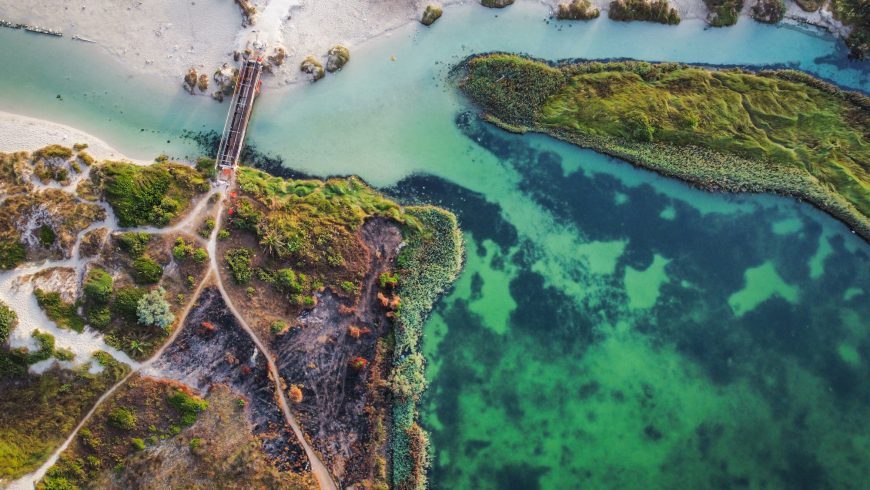
At its heart lies the Bosco di Rauccio, one of the last remnants of the great holm-oak forest that once covered this part of the Salento coast. Nearby are the wetland of Specchia della Milogna and the Idume Basin, an area that is also important for wildlife.
It is an ideal detour if, after spending a few hours among churches and palaces, you feel the need to change pace.
10. Torre Chianca and the Idume Basin
The journey through unusual Lecce can end by the sea, but not necessarily on the best-known beach. The seaside area of Torre Chianca takes its name from the 16th-century watchtower built by the Spanish to defend the Salento coast against pirate raids. Today, the tower is partly ruined, but the surrounding natural landscape is the real attraction.
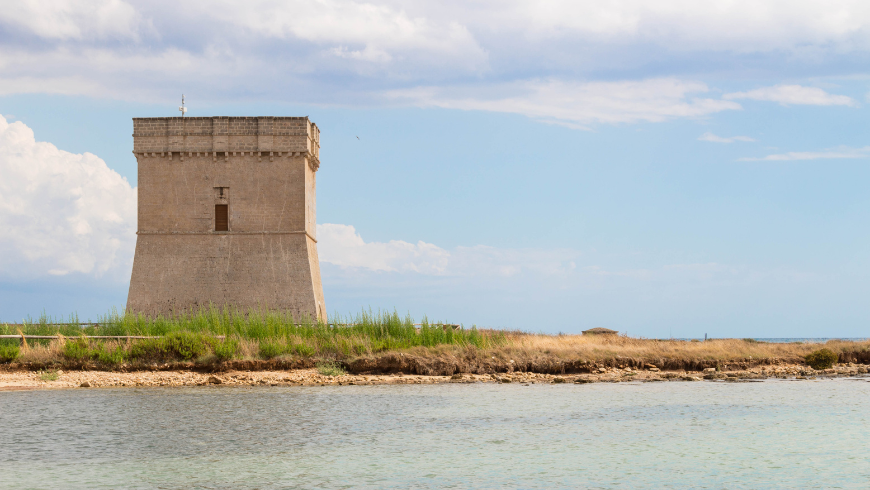
Here you will find the Idume Basin, reed beds, wetland vegetation and salt-tolerant plants. It is also a fascinating place to understand the connection between underground and coastal Lecce: the Idume, which flows beneath the city, resurfaces here before reaching the Adriatic Sea.
Where to Stay Green in Lecce and Surroundings
After a day spent exploring archaeology, narrow streets and natural landscapes, you can choose accommodation that follows the same philosophy of slow and responsible travel.
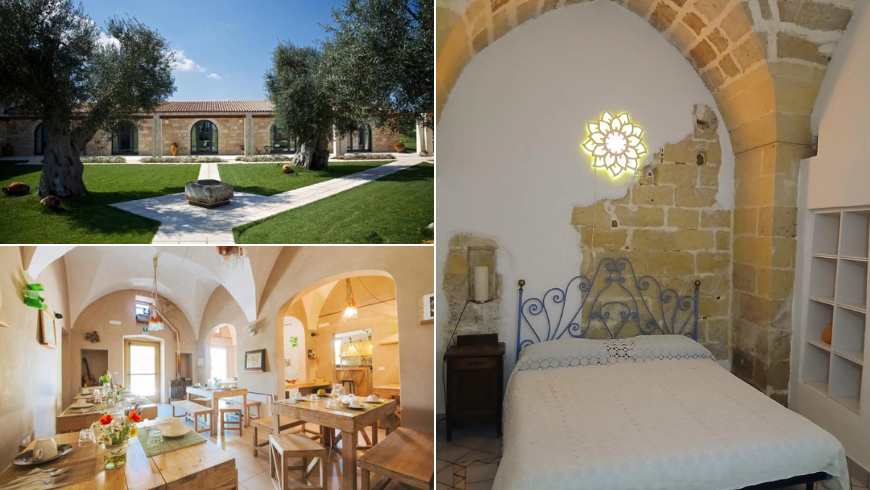
Among the Ecobnb accommodations in the area:
- B&B Vico del Sole – in the centre of Lecce, just steps from the city’s main monuments, with car-free accessibility, a rich breakfast featuring local products and interiors combining stone, wood and wrought iron.
- Agriturismo Biologico Piccapane – in the countryside near Cutrofiano, with organic farming, solar energy, phytoremediation, local products and a vegan restaurant.
- Masseria Stali – near Caprarica di Lecce, surrounded by the Salento countryside, producing organic olive oil and offering local products, nature trails and comfortable rooms.
Discover all the eco-friendly places to stay in Lecce and surroundings