
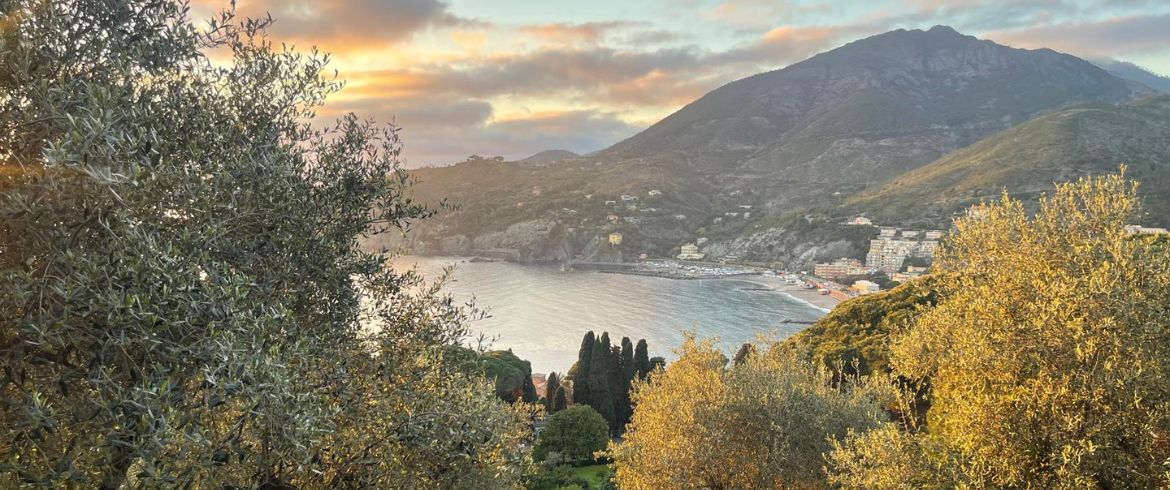
There are places you discover during a trip. And then there are those you return to, year after year, until they begin to feel a little like your own. Levanto is one of them.
I have been coming back here every year for more than twenty years. In all this time, I have seen the town change, grow and transform. Some shops have closed, others have opened, activities and habits have changed, as has the way tourism is experienced. And yet something has remained: the authentic soul of Levanto, shaped above all by the people who live here and by those who, over the years, have chosen to build their work here, cultivate a passion, bring a project to life or simply continue to believe in this place.
Just a few kilometres from the Cinque Terre, Levanto retains something that is increasingly difficult to find in the Riviera’s better-known villages: space, time and an everyday life that goes beyond tourism.
It is a seaside town surrounded by greenery, with a historic centre of narrow streets and squares, shops and local businesses that reflect everyday life. Here you can arrive by train, leave your car behind and get around on foot, by bicycle, canoe or boat, alternating a day at the beach with a bike ride to Framura, a stroll through the caruggi or dinner at a local trattoria.
And then there is everything that makes Levanto a living town: surf schools, bicycle rental shops, cafés and small restaurants, bakeries and focaccia shops. But also the hairdresser, the fruit and vegetable shop, the little store where you go in to buy something and end up exchanging a few words with the person working there. It is this everyday life, even more than the places worth photographing, that makes Levanto special.
So, instead of the usual list of things to see, here are 10 experiences for discovering Levanto slowly: through the sea and nature, food and cycling, history and small local habits, but above all through the people who, every day, help bring the town to life.
1. Cycle along the old railway line to Bonassola and Framura
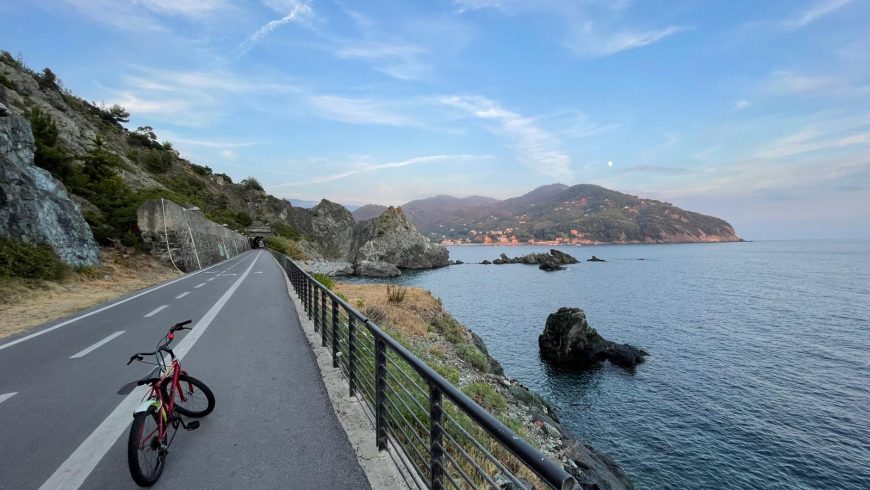
One of the best ways to discover the landscape around Levanto is to get on a bicycle and follow the old railway line towards Bonassola and Framura.
The route is about 6 kilometres long, easy and almost completely flat: perfect for a family bike ride too. The old nineteenth-century railway line has been restored and transformed into a cycle and pedestrian path suspended between the mountains and the sea, where ancient stone tunnels alternate with spectacular views of the coast.
To get started, you can rent a bike from Cicli Raso in Levanto, and reach the old railway station in just a few minutes, now the starting point of the route.
At first, you cycle above the sea, past benches, the scents of lavender and aromatic herbs. Then the path enters the first tunnel: the air becomes cool, the light fades and, through openings in the rock, sudden glimpses of the sea appear.
There are also small coves along the way where it is worth stopping. One of the most evocative is the Caletta della Roccia del Drago, a small cove with colourful pebbles reached by descending a few steps from the path: the perfect place for a break and, when the sea is calm, a refreshing swim.
You can stop in Bonassola, cool off in its clear waters, go for a swim and enjoy its peaceful atmosphere for a while before continuing your ride towards Framura.
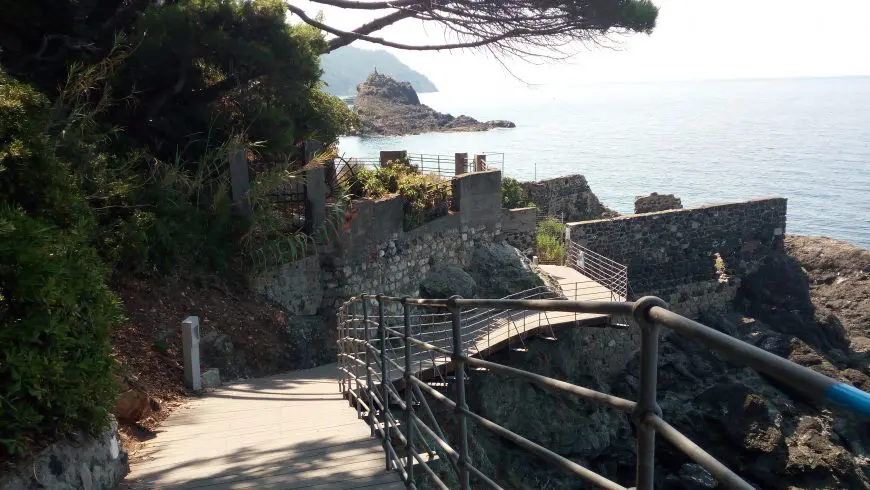
Once you reach Framura, it is worth leaving your bicycle behind and taking the lift down towards the small harbour overlooking the sea. After walking for a few minutes, you can reach the train station and cross the tracks via the underpass to find yourself almost magically on La Via del Mare, a panoramic path of about 800 metres running along the cliff edge, among agaves, maritime pines and the blue Mediterranean. In about ten minutes, you can reach some of Framura’s most beautiful little beaches, where you can stop for a swim or a break in the shade.
Alternatively, you can choose to do the route in the opposite direction and climb from the sea towards Framura’s five small villages – Anzo, Castagnola, Costa, Ravecca and Setta. Connected by ancient stairways, narrow lanes, panoramic terraces and paths between dry-stone walls, they are scattered along the mountain and seem to cling to the hillside above the sea. It is a walk that gradually takes you away from the more touristy coastline, among old churches, watchtowers, vineyards and small glimpses of the Riviera.
The beauty is that you don’t need to plan everything: you can cycle, stop, go for a swim, eat something and set off again whenever you like. And on the way back, if your legs are tired, there is always the train.
2. Walk along the seafront, beyond the tunnels
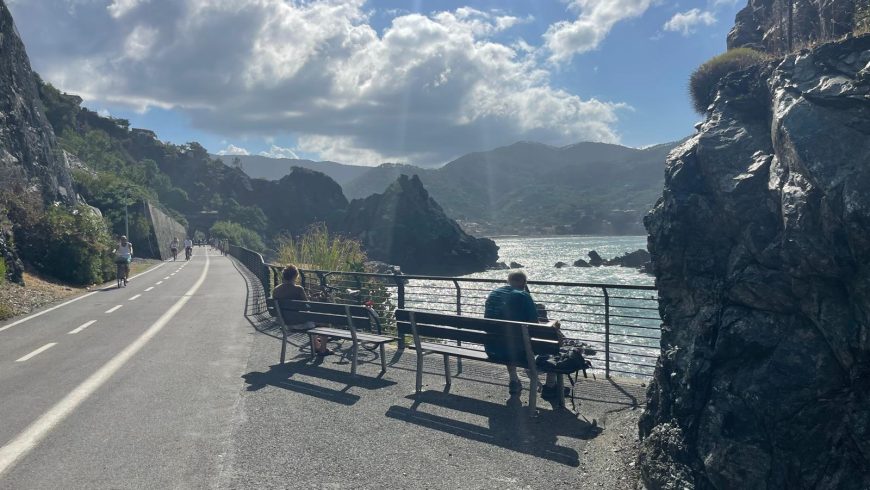
Not every experience needs a destination. In Levanto, one of my favourites is simply walking.
Start from the beach and follow the seafront towards Bonassola, gradually leaving the centre of Levanto behind. Pass through the first tunnels while the sea remains constantly at your side and the landscape becomes wilder. Along the way, you will come across small hidden coves, cliffs plunging into the water and quiet spots where you can stop and admire the view.
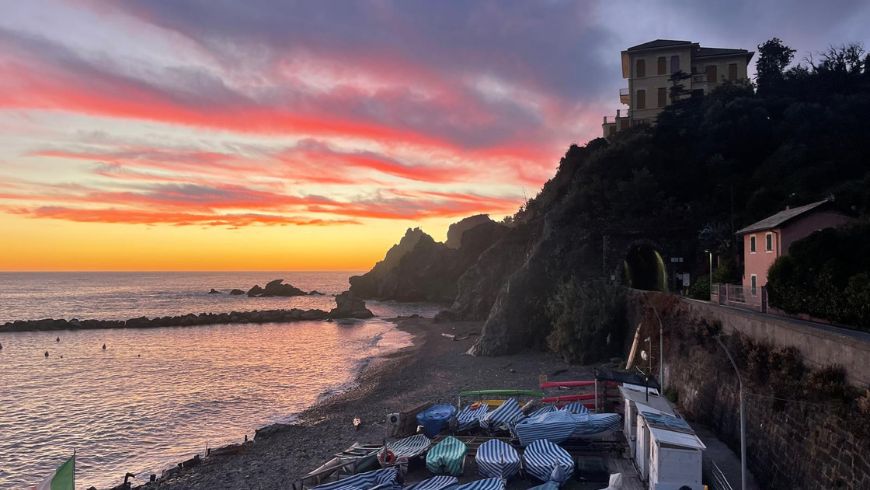
It is a walk to take in the early morning, when the town is waking up, or at sunset, when the sky slowly changes colour and the evening light illuminates the coast. Depending on where you look from, the sun setting over the sea creates ever-changing perspectives of the coastline: a simple, free and beautiful moment to photograph, but above all to experience without rushing.
3. Explore the sea by canoe, kayak or SUP
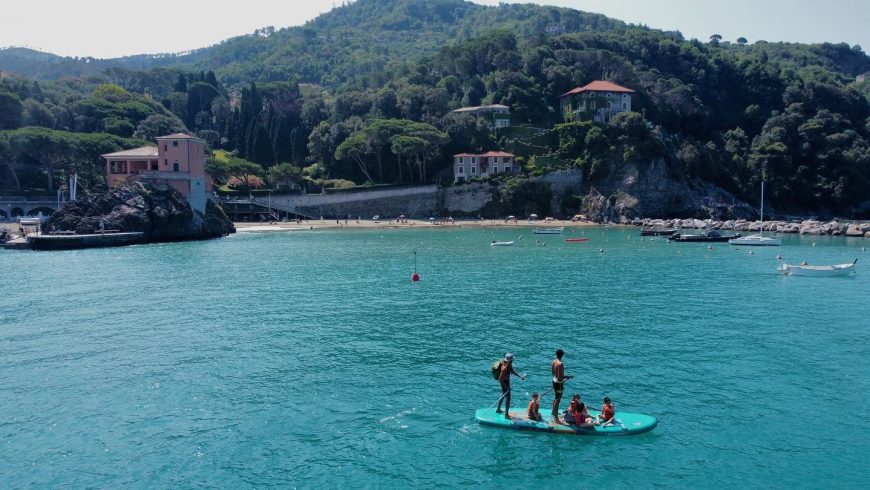
Seeing Levanto from land is only one possibility. From the sea, the landscape changes completely. A canoe, kayak or SUP allows you to follow the cliffs, reach small coves and see the coastline from a different perspective.
I recommend setting off from La Pietra beach and following the coast towards Monterosso, stopping from time to time among the rocks and in the quieter coves for a swim in the clear waters or, where possible and safe, a refreshing dive.
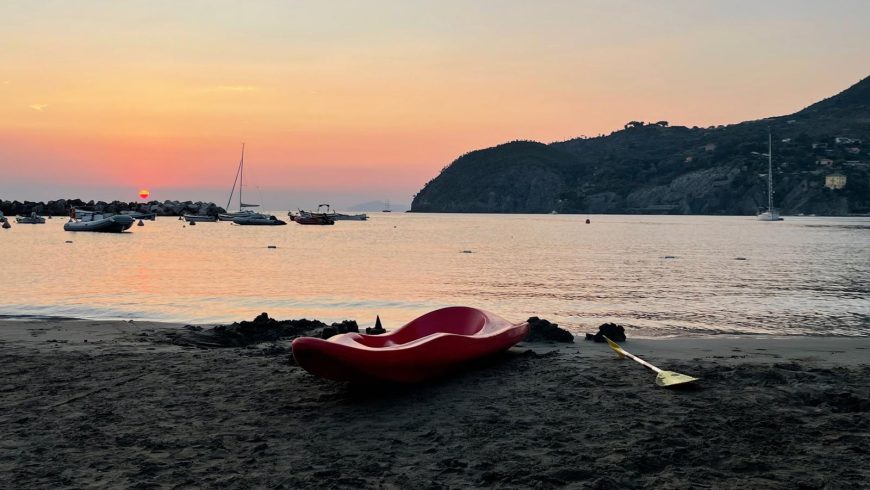
On calm days, with some experience and under the right conditions, you can paddle towards Monterosso and observe the coastline of the Cinque Terre Marine Protected Area, admiring sea caves, rocky walls and small inlets, while the mountains of the Cinque Terre rise steeply from the sea.
From a kayak, you can get a close look at the rock formations shaped by the water and discover corners of the coastline that are difficult to reach by land. It is a slow way to discover the area: the rhythm of the paddle strokes, the sound of the water and the coastline slowly passing before your eyes.
4. Go snorkelling among cliffs and small beaches
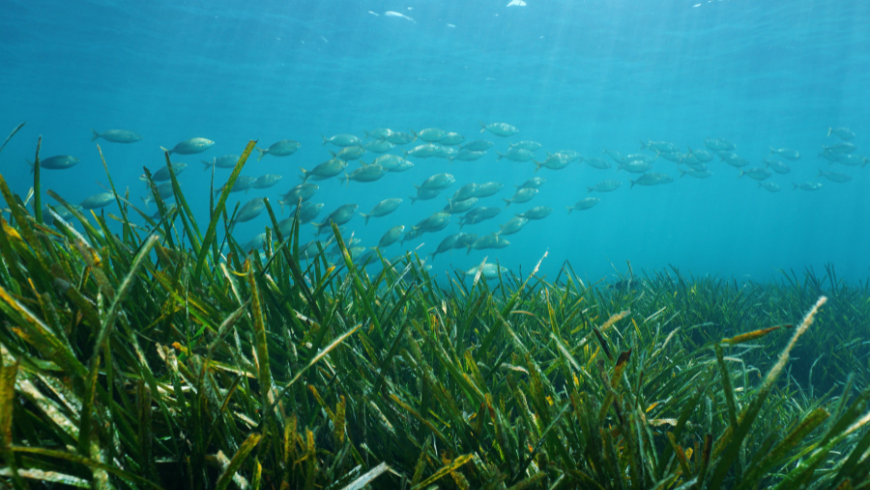
You don’t need sophisticated equipment to discover the sea around Levanto. A mask, a pair of fins and a desire to explore can be enough to discover a world just beneath the surface.
Instead of always staying on the main beach, you can reach the smaller beaches and more secluded corners of the coastline, such as the beach behind the pier, looking for rocky areas where the water is clearer.
All you have to do is put your head underwater to encounter damselfish, white seabream, saddled seabream and many small fish moving among the rocks, while on the seabed you can observe patches of Posidonia seagrass, sea urchins and other forms of Mediterranean marine life. Without touching or collecting anything you find, of course.
It is a particularly beautiful experience in the morning, when the sea is often calmer and the natural light makes the seabed brighter and easier to observe.
5. Relax on the beach, even with your four-legged friend
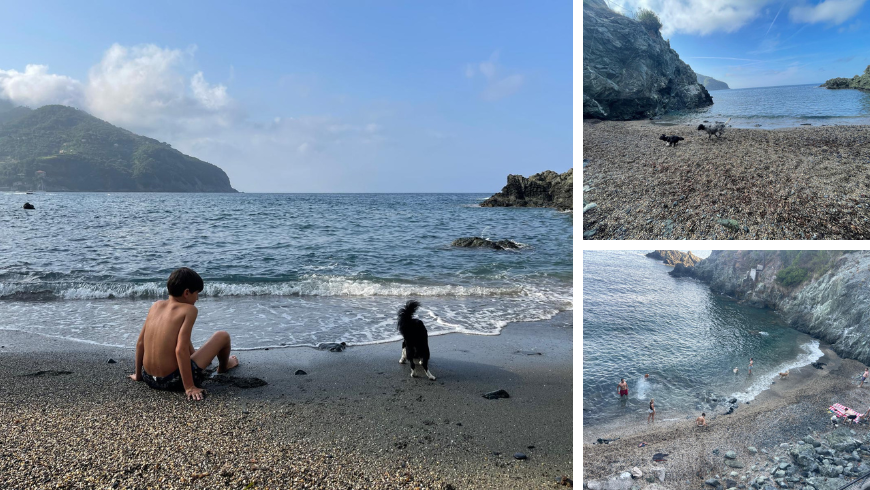
After a walk, a kayak trip or a few hours spent exploring the coastline, there is nothing better than stopping at the beach and enjoying the sea at a leisurely pace. Levanto has several free public beaches, some sandy and others made up of small pebbles, where you can spread out your towel, read a book or simply let yourself be lulled by the sound of the waves.
For those travelling with their four-legged friend, along the cycle and pedestrian path towards Bonassola there is also a small free dog-friendly beach. It is a compact but well-equipped space, with a shower for cooling off dogs, ideal for enjoying a break by the sea together with your travel companion.
Reaching it by bicycle or on foot is part of the experience itself: follow the old railway line, now a cycle and pedestrian path, until you find a small stretch of coastline where dogs can also swim and enjoy a day at the beach.
6. Discover Levanto through food: from pesto to focaccia
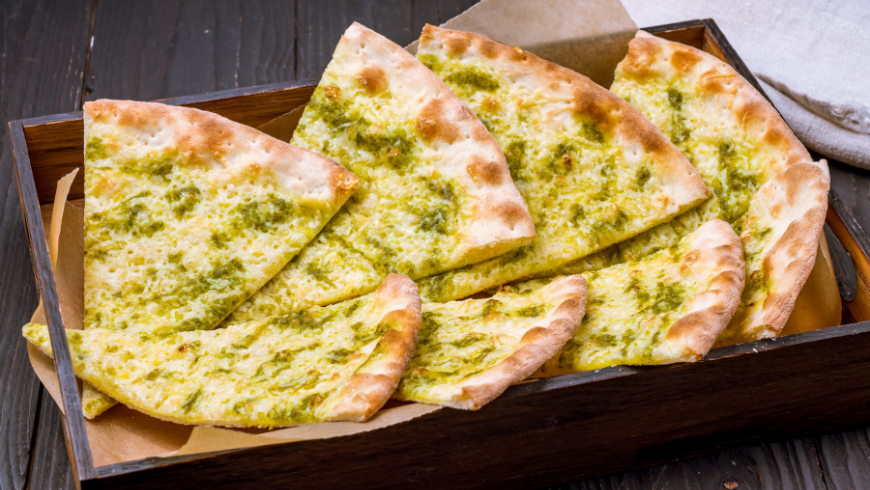
The best way to get to know Levanto? Walk around, look around and, of course, taste. Ligurian cuisine is simple, but it requires quality ingredients and a certain faithfulness to tradition. Pesto is naturally one of the symbols of this region, but in Levanto the culinary journey continues with focaccia, fresh pasta, pastries and gelato.
Among the places that, for me, are part of the Levanto experience is Luigina – Il Laboratorio del Pesto, where you can see how pesto is made up close and, on some occasions, watch demonstrations using a traditional mortar and enjoy tastings. For freshly baked focaccia, there is Raso bakery.
For those with a sweet tooth, there is one ritual that is hard to resist: the cream-filled bombolone at Pasticceria Bianchi. As for gelato, I don’t feel qualified to declare a winner. Levanto has several very good gelaterias and, after so many years, I still think this is one of the few categories where it is worth not choosing: try more than one.
Another way to discover the flavours of Levanto is to visit the covered market in the morning. Here you can buy freshly caught anchovies and fish, as well as seasonal fruit and vegetables. On Wednesday mornings, the weekly market adds more stalls from small local farmers and an even livelier atmosphere. It is one of those places where you can still sense the everyday life of the town, away from the more touristy routes.
And then there are the trattorias and restaurants where you can stop for a simple dinner. One of the places I know is Miki, a pizzeria and restaurant where you can eat without too much fuss, in a relaxed atmosphere.
But perhaps the best way to discover Levanto’s cuisine is even simpler: walk into a bakery, buy a piece of focaccia, sit in a square and watch the town go by. Because here, food is also part of everyday life and of the way people experience the area.
7. Get lost in the caruggi and climb up to the castle
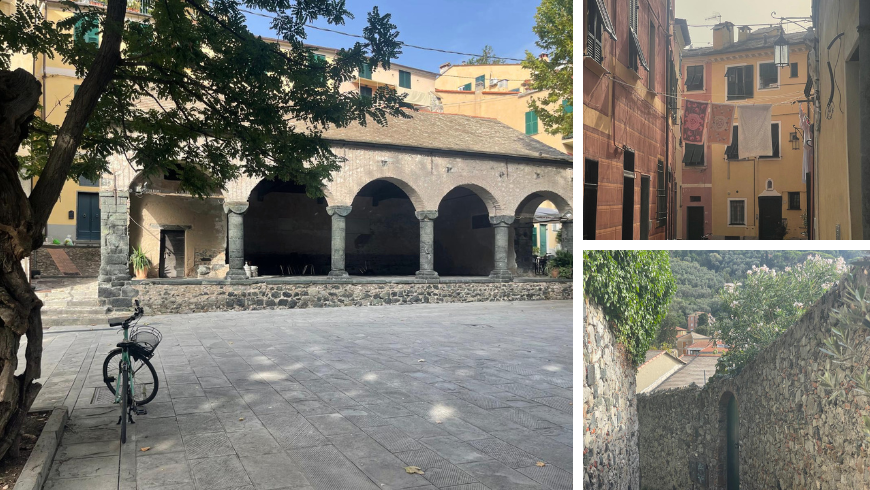
After the sea, it is worth changing pace completely and getting lost in the historic centre. Leave the promenade and enter the caruggi, the narrow streets that wind through the old town, among pastel-coloured houses, arches, stone doorways and façades that tell the long history of Levanto.
A walk can begin on Via Garibaldi and continue through the streets of the centre, letting yourself wander without rushing. Along the way, you will come across small corners filled with history, such as Piazza del Popolo, home to the evocative medieval municipal loggia, with its brick arches. Nearby you can also see ancient merchant houses, such as Casa Restani, with its characteristic arches linked to the commercial role of the old harbour.
Among the religious buildings, it is worth stopping at the Church of Sant’Andrea, one of Levanto’s landmarks. Built from 1222 onwards, it is particularly striking for its façade of alternating bands of white Carrara marble and local green stone, typical of medieval Ligurian architecture.
But don’t stop at the church. As you climb through the narrow streets, you can still follow sections of the ancient medieval walls, built in the 13th century, until you reach the Castle of San Giorgio, also known as Malaspina Castle. The fortress, with its distinctive circular tower, occupies a panoramic position above the village.
From here, the town appears from a different perspective: below you are the rooftops of the village and the beach, while ahead the Gulf of Levanto opens out and behind you the green mountains enclose the valley. It is one of those places where it is worth stopping for a few minutes and doing nothing but looking.
Coming down from the castle, you can then return towards the sea, passing by some beautiful historic residences and reaching the seafront again. Before heading back into the caruggi, it is worth making a small detour to the Church of San Rocco, associated with the former Clarisse convent. The large trompe-l’œil with columns and angels that once decorated the presbytery is now preserved in the nearby Church of Sant’Andrea.
This is precisely what makes Levanto so enjoyable: the constant transition between different landscapes. In just a few minutes, you can move from the sea to the narrow streets, from the beaches to medieval stonework and from the caruggi to an open panorama over the gulf. All you have to do is walk and let yourself be curious about what you encounter.
8. Visit the Cinque Terre, but without rushing
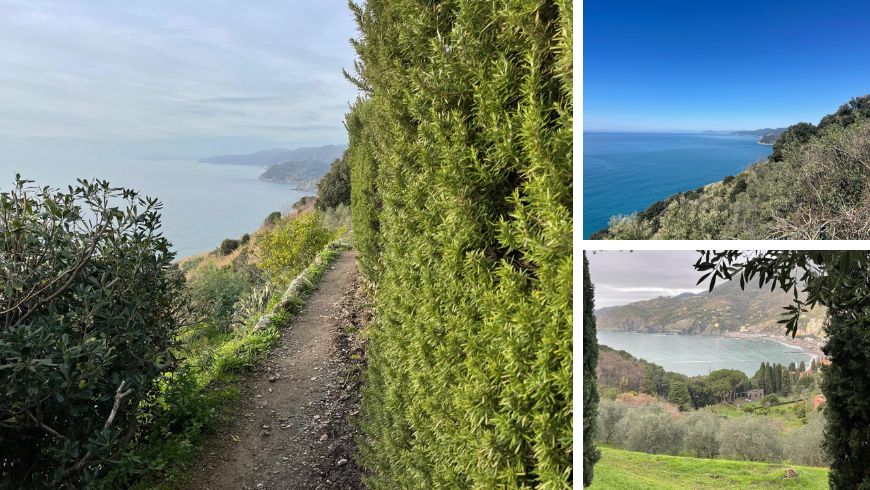
From Levanto, you can reach Monterosso on foot, with a beautiful seaside hike of about three hours crossing the Punta Mesco promontory. The route is 7.3 km long, with uphill and downhill sections (379 metres of elevation gain), so it requires a reasonable level of fitness and suitable footwear.
The trail winds through small woods, more open and panoramic sections and breathtaking views of the coast, constantly offering new perspectives over the sea. It is a slow and immersive way to enter the landscape of the Cinque Terre even before reaching the village.
For those who prefer the train, Monterosso, Vernazza, Manarola and Riomaggiore can be reached in just a few minutes from Levanto. During various periods of the year, from March to December, you can also travel by sea with the boat service, which connects the Cinque Terre and continues to Portovenere, allowing you to admire the coastline from a completely different perspective.
But you don’t have to see everything. Choose one village. Walk. Stop. Eat something. Explore it slowly. Look at the sea. Then return to Levanto. One of the privileges of staying here is precisely being able to discover the Cinque Terre without giving up the pleasure of slowing down.
9. Wait for the waves and discover the surf community
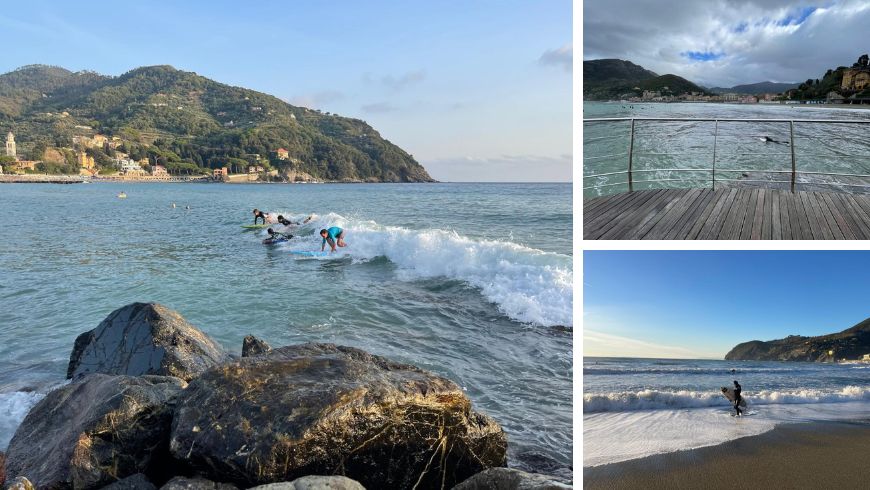
Surfing deserves a special place, but not because Levanto has waves every day. Quite the opposite. Here, surfing is linked to storms and swells: conditions change and the waves arrive when the sea decides to offer them. It is not a sport you can practise every day, and perhaps that is precisely part of its appeal.
When a swell arrives, the town changes pace. Surfboards appear on the beach, people watch the sea to understand where and how the waves are coming in, and those who know the sport understand that they need to be ready. Over time, businesses and schools have grown around this passion, turning it into a profession.
Among them are friends Gabo and Brothers, who have built a surf rental business and school for both adults and children. Their story captures the spirit of Levanto well: a personal passion that becomes a project, a job and a community.
And when there are no waves? You wait. Learning to wait for the sea is also part of surfing.
10. Meet the people who bring Levanto to life
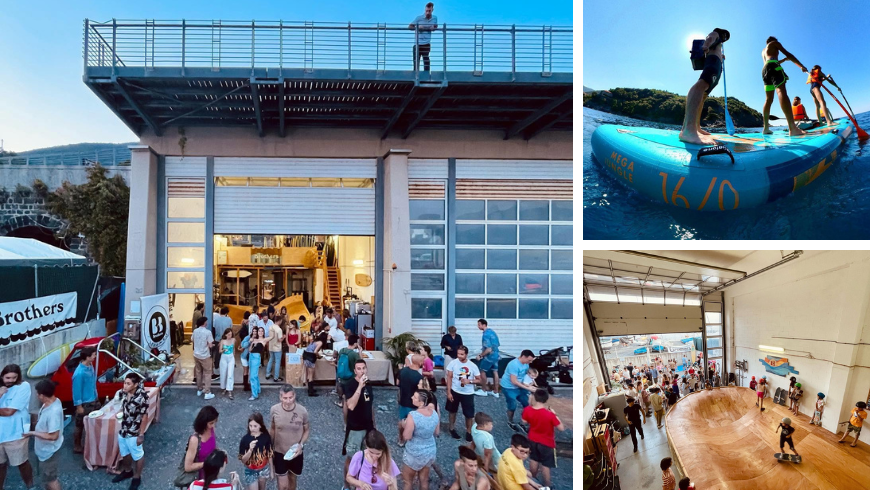
For me, this is the most important experience of all. After more than twenty years of summers in Levanto, what I remember most are not just the views. It is the people.
The people who have opened a business and helped it grow. Those who have turned a passion into a profession. Those who have chosen to stay and those who, every day, continue to invest their energy, creativity and passion in their local area.
One story I particularly like is that of Marco, the captain of Rosa dei Venti 5 Terre Boat Tours. Born and raised in Levanto, he has had a deep connection with the sea and his homeland since childhood. At a certain point, he decided to follow his dream and turn his passion for the sea into a job, taking visitors to discover the coastline and the Cinque Terre.
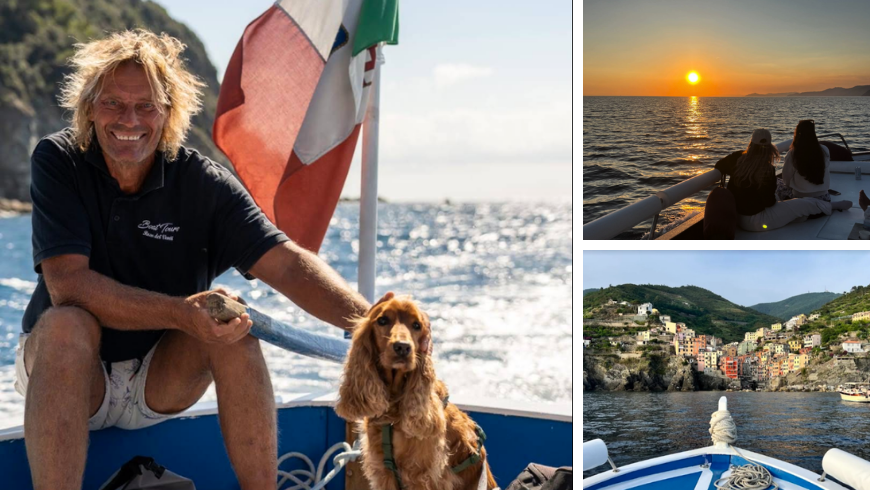
Today, with Rosa dei Venti, he organises small-group excursions among bays, coves and villages seen from the sea. One of the most beautiful experiences is the Sunset Tour in the Cinque Terre, a sunset boat trip with stops for swimming and snorkelling and an aperitivo on board prepared with local, organic and zero-kilometre products: Ligurian focaccia and savoury pies, cured meats and cheeses from Val di Vara, traditional specialities and local wine.
Behind the tour there is also Marco’s story: he chose to turn his passion for the sea into a job. When he started, not everyone believed in his project. Today his dream has become a business that tells visitors about Levanto and its sea, transforming a personal passion into a way of sharing this place with others.
And perhaps this is what makes a place truly alive. Not just its landscapes, but the people who continue to imagine something, give it a try and build new paths.
You can feel it in Levanto while walking along the seafront, stepping into a local shop, talking to someone making pesto, renting a bicycle, picking up a surfboard or simply sitting down to eat a piece of focaccia. Perhaps the real experience to have in Levanto is precisely this: meeting the people who live it.
Where to stay green in Levanto
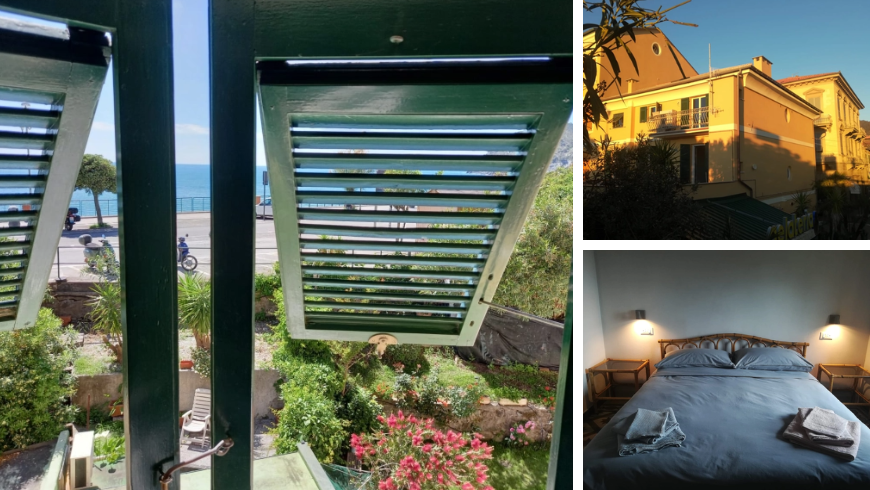
To experience Levanto slowly, choosing where to stay can also make a difference.
Choosing accommodation that pays attention to sustainability, ideally within easy reach by train and close to local services, makes it possible to leave the car behind and get around on foot, by bicycle or by public transport.
Among the green accommodations on Ecobnb there is a home in the historic centre, renovated while preserving the original architecture and using ecological materials wherever possible. It is about a ten-minute walk from the station and also provides guests with “Riciclette”, upcycled bicycles that can be used to reach Bonassola and Framura along the old railway cycle path.
Discover green accommodation in Levanto on Ecobnb
When to visit Levanto
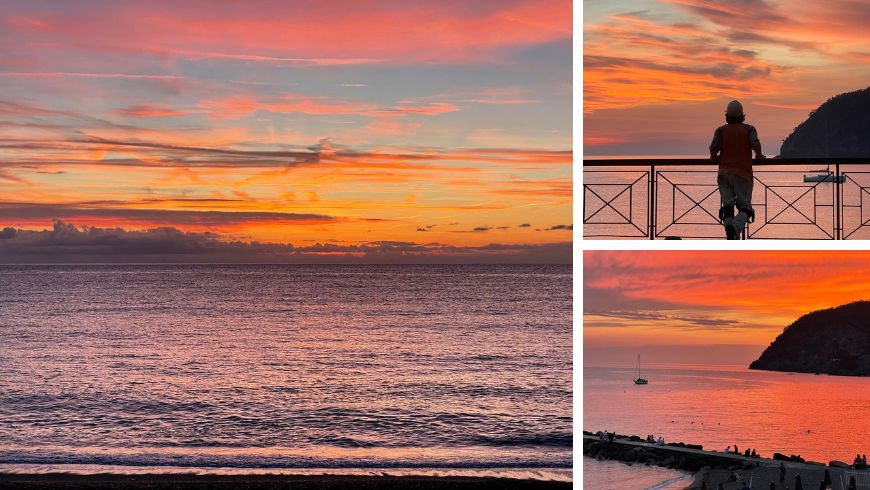
To experience Levanto at a slower pace, avoiding the busiest months, my favourite periods are late summer through autumn and spring.
From late August to November, summer gradually gives way to a quieter atmosphere, but the sea can still offer wonderful days and, as autumn arrives, the first swells also attract surfers.
From April to June, the days grow longer, nature is at its most beautiful and the weather is ideal for walking, cycling and spending time outdoors.
These are perfect months for discovering a more authentic and less crowded Levanto, following the rhythms of the place and allowing yourself more time to stop, explore and meet the people who live here.
Levanto, a slower way to experience Liguria
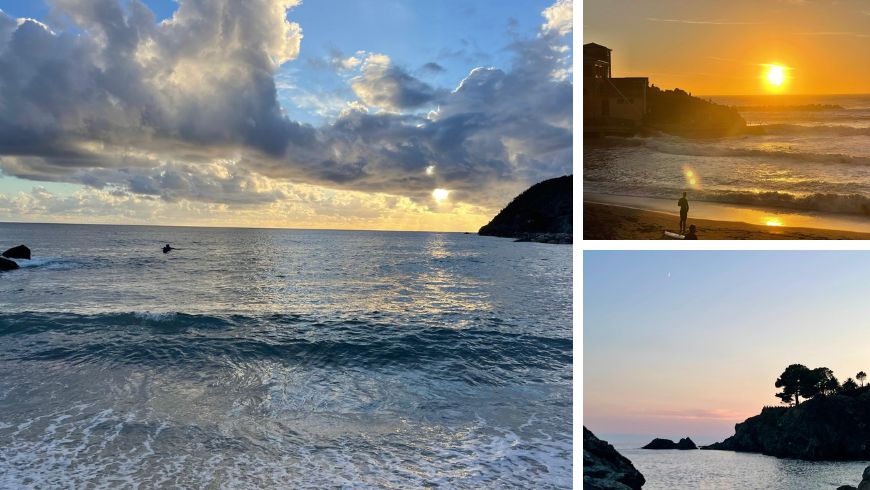
Levanto has changed a lot since I first started coming here more than twenty years ago. But perhaps that is precisely its strength. It has not remained frozen in time to preserve an image of the past. It has changed while continuing to live.
And behind this change are people who have chosen to stay, return, create, work and believe in this corner of Liguria.
That is why Levanto is not just a gateway to the Cinque Terre. It is a destination in its own right. A place where you can wait for a swell, cycle through an old railway tunnel, swim among the fish, eat a still-warm piece of focaccia, take a canoe out onto the water and watch the sea at sunset.
And perhaps this is the best way to get to know it: don’t just look for what to see, but stop and observe how people live.
Cover image: photo by Silvia Ombellini
 Affittacamere Trame di Mare – Green Bed & Breakfast in Levanto, Provincia della Spezia, Liguria, IT
  Sesta Terra Natural Resort – Green Glamping in Framura, La Spezia, Liguria, IT


