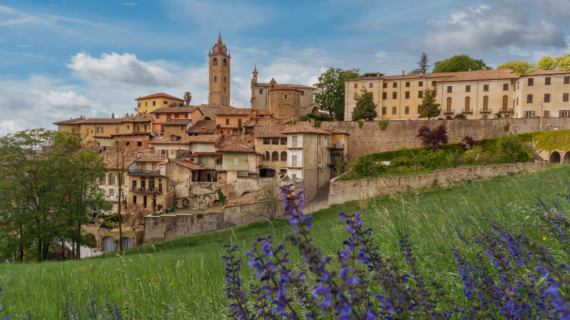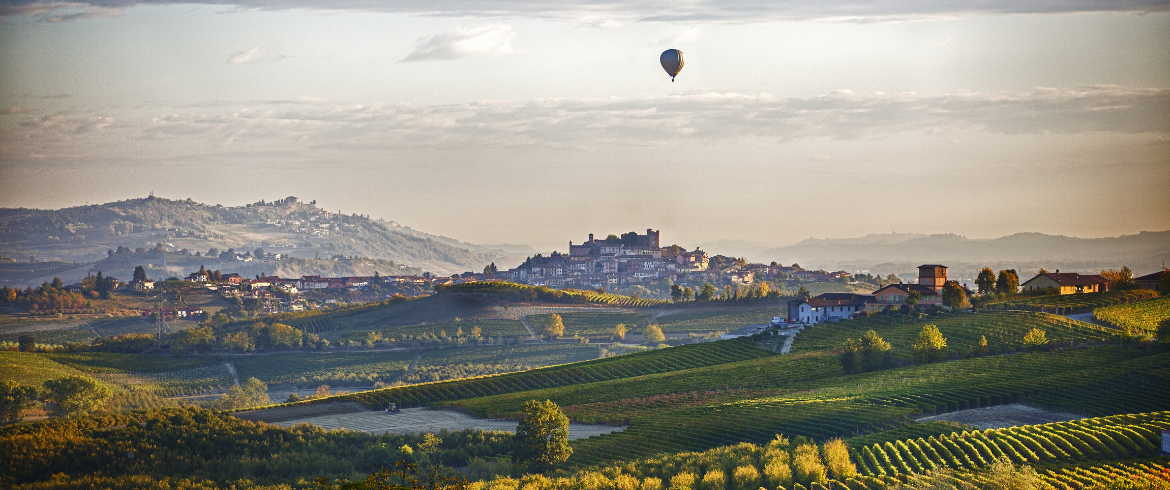
Imagine walking through the streets of a medieval village, stopping on a bench to breathe fresh air and having a chat with a local. Then, at sunset, sip a glass of wine accompanied by typical products as you’re looking at the Roero hills.
We are in the heart of one of the most authentic corners of Piedmont, where nature, history and traditions intertwine in a landscape of extraordinary beauty. The Roero is part of the Langhe-Roero and Monferrato Wine Landscapes, recognized as a UNESCO World Heritage Site for their cultural and landscape value. It is full of its the famous Rocche, ancient sandy ravines shaped by time, and vineyards that shape the hills. Therefore, here it is possible to fully experience slow travel, following slower rhythms and rediscovering the pleasure of authentic experiences.
A few kilometers from Alba and Bra, Monticello d’Alba is an ideal starting point for exploring the area. Among medieval castles, scenic trails, wineries and villages steeped in history, the Roero offers numerous opportunities. Especially for those who want to discover Piedmont sustainably and away from the most crowded routes!
Where to start? Here is everything you need to know to plan your trip.
Monticello d’Alba and its castle, between history and breathtaking landscapes
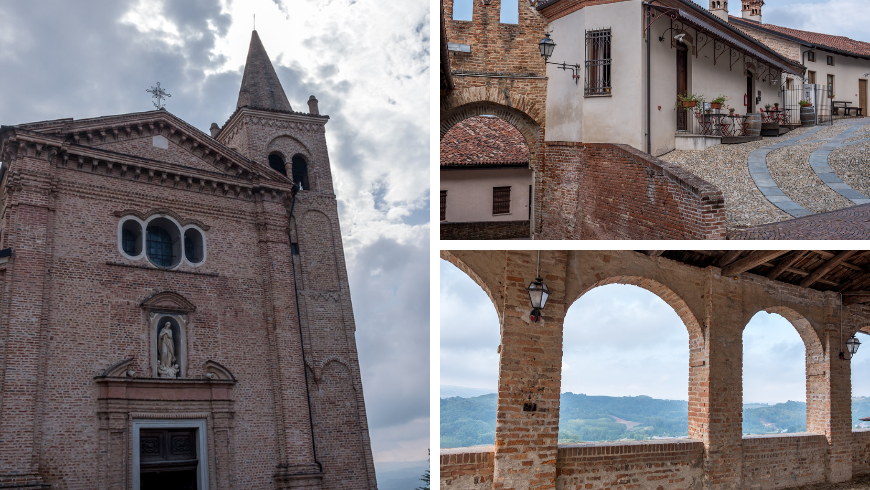
A few minutes from the city of Alba stands the small village of Monticello d’Alba, divided into Monticello Villa and Monticello Borgo due to its vertical nature. In fact, the first area of the town is located downstream and represents the most modern area. On the contrary, the medieval village itself developed on the hill, around the Castle of Monticello d’Alba.
The city as we know it today was born in the 14th century, thanks to the Roero family who rebuilt it after the battles between Asti and Alba in the 13th century. However, there are still traces dating back to Ancient Rome. The Romanesque jewel of the area is the cemetery chapel of San Ponzio, downstream, where the oldest frescoes of the Roero are visible. From here, you can climb, passing through hills full of vineyards. At the end, you reach the church of the upper village, from which you can enjoy a breathtaking view.
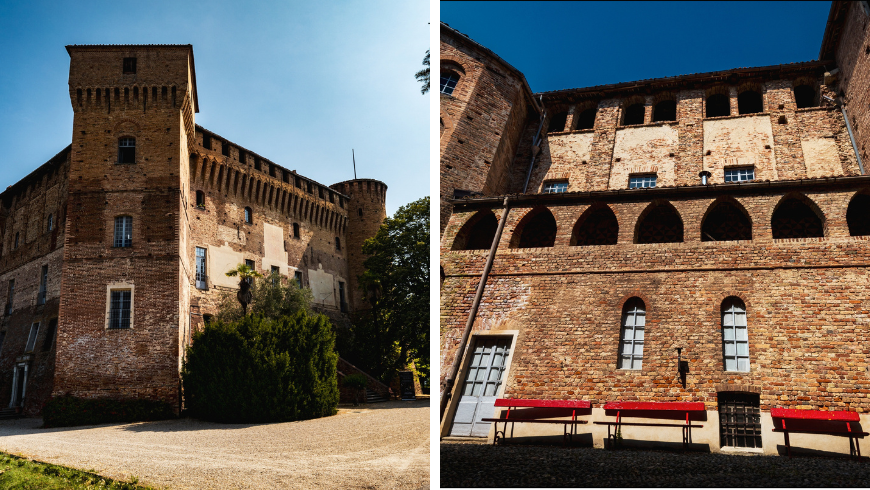
Monticello d’Alba Castle dominates right here. It is one of the oldest and best preserved medieval fortress in Piedmont, build by the Roero family in 1372. Its towers represent and architectural rarity because they have different bases: a square, a round and an octagonal one. The exterior, which retains its 14th century charm to this day, also features a 19th century English garden, offering a relaxing stroll through the greenery. In addition, you can visit the interior of the castle. Here, the ancient medieval rooms tell the story of the customs and traditions of the time and are enriched by frescoes and the secrets of the Roero family.
From the promontory of the village, or the castle, you will enjoy the majesty of the Roero hills, on which there are several paths for relaxing walks and more challenging treks.
The best trails in Roero: Rocche, vineyards and slow tourism
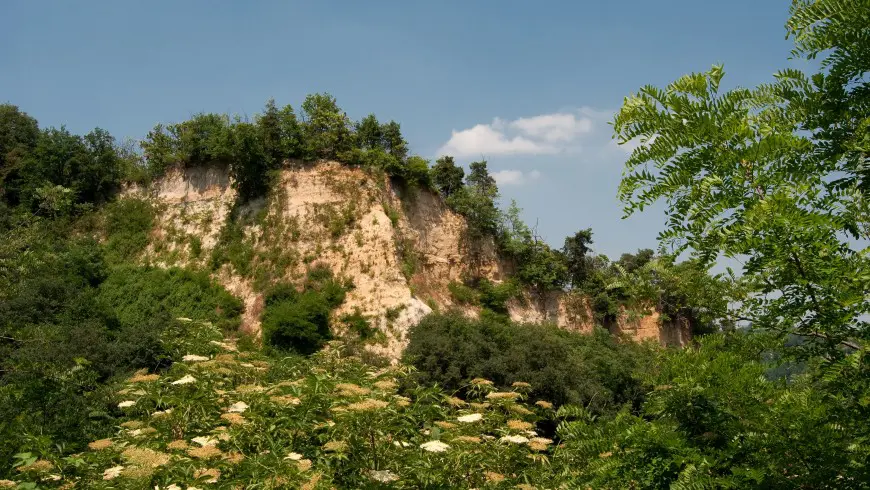
To truly immerse yourself in a slow and sustainable tourism experience, it’s worth exploring the rolling hills of the Roero on foot. Several scenic trails wind here, traversing an extraordinary landscape shaped over time by the famous Rocche del Roero. Deep incisions on the ground, sandy walls and spectacular ravines formed when this area was still an ancient seabed. Walking among these trials, it is not uncommon to come acrossfragments of fossils and shells, precious testimonies of the past that make the excursion even more fascinating.
Even for the less experienced, walks here are easy thanks to the themed trails of the Ecomuseum of the Rocche del Roero. This is a network of trails designed and controlled by the association. In addition to walking, many tracks are also suitable for cycling or e-bike excursions.
Among the most evocative itineraries we find:
- The Wolf’s Path, which crosses the woods of the ancient Romansilva popularis, and leads to the village of Caialupo.
- The Beekeeping Trail, dedicated to the world of bees, among blooms, rural landscapes and traditional ciabòt (the characteristic brick houses of the Piedmontese countryside).
- The Fossil Trail, ideal for those who want to discover the traces of the ancient seabed still visible among the Rocche.
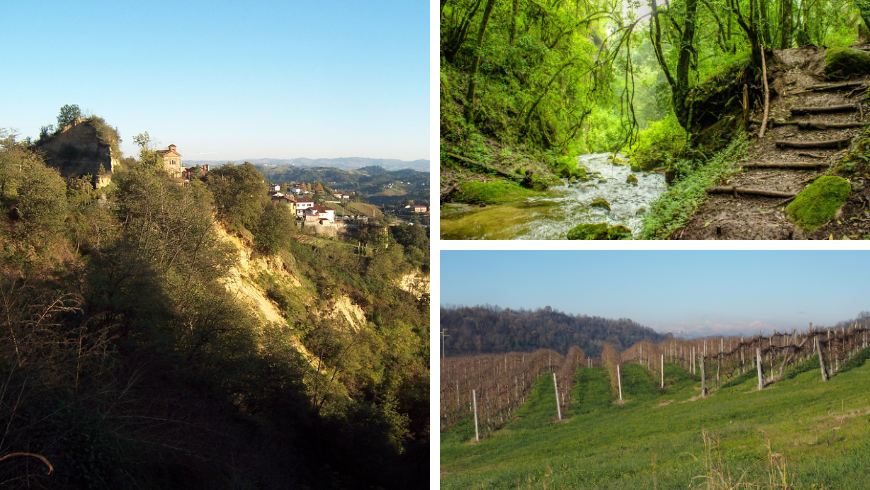
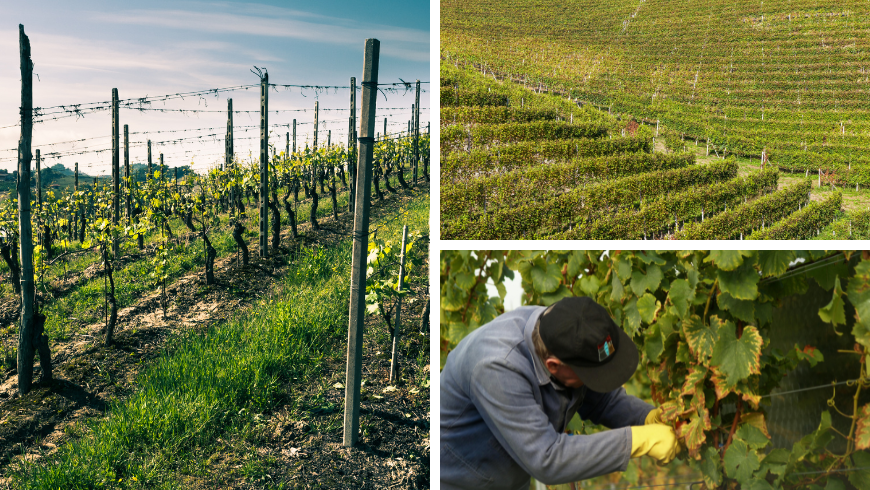
Along these paths you also encounter the characteristic vertical vineyards of the Roero, which climb steep sandy slopes shaping a unique agricultural landscape. These lands, formerly submerged by the sea, help give local wines their unique flavor. The conformation of the ground makes it difficult to use mechanical means: therefore, many operations are still carried out manually. A tradition that falls within the so-called heroic viticulture, an expression of an agriculture that adapts to the nature of the territory rather than modifying it.
What to eat and drink in the Roero: wines, truffles and typical products
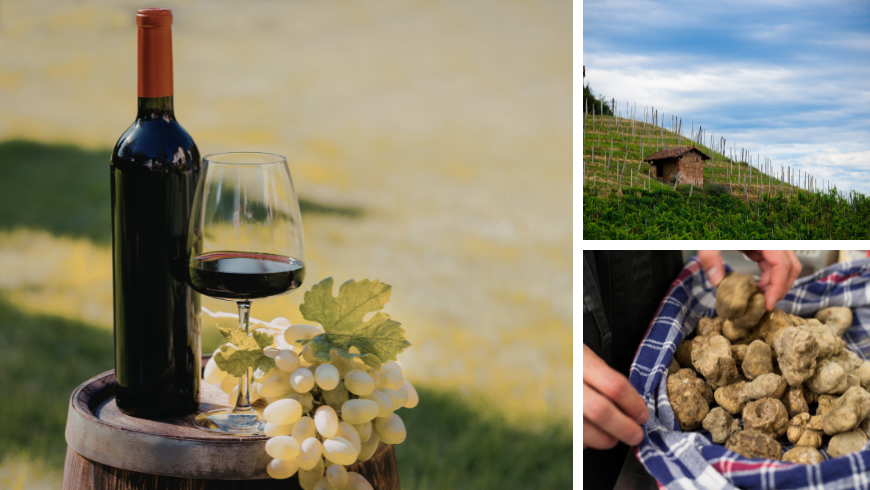
After a day of walking and exploring nature and culture, a stop in a vineyard for a tasting of local products is a must. First of all: wine. Many wineries in the Roero hills offer tastings and slow tours. You will learn about the artisanal workmanship and unique characteristics of the area’s two wines. The first is Roero Arneis DOCG, a native white wine with fresh notes of white peach and almond. The second is Roero DOCG, the corresponding red wine with spicier notes.
The perfect dinner, however, also includes a tasting of local and seasonal products. Among these, the best known is the Alba White Truffle, collected in the woods surrounding the Roero vineyards. Along with truffles are also porcini mushrooms, Canale peaches and Madernassa pears, often used as desserts. And finally, you can’t miss hazelnuts, the main ingredient of the local pastry: from Baci di Dama to hazelnut cake, up to the classic Bunet (a pudding).
In short, at the culinary level there is plenty of choice between first courses seasoned with meat sauces, truffles and cheeses, and delicious second courses, accompanied by a good glass of wine. And then, everything is made more romantic and relaxing by the breathtaking view of the Roero hills.
What to see around: Alba, Bra and the villages of Roero
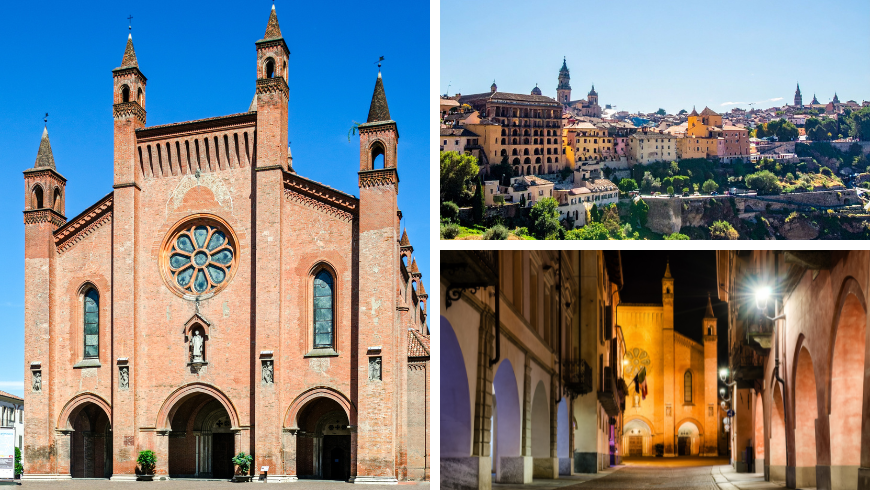
The Roero area and the nearby Langhe area are dotted with charming medieval villages. Among these, the best known is that of Alba, the capital of the Langhe. Also called the “capital of the hundred towers”, this city has several bastions both inside and outside its medieval walls. Strolling along Via Maestra (Via Vittorio Emanuele) is a unique experience, where you discover historic shops, elegant buildings and ancient architecture. However, Alba’s real gem is the underground city tour. Here, you will know more about the authentic Roman and medieval roots, slowly and sustainably.
A few kilometers from Alba lies Bra, the capital of Roero with a more baroque soul. In fact, Baroque culture and architecture prevails here, visible for example in palaces such as the facade of Palazzo Traversa. On the highest hill, Monte Guglielmo, dominates the 19th-century villa “La Zizzola”, home to a museum on the city’s culture. This villa also serves as a promontory on the spectacular panorama of the hills, especially at sunset. Furthermore, Bra is known for the international Slow Food Movement, founded by Carlo Petrini. The aim is to transmit the agricultural food and wine traditions of the entire world, enhancing the seasonality and rhythm of nature. A true hymn to sustainability!
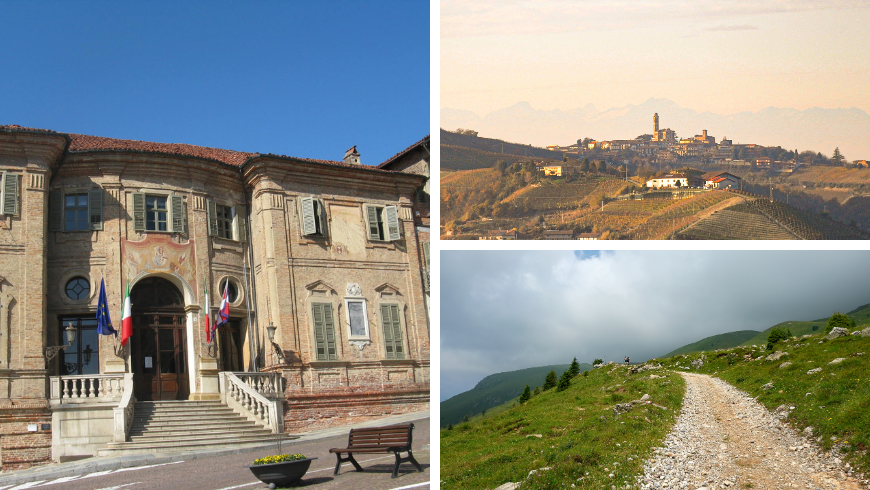
Around Alba and Bra, in addition to Monticello d’Alba, there are many other villages, known for the historical and cultural aura that characterizes them. For example, Govone, Guarene and Monteu Roero are home to amazing medieval palaces and castles, from which to enjoy spectacular views.
Where to sleep in Roero: eco-friendly structures and sustainable stays
The Roero is the ideal place to enjoy a slow and sustainable tourism experience. Here you can find many historic farmhouses and homes nestled in the hilly landscape, where you can spend a relaxing and rejuvenating stay. By choosing these facilities, you help support the local economy and enhance the biodiversity of the area.
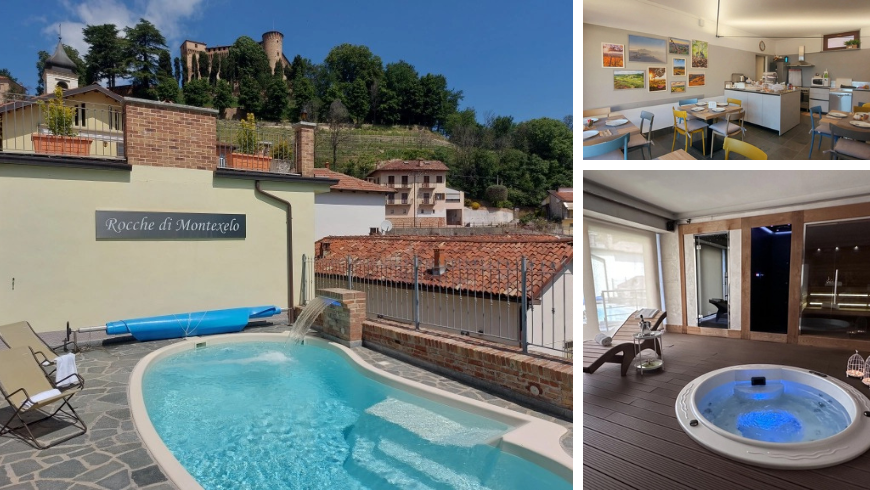
Among the many proposals, Rocche di Montexelo – Appartamenti & SPA is a unique experience among wellness and sustainability. Located right in Monticello d’Alba, it is the ideal starting point for your adventures in the Roero. It is located at the foot of the medieval castle. Furthermore, it also follows green practices with an energy-efficient structure and several sustainable initiatives.
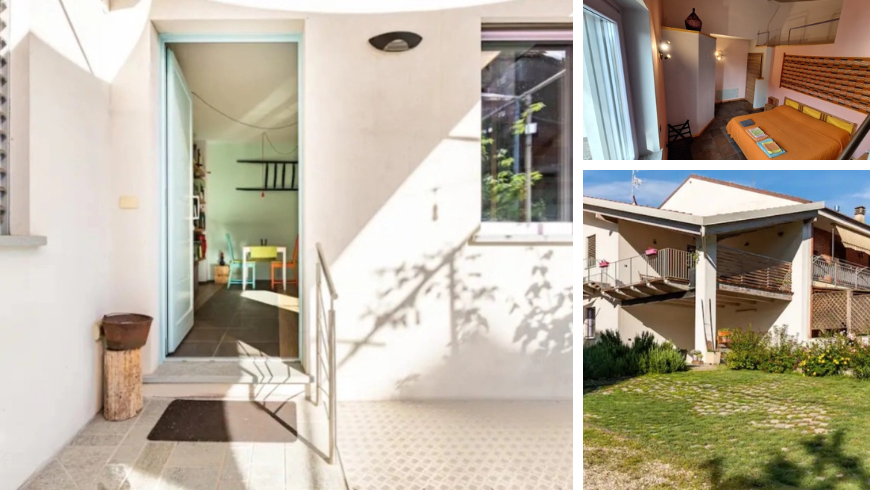
In Monticello d’Alba, you can also find La Noisette B&B. The ancient structure was surrounded by a magnificent hazelnut tree, a part of which remains in the garden. Here, each room has different characteristics, but all follow the sustainable principles that inspired the owners. Furthermore, the strategic location in Monticello Villa allows easy access to the village of Monticello d’Alba ad the other surrounding villages.
Discover here more sustainable stays in Roero, around Monticello d’Alba.
Monticello d’Alba is not only a charming medieval village, but a place where travel slows down and leaves room for exploring. Among castles, vineyards and paths immersed in nature, the Roero offers an authentic experience made of landscapes, traditions and encounters.
A territory to be explored calmly, guided by the scents of the vineyards, the traces of its history and the beauty of its hills.
Cover photo from Canva PRO