

You hear about it more and more often, sustainable tourism is a way of traveling that respects the environment, local communities, and the economies of the regions.
It doesn’t mean giving up the pleasure of traveling, but choosing more conscious experiences that can generate lasting benefits for the places we visit.
In this complete guide, you will discover what sustainable tourism is, its objectives, advantages, main forms, and how to practice it concretely, including by choosing truly eco-friendly accommodations.
Index
- What is sustainable tourism
- Principles of sustainable tourism
- Why is it important today
- Objectives of sustainable travel
- Main forms of green tourism
- Benefits of sustainable tourism
- How to practice it
- 10 tips for sustainable travel
- How to choose a sustainable accommodation
- What is regenerative tourism?
- Ecotourism in Italy
- FAQ on Sustainable Tourism
What is sustainable tourism

According to the World Tourism Organization (UNWTO), sustainable tourism is:
Tourism that meets the needs of present tourists and host regions,
protecting and enhancing opportunities for the future, managing all resources in a way
that meets economic, social, and aesthetic needs while maintaining cultural integrity,
essential ecological processes, and biodiversity.
In other words, sustainable tourism aims to reduce the negative impacts of tourism
and maximize the positive ones, creating value for the environment, people, and local economies.
Principles of sustainable tourism
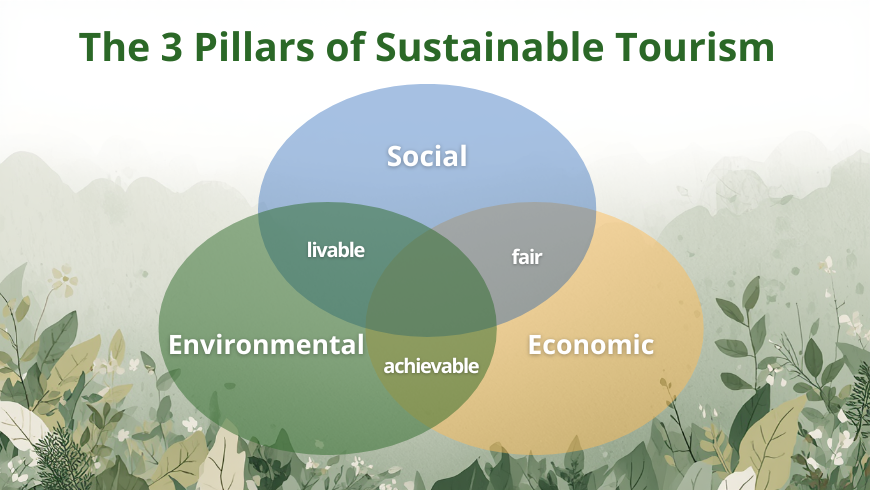
Eco-sustainable tourism is based on three fundamental pillars:
Environmental sustainability
Protect ecosystems, reduce pollution, limit natural resource consumption,
and preserve biodiversity.
Social and cultural sustainability
Respect local communities, traditions, and cultural heritage, avoiding exploitation,
standardization, and loss of identity.
Economic sustainability
Generate economic benefits fairly distributed, supporting local employment and long-term
development of destinations.
Why sustainable tourism is important today
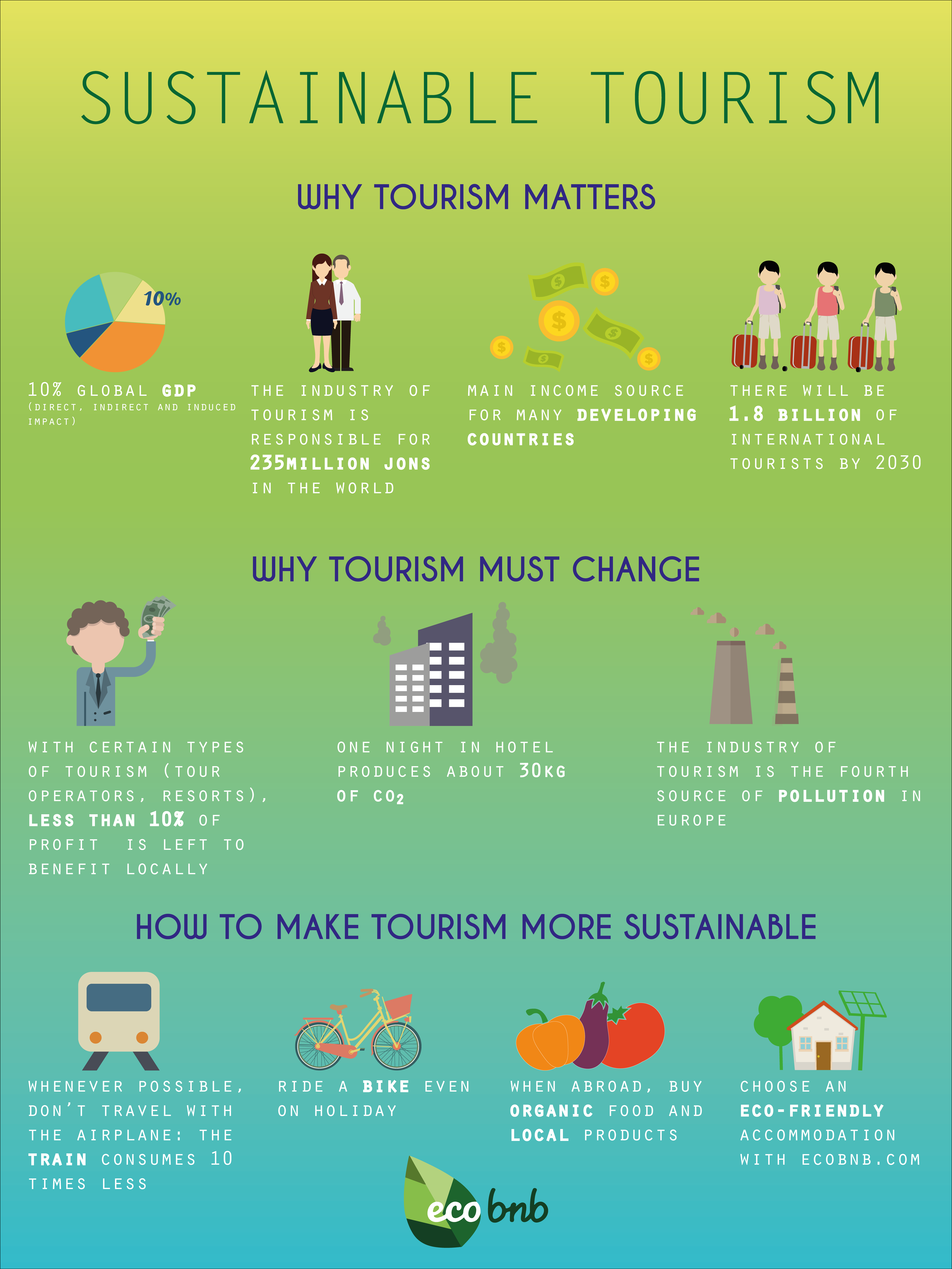
Tourism is one of the largest global industries but also one of the most impactful.
Mass tourism can cause environmental degradation, overcrowding, excessive resource consumption,
and loss of cultural identity.
In many cases, tourists end up destroying what they came to see.
Responsible tourism is therefore the only way to continue traveling without compromising the future of the planet and local communities.
Objectives of sustainable travel
- Reduce the environmental impact of tourism activities
- Protect natural, cultural, and social heritage
- Support local economic development
- Ensure lasting benefits for future generations
Main forms of sustainable tourism

Nature tourism
Trips immersed in nature, natural parks, reserves, and protected areas.
Slow tourism
A more conscious way of traveling, at slow pace, prioritizing quality experiences.
Food and wine tourism
Discover local products, culinary traditions, and sustainable supply chains.
Experiential tourism
Authentic experiences that directly involve local communities.
Proximity tourism
Travel near home, exploring lesser-known areas.
Community tourism
Local communities take an active role in hospitality and tourism development.
Benefits of sustainable tourism

For the environment
Reduces pollution and helps conserve ecosystems.
For local communities
Enhances traditions, culture, and creates economic opportunities.
For travelers
Offers more authentic, deep, and meaningful experiences.
For the local economy
Promotes fairer and more sustainable economic development.
How to practice sustainable tourism

- Prefer low-impact means of transport
- Reduce waste and single-use plastic
- Respect the environment and local traditions
- Choose responsible activities and services
Learn more:
Sustainable travel: best practices
10 tips for sustainable travel

There is no one-size-fits-all formula, but here are some practical choices to become a responsible traveler:
- Whenever possible, avoid flying and prefer trains, electric cars, and carpooling
- Choose eco-friendly accommodations using renewable energy and saving water
- Remember that natural resources like water and energy are limited
- Respect the surrounding environment: follow trails, don’t leave waste, don’t take natural souvenirs
- Bring reusable bottles and containers, avoiding single-use plastic
- Choose restaurants and services run by locals
- Buy organic and local products
- Respect local customs; every country is designed for its inhabitants
- Slow down, explore on foot or by bike whenever possible
Also explore:
How to choose a sustainable accommodation
A truly sustainable accommodation:
- uses renewable energy
- reduces water and energy waste
- supports the local economy
- communicates its practices transparently
It’s important to watch out for greenwashing and rely on platforms that select
truly sustainable accommodations, such as Ecobnb.
Also explore:
- Sustainable accommodations: how to find green places for your eco-friendly vacation
- Sustainable hotels: another way of traveling is possible
- Benefits of staying in a sustainable hotel
Regenerative tourism: going beyond sustainability

Regenerative tourism represents the natural evolution of sustainable tourism. While sustainable tourism aims to reduce the negative impact on destinations, regenerative tourism focuses on generating a tangible positive impact on the environment, local communities, and cultural heritage.
It is important not to confuse it with wellness tourism: the focus of regenerative tourism is not the traveler’s personal well-being, but the real and measurable improvement of destinations.
However, those who participate in these experiences often leave feeling renewed and enriched.
Main characteristics of regenerative tourism
- Regeneration of natural resources: reforestation, beach clean-ups, sustainable water management, and habitat protection
- Benefits for local communities: local employment, training, and sustainable economic development
- Enhancement of culture and heritage: respect and promotion of local traditions
- Traveler education: informative guidance to raise environmental and cultural awareness
- Benefits for travelers: meaningful and enriching experiences
- Impact measurement: monitoring environmental, social, and economic results
Regenerative tourism creates a virtuous cycle: resources are restored, communities thrive, and travelers benefit from experiences, generating a lasting and tangible positive impact.
Sustainable tourism in Italy

Italy is one of the ideal destinations for sustainable tourism: villages, natural parks, rural areas, and local communities offer authentic and low-impact experiences.
Choosing conscious tourism in Italy means valuing the territory and protecting a unique global heritage.
Also explore:
- How to discover Italy in an alternative and sustainable way
- How to discover Italy in an alternative and sustainable way
- Best eco-friendly hospitality in Italy
Frequently Asked Questions
No, it often means making different choices, not necessarily more expensive ones.
Yes, every destination offers opportunities to reduce your environmental impact.
They are complementary concepts but not identical.
Sustainable tourism mainly concerns facilities, destinations, and policies that minimize the environmental, social, and economic impact of tourism, creating lasting benefits for local communities and the environment.
Responsible tourism, on the other hand, concerns the choices and behaviors of the traveler, who acts consciously and respectfully during the trip, personally contributing to the sustainability of destinations.
In conclusion, traveling sustainably means taking care of the world while exploring it.
Every conscious choice helps build tourism that is fairer, more respectful, and long-lasting.
Article updated by the Ecobnb editorial team – last revision 2026


