
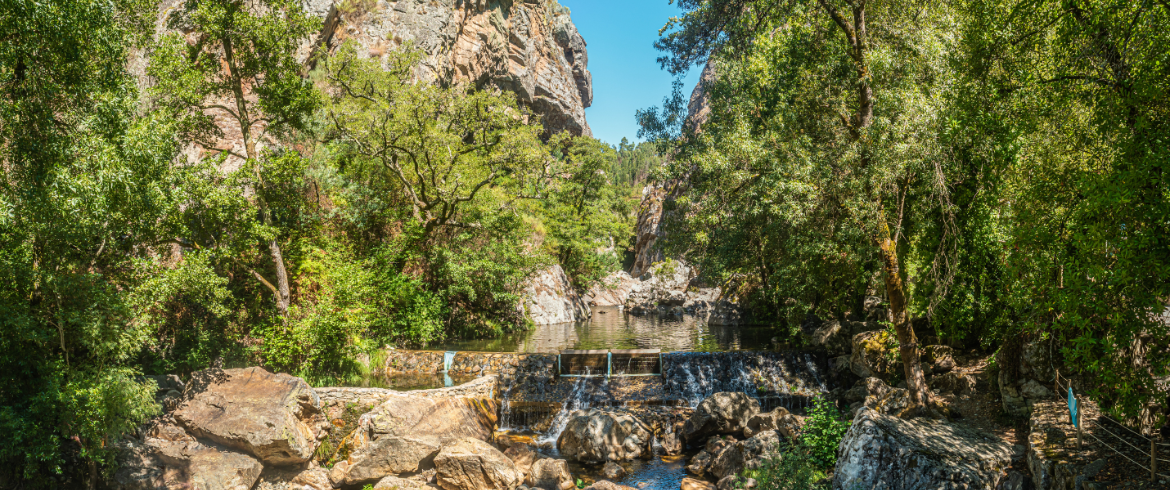
Portugal is not just Lisbon, the Algarve, the waves of Nazaré or Sintra. There are lesser-known places that can still surprise you and leave you speechless. This is the Portugal of back roads, green mountains, clear rivers, forests, waterfalls and small villages where time seems to move at a different pace.
In the heart of the country, far from the best-known destinations, nature takes centre stage. The inland mountains hide scenic trails, gorges and waterfalls, while rivers create small beaches where you can stop for a swim on warm summer days. It is a landscape to explore slowly, following roads through forests and villages and allowing yourself to be surprised by scenery that rarely appears on classic tourist itineraries.
In this corner of Central Portugal, between the Serra do Espinhal, the Ribeira de Alge and the Cabril reservoir on the Zêzere River, we have gathered seven natural wonders to discover at a slower pace. An ideal itinerary for anyone looking for nature, tranquillity and a different way to experience Portugal, far from mass tourism.
1. Ribeira de Alge: the River that Flows Through Goladinha
At the heart of Central Portugal flows the Ribeira de Alge, a waterway that crosses the municipality of Figueiró dos Vinhos before meeting the Zêzere River at Foz de Alge.
The Ribeira de Alge winds through a landscape of forests and mountains before making its way towards the Zêzere. Along the river, small trails invite you to explore the area at a leisurely pace, far from crowded tourist destinations.
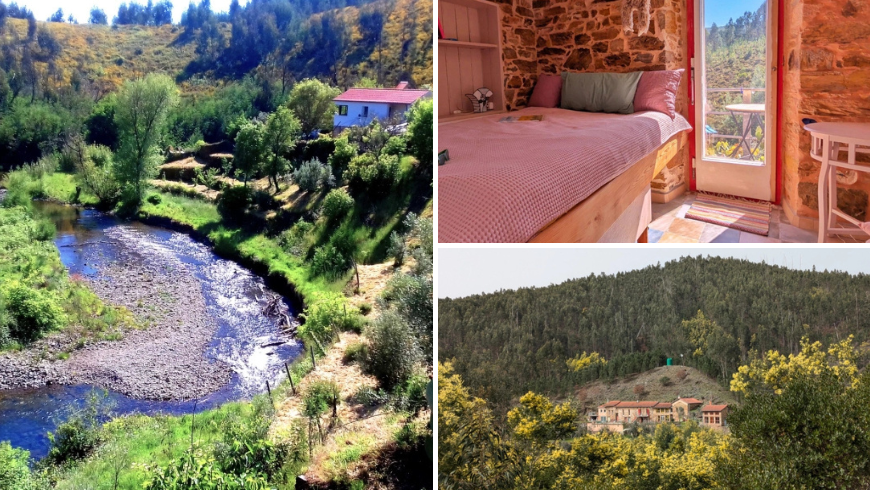
It is right on the banks of this river that you will find Goladinha, a small historic village at the foot of the Serra do Espinhal mountain range. The river flows right beside the houses and, during the warmer months, creates peaceful spots where you can swim, sunbathe or simply sit by the water and listen to its gentle flow. Here, you can stay for a few days at Casa Madeira, an eco-friendly country house for four people, with a spacious kitchen-dining area, a comfortable sleeping area and a private outdoor space.
The special appeal of the property lies in its relationship with the river: simply step outside and you can reach the small river beach, leaving noise and busy schedules behind. It is the perfect place for anyone looking for a holiday where nature is not just something to see on an excursion, but part of everyday life.
2. Fragas de São Simão: Rocks, Forests and Crystal-Clear Water
Not far from Goladinha lies one of the most spectacular landscapes in the area: Fragas de São Simão.
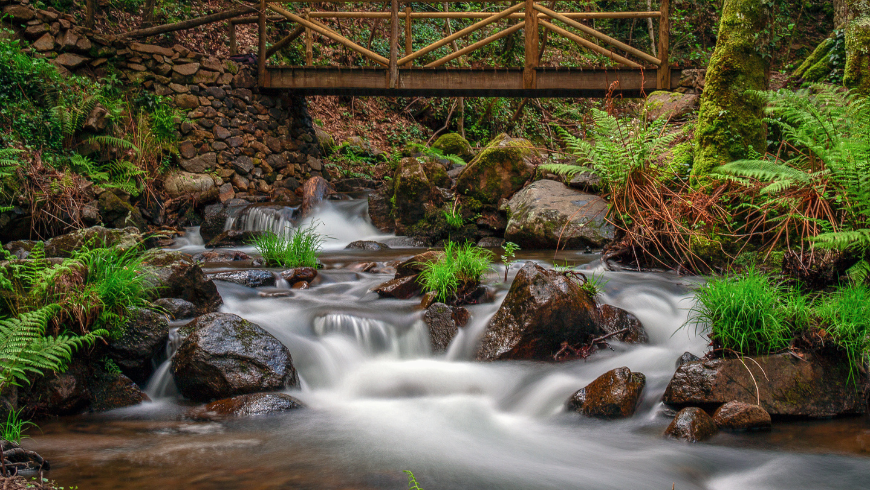
Two enormous rock walls enclose a small river beach, while the green of the mountains reaches almost to the water. A pedestrian route with wooden walkways connects the viewpoint with the banks of the Ribeira de Alge and the small village of Casal de São Simão.
Nearby Casal de São Simão is a small aldeia built mainly from quartzite, with a handful of houses gathered along the mountainside. It is one of those villages worth visiting without being in a hurry to leave: take a walk through its narrow streets, enjoy the peaceful atmosphere and then make your way down towards the river beach.
It is also a wonderful example of how, in Central Portugal, nature and small villages are often part of the same landscape.
3. Serra do Espinhal: Trails Through Mountains and Forests
If you enjoy walking, the Serra do Espinhal deserves at least a full day. The mountain offers several routes through forests, streams and rural landscapes, with viewpoints overlooking the surrounding mountains and small settlements. Some trails follow gorges and waterways, while others climb towards the higher parts of the mountain, where the landscape opens out over the surrounding countryside.
It is an ideal area for anyone who is not necessarily looking for challenging hikes, but simply wants to walk surrounded by greenery, stop from time to time to admire the scenery and discover a more rural side of Portugal.
And it is right here in the Serra do Espinhal that two other stops on this itinerary can be found: Pedra Ferida Waterfall and Louçainha River Beach.
4. Pedra Ferida Waterfall: Water Falling Through the Forest
Among the rocks and vegetation of the Serra do Espinhal, Pedra Ferida Waterfall appears almost unexpectedly.
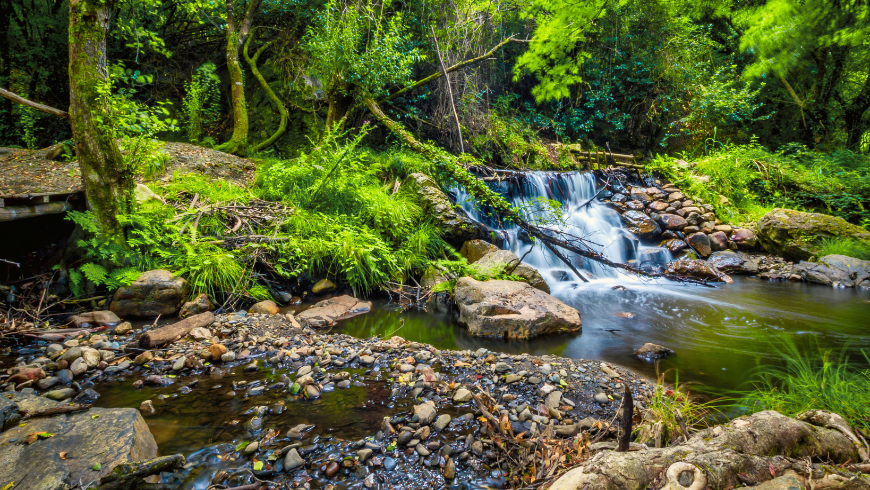
Fed by the Ribeira da Azenha, the waterfall is around 25 metres high. Its unusual name comes from the reddish colour that the rocks take on when they come into contact with the water, resembling a wound.
To reach it, you follow a trail through the forest, accompanied by the sound of running water. Pedra Ferida Waterfall is connected to Louçainha River Beach by the PNL2 walking route, an itinerary through the Serra do Espinhal that allows you to combine the two destinations in a single hike.
It is one of those walks where the destination matters, but the journey matters just as much: the forest, rocks, small streams and remains of old watermills tell the story of a landscape shaped by water over the centuries.
5. Louçainha River Beach: A Swim in the Heart of the Mountains
After a walk, what could be better than a swim in clear water? Louçainha River Beach is one of the most pleasant bathing areas in the Serra do Espinhal. Here, the idea of a beach is very different from what might first come to mind: no endless rows of sand and parasols, but fresh water, rocks, trees and mountains.
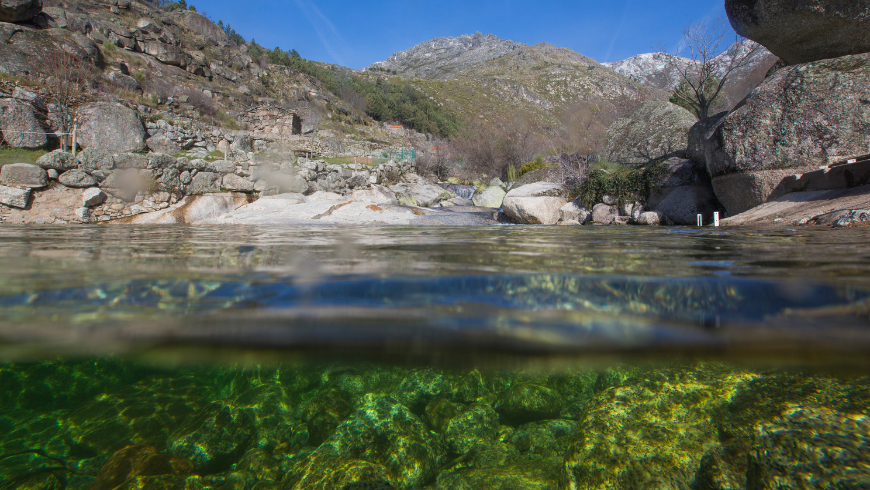
Louçainha River Beach lies in a wooded valley. The bathing area is surrounded by trees, rocks and vegetation-covered slopes, which provide shade during the hottest hours and create a refreshing atmosphere even in summer. Natural pools and bathing areas are fed by the stream, while the facilities make it easy to stop for a picnic, rest in the shade or simply spend a few peaceful hours by the water.
6. Mata Municipal do Cabeço do Peão: A Forest Above the Rooftops of Figueiró dos Vinhos
Just above Figueiró dos Vinhos, the town gives way to the greenery of Mata Municipal do Cabeço do Peão, a vast woodland area covering more than 30 hectares on the outskirts of the town.
It is a place to discover at a leisurely pace, following trails through pine trees, oaks, holm oaks, laurels and strawberry trees. In spring, the undergrowth bursts into colour, while on warmer days the vegetation creates shady spots that are perfect for a break. The walking paths and equipped areas also make the woodland pleasant for an easy stroll.
But the real reason to come here is Cabeço do Peão, the highest point of the woodland. At around 539 metres above sea level, the view opens across the mountains surrounding Figueiró dos Vinhos, reaching as far as the Serra da Gardunha, Serra da Estrela, Serra de Muradal and Serra da Lousã.
You can reach it directly from the town by following the pedestrian route that climbs towards the woodland. Once at the top, you will find yourself facing a sweeping panorama: after walking through forests and valleys, seeing the landscape from above helps you understand just how green and wild this corner of Central Portugal really is.
7. Zêzere River and Cabril Reservoir: The Green Heart of Portugal
The journey can continue south towards the Zêzere River and the Cabril reservoir. Here, the landscape unfolds in a succession of wooded mountains, water and small villages. The reservoir reflects the surrounding hills, creating a particularly striking landscape, especially where the roads draw close to the water.
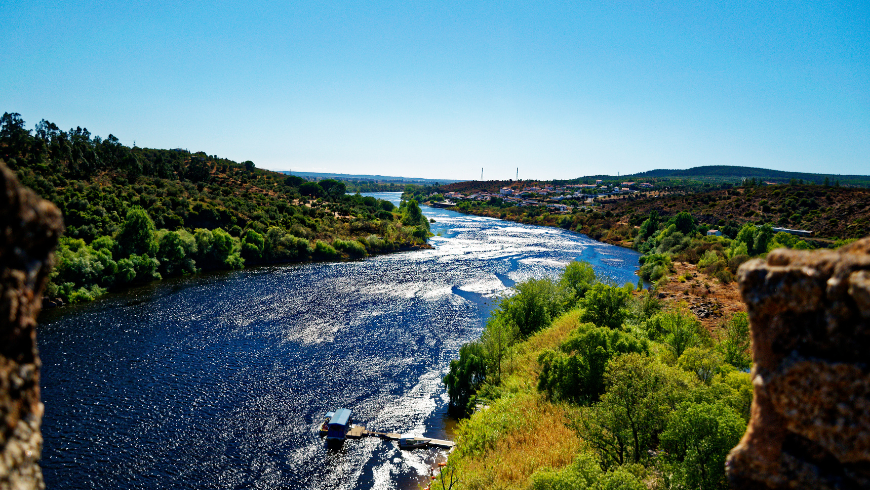
It is a place where time really seems to slow down. You can explore small waterways, discover quiet corners of the reservoir or simply stop to take in the view.
If this landscape intrigues you, you can discover more in our article The Zêzere River and Cabril Reservoir: Sustainable Living in the Green Heart of Portugal, dedicated to this green corner of Central Portugal. The article also explores sustainable ways of living, nature and communities that have developed around the reservoir.
The natural wonders of Portugal are not all found along the Atlantic coast or inside large national parks. Some are hidden along a back road, among the houses of a small village or on the banks of a river, in the heart of the country’s inland landscapes.
If you would like to continue exploring Portugal sustainably, take a look at the Ecobnb Green Guide to Portugal, with more itineraries, places and ideas for slower, more environmentally conscious travel.


