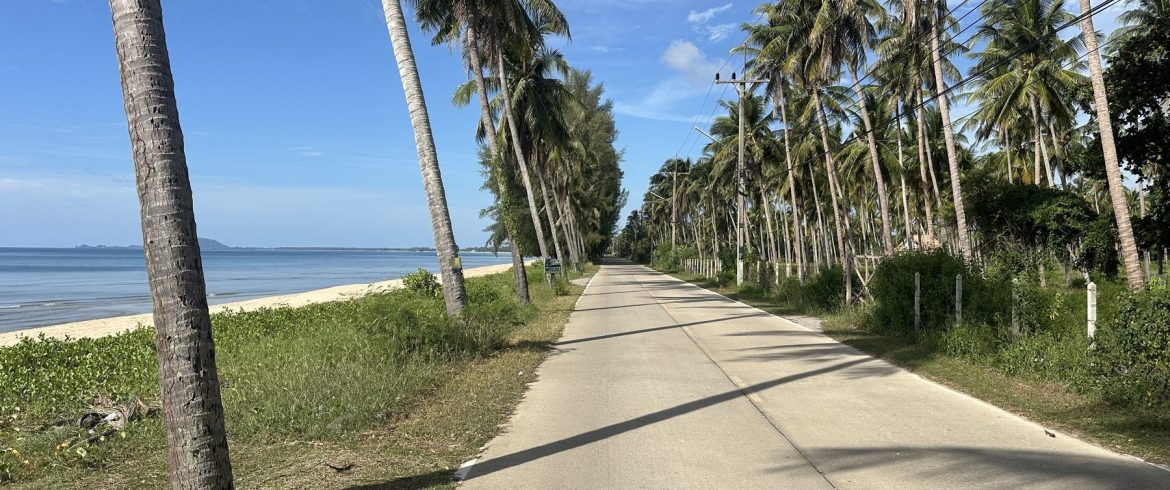
The train from Bangkok takes about seven hours to reach Ban Krut, and that is the first thing worth saying about the place. You can get here without flying. The village sits 380 kilometres south of the capital on the southern railway line, and it has its own station, which means the entire journey from the middle of Bangkok to a beach on the Gulf of Thailand happens on rails.
Three trains a day stop here. Most do not. The southern line carries a steady stream of travellers heading for Chumphon and the ferries to Koh Tao, Koh Phangan and Koh Samui, and almost all of them stay in their seats as the train slows through Ban Krut and picks up speed again. That is the whole reason this coast is still what it is.
A beach with no beach club
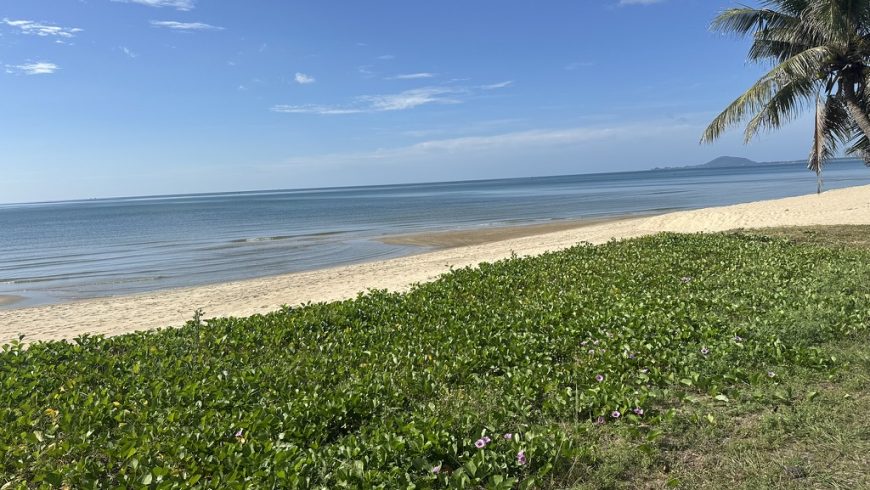
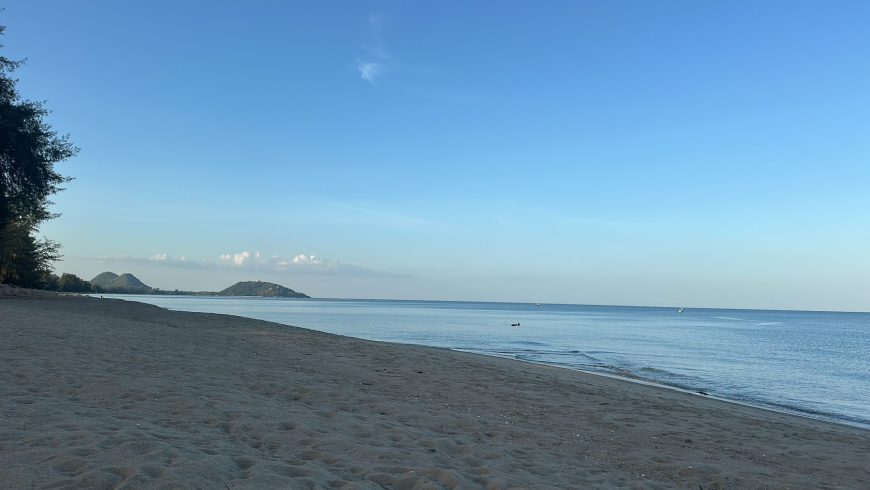
Ban Krut has twelve kilometres of sand, and what defines it is an absence. There is no beach club. There is no bar street. There is no strip of identical loungers rented by the day, no music at sunset, no jet skis. This is not a marketing line that somebody at a tourist board decided on. It is simply what the coast looks like, because the development that flattened other Thai beaches never arrived here.
What is here instead: casuarina trees along the sand, fishing boats pulled up on the beach in the morning, a coast road running parallel to the water with coconut palms on both sides, and a headland called Khao Thong Chai dividing the northern half of the beach from the southern half.
The fishing still works. Boats go out and come back, and the catch goes to the market and to the restaurants along the shore rather than onto a lorry heading north. That is an unglamorous detail, but it is the difference between a coast that has a local economy and a coast that has been converted into one.
On weekdays long stretches of the beach are close to empty. At weekends and during Thai public holidays that changes, because families drive down from Bangkok, and the beach fills up with Thai visitors rather than foreign ones. Ban Krut was never undiscovered. It was simply discovered by the people who live in the country.
Living at the village’s pace
The morning market runs every day beside the old railway station. It starts around six, and by mid-morning the stalls are already packing up, which is inconvenient if you like a slow start and the single best reason here to get out of bed early. It is where the village actually happens: fish that came in that morning, vegetables, curries sold by the bag, people talking to each other rather than to visitors.
Other markets fill out the week. Thursday afternoon, the stalls gather near the temple. Saturday, some set up on the other side of the railway tracks. Sunday evening is the best of them, when the beach road fills with food stalls and tables set out on the sand, roughly four until eight, sometimes with live music.
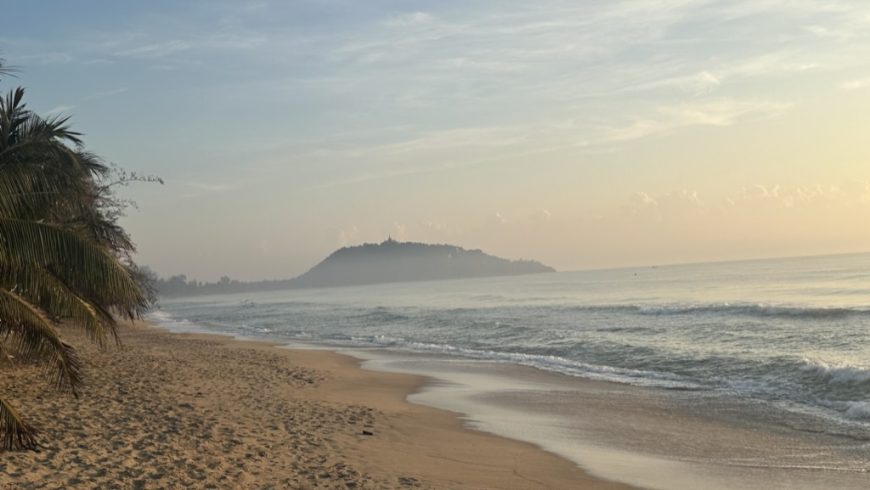
Above the bay, on the Khao Thong Chai headland, stands Wat Thang Sai. The climb is worth it for the view, which does more to explain the geography of this coast than any map: the beach running away in both directions, the Gulf in front, and on clear days islands on the horizon.
Cycling the coconut roads
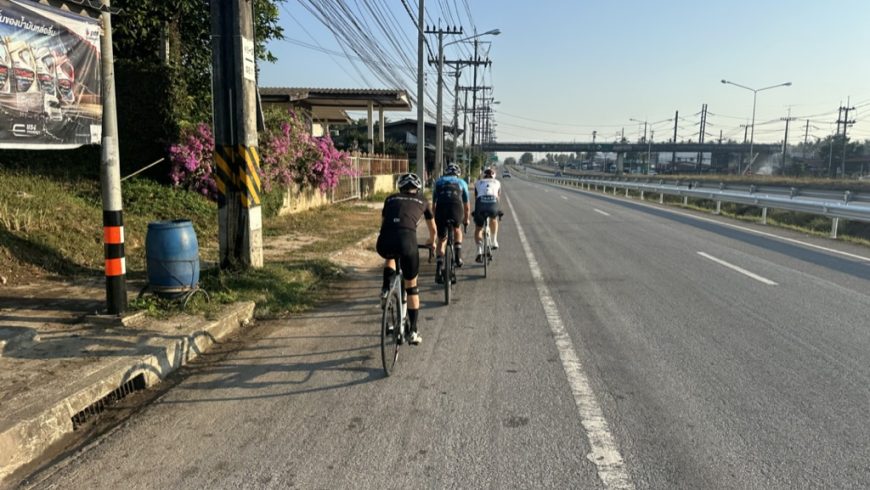
The land behind the beach is flat, and the roads are quiet, which makes a bicycle the honest way to see this place. South of the village, the road runs through coconut groves and small fishing settlements to beaches with even fewer people on them. Bicycles can be rented in the village.
This matters more than it sounds. A destination where the interesting things are within cycling distance is a destination that does not need you to hire a car or book a minibus tour, and the carbon arithmetic of a holiday changes considerably when the local transport is a bicycle and the long-distance transport is a train.
Staying small
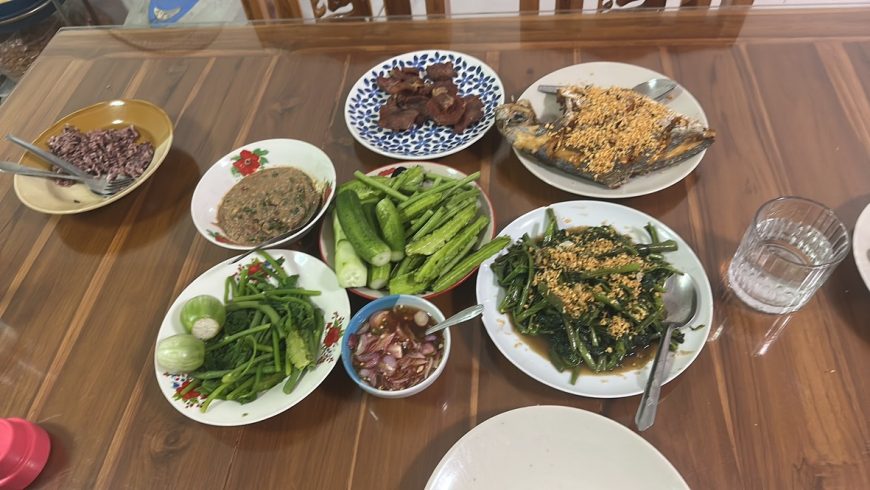
Accommodation along this coast is mostly family-run: guesthouses, bungalows and small resorts rather than chains. The money that comes in tends to stay with the family that owns the place.
One practical warning, and it catches people out. Twelve kilometres of coast means two places both described as being in Ban Krut can be several kilometres apart. Check the position on a map before booking. If you want to walk to the market, the station and the shops, stay in the central area. If you want quiet above everything else, the places further along the coast will give you that, at the cost of needing a bicycle for anything at all.
Practical notes
When to go. The dry season on this coast runs December to April, with January the most reliable month: dry, breezy, and cool enough at night to sleep with the windows open. February stays dry and the sea is usually calm. March gets hotter, with clear water. April is hotter still, and mid-month is Songkran, the Thai new year.
October is the month to avoid, the wettest of the year, with onshore wind and rough water. November can still be wet early on and improves towards the end.
One thing that is worth getting right: Ban Krut faces the Gulf of Thailand, not the Andaman Sea. The seasonal advice written for Phuket and Krabi does not apply on this side of the peninsula, and following it will send you here in the wrong month.
How long. Two or three nights is the minimum, enough for the beach, the temple, one market and a day exploring the coast without hurrying. People who came for two nights routinely stay longer, which is either a recommendation or a warning depending on your itinerary.
Booking the train. Tickets for the southern line can be booked in advance through the State Railway of Thailand, and it is worth doing in the busy months. Two cautions. First, check that the service you book actually stops at Ban Krut, since most southern-line trains pass straight through. Second, the neighbouring stations are a genuine trap: Bang Saphan Yai has eight direct services a day from Bangkok, while Bang Saphan Noi has two and both of them arrive after midnight. The names look nearly identical on a booking screen, and realising the mistake at one in the morning turns a simple journey into a long night.
Is it worth getting off the train?
If you want attractions, nightlife and a full schedule, no, and there is no point pretending otherwise.
If somewhere in the middle of a trip you find you need to slow down, then this coast will do that for you without taking you off the route between Bangkok and the south. You can walk on the beach, go to the market in the morning, climb the headland, eat fish while looking at the sea, and get back on the train whenever you feel like it.
The train arrives, slows, and carries on towards Chumphon. Most people stay on board.
Cover image: Photo: Michael Lauritzen
Author: Michael Lauritzen lives in Ban Krut and writes aboutbankrut.com, an independent guide to this stretch of the Thai Gulf coast, published in eleven languages with no advertising. He has no commercial interest in any accommodation or business mentioned here.