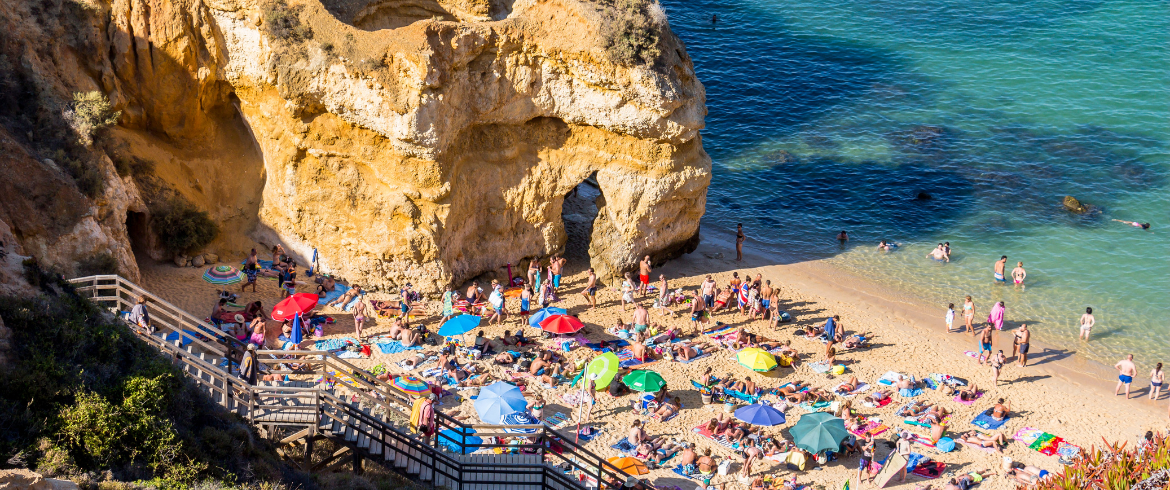
Tourism is often described as a precious resource and a source of wealth for local areas and communities. But is that always the case? Looking closely, the picture becomes complicated. Overcrowded historic centers, precarious seasonal work, unaffordable prices, and rising rents are pushing residents out of cities. These are just some of the downsides of mass tourism, which are all too often swept under the rug.
The contradictions of contemporary tourism are brought to light in a compelling book by Cristina Nadotti, titled Il turismo che non paga (“The Tourism That Doesn’t Pay”). An investigative work across Italy that gives a voice to those who, every day, bear the consequences of overtourism. The book is an invitation to think critically about the social and environmental impacts of an industry that is far too often idealized.
We interviewed the author to explore the book’s themes and reflect on how to make tourism more sustainable.
The Interview with Cristina Nadotti
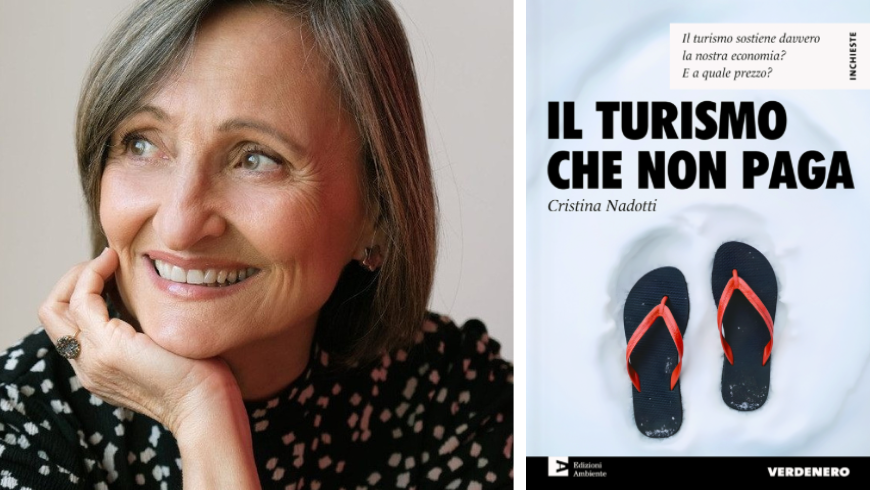
The book carries out an investigation into contemporary tourism: what was the starting point that led you to dig deeper into this topic?
More than a single moment, it was a series of reflections that emerged over the course of many trips I took both for pleasure and for work. I also think it was crucial to witness the transformation of Sardinia, my adopted home, as tourism activities there has rapidly developed.
Alghero, which in summer nearly triples its 40,000 inhabitants, has services that work perfectly in winter but simply can’t cope with the pressure of the crowds during summer. At first, I thought I’d focus mainly on tourism’s environmental impact. But you can’t talk about sustainability without also addressing economic, social, and cultural sustainability.
“Il turismo che non paga” challenges the idea of tourism as an ever-positive resource. What evidence or observations struck you most in overturning that narrative?
No human activity can have zero impact. But tourism, more than most industries, is always talked about as a sector that generates wealth, without considering its deeper impacts. This is partly due to the fact that tourism is the holiday industry, and holidays have always been associated with leisure, fun, and joy. The conversation is dominated by industry organizations, entrepreneurs, and politicians dazzled by the promise of new jobs. I wanted to give a voice to people who don’t benefit from tourism. I tried to examine, for instance, what kind of work the tourism sector actually offers, or whether an economy built entirely around the holiday industry can ever be a solid one.
You write about the transformation of places into “art cities,” “authentic villages,” or “Instagrammable destinations”. What does that actually change in the daily life of those communities?

Tourism transforms the places where it develops because visitors’ needs are not the same as residents’ needs. Tourism demands new dedicated infrastructure, which often leads to land consumption. This harms the environment without improving the quality of services for the people who actually live there. The tourism industry reshapes the social and economic fabric of cities, which risk becoming theme parks rather than places where people live and work.
Tourists have greater spending power, or at least a greater willingness to spend on a daily basis, than residents do: hence the rise in prices. In short, tourism establishes a form of colonization. It imposes on communities the gaze of the visitor rather than that of the inhabitant.
After the book came out, I thought more about this last point and wrote an article, coming out in June in The Passenger. In the article, I explore the consequences of conforming to the tourist’s gaze.
The book brings together many different voices (residents, workers, operators, researchers): which testimony struck you the most?
I was deeply affected by the account of Fabio De Iaco, an emergency medicine specialist, who described what happens in the emergency rooms of seaside towns in summer.
I was also struck by the testimony of Daniela D’Amico from the press office of the Abruzzo, Lazio, and Molise National Park. Her description of tourists who consider themselves “eco-travellers” but can’t understand that some places are simply off-limits was illuminating.
Another important voice was that of Franco Borgognop, with his story about underwear lost at high altitude. An example of how even those who consider themselves responsible tourists inevitably leave waste behind.
I also want to say that every academic I consulted was exceptional in giving me their precious insights.
One of the book’s key ideas is that tourism is not a neutral sector but has profound environmental and social impacts. Which do you think are the most underestimated?
Environmental issues get talked about a lot, sometimes too much. However, the social and cultural transformations I mentioned receive far less attention. The enormous consumption of resources (water, food, energy) is downplayed in favor of the economic benefits. Also, the extractive nature of the tourism industry is never described. Nor do people say plainly that an economy built primarily on tourism is a dangerous monoculture.
The investigation also highlights cases of overtourism: what are the most critical situations in Italy today?
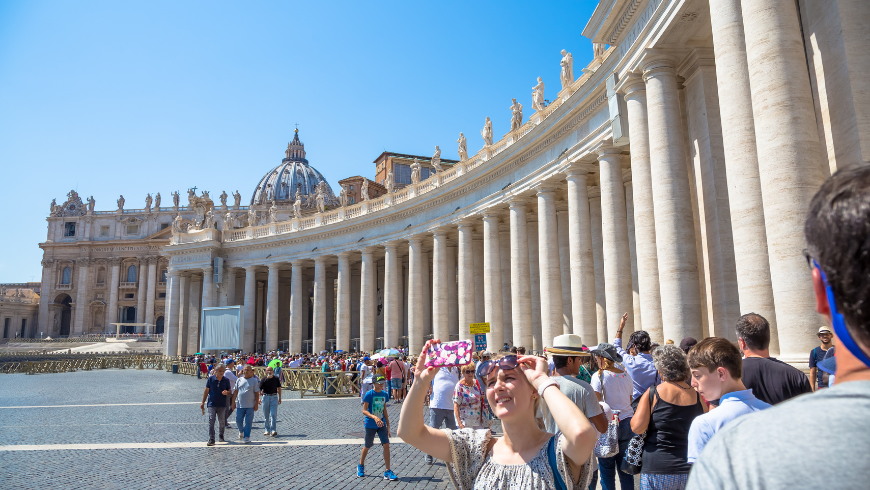
Everyone can see what’s happening in Venice, Florence, or Rome. However, many smaller towns experience a kind of tourism that deprives them of their distinctiveness.
I think of villages described as “open-air museums”: who could actually live in a museum? Tourism in inland areas is often cited as a solution for depopulation, but it isn’t. Without planning and thinking about the needs of the people who live in a place, there can be no repopulation. One of the most visible and serious consequences of the touristification of urban centers is the housing shortage. Short-term tourist rentals are certainly not the only problem, but they amplify the housing crisis.
Are there already models of more sustainable tourism that genuinely work? Which ones do you find most interesting?
There are many, and they all start from a community becoming aware of the issue and taking an active role in planning. I should say that very often these are mountain communities or inland villages.
Trentino-Alto Adige leads the way, with projects like Visit Paganella, which has understood well that transport is key to avoiding the concentration of tourists in one place at one time. There are also towns like Pitigliano, which promote shared reflection processes. And regions like Friuli Venezia Giulia, where movements such as the Patto per l’Autonomia highlight that adequate planning is needed to prevent overcrowding. Which is exactly what I stress in the book. I am also fond of the Miradas project in the Nuoro area.
What role can accommodation providers and travelers play in driving change in the system?
They are absolutely crucial. A concrete example: the work of entrepreneurs like Daniela Meloni of Limolo House 56 Green, in Cabras in the Oristano area, shows that it is possible to influence visitors’ choices. Meloni hasn’t just built a low-impact facility and offered low-impact activities. She also educates, organizes moments of reflection and puts pressure on political decision-makers.
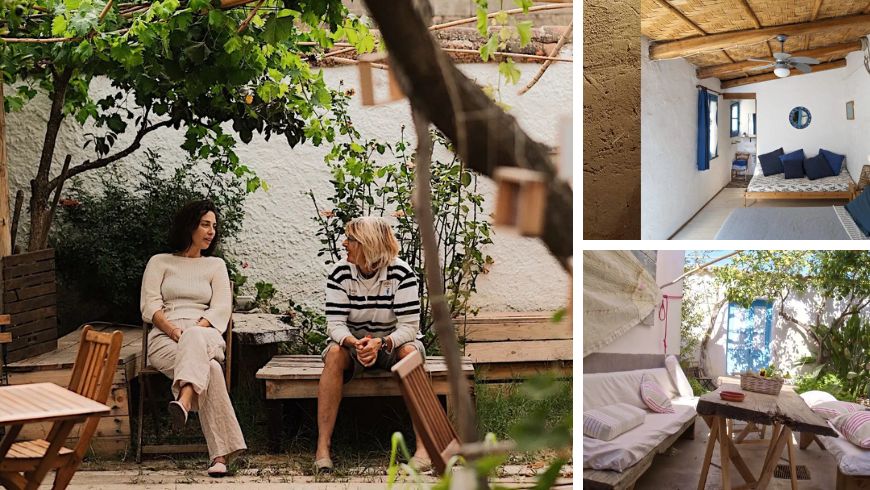
Entrepreneurs like her can lobby in a genuinely positive sense. As for travelers, I think it would be more effective to focus less on the word “sustainability” and more on the concept of limits. Consuming less and avoiding what is superfluous are the starting points for making the tourism industry less destructive.
Change starts with us
Cristina Nadotti‘s words invite us to look at tourism through different eyes. The point is not to demonize travel, which remains one of the most enriching and formative experiences a person can have, but to let go of the idea that tourism is automatically beneficial. Every visit has a cost: for the local area, for residents, and for the environment.
Every decision we make when we travel can contribute to a more sustainable form of tourism. These include where to stay, how to get around, and which activities to support. Choosing destinations that take sustainability seriously, favoring eco-friendly modes of transport, and selecting sustainable accommodation are the first steps toward responsible tourism that genuinely benefits local communities.
As Cristina suggests, change starts with us. With entrepreneurs who make bold choices, with communities that preserve their own identity, and with travelers willing to slow down and seek out authentic experiences.
Truly sustainable tourism is possible. But, as this book reminds us, it requires awareness and the ability to see beyond the most convenient narratives.
Cover image: Photo via Canva PRO