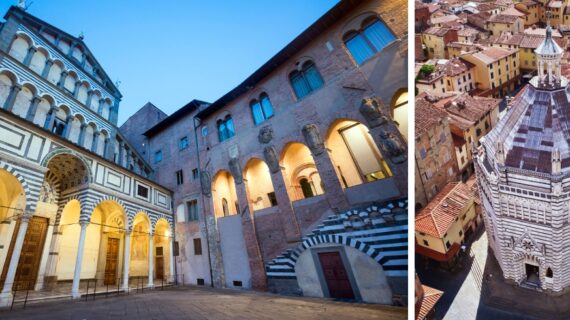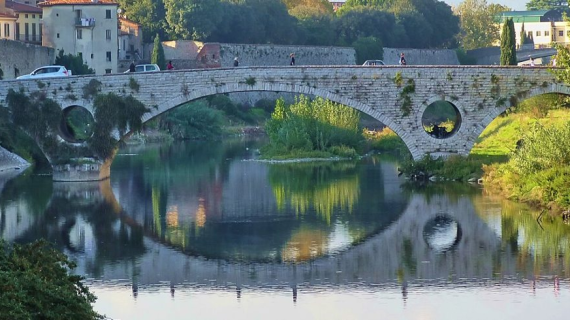
Among Tuscany’s great art cities and the rolling hills that have made the region famous, there is a territory where travel can still follow a slower rhythm. Pistoia lies at the foot of the Apennines and, within just a few kilometres, takes you from medieval squares to forests, from the olive groves of Montalbano to small mountain villages.
For those who enjoy walking, cycling and discovering places along quiet back roads, Pistoia offers a pleasant way to experience Tuscany away from the busiest routes. The historic centre can become the starting point for exploring the surrounding hills, while further north the landscape changes and gives way to the Pistoiese Mountains, with forests, streams, ancient villages and hiking trails.
We have gathered some itineraries and places to include in a slow trip to Pistoia, choosing routes that combine nature, culture and slow mobility.
Why choose Pistoia for a slow trip?
Pistoia has a particularly interesting location for those who want to combine a cultural visit with days spent outdoors. The city lies at the foot of the Apennines, while the surrounding area includes hills, historic villages, forests and natural landscapes.
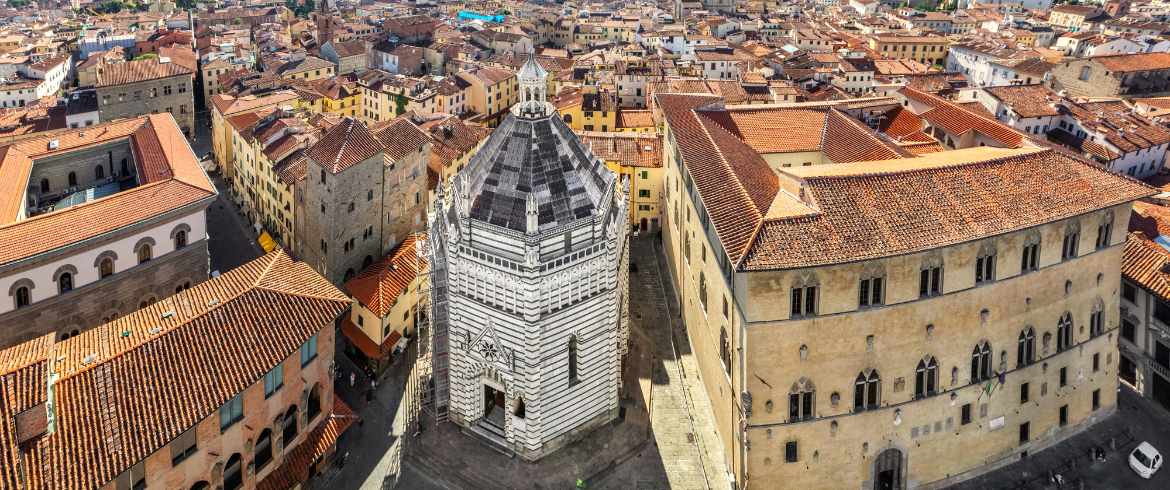
The historic centre, with Piazza del Duomo, the Cathedral of San Zeno, the Baptistery and its medieval streets, can easily be explored on foot. Just outside the city, cycling routes and trails towards the hills begin.
Further north lies the Pistoiese Mountains, an area characterised by forests and valleys where walking can become the common thread of a journey. The area includes places such as San Marcello Piteglio, Cutigliano, Abetone, Sambuca Pistoiese and Marliana, each with its own landscape and history to discover.
To help plan your stay, you can also explore our Guide to Tuscany and discover sustainable accommodation throughout the region.
Discover Pistoia on foot: historic squares, art and gardens
The best way to begin discovering Pistoia is to wander through the streets of its historic centre. Distances are short, and within just a few minutes you can move from large medieval squares to quieter streets, small shops, courtyards and green corners.
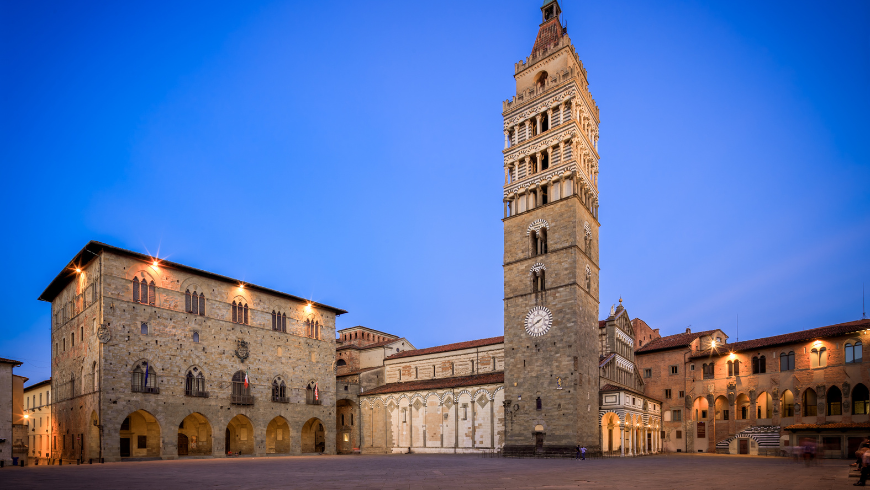
The heart of the city is Piazza del Duomo, one of Pistoia’s most striking urban spaces. Several of the city’s main historic buildings are gathered here: the Cathedral of San Zeno, the Baptistery of San Giovanni in Corte, the Bishop’s Palace, the Town Hall and the bell tower.
From Piazza del Duomo, you can continue towards Piazza della Sala, one of the liveliest spots in the historic centre, and then reach the Ospedale del Ceppo, an ancient hospital founded in the 13th century and recognisable by its famous glazed terracotta frieze. Nearby are also the Church of Sant’Andrea, with its pulpit by Giovanni Pisano, and the Church of the Tau, an important example of medieval art in Pistoia.
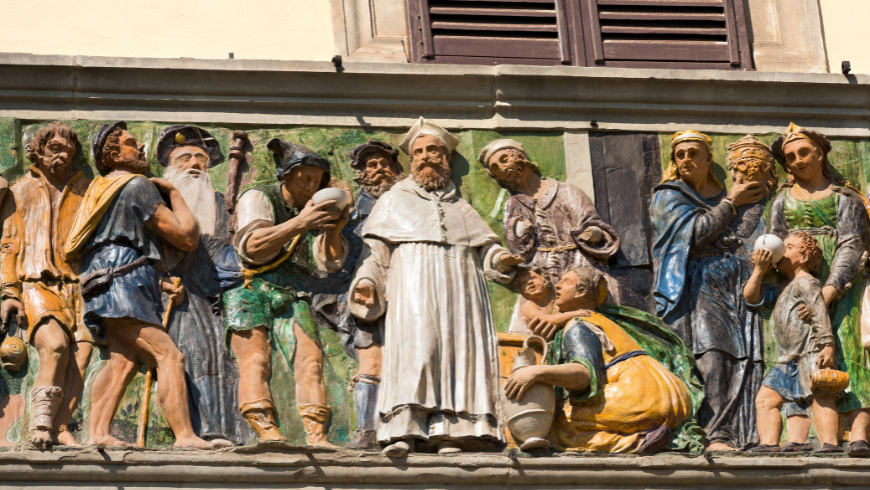
For a break surrounded by greenery, head to Montuliveto Park, a small urban oasis where you can stop and recharge.
Pistoia is therefore a city to explore without an overly rigid schedule: a walk through the squares, a coffee break, a museum visit and then back outside, simply following your curiosity.
Nature and itineraries around Pistoia: from the Montalbano hills to the Pistoiese Mountains
Once you leave the city centre, the landscape changes quickly. The Pistoia area is characterised by cultivated hills, forests, trails and mountains, offering plenty of opportunities for those who enjoy walking, cycling or following historic routes.
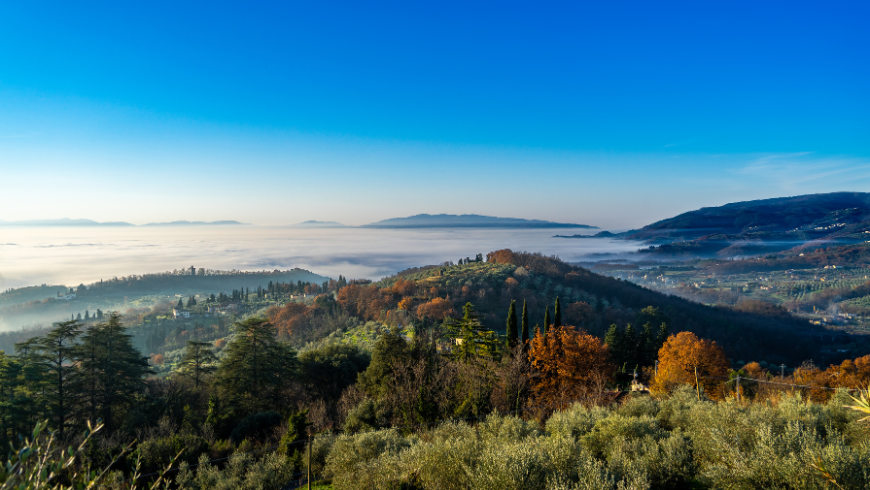
One of the most interesting landscapes is Montalbano, with its vineyards, olive groves and woods. A section of the Romea Strata also passes through this area, an ancient pilgrimage route followed in the Middle Ages by pilgrims from Central and Eastern Europe. The route reaches San Baronto, a hamlet of Lamporecchio, and offers a demanding day of walking through dirt roads, trails and wooded landscapes.
For a completely different experience, head to Orsigna, in the Pistoiese Mountains, and follow the itinerary dedicated to Tiziano Terzani. The route crosses forests and high-altitude meadows, passes the famous Albero con gli occhi (“Tree with Eyes”) and continues towards the ridge marking the border with Emilia-Romagna. The complete route is 14.5 kilometres long, takes around 7 hours and has a medium difficulty level.
Those who prefer a multi-day journey can choose one of the long-distance trails crossing the area. The Cammino di San Bartolomeo connects Pistoia with Fiumalbo, while the Cammino di San Jacopo crosses Tuscany from Florence to Livorno, passing through Pistoia. These routes combine nature, small towns and historic heritage, offering a slower way of travelling that is closely connected to the landscape.
Cycling also has its place here. The hills around Pistoia offer routes along quiet roads, through the countryside and small settlements, while Montalbano has more demanding trails for mountain bikers.
Villages near Pistoia between Montalbano and the Apennines
The area around the city is dotted with small villages, each with its own character.
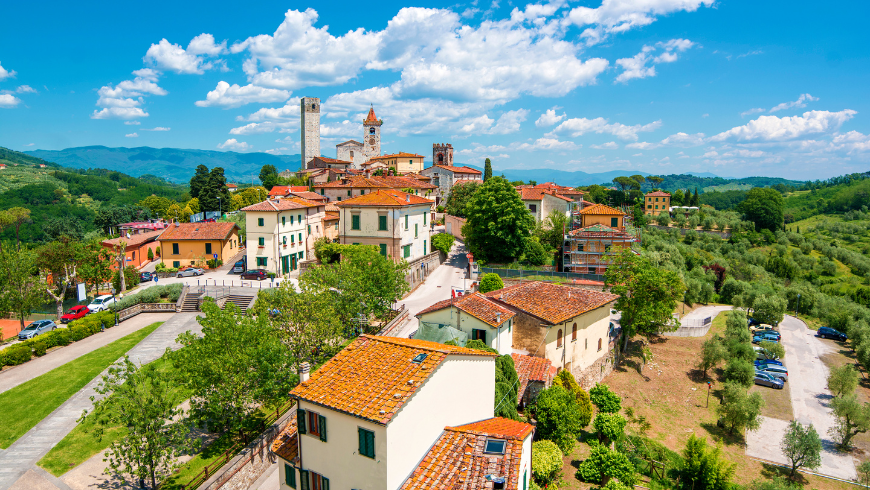
Serravalle Pistoiese is one of the first villages worth visiting. Perched on the eastern slopes of Montalbano, it still preserves traces of its fortified past, including the Torre del Barbarossa, the Rocca di Castruccio and sections of the ancient walls.
As you climb towards the Pistoiese Mountains, you reach San Marcello Piteglio and its surroundings, where the landscape gradually becomes more mountainous. This is also where you will find the Ponte Sospeso delle Ferriere, one of the area’s best-known attractions, suspended above the Lima stream.
Continuing towards the Apennines, you can reach Cutigliano, a medieval village surrounded by the landscapes of the Pistoiese Mountains. Its streets and squares reflect the history of a territory shaped for centuries by mountain life, while numerous trails begin in the surrounding area.
On the other side lies Sambuca Pistoiese, a territory of forests, valleys and small settlements. Its distinctive character is also linked to its position on the border between Tuscany and Emilia-Romagna. Here you can visit villages such as Casale, Posola, Pavana and Treppio, or follow the routes of the Pistoiese Mountain Ecomuseum, dedicated to themes such as chestnut cultivation, ice, stone, ironworks and the traditional life of mountain communities.
Where to stay in Pistoia
After a day spent exploring the historic centre, the hills and the trails of the Apennines, choosing environmentally conscious accommodation allows you to continue your journey with the same approach.
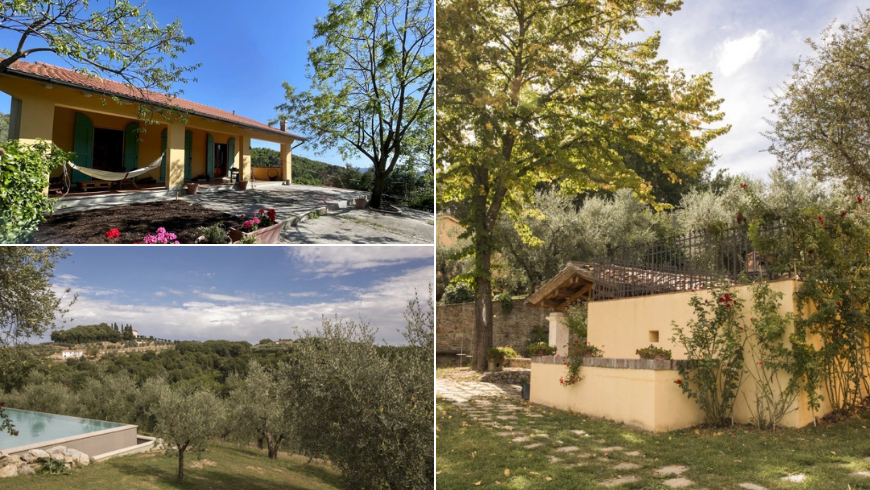
On Ecobnb you can find several places to stay around Pistoia, that adopt sustainability practices, from farm stays surrounded by countryside to accommodation in the hills and mountains.
One example in the area is Podere Saliccioni, a 150-square-metre apartment surrounded by woodland, within a 16-hectare property with olive groves, meadows, an orchard and a vegetable garden. The property declares several environmental practices, including organic food, eco-friendly cleaning products and the recovery and reuse of rainwater. It also declares accessibility without a car, while the historic Porrettana railway connects Pistoia with Porretta Terme nearby.
Discover places to stay in Pistoia and the surrounding area on Ecobnb
 Podere Saliccioni – Green Country House in Pistoia, Province of Pistoia, Tuscany, IT