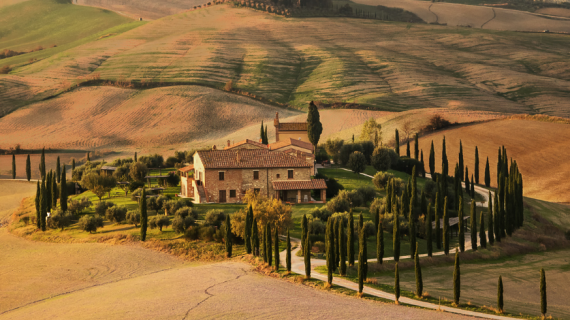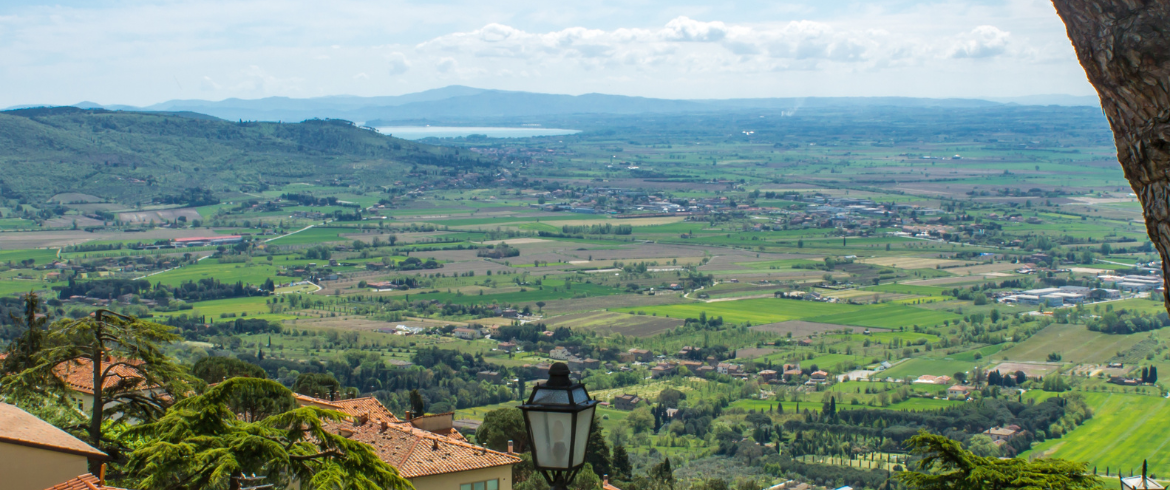
We have all heard of Chianti, Siena or the famous Val d’Orcia: these stunning destinations in Tuscany simply need no introduction. But then there is Valdichiana Senese, sitting quietly beside all of this with an almost stubborn discretion. Charming villages, a landscape shaped by rolling hills and millennia-old traces of a civilisation that predates Rome. This is one of Tuscany’s most beautiful and least crowded destinations, made for slow, sustainable travel.
Villages and art towns to explore without rushing
Valdichiana Senese is dotted with small historic centres, each with its own story and character. Montepulciano is the best known: a Renaissance hilltop town lined with noble palaces and wine cellars carved into the tufa rock. Here you’ll find the magnificent church of San Biagio standing beautifully against the countryside below. It’s worth strolling through the side streets, stepping into a local osteria and forgetting about the frantic pace pf city life.
But it’s in the quieter corners that Valdichiana Senese truly surprises. Cetona is a delightful medieval village whose historic layout has remained largely intact, with narrow lanes winding between the buildings. Sarteano overlooks the plain from its medieval tower and holds one of the area’s most significant Etruscan heritage sites. Chiusi, a city of ancient origin, is a place that Latin sources consider to be one of the oldest Etruscan cities. Today, it is home to the Museo Nazionale Etrusco and a remarkable underground city with tunnels leading to an enormous cistern dating back to the first century BC.
Trequanda
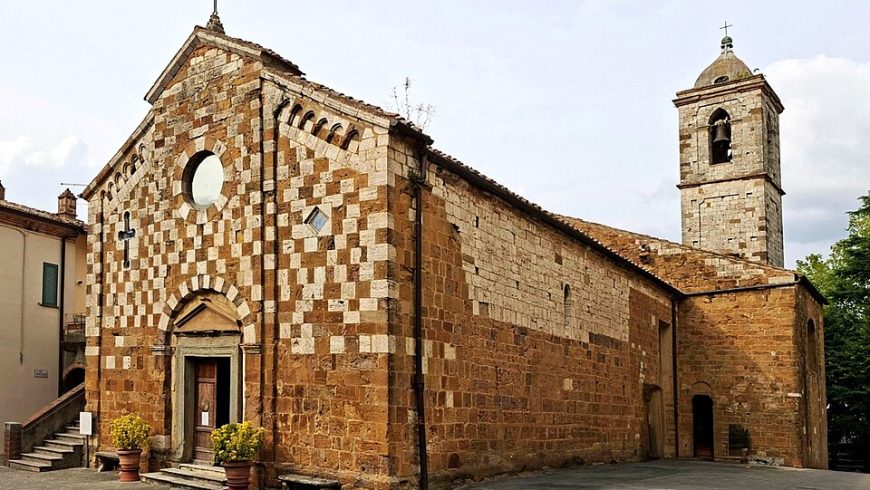
And then, you’ll find Trequanda: a village that only few seek out and many stumble upon by chance. Perched on a hilltop in Valdichiana, it still bears traces of its Etruscan past. In particular, this is visible not only in archaeological finds, but also in place names: Cennano, Petroio, Sicille. Furthermore, the Italian Touring Club awarded the village its “Orange Flag” for the quality of its hospitality. On Piazza Garibaldi stands the Romanesque church of Santi Pietro e Andrea with its striking chequered façade made of stone and tufa. Just outside the village centre, the Torre del Molino a Vento is a dovecote tower that landowners built in the late eighteenth century. The sorrounding area also includes the villages of Castelmuzio and Petroio, both worth a stop. Petroio has long been known throughout Tuscany for its tradition of handcrafted terracotta.
Natural hot springs in Valdichiana Senese
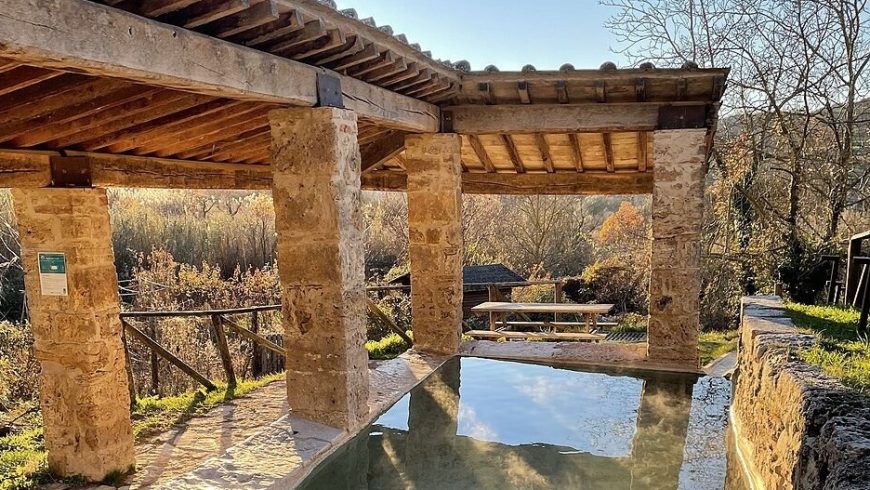
Valdichiana Senese is one of Tuscany’s richest thermal areas. There are hot springs flowing at temperatures between 25°C and 42°C and a centuries-old tradition of wellness. Chianciano Terme is the most well-known, with historic thermal baths and mineral-rich waters. But the most authentic and sustainable experience is found at San Casciano dei Bagni. These ancient stone pools allow you to soak in hot thermal water outdoors, surrounded by steam and unspoilt nature. They are completely free to access and uncrowded. It was in these very waters that archaeologists made one of the most significant discoveries of the century. They found over twenty bronze statues from the Etruscan and Roman periods in near-perfect condition. In addition, Montepulciano also has its own thermal springs, which are less famous but equally restorative.
Winding along gravel roads and clay landscapes
Valdichiana Senese seems designed to be explored on foot or by bike at leisurely pace, admiring the breathtaking scenery. Here white gravel tracks link isolated farmhouses, ploughed fields shift colour with the seasons, the sculpted ridges of the crete and rows of cypress trees mark the invisible boundaries between estates.
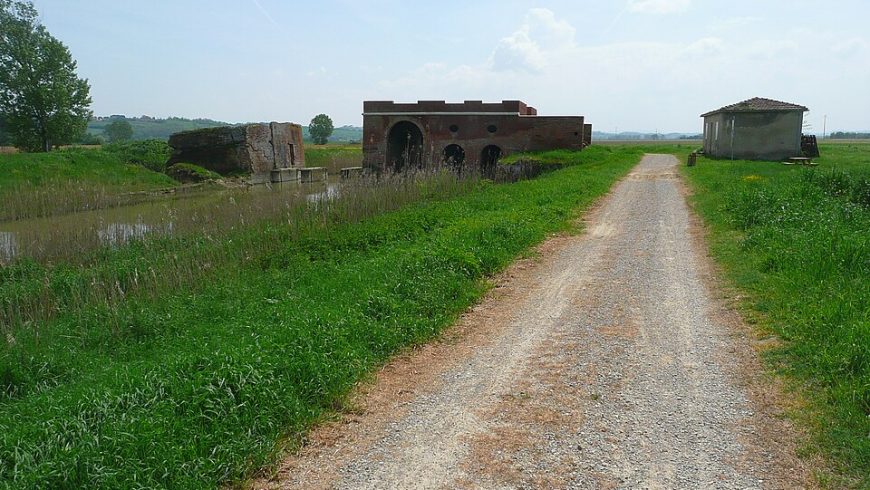
Percorso del Gigante Bianco is a 28-kilometre cycling route through the heart of the territory. It is perfect for gravel biking, cycle touring and mountain biking enthusiasts. Alternatively, for those who prefer to walk, the trails between Sarteano, Cetona and Chianciano offer stunning landscapes that shift with every bend in the path. Running alongside the Chiana canal is the Sentiero della Bonifica, a 62-kilometre route between Chiusi and Arezzo. It is traffic-free and ideal for cyclists. Along the way you’ll pass points of interest such as the Chiusa dei Monaci and the scenic lakes of Chiusi and Montepulciano.
Following the footsteps of the Etruscans
The Etruscan legacy in the Valdichiana Senese is not confined to museums. It is visible from the layout of the villages, place names and the very shape of the landscape. In Sarteano, the Museo Civico Archeologico holds precious finds from the Pianacce necropolis. The museum features a replica of the Tomba della Quadriga Infernale, celebrated for its remarkably well-preserved painted cycle. Saturday visitors can access the actual tomb on site.
For those interested in this ancient civilisation, the ideal slow travel itinerary connects Chiusi, Sarteano and Chianciano Terme. Renting an e-bike lets you hop from one museum to the next while soaking up the beauty of the hills in an eco-friendly way.
Authentic and locally sourced flavours
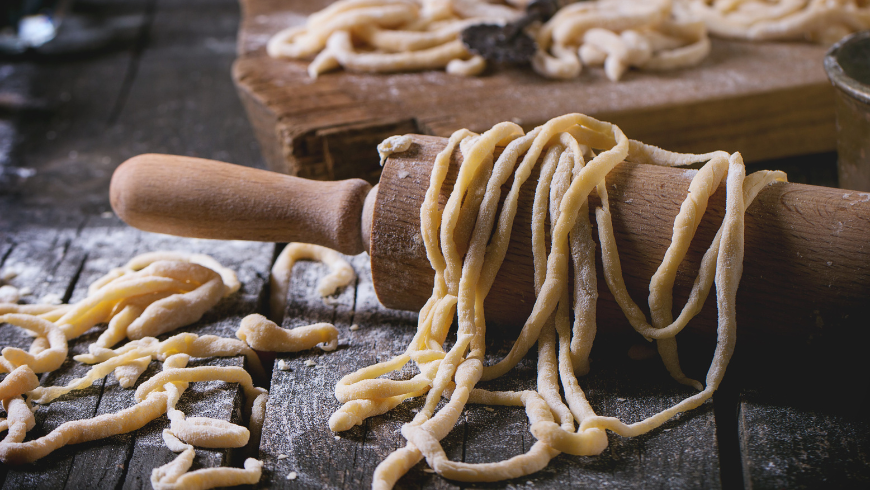
Sitting down to eat in Valdichiana is a journey through flavours rooted in the deep history of the land. Every dish has ancient origins and reminds of the work of local producers.
The Chianina, the white cattle breed that grazes across the valley’s pastures, traces back to the sacred ox of the Etruscans. It yields some of the most prized steaks in Italy. Trequanda’s extra virgin olive oil is a local treasure, pressed from ancient olive trees clinging to the hillside. The Vino Nobile di Montepulciano is one of Tuscany’s great reds, best appreciated slowly in a historic cantina carved into the tufa rock. At the weekly markets and village shops you’ll find pici, the typical hand-rolled fresh pasta. You can also try Pienza pecorino, Cinta Senese cured meats and rare legumes such as cicerchia and black chickpeas. Exceptional products grown in the same valley for centuries, now protected and championed by organic farming.
Eco-friendly stays at organic agriturismi
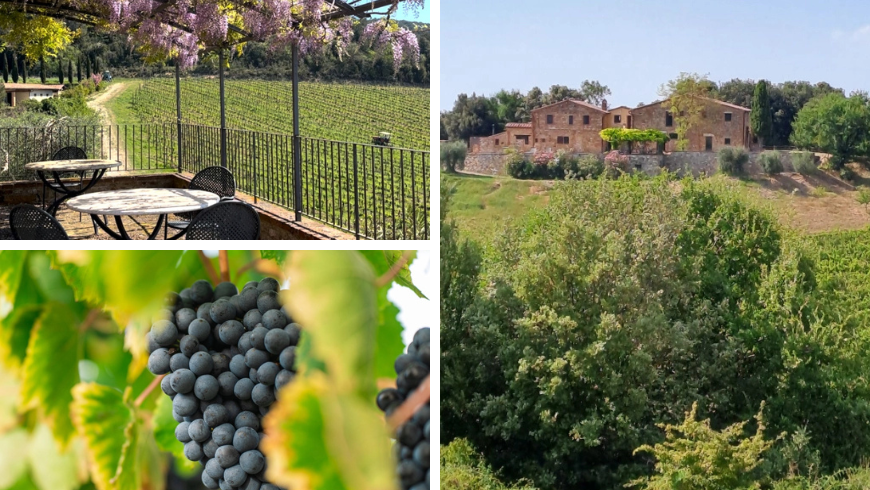
Valdichiana Senese is home to several organic agriturismi and B&Bs nestled in the countryside, ideal for anyone seeking an authentic, sustainable stay in the heart of Tuscany.
Among them is Podere Sole, a beautiful historic farmhouse surrounded by the rolling hills and a regenerative organic vineyard. The estate produces high-quality wines from grapes locally sourced and harvested entirely by hand. Breakfast is completely organic and vegan, with products made fresh each morning. It’s the perfect base for a sustainable rural stay.
A fascinating, little-known part of Tuscany
Compared to Tuscany’s most famous destinations, Valdichiana Senese moves at a different pace. This is a place to listen to rather than just photograph, to live rather than just consume.
With its charming villages, natural thermal baths, white gravel roads, local flavours and Etruscan tombs, there is a whole world to explore, without rushing. Valdichiana’s many secrets and landscapes are waiting to be discovered.
Cover image: Photo via Canva Pro
 Podere Sole – Green Farm house in Trequanda, Province of Siena, Tuscany, IT