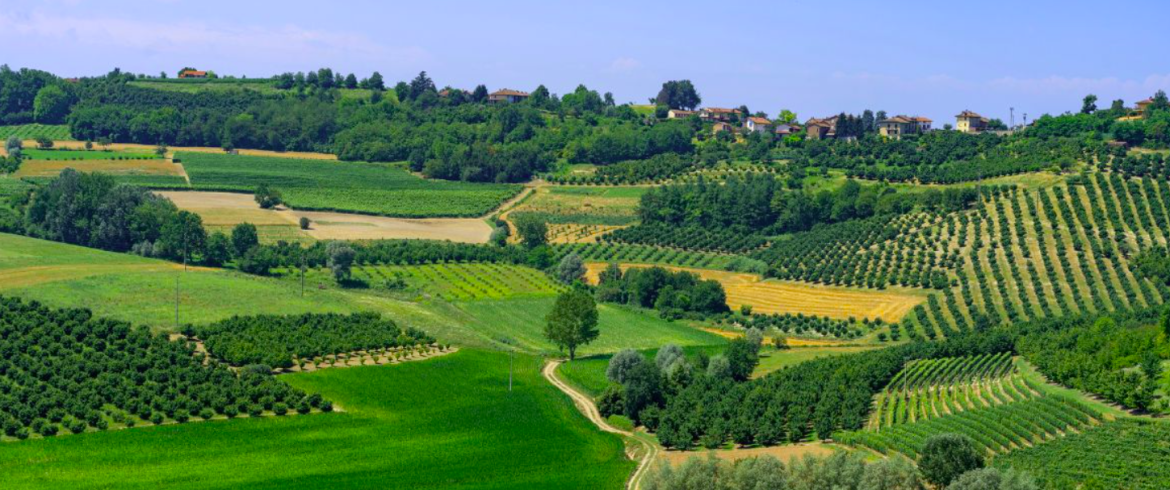
If you are love cycle tourism and Romanesque art, exploring the Astigiano by bike is the perfect experience for you: a slow journey through rolling hills, historic villages and ancient churches that narrate centuries of Piedmontese history.
The route I want to share with you is the Strada del Romanico in the Alto Astigiano: an itinerary of around sixty kilometres winding through medieval churches, isolated chapels and small architectural gems waiting to be discovered, one pedal stroke at a time.
Cocconato d’Asti: a Village suspended between History and the Riviera del Monferrato
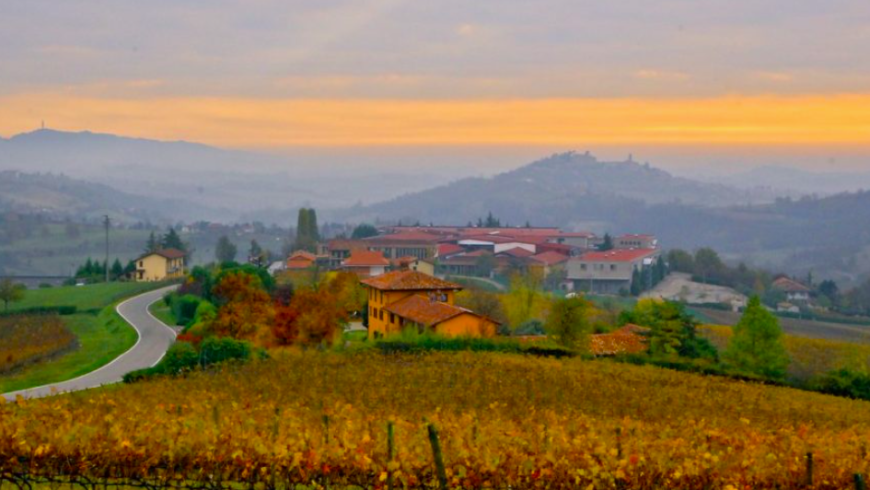
The village figures among Italy’s Most Beautiful Villages (Borghi più Belli d’Italia). Cocconato d’Asti is also known as “Riviera del Monferrato.” This nickname dates back to the nineteenth century, thanks to the area’s unusually mild climate and the surprising presence of Mediterranean vegetation, sich as olive trees, palms and mimosa.
That alone is reason enough to visit the town. In addition, the historic centre is a true work of art, perfect for a leisurely stroll.
The Parish Church
Completed in 1689, the church has been modified several times over the centuries. Local workers raised the bell tower in 1770, and expanded the building during the nineteenth century. It features a single large nave and eight side chapels, which once belonged to private families.
If you can, visit Cocconato in autumn: on the fourth Sunday of September, the village hosts the famous Palio degli Asini, a historical re-enactment with a costumed procession and a race between the eight districts of the village, set in the thirteenth and fourteenth centuries.
More information: Visit Cocconato
Montechiaro d’Asti and its unmistakable Bell Tower
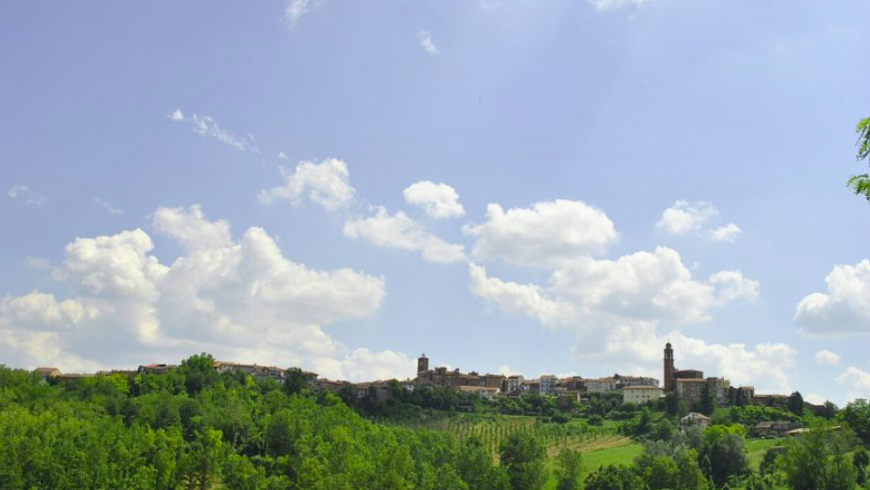
Montechiaro d’Asti is easy to spot from a distance, thanks to its bell tower rising above the hilly landscape.
The Bell Tower of San Nazzario e Celso
Around twenty metres tall, the bell tower has four storeys, built with sandstone blocks alternating with thin brick courses.
The Church of San Nazzario e Celso
The church dates back to 1130 and was built on an ancient settlement. In the thirteenth century, the local population moved closer to the castle for safety reasons, leaving the building abandoned.
Between 1847 and 1849 it was restored: the original façade was preserved, while the rest was carefully rebuilt. Each element was numbered, to ensure it matched the original as closely as possible.
More information: Santi Nazario e Celso Montechiaro d’Asti
A Detour to Pieve Romanica di Piesenzana
A short detour from Strada del Romanico leads to Pieve di Piesenzana, also known as Santa Maria Assunta.
Records mentioned the church as far back as 907, though what we see today is largely the result of nineteenth-century work (1808). Of the original structure, the apse is the most significant surviving element.
More information: Pieve romanica di Piesenzana
Cortazzone: Castle, Romanesque Architecture and Truffles
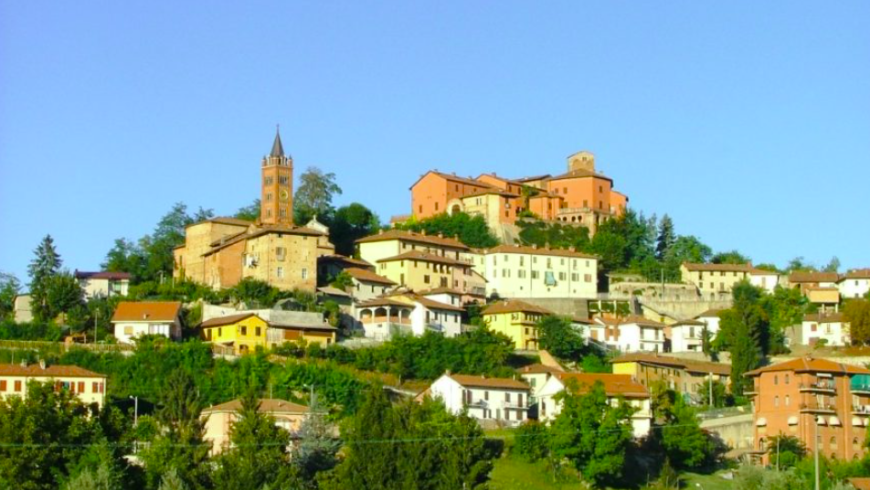
The castle of Cortazzone, privately owned, dates back to the ninth century, though its current appearance reflects fourteenth-century rebuilding after successive destructions. Today it also hosts events and weddings.
Next to the castle stands the Church of San Secondo. The village celebrates the patron saint every first Tuesday of May.
The Parish Church, likely dating from the sixteenth century, has a neo-Romanesque façade and a single-nave interior with side chapels.
Cortazzone is also famous for its white truffle. Don’t miss the Sagra della Tagliatella con il Tartufo (21–23 August 2026) or the Fiera Regionale del Tartufo (last weekend of November), both accompanied by historical re-enactments.
Albugnano and the View Over the Monferrato Hills
A scenic road through the vineyards leads to Albugnano, home to the evocative Church of San Pietro, within the village cemetery.
This twelfth-century Romanesque church stands out for its brick-and-stone façade and decorated apse: from here, the views over the surrounding hills are simply stunning.
Abbazia di Vezzolano: Legend and Romanesque Splendour
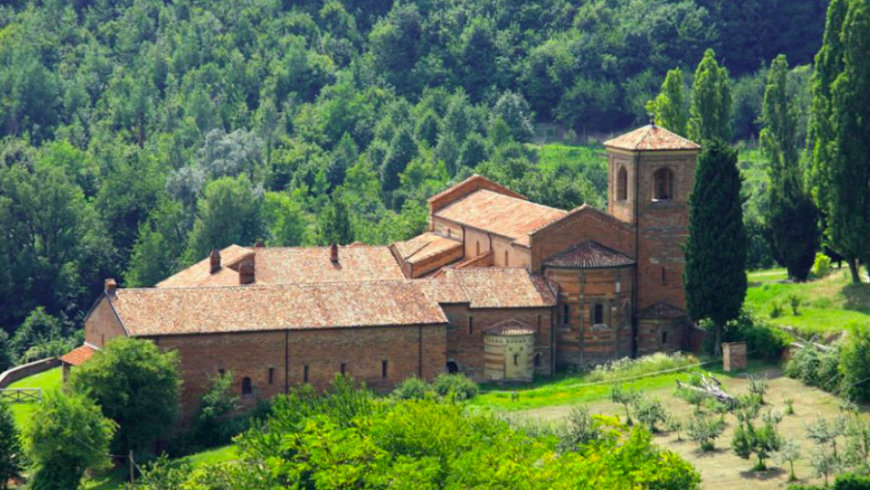
Abbazia di Vezzolano, a masterpiece of Romanesque-Gothic architecture, is one of the most important monuments in Piemonte.
According to the legend, it was founded by Charlemagne in 773 following a mystical vision and the counsel of a hermit.
The architectural complex preserves remarkable spaces: the cloister, the chapter house, and the guest quarters. The latter hosts today permanent photography exhibitions.
More information: Abbazia Santa Maria di Vezzolano
Descending to Aramengo and the Church of San Giorgio
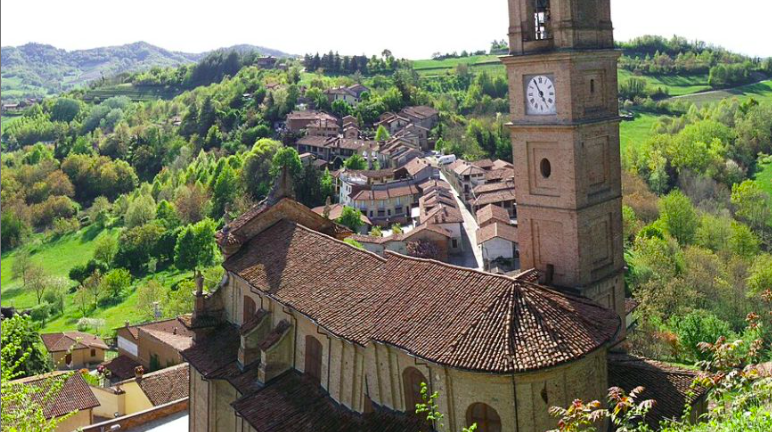
Heading down towards Aramengo along a steep road through the hamlet of Masio, you’ll come across the Church of San Giorgio.
The building has a beautifully simple geometric interior: a rectangular hall ending in a semicircular apse.
One fascinating detail: a series of ancient graffiti can be seen on the southern side of the apse and the adjacent wall, and the inscriptions are written in reverse. The reason? The builders reused materials from an older site, which confirms the presence of an earlier cemetery on the spot.
More information: La Chiesa di San Giorgio Masio, Aramengo
Practical Information to Explore Astigiano by bike
The Strada del Romanico route through the Alto Astigiano is best suited to moderately experienced cyclists, given the constant ups and downs of the terrain.
An e-bike is highly recommended if you want to enjoy the scenery without too much effort.
The route can be completed in a single day, but to truly appreciate the villages, churches, and food-and-wine stops along the way, splitting it over two days is ideal.
When to Visit Astigiano by Bike?
The best times to explore the Astigiano by bike are spring and autumn, for the mild temperatures and spectacular colours.
- September: ideal for Palio degli Asini in Cocconato (fourth Sunday of the month)
- November: perfect for truffle lovers, with the White Truffle Fair in Cortazzone
- April–June: the prime cycling season, with long days and the hills in full bloom
Route information: Strada del Romanico nell’Alto Astigiano
Cover photo: via Canva Pro
 Cascina Rural – Green Bed & Breakfast in Montafia, Province of Asti, Piedmont, IT