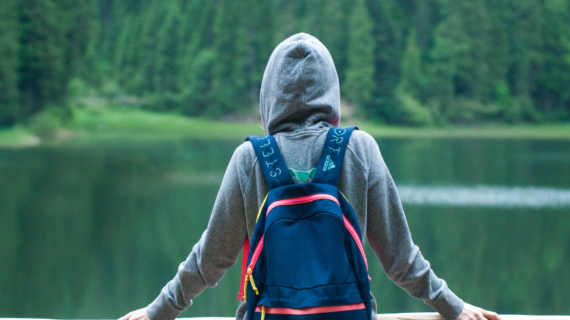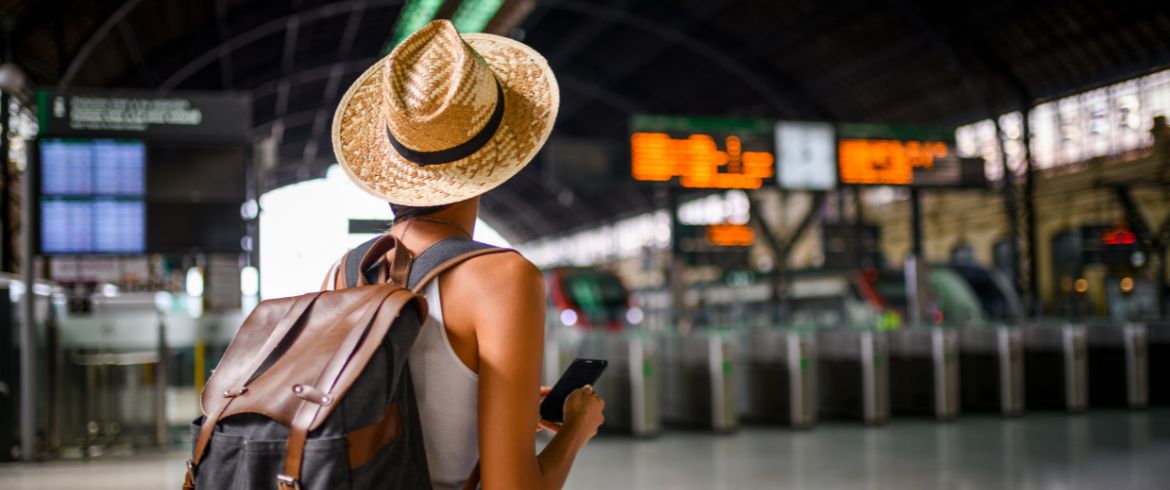
In recent years, the term solo trip has been appearing more and more frequently on social media: trips taken completely alone. It’s not just a trend, but a true way of experiencing travel, increasingly connected to the idea of sustainable and conscious travel. In a generation like ours, where independence is both a need and a goal, traveling alone becomes almost a form of personal growth.
At first, the idea may seem strange. Many people struggle to imagine themselves sitting alone at a restaurant table, without someone to talk to or share the moment with. Being alone, in fact, often creates discomfort. We are used to filling every moment with the presence of someone else: friends, family, or a partner. For this reason, silence and solitude can feel almost unsettling.
And yet, solo travel forces us to face exactly this feeling. When you travel alone, there’s no one to share decisions with, no one choosing for you or filling the quiet moments. Everything depends on you: where to go, what to see, when to stop. This freedom may seem intimidating at first, but it is precisely what makes a solo trip so powerful, especially when choosing authentic experiences connected with nature.
Traveling alone means learning to listen to yourself. Without the influence of others, you discover what you truly like, what sparks your curiosity, and what makes you feel good. Even the small challenges of traveling—like navigating a new city, talking to strangers, or organizing transportation—become opportunities to build confidence and self-trust.
To make the most of it, however, it’s important to avoid some common mistakes:
1. Thinking that traveling alone means always being alone

This is a common belief, partly due to the term “solo trip” itself. The word may suggest that you have to spend all your time completely alone. In reality, one of the most beautiful aspects of these trips is the opportunity to meet new people, often locals, connecting with the culture in a more authentic way.
A solo trip encourages you to put yourself out there and build new relationships, without being tied only to the people you started the journey with. You talk to other travelers, locals, or people sharing the same experience. Conversations often become more spontaneous and genuine.
2. Not planning anything
Even though the beauty of traveling alone lies in its freedom, setting off without any planning can create stress. Having at least a general idea of accommodation, transport, and places to visit — preferably choosing eco-friendly accommodations, sustainable mobility, and slow itineraries — makes the experience much more peaceful and sustainable.
Of course, it’s a personal choice: some people find comfort in improvisation, while others—especially those already hesitant about traveling alone—may feel more at ease having even a basic plan. This way, you arrive at your destination feeling more secure and can start enjoying the experience with fewer worries.
3. Filling every moment to avoid solitude
A solo trip is also about learning to be with yourself. Trying to fill every minute with activities or distractions means missing an important part of the experience.
The core of a solo trip is not about following a trend or adding your name to the list of people doing it, but about stopping and facing that sense of emptiness that sometimes arises when we don’t have someone beside us. Solo travel invites us to explore that feeling and start an honest conversation with ourselves.
4. Depending too much on your phone
Constantly checking social media or staying connected can prevent you from truly experiencing the moment and your surroundings.
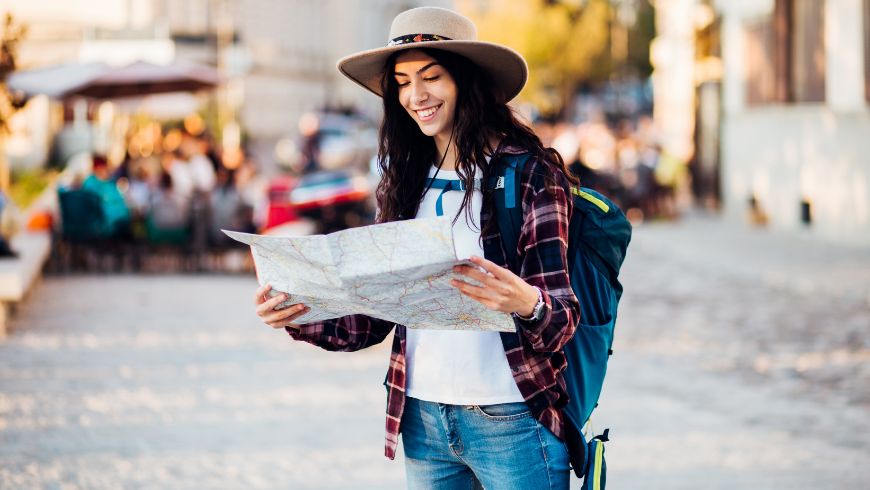
Constantly talking to people back home doesn’t help you step out of your comfort zone. On the contrary, it risks trapping you in a small bubble instead of allowing you to truly explore where you are. It’s better to put your phone away and follow these simple tips to explore your destination slowly and mindfully.
5. Underestimating safety
Traveling alone also requires greater awareness. It’s important to research your destination, avoid risky situations, and always keep an eye on your documents and personal belongings.
It’s true that this type of travel pushes us to try new things and step out of our comfort zone, but that doesn’t mean making irresponsible choices or putting your safety at risk. It’s always advisable to learn about the places you visit, by researching online, asking locals, or talking to people you know who have already been there.
6. Thinking everything will be perfect
Not every moment will be perfect or “Instagram-worthy.” There will also be moments of boredom, tiredness, or loneliness.
Your trip will have highs, where you experience amazing moments and meet interesting people, but also lows, where you may not know what to do, miss people back home, or face unexpected challenges. And that’s completely normal.
7. Not listening to your emotions
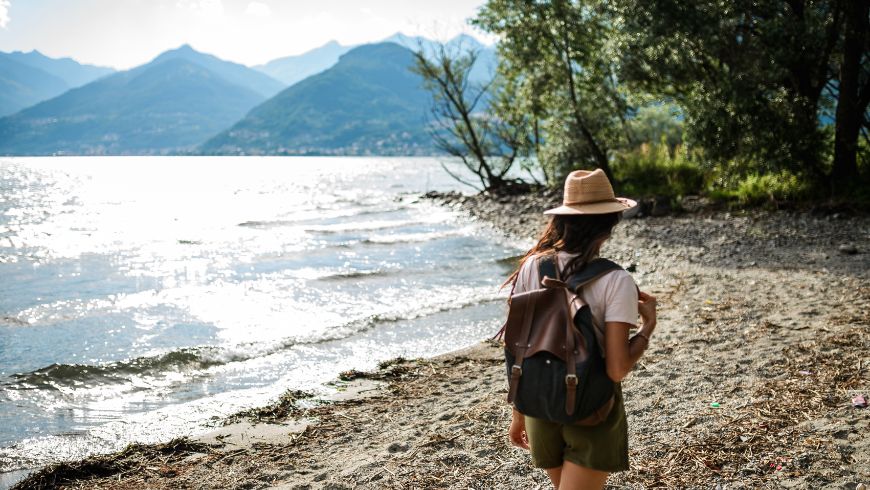
Solo travel can bring up thoughts and emotions that we often ignore in everyday life. Instead of avoiding them or distracting ourselves, we should welcome them as part of the experience.
These moments of reflection can become the most meaningful parts of the journey.
8. Thinking the trip has to “change your life”
A solo trip doesn’t have to be a radical transformation. Sometimes it’s enough to come back with greater self-awareness.
There’s no need to set unrealistic expectations: solo travel doesn’t automatically change your life, but it can offer a different perspective and become a starting point to better understand yourself. It should be experienced as a journey of discovery, enjoyment, and lightness.
Conclusion
For many, solo travel becomes almost a form of therapy. Not in the clinical sense, but as a break from the chaos of everyday life.
It’s also a way to prove to yourself that you are capable of living meaningful experiences without constantly relying on others.
Ultimately, the true purpose of a solo trip is not just to visit a new place, but to discover something new about yourself. And perhaps that’s why more and more people are choosing to travel alone: because sometimes the most important journey is the one we take within ourselves.
Author: Benedicta Osamuyimen Imade
Cover image: photo via Canva PRO