A practical guide for accommodation providers: what is changing, which words to use and how to communicate your property’s environmental practices
Have you installed solar panels, chosen organic products for breakfast, started collecting rainwater or eliminated single-use plastic? These are all choices worth sharing with your guests.
But how can you communicate them correctly? Can you still describe your property as “green”, “ecological” or “eco-friendly”? And what if the word “Eco” appears in your accommodation’s name?
From 27 September 2026, the new European rules against greenwashing will apply, affecting hotels, farm stays, B&Bs, campsites, mountain huts and holiday rentals.
To better understand what is changing, we attended a webinar organised by Sustainable Travel International, featuring Jana Hošková and Jeroen Van Laer, officials from the European Commission’s Directorate-General for Justice and Consumers who worked on developing the directive. It was a valuable opportunity to hear directly from those involved in shaping the new rules and discuss some practical questions and concerns relevant to accommodation providers.
The good news is that you do not have to stop talking about sustainability, and you do not necessarily need an environmental certification to communicate the choices you make.
However, you do need to pay attention to how you present them: environmental claims must be clear, specific and substantiated.
Let’s look at what this means, with some practical examples.
1. Can I still describe my property as an “eco-friendly accommodation” or “ecolodge”?
This was one of the questions raised during the webinar:
“Will it no longer be possible to use the term ecolodge under the new rules?”
The answer is that using this expression is not automatically prohibited. However, you must be able to demonstrate what actually makes your property environmentally friendly.
Expressions such as ecolodge, eco-friendly accommodation or “ecological accommodation” communicate an overall environmental benefit to travellers. For this reason, they cannot simply be used as slogans.
Under the new rules, generic environmental claims are only permitted when a property can demonstrate recognised excellent environmental performance in accordance with the criteria established by the legislation.
An official environmental certification based on criteria verified by an independent third party can be an important reference. Specific information about the practices you have adopted is also essential to explain the property’s actual characteristics.
Our advice: instead of simply writing “we are an ecolodge”, explain what you actually do.
For example:
- We generate part of our electricity using our own photovoltaic system.
- We purchase electricity certified as coming from renewable sources.
- We use solar panels to produce hot water.
- We serve organic breakfast products (milk, honey, eggs and flour) sourced from local farms.
- We collect rainwater to irrigate our garden.
- We have eliminated single-use plastic bottles from our guest rooms.
This information is much more useful for people choosing where to stay. Of course, it must reflect practices that are actually in place and can be substantiated.
What if “Eco” or “Green” is part of my property’s name?
Another important clarification concerns business and trading names.
If you have named your property “Eco Lodge”, “Green House” or “Eco Hotel”, or included words such as green and eco in your business name, this does not necessarily mean you have to change it.
However, the European Commission’s FAQs clarify that company names, trademarks and trade names can also convey environmental claims. Registering a name or trademark does not, in itself, exempt it from the new rules.
What matters is the message your name communicates to potential guests.
If your name suggests that your property has particularly positive environmental characteristics, you must be able to substantiate this impression through recognised environmental certification or concrete evidence, in accordance with the conditions set out in the legislation.
In practice: if your property is called “Green House”, ask yourself whether you can explain and demonstrate which environmental characteristics justify this name. Simply having chosen it years ago or registered it as a trademark is not enough.
2. Will I need an environmental certification to keep talking about sustainability?
This is one of the most common concerns, especially among small accommodation providers.
During the webinar, an important question was raised: could the new rules disadvantage small businesses in particular, which often adopt good environmental practices but cannot afford expensive certifications?
The European Commission officials clarified that the legislation does not distinguish between small and large businesses.
But be careful: this does not mean that every accommodation provider must obtain an environmental certification.
It is important to distinguish between two situations.
If you want to communicate your property’s environmental practices
You can do so without certification. You can describe the choices you make, the improvements you have implemented and the characteristics of the services you offer. You simply need to be able to demonstrate that what you say is true.
If you want to use a sustainability label
In this case, specific requirements apply. Voluntary sustainability labels must either be established by a public authority or be based on a certification scheme that complies with the legislation and includes independent verification.
So, do not confuse the possibility of describing your practices accurately and in detail with the right to display an environmental label: these are two different things.
3. Be careful with words: “green”, “eco-friendly” and “sustainable”
The new rules mainly concern generic environmental claims: expressions that suggest an overall environmental benefit without explaining what that benefit actually consists of.
Here are some examples:
- Green hotel
- Eco-friendly accommodation
- Ecological accommodation
- Nature-friendly
- Zero-impact tourism
- Climate-friendly
- We care for the environment
This does not mean these words are always prohibited in every context. It means that when they are used as generic environmental claims, they must meet specific conditions and cannot be left unsupported.
So, what can you do?
Instead of writing:
“Our farm stay is completely eco-friendly and environmentally responsible.”
You could write:
“We use electricity from renewable sources, produce hot water with solar panels and serve breakfast made with organic and locally sourced products.”
In the second example, you describe specific choices that travellers can understand and evaluate.
Remember: specific claims must also be truthful and supported by adequate information. If you use renewable energy for only part of your consumption, for example, it is important not to give the impression that all the energy you use comes from renewable sources.
Images communicate too
Words are not the only things that convey an environmental message.
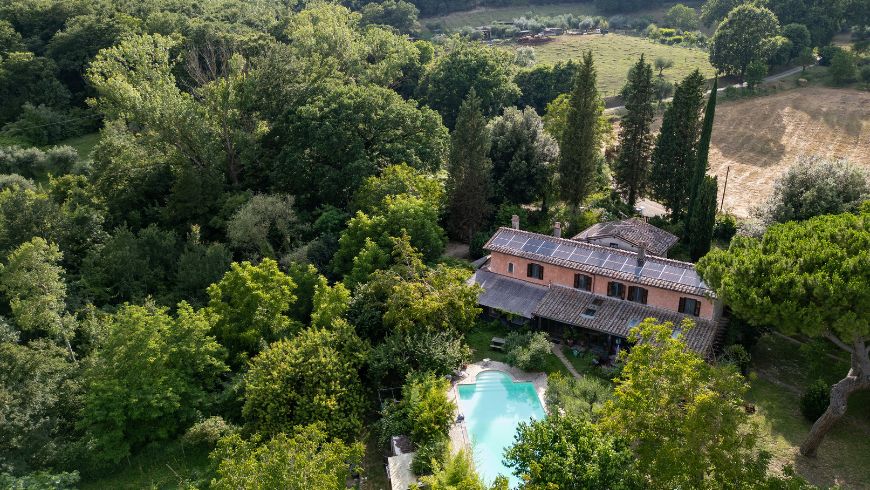
Logos, symbols, leaves, trees, water drops and colours can also contribute to creating the impression that an accommodation has particular environmental characteristics.
This certainly does not mean you have to give up photographs of your garden, the forest or the surrounding landscape! However, you should avoid creating an overall impression through images and text that suggests environmental benefits you cannot substantiate.

4. Do you have an environmental certification or label? Can you still display it?
Environmental certifications are a useful tool for communicating your commitment because they are based on defined criteria and, where applicable, independent verification.
Some examples recognised under European legislation include:
- EU Ecolabel, the European Union’s official environmental label;
- certain officially recognised national or regional environmental labels, such as Nordic Swan and Blue Angel;
- other schemes that meet the requirements established by the legislation.
The European Commission specifically mentions the EU Ecolabel for tourist accommodation as an example of a label that can support claims relating to lower energy and water consumption and reduced waste generation compared with conventional accommodation, provided the label’s criteria are met.
If you have obtained a certification, always check that it is still valid and that you comply with the conditions for using its logo.
Just because a label describes itself as “ecological” or “sustainable” does not automatically mean it can be used as a sustainability label. You need to check whether it has been established by a public authority or is based on a certification scheme that meets European requirements, with transparent criteria and independent third-party verification.
The same applies to territorial and quality labels awarded by public bodies or natural parks. Not all labels are automatically equivalent to a European certification: it is important to understand the criteria, checks and procedures used to award them.
5. Can you still support CO₂ offsetting projects?
The webinar also addressed carbon offsetting, meaning projects that fund initiatives such as reforestation, forest conservation and other activities through carbon credits.
To explain the issue, the European Commission officials referred to the example of airlines: an airline can continue to fund environmental projects, but it cannot describe a flight as “carbon neutral” or zero-emission simply because it purchases carbon credits to offset the emissions generated by the journey.
The legislation does not prohibit supporting these projects. Rather, it aims to prevent offsetting from being used to give consumers the impression that the emissions generated by a product or service have been eliminated.
Accommodation providers can also continue to support reforestation or environmental conservation projects. They can explain which project they fund and how they contribute, but they should avoid presenting a stay as “zero-impact” or “carbon neutral” on the basis of offsetting alone.
What to avoid:
“Stay at our zero-impact hotel thanks to our reforestation projects.”
A better alternative:
“Our property supports a forest conservation project through the purchase of carbon credits. This initiative complements the measures we have implemented to reduce energy consumption.”
The difference is important: reducing the emissions generated by your own business is one thing; funding a project that contributes to tackling climate change is another.
6. Can you also communicate your future goals?
Absolutely! If you have decided to install a photovoltaic system, improve your building’s insulation or reduce water consumption over the coming years, you can share your plans and progress.
But be careful about making overly general promises.
If you write “we will become carbon neutral by 2030”, you need to have a concrete plan for achieving this goal, including:
- clear and measurable targets;
- defined deadlines;
- realistic measures and adequate resources;
- regular checks carried out by an independent expert.
It is much better to describe a journey made up of small steps, explaining what you have already achieved and what you would like to improve, rather than promising results without knowing how you will achieve them.
7. How to prepare: a few checks you can carry out now
You do not need to rewrite your entire website overnight, but it is worth taking some time to review how you present your property.
Here are a few suggestions.
Your accommodation description
- Check whether you use generic expressions such as “green”, “ecological” or “zero-impact”.
- Replace slogans with concrete descriptions of your practices.
- Make sure all information is up to date and accurate.
Your website and social media
- Review your homepage and room descriptions.
- Check the images, symbols and logos you use.
- Make sure the information is consistent across all your channels.
Labels and certifications
- Check that they are still valid.
- Review the conditions for using their logos.
- Explain to your guests who awards the recognition and what it certifies.
Documents to keep
One final piece of advice: keep evidence of the practices you communicate. It may be useful if a customer or an authority asks you to substantiate your claims.
For example:
- energy bills and consumption data;
- documents relating to your renewable energy supply;
- invoices for organic or locally sourced products;
- technical specifications of installed systems and equipment;
- photographs of completed improvements;
- certificates and documents relating to the labels you have obtained.
You do not need to create a complicated archive: the important thing is not to rely on claims alone.
Communicate what you do, using precise language
The new European rules may seem like another administrative burden for those managing a small accommodation business. But they can also be an opportunity to improve the way you communicate your work.
You do not need to run a perfect property or have already implemented every possible improvement. You can share the choices you have made, the results you have achieved and even the areas you are still working to improve.
If you generate some of your electricity with photovoltaic panels, choose local suppliers, collect rainwater or have reduced single-use products, tell your guests about it!
The new legislation does not ask us to stop talking about sustainability. It asks us to do it better: using clear language, precise information and claims we can substantiate.
Because communicating what you actually do is the best way to highlight your efforts and help travellers make more informed choices.

Checklist: 10 things to check at your accommodation
Before publishing or updating your accommodation description, take a few minutes to go through these checks.
- Your property’s name: Does it contain words such as “Eco”, “Green” or “Natural”? Check that the name does not create an environmental impression you cannot substantiate.
- Your accommodation description: Have you used generic expressions such as “eco-friendly”, “green” or “fully sustainable”? Consider replacing them with more specific information.
- Energy: If you claim to use renewable energy, can you demonstrate where it comes from and specify what proportion of your consumption it covers?
- Water: If you mention water savings, which devices or systems have you actually installed?
- Food: If you claim to offer organic or local products, do you have invoices, certificates or other information to demonstrate their origin?
- Waste and plastic: If you claim to be plastic-free or produce no waste, does this statement really reflect what happens at your property?
- Images and logos: Do your photographs, symbols and colours convey an environmental message that is consistent with your property’s actual characteristics?
- Certifications and labels: Are the recognitions you display valid? Do you know who awards them and which criteria they certify?
- CO₂ offsetting: If you support environmental projects, do you describe them without claiming that your stay is zero-emission thanks to offsetting?
- Documentation: Have you kept bills, invoices, technical specifications, certificates and other documents that can substantiate what you communicate?
One final exercise: read your property’s description as if you were a traveller considering booking a stay. Whenever you come across a word such as “ecological”, “green” or “sustainable”, ask yourself: What does this actually mean in my case? And how can I demonstrate it?
If you can answer these two questions, you are already on the right track towards clearer and more transparent communication.
Frequently asked questions about the new European anti-greenwashing rules
No. The European directive does not require all accommodation providers to obtain environmental certification. You can continue communicating the practices you adopt without certification, provided your information is accurate, truthful and substantiated. However, specific requirements apply to the use of sustainability labels and generic environmental claims.
It is not automatically prohibited, but a business name can also convey an environmental message. If it suggests that the property has excellent environmental performance, it must meet the requirements established by the legislation. Registering a name or trademark does not provide an exemption.
Not necessarily. Generic expressions such as “ecological”, “green” or “eco-friendly” require excellent environmental performance recognised in accordance with European criteria. You can, however, describe individual practices specifically: for example, that you use solar panels to produce hot water or serve organic products at breakfast, provided this information is true and can be substantiated.
No. You cannot present a stay as “carbon neutral” or zero-emission on the basis of external offsetting. You can, however, transparently communicate the environmental projects you support and explain how they complement the measures you take to reduce your property’s emissions.
No. To be listed on Ecobnb, accommodation providers declare that they meet at least 5 of our 10 environmental criteria. This selection process is not equivalent to independent environmental certification. Declared practices and any certifications obtained are two distinct pieces of information that should be communicated clearly.
Want to learn more?
During the webinar, the European Commission officials repeatedly referred participants to the Commission’s official FAQs, which provide questions and answers on the main aspects of the new legislation.
Download and read the European Commission’s FAQs
This is a useful resource for exploring specific cases and clarifying any questions about environmental claims, certifications, sustainability labels and carbon offsetting.