A place made famous by Game of Thrones, it is now also one of Europe’s best examples of sustainable visitor management. It proves that limiting access can protect nature, enhance the visitor experience, and preserve a unique heritage for future generations.
There are places that seem to belong more to imagination than reality. San Juan de Gaztelugatxe is one of them.
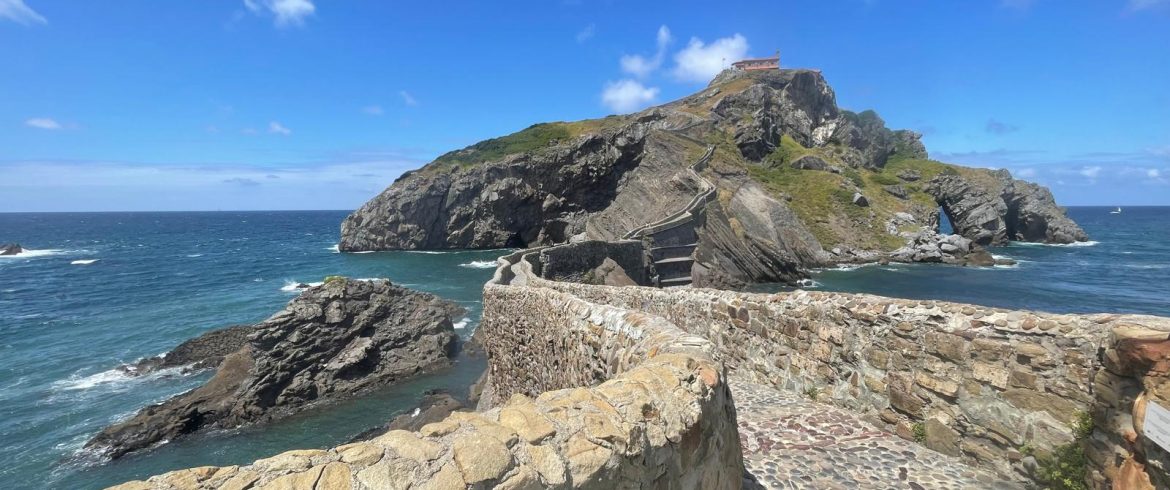
A small rocky islet overlooking the Atlantic Ocean, connected to the Basque coast by a stone bridge and a spectacular staircase of 241 steps leading to an ancient hermitage dedicated to Saint John the Baptist. For centuries, it has been a pilgrimage destination, a place of devotion for fishermen and sailors, and one of the most breathtaking corners of the Biscay coastline.
Then came a television series.
Within just a few years, this place went from being known mainly by local residents to becoming one of the most photographed destinations in Spain. A transformation that could easily have compromised its fragile natural balance. Instead, thanks to forward-thinking management, San Juan de Gaztelugatxe has become a tangible example of how tourism can be managed sustainably.
If you’re planning a visit, you’ll find all the practical information in our walking itinerary to San Juan de Gaztelugatxe, including the route, walking times, tips for tackling the climb, and instructions on how to book your visit.
When a TV Series Changes the Fate of a Place
In October 2016, the peaceful atmosphere of Gaztelugatxe was interrupted by the arrival of HBO film crews. For several days, the islet was closed to the public to allow filming for the seventh season of Game of Thrones.
Thanks to visual effects, the ancient hermitage was transformed into the imposing castle of Dragonstone, the ancestral seat of House Targaryen and the place where Daenerys returns to Westeros. The iconic staircase, the stone bridge, and the spectacular cliffs of the Basque coast remained entirely real, helping create one of the most memorable settings in the entire series.
When the episodes aired in the summer of 2017, millions of viewers discovered San Juan de Gaztelugatxe for the first time. Within a few months, the site became a permanent stop on Basque Country itineraries, turning into one of the region’s most visited natural attractions.
What initially seemed like an extraordinary tourism success soon began to reveal its less positive side.
When Success Risks Becoming a Problem
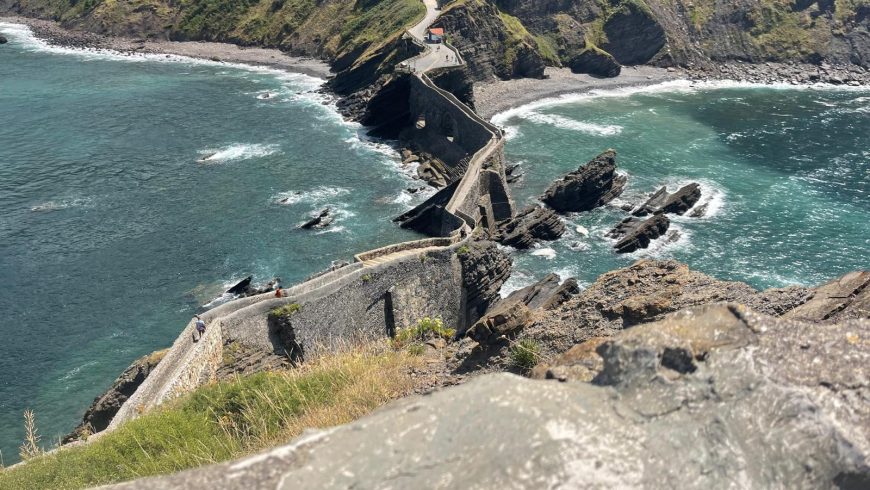
San Juan de Gaztelugatxe is a spectacular place, but also an extremely fragile one.
The islet is connected to the mainland by a single stone bridge and a narrow staircase. The trails cross a delicate coastal environment characterized by cliffs, native vegetation, and areas inhabited by numerous seabird species.
When thousands of people walk the same steps and trails every day, the consequences quickly become apparent:
- soil erosion increases;
- wildlife is increasingly disturbed;
- long queues form along the staircase;
- the quality of the visitor experience declines;
- the risk of accidents increases along an already demanding route.
This phenomenon has a specific name: overtourism.
Overtourism occurs when the number of visitors exceeds a destination’s capacity to accommodate them without compromising its natural environment, cultural heritage, or the quality of life of local communities.
In recent years, this phenomenon has affected historic cities, beaches, natural parks, and mountain destinations worldwide. We also explored it in our article “Overtourism: Causes, Consequences, and Solutions“, where we explain why mass tourism has become one of the greatest challenges facing today’s most popular destinations.
The question the Basque authorities asked themselves was as simple as it was essential:
How can thousands of visitors continue to enjoy such a delicate place without compromising it?
The Answer: Managing Visitor Flows, Not Banning Visits
The solution chosen by the Provincial Council of Bizkaia was not to build new infrastructure or widen the trails.
Instead, they made a far smarter decision: manage the number of visitors.
In the summer of 2018, a digital booking platform was introduced, allowing visitors to reserve their free entry during the busiest periods. The goal was to spread visits throughout the day, reduce queues, and ease pressure on the natural environment.
The experiment proved so successful that the system was gradually consolidated.
Since 14 March 2020, visitor regulation has become an integral part of the site’s management. Today, on the dates specified in the official calendar, visits require a free online reservation, and the maximum number of visitors is limited to 1,462 people per day—a threshold established to balance public access with the protection of the site’s natural and cultural heritage.
This is not about making the place exclusive.
Quite the opposite.
The aim is to allow everyone to visit without turning the experience into a long queue on a staircase or compromising one of the Basque coast’s most precious landscapes.
This approach reflects one of the fundamental principles of sustainable tourism: maximizing not the number of visitors, but the quality of the experience and the conservation of the destination.
Carrying Capacity: A Key Concept in Sustainable Tourism
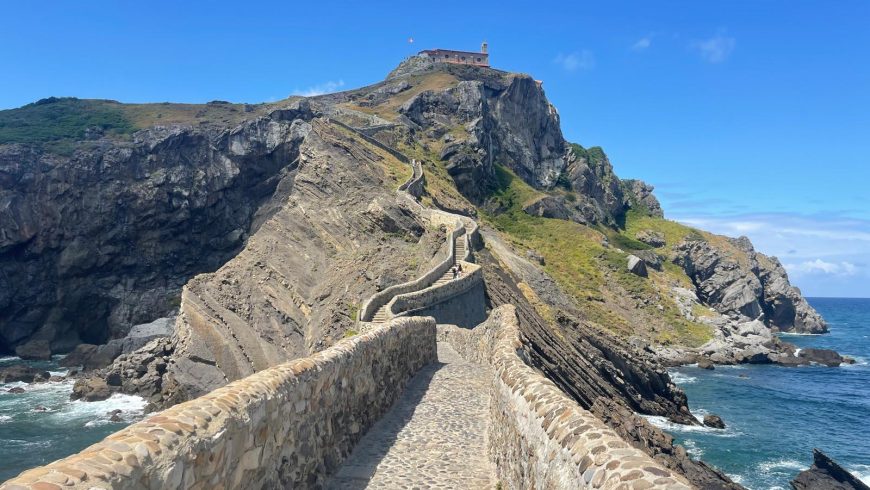
Behind San Juan de Gaztelugatxe’s booking system lies one of the fundamental principles of sustainable tourism: tourism carrying capacity.
Every destination has a limit beyond which human presence begins to generate negative impacts. This limit concerns not only the natural environment but also the quality of the visitor experience and the well-being of local communities.
In the case of Gaztelugatxe, carrying capacity is determined by several factors:
- the shape of the islet, connected to the mainland by a single stone bridge;
- the narrow staircase with its 241 steps;
- the fragility of the coastal vegetation;
- the need to protect seabird nesting areas;
- the safety of people walking the trail.
For this reason, the daily visitor limit is not an arbitrary restriction but a management tool based on the long-term conservation of the site.
A Better Experience for Visitors
When people hear about visitor limits, they often think immediately of restrictions.
In reality, the opposite is often true.
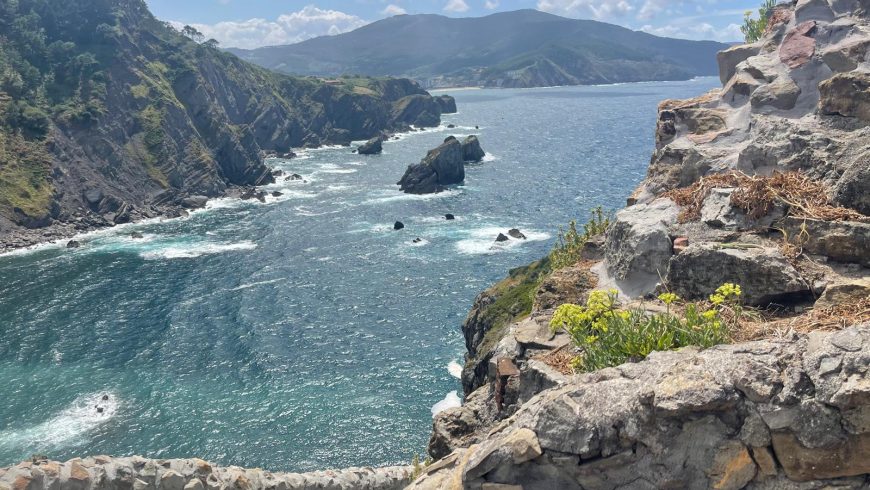
Visiting a less crowded place means experiencing it as it was meant to be. It means pausing to listen to the sound of the ocean instead of the noise of the crowd. Taking a photograph without dozens of people standing in front of the lens. Walking safely along the staircase. Enjoying the scenery without rushing.
Sustainability doesn’t just benefit nature. It also enhances the travel experience.
This philosophy is reflected in many of the destinations featured on Ecobnb: travelling more slowly, spreading visits throughout the year, choosing less-travelled trails, and seeking authentic experiences rather than simply ticking famous landmarks off a bucket list.
Gaztelugatxe Is Not an Isolated Case
In recent years, an increasing number of destinations have introduced booking systems or visitor limits.
The reasons are always the same:
- to protect fragile ecosystems;
- to reduce soil erosion;
- to improve visitor safety;
- to distribute tourist flows more evenly.
This is already happening, for example, on several beaches in Sardinia, where daily visitor numbers are limited to protect dunes and coastal habitats. Likewise, a growing number of natural parks across Italy and Europe are experimenting with reservation systems during peak seasons.
This doesn’t mean preventing people from travelling.
It means ensuring that these places can still be enjoyed twenty or even fifty years from now.
Exploring the Basque Country Beyond Game of Thrones
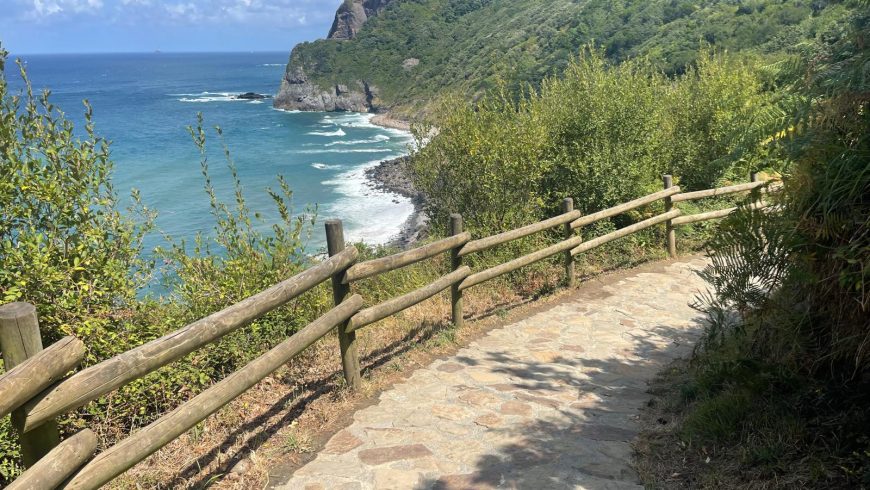
It would be a mistake, however, to stop at Gaztelugatxe alone.
Anyone visiting this stretch of coastline quickly discovers that the charm of the Basque Country extends far beyond the famous Game of Thrones filming location.
Just a few kilometres away lie the Urdaibai Biosphere Reserve, a UNESCO-designated site, the fishing port of Bermeo, the beach of Bakio, and countless scenic hiking trails winding along dramatic Atlantic cliffs.
If you’re planning a trip to the region, we also recommend reading:
- The Basque Country: Ideas for a Sustainable Holiday, featuring itineraries, nature experiences, and tips for exploring the region responsibly.
- Green Itineraries Along the Basque Coast, a collection of hikes through forests, coastal landscapes, and charming fishing villages.
- San Juan de Gaztelugatxe: A Walking Guide to the Game of Thrones Island, our complete guide with route details, walking times, and practical tips for planning your visit.
That way, you can turn a simple excursion into a slower, more meaningful journey, taking time to discover the lesser-known corners of the Basque coast.
Sustainable Tourism Is About Finding Balance
For many years, the success of a destination was measured almost exclusively by the number of tourist arrivals.
Today, that perspective is changing.
More and more local authorities, protected area managers, and communities are asking a different question:
How many visitors can a place welcome without losing its identity?
It’s a question that concerns all of us.
Because every time we choose to visit a destination, we can either help preserve it or, unknowingly, contribute to its decline.
Booking a visit in advance, staying on marked trails, choosing quieter times of the day, or spending a few extra days in the area are all small actions that, together, can make a big difference.
The Real Lesson of Gaztelugatxe
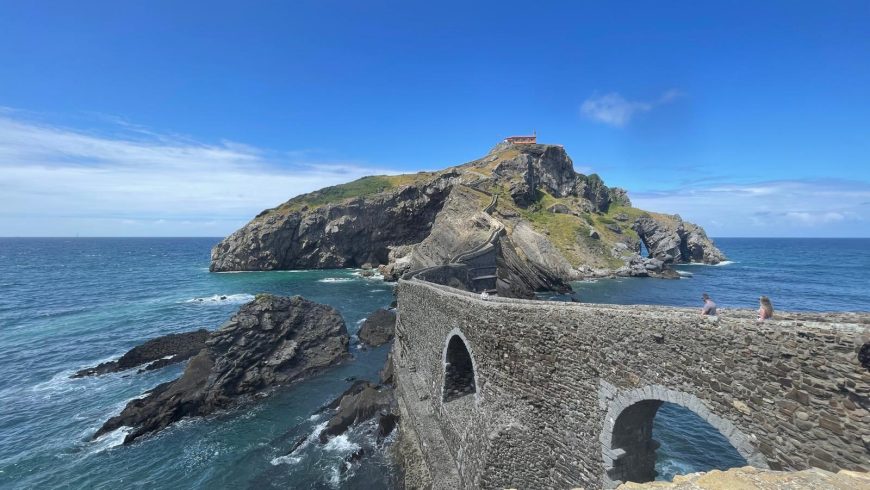
When you finally reach the Hermitage of San Juan de Gaztelugatxe after crossing the stone bridge and climbing its 241 steps, it’s immediately clear why this place has captivated visitors from around the world.
But its story teaches us something even more important.
Sustainable tourism is not about closing places off or making them accessible only to a privileged few.
It is about finding the right balance between our desire to explore the world and our responsibility to protect it.
Gaztelugatxe shows that this balance is possible.
Limiting visitor numbers does not mean limiting emotions.
It means ensuring that those who come here ten, twenty, or fifty years from now will still be able to experience the same sense of wonder as they stand before the Atlantic Ocean, the towering cliffs, and the ancient hermitage suspended between sea and sky.
Cover image: photo by Silvia Ombellini