Summer has finally arrived, and with it comes one of the most eagerly awaited announcements for beach lovers: the 2026 Blue Flag awards. The list is compiled by the Foundation for Environmental Education, which evaluates water quality, environmental management, services and safety based on precise and verifiable criteria. The Blue Flags therefore serve as a useful guide for anyone whishing to make a conscious choice for their summer getaway.
This year, the award goes to 257 Italian municipalities, 525 beaches and 87 certified tourist marinas. Compared to 2025, the numbers show growth, with 11 more municipalities and 38 more beaches. These are small steps, but in the right direction. It reveals an Italian seaside tourism industry that is learning gradually, yet with extraordinary determination, to respect its sea and coastlines, not just to attract tourists, but as a commitment to the environment and future generations.
What is the Blue Flag certification?
Blue Flags are an international award presented annually by the FEE (Foundation for Environmental Education) to coastal and lakeside municipalities. The programme is run in collaboration with two UN agencies: the United Nations Environment Programme (UNEP) and the World Tourism Organisation (UNWTO), and operates in 51 countries.
To obtain this recognition, a location must meet very strict criteria: the quality of bathing water is fundamental, with regular sampling required to certify the absence of pollution. However, environmental education (providing educational information for tourists), waste management, safety of bathers, accessibility and provision of facilities such as cycle paths and pedestrian areas are also assessed.
In short, the assessment focuses on whether a community knows how to look after its local area, not just during the bathing season, but as a long-term political and cultural commitment.
What’s new in 2026
In 2026, the list of the Blue Flags in Italy includes 14 new entries and just 3 withdrawals. Furthermore, from this year onwards, the Blue Flag will be awarded every two years: this is designed to provide greater stability in planning for local authorities and a longer-term outlook for tourists wishing to plan their holidays.
The FEE has also launched a partnership with the Green Key certification scheme, with the aim of strengthening sustainability policies. Indeed, this link enables the environmental certification to cover both the local area and the accommodation facilities themselves. This creates an integrated system involving public authorities, local communities and eco-friendly accommodation providers.
Introduced last year, the “Piano di Azione per la Sostenibilità” (sustainability action plan) requires local authorities to propose, implement and monitor specific environmental measures on a three-year basis (2025–2027). It has five overarching objectives: sustainable mobility, sustainable cities and communities, life on land, life below water and combating climate change. The result is that whilst 81 per cent of local authorities had been working on all five objectives simultaneously in 2025, this figure reached a record high of 94 per cent in 2026.
The top-awarded regions
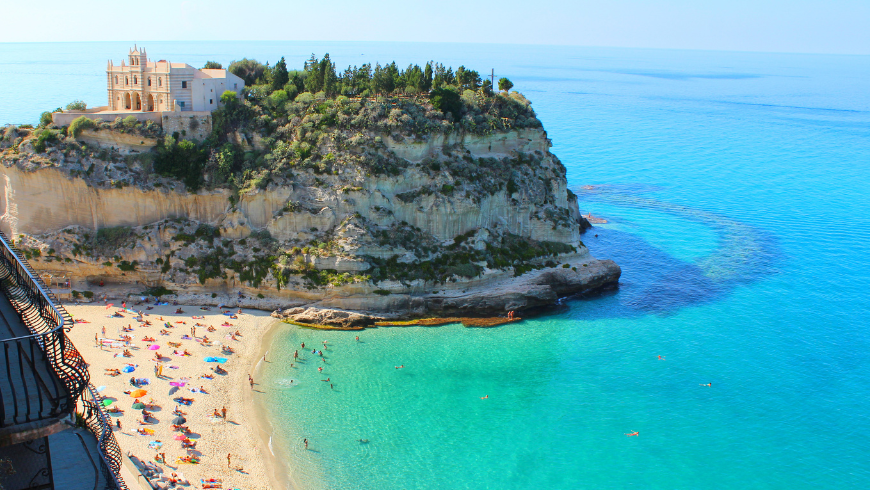
As for the most awarded regions, Liguria remains in the lead with 35 municipalities receiving awards. It is followed by Puglia and Calabria, both with 27 awards, whilst Campania, Marche and Tuscany each have 20. This ranking reflects a commitment that is being pursued consistently across both the north and south of Italy. It is worth noting the strong growth in the south. Calabria and Sicily have made clear progress, with new entries reflecting tangible investment in environmental quality.
Furthermore, the Blue Flags for lakes, often overlooked in summer coverage, also deserve attention. The number of Blue Flags on lakes has risen to 23, with Limone sul Garda as the sole new entry for 2026. For those seeking an alternative to the crowded seaside, these certified lakeside destinations represent an attractive option.
The new Blue Flags for 2026
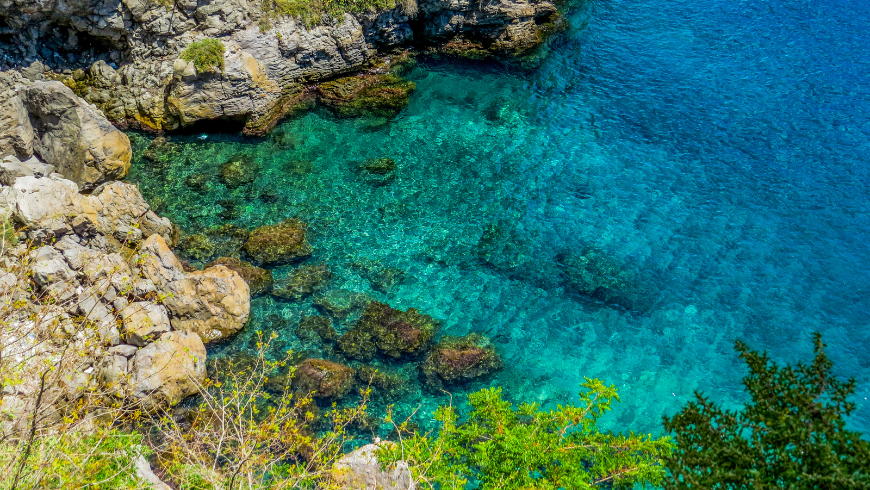
If you’re looking for inspiration for this year’s destinations, the new entries for 2026 range from the lakes of the north to the major islands. Among the 14 new entrants, you’ll find:
- Limone sul Garda (Brescia), a splendid new addition to lakeside tourism in Lombardy.
- The famous Romagna Riviera, with the inclusion of Rimini.
- The Tuscan charm of Monte Argentario (Grosseto).
- The heart of Salento, with the gems of Tricase and Morciano di Leuca (Lecce).
- Calabria’s standout additions: Amendolara (Cosenza), Locri (Reggio Calabria), Montegiordano (Cosenza) and Falerna (Catanzaro).
- Sicily, with beloved destinations such as Lipari (Messina) and Ispica (Ragusa).
- Sardinia, which enriches its coastal paradise with the splendid Teulada (Southern Sardinia).
- Finally, in Liguria, there are Andora (Savona) and Taggia (Imperia).
What has changed since 2025
Looking at the overall figures for the country, the growth compared with last year is clear and reflects the sustainable path taken by many local authorities. In 2025, there were 246 award-winning resorts and 487 beaches, whilst in 2026 the figures have risen to 257 resorts and a total of 525 beaches.
This positive trend demonstrates how sustainability is becoming a fundamental pillar and no longer an exception for Italian seaside tourism.
How to choose a truly sustainable beach
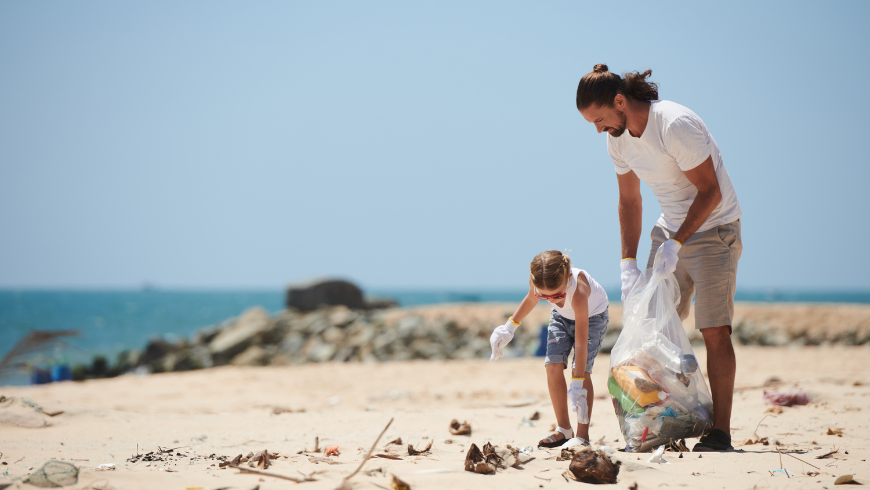
Choosing a Blue Flag destination is a good starting point for a sustainable holiday, but it is not enough. Here are some questions to ask yourself before choosing a destination:
- How do I get there? A destination that can be reached by train or local transport significantly reduces the impact of the journey. Many of the award-winning destinations are located along railway lines or have seasonal bus services. In addition, the presence of pedestrian and cycle paths on site is a great bonus.
- Where should I stay? It’s important to choose eco-friendly beach resorts, accommodation and hotels that invest in energy efficiency, local produce and all-round sustainability. If you’re planning a sustainable seaside holiday, you can find inspiration and search for eco-friendly accommodation on Ecobnb. Choose where to stay with the same care and respect as you do when choosing where to swim!
- How should I behave on the beach? Even the most eco-conscious destination can be compromised by visitors’ behaviour. No single-use plastic or littering are important. Protecting biodiversity is another key point: respect the dunes and coastal vegetation and be mindful of the seabed whilst diving or snorkelling.
- What should I visit? Blue Flag beaches are often close to historic villages, nature trails and local markets. Dividing your time (and consumption) between the coast and the inland areas is an effective form of slow tourism, especially for supporting small local businesses.
Blue Flags as a guide, not a tick-box list
Blue Flags are not a ranking of the most beautiful beaches, nor are they simply an achievement to show off. They are a starting point for more mindful seaside holidays. Choosing one of these 525 beaches means rewarding communities that invest in the future of our planet. At the same time, it ensures a safe, clean holiday experience in close contact with Italy’s authentic beauty.
Cover image: Photo via Canva Pro