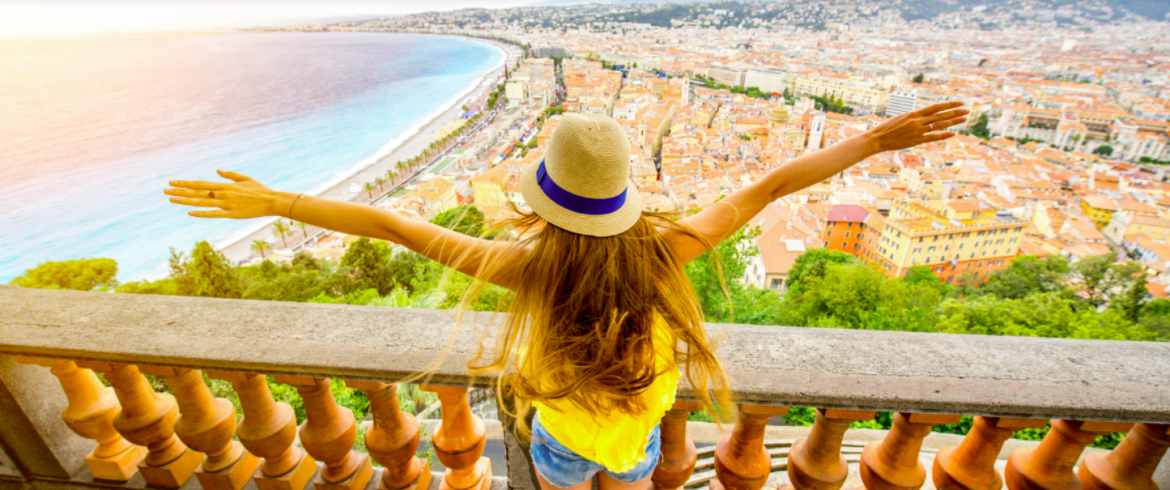
Just a few kilometres from the Italian border, Nice is the perfect destination for a relaxing getaway, combining sea and nature. Overlooking the crystal-clear water of the Côte d’Azur, Nice is an elegant French city. Situated in the Alpes-Maritimes, it is quite easy to reach by train. Thanks to its mild, sunny climate it is an amazing place to explore even in the off-season. Since 2021, Nice has been listed as a UNESCO World Heritage Site, a “Winter Resort Town of the Riviera”.
Despite being one of France’s major cities, you can easily explore Nice on foot or by bike, thanks to its many pedestrian and cycling routes. Here is an itinerary to discover Nice at its best, in a sustianable and authentic way.
Exploring Nice on foot: from Place Masséna to Castle Hill
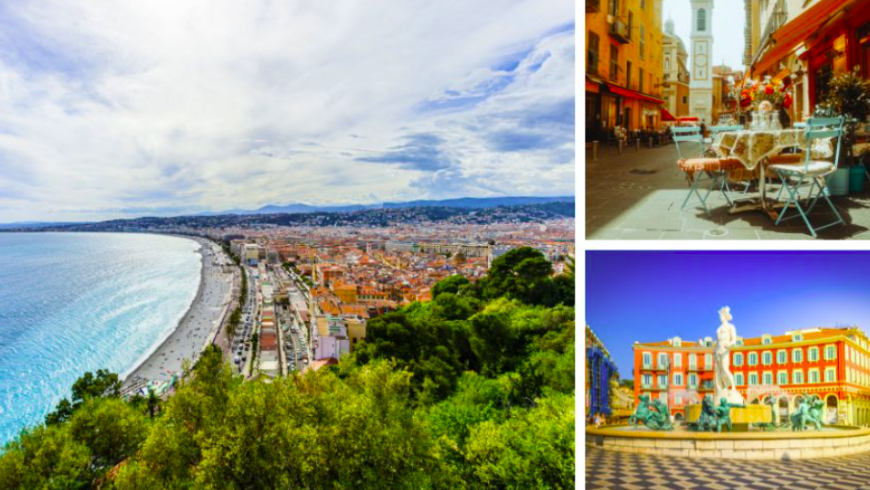
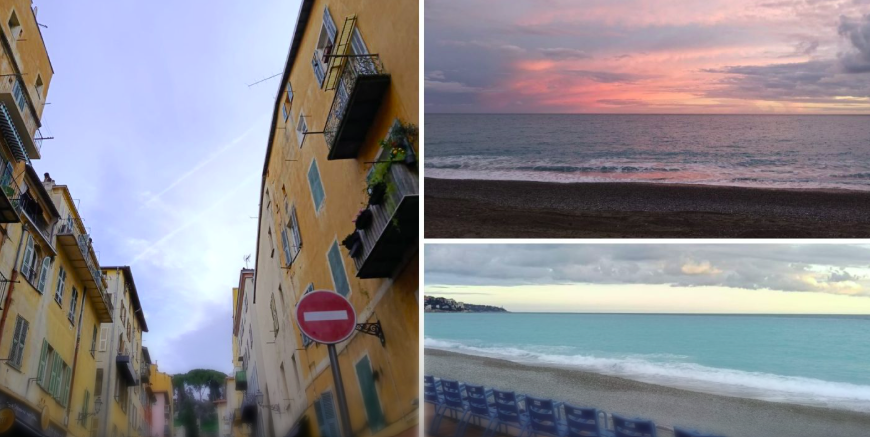
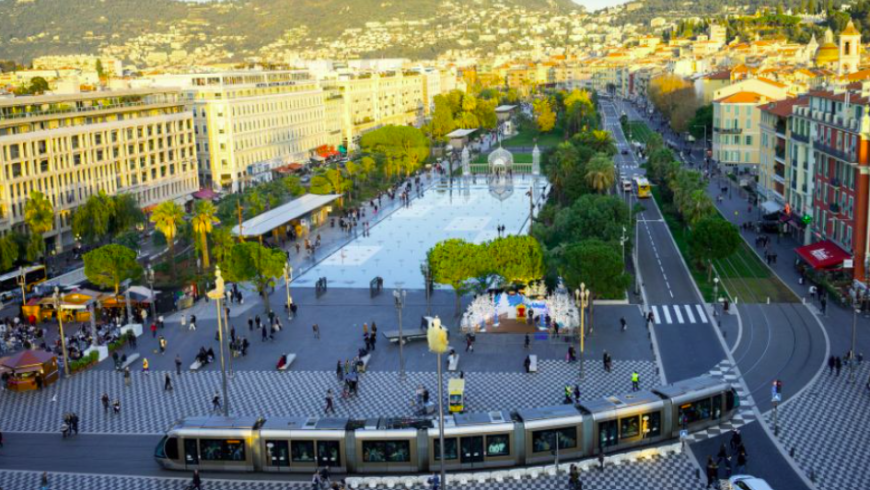
You could begin by exploring the city from Place Masséna, Nice’s main square. It is known for its chequered paving, red-façaded buildings and the Fontaine du Soleil. Heading down towards the sea, you will reach the famous Promenade des Anglais. It is a 7 km long seafront path for pedestrians and cyclists, never losing sight of the Mediterranean. Along the way you will find the iconic blue chairs, where you can rest and admire the sunset.
Continuing along the seafront heading east, you will reach Porto Lympia with its pastel-coloured façades and boats moored along the quays.
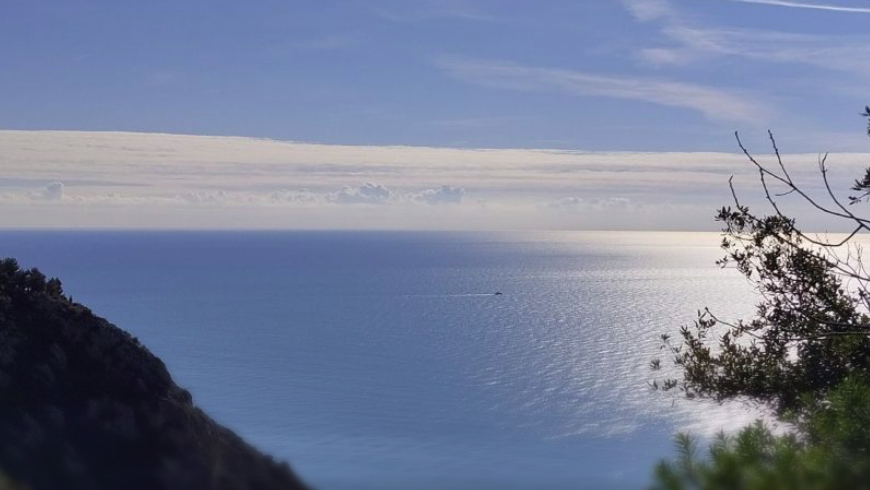
You can then wander through the narrow streets of the old town, admire the typical yellow and red buildings, and climb up to Castle Hill. From the top, you will be rewarded with one of the most beautiful panoramas on the Côte d’Azur. The view stretches across the Bay of Angels, the historic centre and the harbour.
If you have more time, you can make a detour to the Russian Orthodox Cathedral of Saint Nicholas. It is one of Nice’s most striking religious buildings, inspired by the architecture of Moscow’s churches.
A fun fact about Castle Hill: if you find yourself near Castle Hill at noon, you might hear a loud bang. This is the traditional midday cannon shot, linked to the figure of the Scotsman Thomas Coventry-More. The custom dates back to the second half of the nineteenth century.
This itinerary can also be followed by bike, as the Promenade des Anglais is open to both pedestrians and cyclists. The city has an ever-expanding cycling network (over 100 km of cycling routes) and numerous bike parking areas.
To hire a bike for free, you can use the apps of operators Lime and Pony. It is active in Nice and other municipalities of the Métropole Nice Côte d’Azur. Various routes are available for different levels of ability and allow you to explore the entire city by bike.
| Green Itinerary in Nice | |
| Starting point | Place Masséna |
| Main stops | Promenade des Anglais, Porto Lympia, Vieux Nice, Castle Hill |
| Walking time | About half a day, with scenic stops and breaks at the markets |
| Cycling time | 2-3 hours, at a relaxed pace |
| Difficulty | Easy along the Promenade des Anglais and in the city center; medium if you go up to Castle Hill |
| Recommended time of the year | Sping, autumn and mild winter days, when the city is less crowded |
| Ideal for | Those who want to visit Nice without car and admire sea, historic center, local markets and panoramic views |
| Green tip | Reach Nice by train and get around on foot, by bike or use public transport to reduce the environmental impact of your trip |
Local markets and regional cuisine in Nice
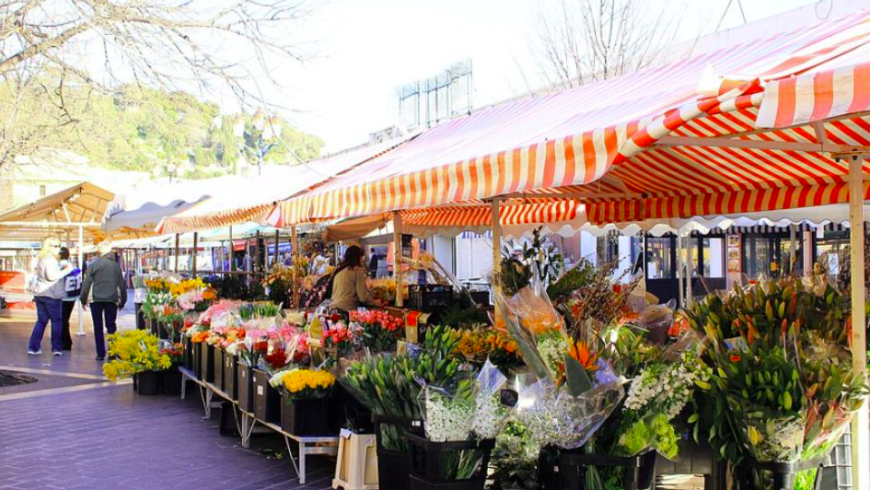
For a sustainable snack or lunch, there are several options worth considering. In the old town, very close to the Promenade des Anglais, you will find the Cours Saleya Market, open Tuesday to Sunday. One section, the Marché aux Fleurs, is, as the name suggests, dedicated to flowers. A little further along, you will find stalls selling organic produce such as fruit, vegetables, bread and much more.
Among the Nice specialities, a must try is socca, a thin crêpe made from chickpea flour. Also, the salade niçoise and pissaladière, a rustic flatbread topped with caramelised onions, anchovies and black olives, is worth trying. The city also has numerous vegetarian and vegan restaurants serving dishes made with local produce.
Eco-friendly hotels and accommodation in Nice
Choosing sustainable accommodation helps reduce the environmental impact of your trip while offering a more authentic experience. On Ecobnb you can find hotels, bed & breakfasts and apartments that adopt eco-friendly practices and celebrate the local area.
Nice’s Most Beautiful Parks
Nice is not only about the sea and architecture: the city also offers many green spaces, ideal for a relaxing pause. Here, nature fits seamlessly into the urban setting, creating beautiful green areas just steps from the main attractions.
One of the most iconic spots is the Promenade du Paillon, a large urban park stretching through the city centre across around 12 hectares. With its fountains, shaded areas and children’s play installations, it is a much-loved meeting point for both locals and visitors.
Just a short walk from the old town lies the Jardin Albert Ier, one of Nice’s oldest public gardens, connecting Place Masséna to the Promenade des Anglais. It is perfect for a quiet stroll among palm trees, flowerbeds and art installations.
For those seeking a more immersive experience in nature, Parc Phoenix, near the airport, offers tropical greenhouses, themed gardens and rich biodiversity all within one large green space.
Finally, the Jardin du Monastère de Cimiez, set on the hillside above the city, is also well worth a visit. Quieter and less crowded, it offers a wonderful view over Nice and a particularly peaceful atmosphere.
These green spaces reveal a slower, more authentic side of the city. They are perfect for those who want to explore Nice at a sustainable pace, away from the urban bustle.
Why Nice is a sustainable city
Nice has stood out for its sustainable approach, including to tourism, for a number of years now. In recent years the city has invested in expanding its cycling lanes, strengthening its tram network and regenerating numerous urban green spaces.
According to an analysis by Kermap, Nice ranks as the greenest among France’s major cities, with 33% tree canopy coverage and approximately 53 square metres of tree-covered surface per inhabitant.
Visiting Nice without a car means discovering the city at a slower pace. Wandering through the colourful lanes of the Vieux Nice, cycling along the seafront, getting lost among local markets and taking a break in one of its many green spaces.
Whether you explore on foot, by bike, or simply by letting the Mediterranean atmosphere guide you, Nice reveals its most authentic face. An elegant, vibrant city where sea, culture and sustainability meet in perfect balance.
Cover image: photo via Canva PRO