
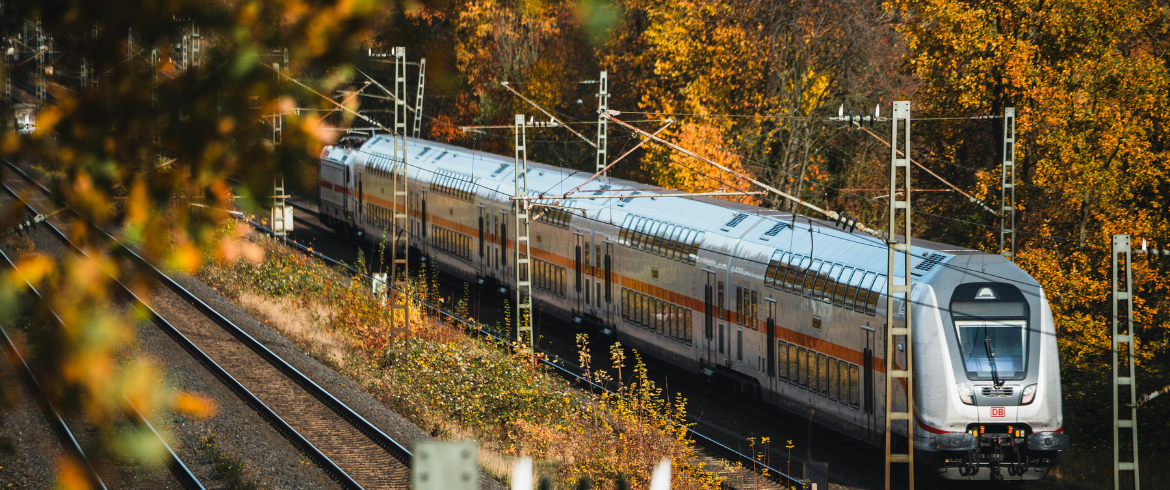
Traveling across Vietnam depends greatly on how you move through the country. For travelers interested in train travel Vietnam sustainable, this is one of the most meaningful ways to cross the country from north to south.
With its long and narrow geography, there are three main ways to travel:
- Flying is for those short on time.
- Motorbike is for the more adventurous.
- And the train is a balanced option for travelers interested in slow travel, lower environmental impact, and everyday life along the way.
This article focuses on traveling by train from north to south. It explains how the route works, where to stop, and why this is a practical and sustainable way to cross the country, being a great way of reducing your carbon footprint with eco-friendly transportation choices.
The journey starts in Sapa and continues all the way to Ho Chi Minh City.
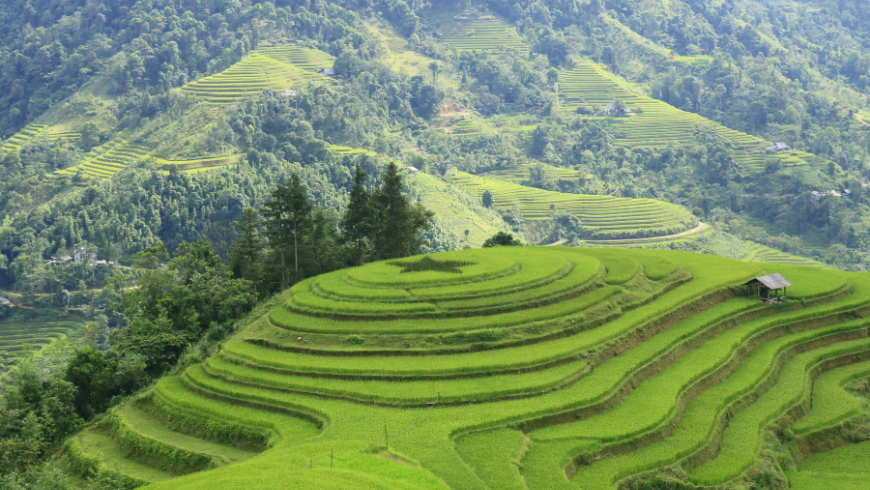
Train travel Vietnam sustainable and slow journeys
Train travel aligns well with sustainable tourism practices. It produces lower carbon emissions than domestic flights. It relies on public infrastructure and encourages longer stays.
According to the International Energy Agency, rail travel emits over 100 grams less CO2 per passenger and per kilometer traveled than flying.
It is also affordable for long distances. Comfortable enough for overnight travel. And a great way to observe landscapes and local routines.
The slower pace allows travelers to experience the country gradually, without skipping entire regions. This is why train travel Vietnam sustainable is becoming more popular among conscious travelers.
You can read more about sustainable travel in Vietnam here: Things to do before leaving on a sustainable trip to Vietnam.
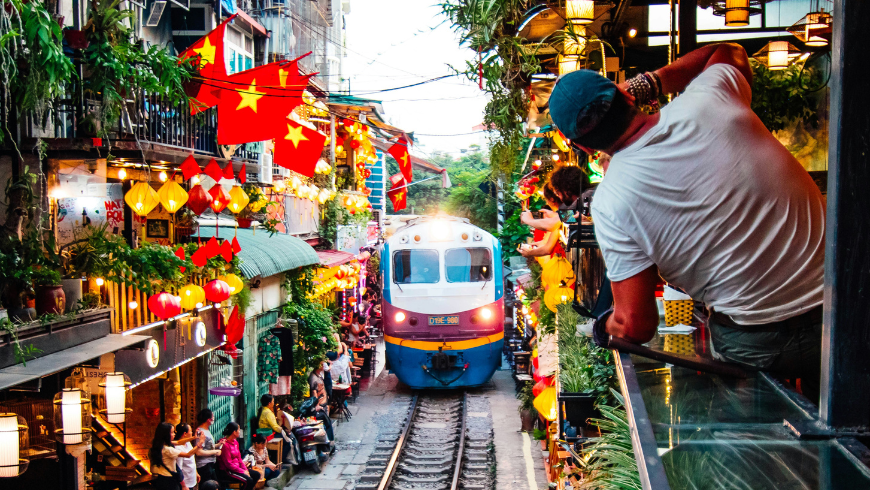
Overview of the train travel Vietnam sustainable route
Vietnam’s main railway line runs from the far north to the southern metropolis.
- Total distance: around 1,726 km
- Total travel time (no stops): 32 to 36 hours
- Recommended approach: divide the journey into segments
Breaking the trip into stages makes it easier to rest. It also helps you explore different regions and maintain a comfortable rhythm.
Vietnam is commonly divided into three main regions:
- North Vietnam – mountains, rice terraces, and historic cities like Hanoi and Sapa
- Central Vietnam – imperial towns and coastal landscapes such as Hue, Da Nang, and Hoi An
- South Vietnam – tropical lowlands and dynamic cities like Ho Chi Minh City and Nha Trang
Each region has its own culture, food, and pace of life. Look at the map below to see how the railway connects them from north to south.
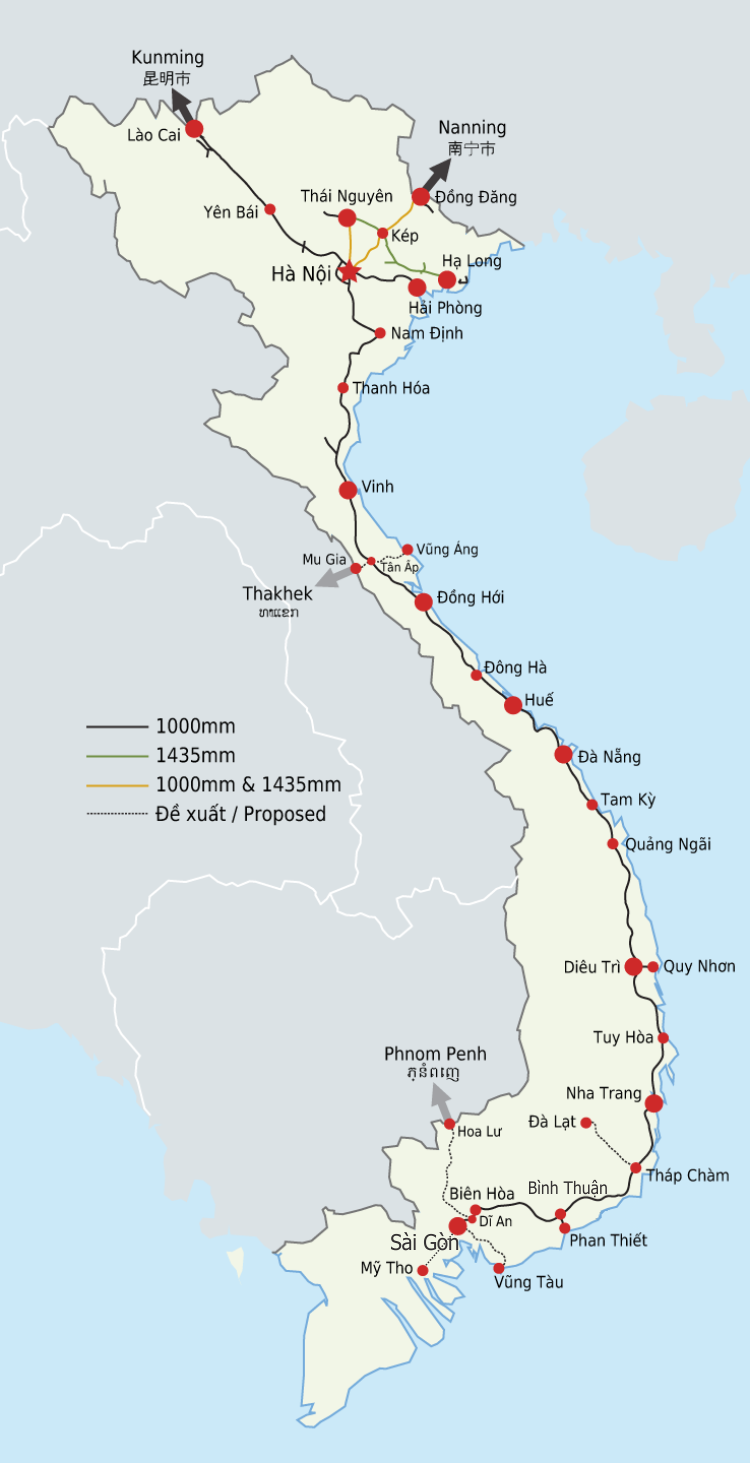
You can learn more about this historic line here: Through Vietnam by train: the Reunification Express.
Suggested itinerary from north to south
A balanced train route can follow this structure:
Sapa > Lao Cai > Hanoi
Bus or van from Sapa to Lao Cai.
Overnight train from Lao Cai to Hanoi.
A practical first night on the train.
Hanoi > Hue
12 to 14 hours.
Commonly done overnight.
Arrival in Hue, a key cultural stop in central Vietnam.
Hue > Da Nang
About 3 hours.
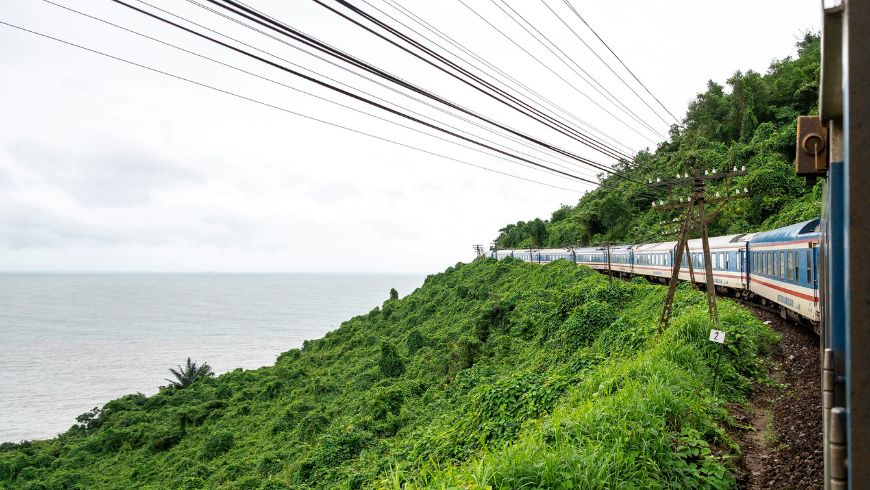
Coastal and mountain views along the Hai Van Pass.
Arrival in Da Nang.
It is highly recommended to visit Hoi An, a lovely town about 40 minutes from Da Nang.
Da Nang > Ho Chi Minh City
Long-distance journey (around 17 hours), usually overnight.
Direct connection to the south and final stop of the route.
It is also possible to go from Da Nang to Nha Trang (around 8 hours).
And then continue to Ho Chi Minh City (around 7 hours).
This itinerary allows travelers to experience mountains, central Vietnam, the coastline, and the south without rushing. This shows how train travel Vietnam sustainable can support responsible tourism and low-impact journeys.
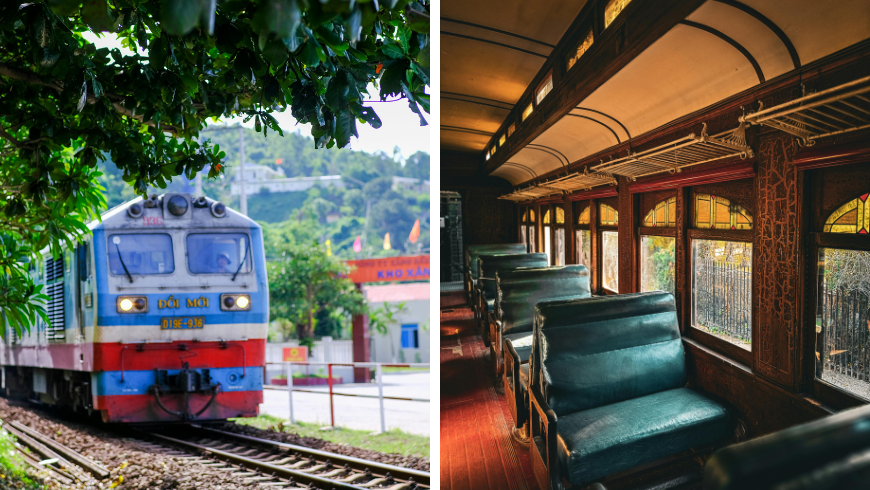
Train classes and sleeping cabins
For long distances, sleeper trains are the most practical option, as they allow travelers to rest overnight and reduce the need for extra accommodation.
Sleeper options
Soft sleeper cabins have four beds, thicker mattresses, and offer greater comfort for long journeys.
Hard sleeper cabins have six beds, thinner mattresses, and are a lower-cost option widely used by local travelers.
Bed levels
The lower bunk is the easiest to access and includes a small table.
The upper bunk is useful for luggage storage.
The middle bunk is generally the least practical.
When using the upper or middle bunks, shoes should be removed before climbing.
This is a common and respected custom on Vietnamese trains.
How to buy train tickets
Tickets can be purchased in two main ways:
- Through online platforms or agencies (usually with a service fee)
- Directly at train stations, often at a lower price
Stations such as Hanoi’s central railway station are easy to reach.
They also handle in-person ticket purchases efficiently.
What to pack for overnight trains
A small carry-on bag helps keep essentials close:
- Light sheet or sarong
- Thin jacket for air-conditioned cabins
- Toiletries and a face towel
- Toilet paper
- Eye mask
- Motion sickness medication
- Reusable water bottle
- Snacks and simple entertainment
Comfort varies by train type.
So checking the train category during booking is recommended.
Traveling slowly through Vietnam

Crossing Vietnam by train allows travelers to see how landscapes and daily life change from north to south.
Rice fields, coastal towns, cities, and countryside pass by at a pace that encourages observation and awareness.
For travelers interested in train travel Vietnam sustainable, this route offers an accessible, affordable, and grounded way to experience the country from start to finish.
Where to stay along the route
Along this north to south journey, you will find many eco-friendly places that support local communities and reduce environmental impact. Choosing responsible accommodation is another way to make your trip even more meaningful!
Cover image: photo via Canva PRO