
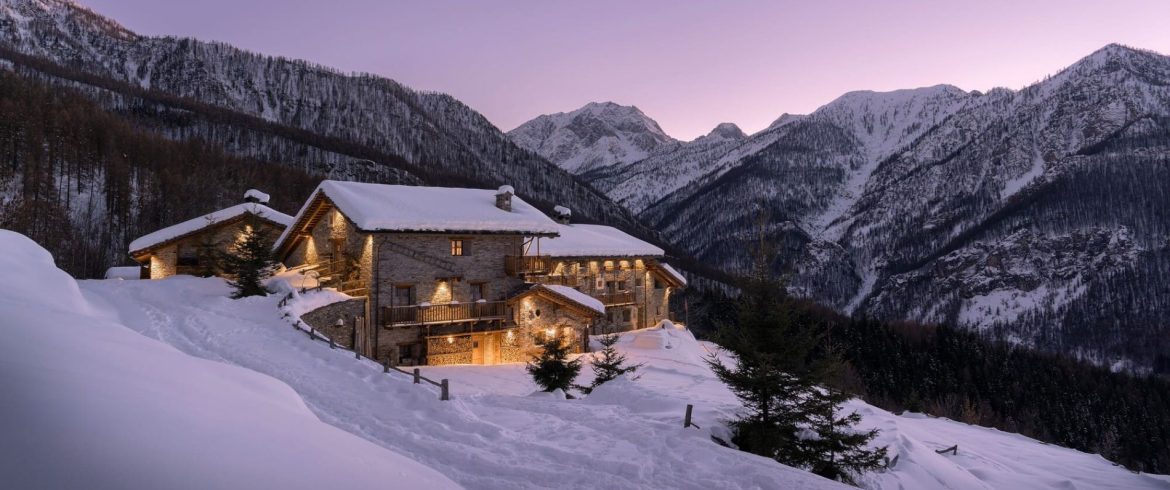
The Maira Valley, in the heart of the Piedmont Alps, is one of the most authentic destinations for those who love the mountains, silence, and slow travel. Not only trekking and unspoiled nature: this valley preserves a surprising cultural heritage made of ancient languages, traveling crafts, and reborn villages.
Here are 5 incredible curiosities that make the Maira Valley a truly special place.
1. Occitan is still spoken in the Maira Valley
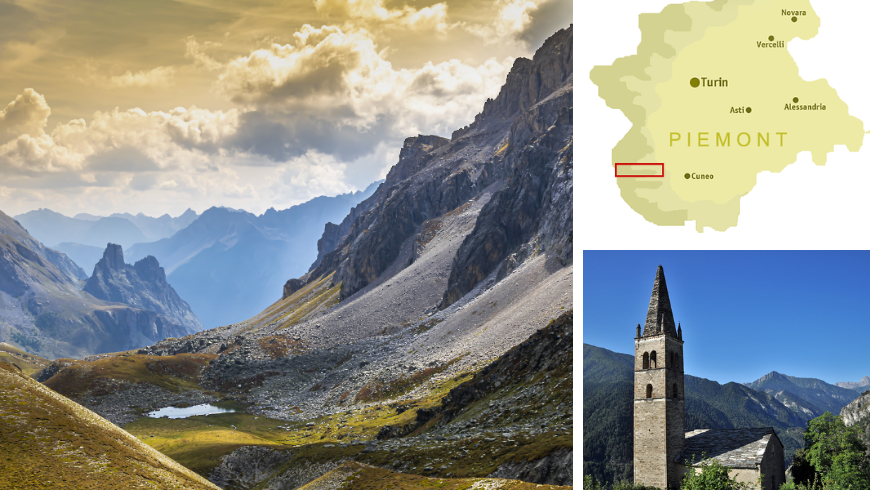
Did you know that the Occitan language, passed down for centuries, still survives here? Spoken especially in the most remote hamlets, Occitan accompanies festivals, songs, and folk tales, keeping alive the memory of a land that has managed to preserve its roots.
For those who want to immerse themselves in Occitan culture, there are routes dedicated to its discovery, offering a unique experience among history, language, and enchanting landscapes.
2. The frescoes of Hans Klemer: a museum among the mountains
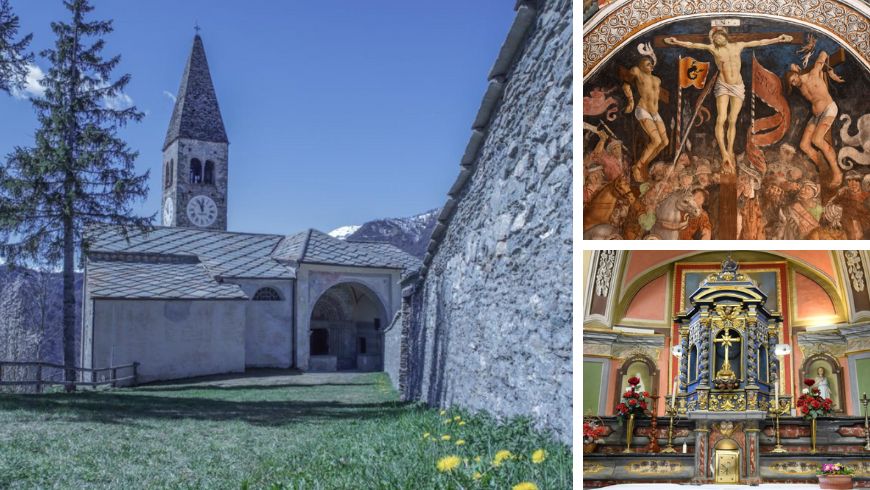
In the village of Elva, one of the most charming in the valley, you’ll find a church that holds an unexpected masterpiece: the frescoes of the German painter Hans Klemer (16th century).
His works tell religious stories with vivid colors and surprising details, turning the church walls into a true museum among the mountains.
Learn more about the frescoes of Elva
3. The Museo dei Pels: the curious story of hair collectors
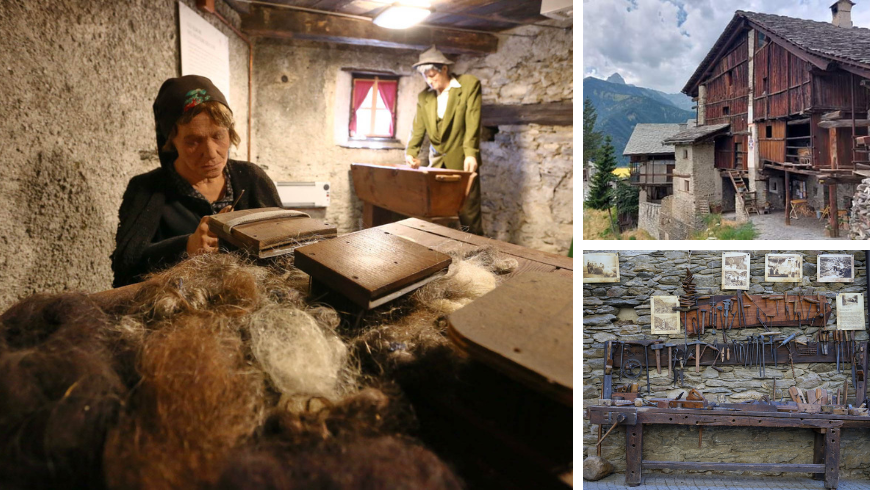
Yes, you read that right: in the Maira Valley there is a museum dedicated… to hair!
The Museo dei Pels, opened in 2006 in Elva, tells the story of one of the most unusual trades born in these mountains: that of the hair collectors, called caviè.
In a time when the valley offered few economic opportunities, many men would leave in autumn, traveling across Italy and Europe to collect braids and hair to resell in markets supplying the wig industry.
When braids were scarce, they would even settle for hair left behind on combs. Everything was gathered into large sacks and brought back to the village, where women washed, combed, and braided the hair, then left it out to dry.
The Museo dei Pels is a tale of resilience, memory, and creativity. A truly unique place that you should absolutely include in your cultural journey through the Maira Valley.
4. The tradition of the anchovy sellers: a trade born in the mountains
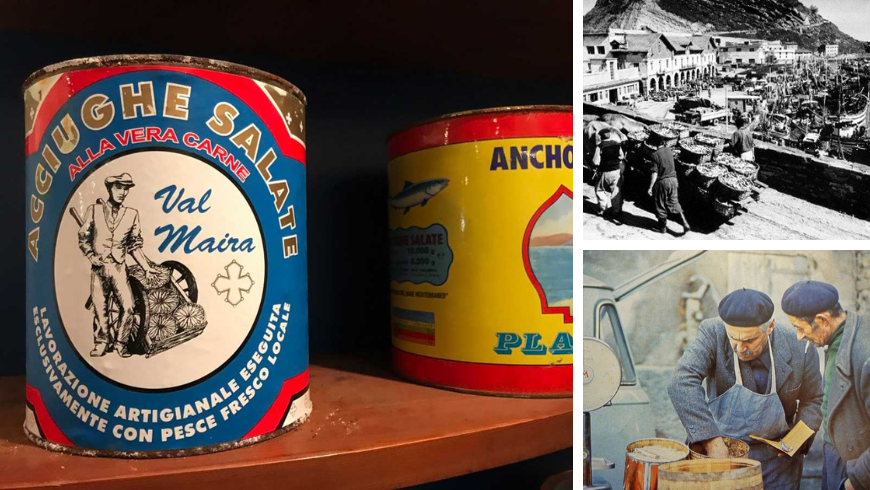
Among the most fascinating stories of the Maira Valley is that of the anchovy sellers, called anchoiers in Occitan and anciuè in Piedmontese. This trade was born when, in the past, during the long winter months, many valley inhabitants were forced to leave their homes to seek work elsewhere. Not to get rich, but simply to survive.
The anchovy sellers would head down to the plains at the end of summer with their wooden carts, the caruss, often painted blue, loaded with salted anchovies purchased in Ligurian ports.
They traveled hundreds of kilometers, walking up to 30 km a day through markets, farmhouses, and villages across Piedmont, Lombardy, Veneto, and Emilia.
A grueling job, but also a symbol of the resourcefulness and adaptability of Alpine communities.
5. Abandoned villages and rebirths: the magic of Sagna Rotonda
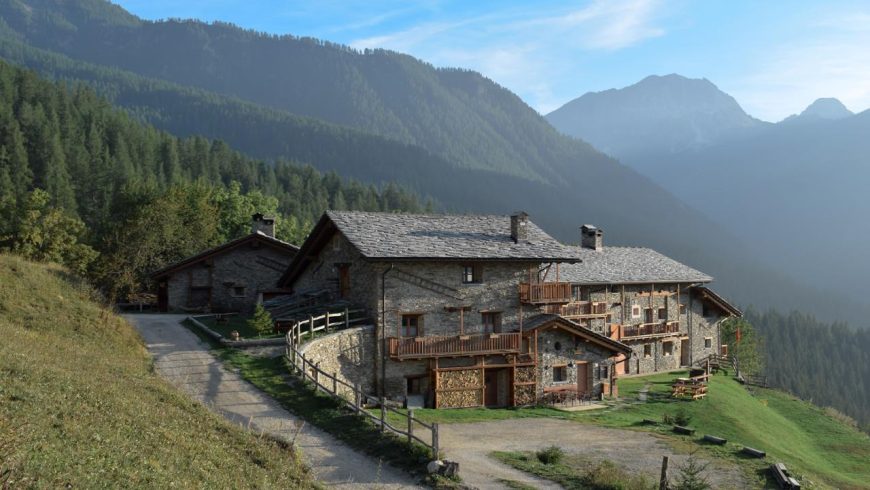
The Maira Valley is dotted with abandoned villages and ghost hamlets, real testimonies of a rural past marked by depopulation.
Walking among silent stone houses, like those of the Garini hamlet in the Vallone di Celle Macra, feels like taking a journey back in time: every corner tells stories of Alpine life, traditional crafts, and communities that once brought the valley to life.
But among these forgotten places, one in particular tells a different story: that of rebirth.
Sagna Rotonda: an eco-sustainably restored village in Maira Valley
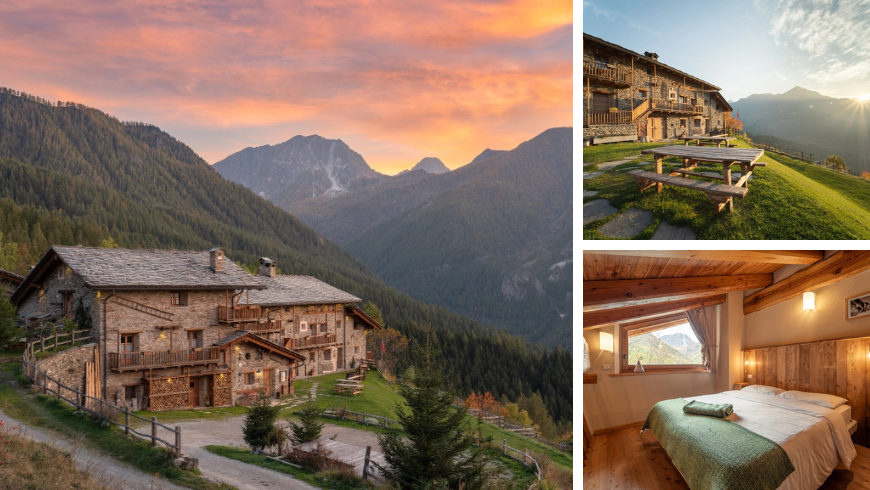
At an altitude of 1,644 meters, surrounded by the unspoiled nature of the Piedmont mountains, Sagna Rotonda is an ancient 18th-century village that remained uninhabited for years.
Today, thanks to a love for the mountains and the vision of Giovanni, Teresina, and their family, this hamlet has come back to life, becoming an extraordinary example of eco-sustainable hospitality.
The entire eco-village is energy self-sufficient:
- electricity from a photovoltaic system
- heating with efficient heat pumps
- low-consumption LED lighting
- zero CO₂ emissions
Here, silence takes center stage: there are no televisions, only breathtaking views of the surrounding mountains. The warm hospitality of Teresina, Giovanni, and their family adds a unique value to the stay, making the experience unforgettable.
Guests also have access to an organic garden, where they can freely pick fresh produce, and a small shop offering local specialties: honey, jams, cookies, wine, craft beer, and the traditional genepy, the typical mountain liqueur.
Plan your slow trip in the Maira Valley
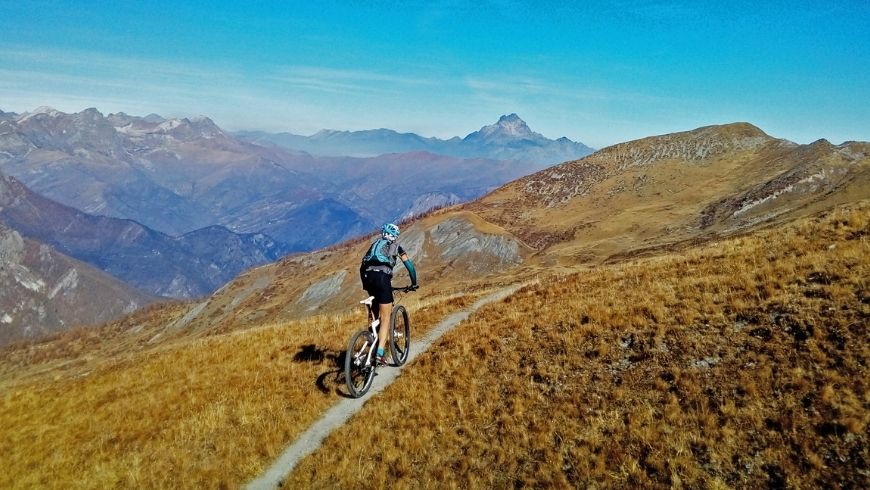
The Maira Valley is a unique destination, where nature and culture intertwine deeply: ancient languages, millennia-old traditions, Alpine art, and reborn villages.
There is no better way to discover it than to experience it slowly, step by step, choosing environmentally respectful activities and eco-sustainable accommodations.
Ecobnb’s tip: Visit the Maira Valley in spring or autumn: fewer crowds, incredible colors, and an even more authentic experience.
 Borgata Sagna Rotonda – Green Accommodation in MARMORA, Cuneo, CUNEO, IT


