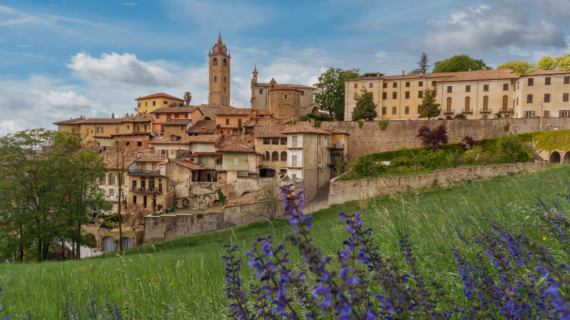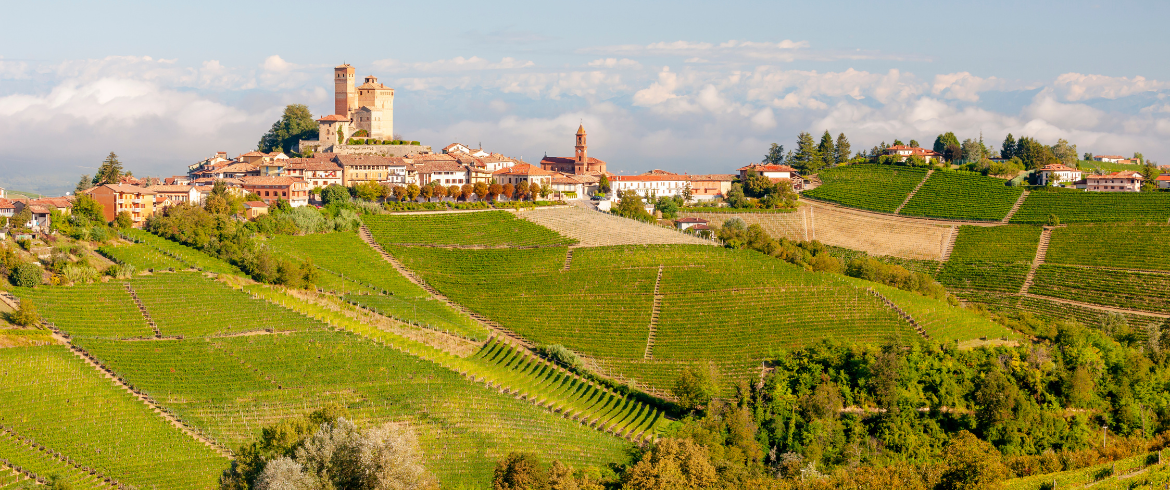
You only need to leave the main road and take one of the many unpaved roads winding up through the rows of vines to understand that the Langhe are about much more than Barolo and postcard-perfect views. This is a landscape shaped by generations of farming, so much so that it has been recognized as a UNESCO World Heritage Site. And like every landscape marked by the passage of time, it reveals its true soul only to those who discover it slowly. A slow and authentic journey on foot or by bicycle, stopping to enjoy a glass of wine with the people who live and cultivate this land every day.
Walking among vineyards, hazelnut groves and villages
Exploring the Langhe can begin simply like this: one step after another, relying on your own two feet. This is not about athletic trekking, but about slow living, a slower philosophy of life that finds its ideal rhythm in walking. Moving slowly becomes the only way to capture the essence of the landscape: the ever-changing shades of the earth, the wildflowers lining the paths, and those small villages that reveal themselves, hill after hill, along the roads connecting one town to another.
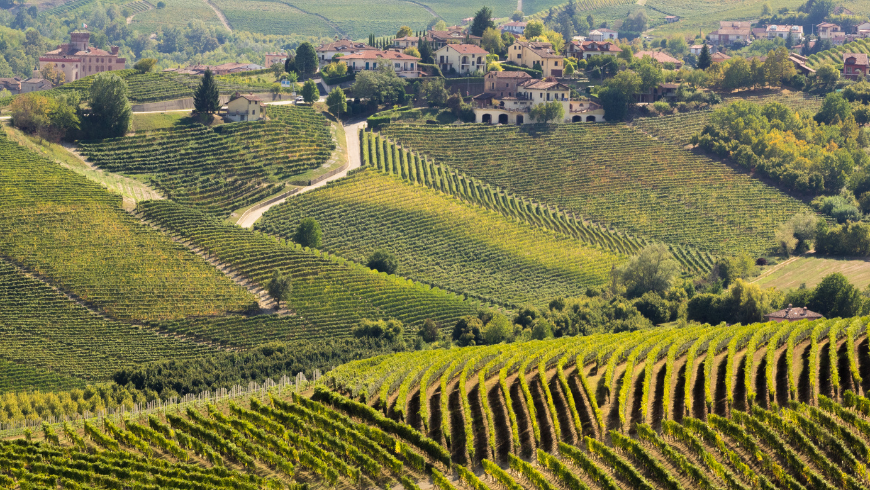
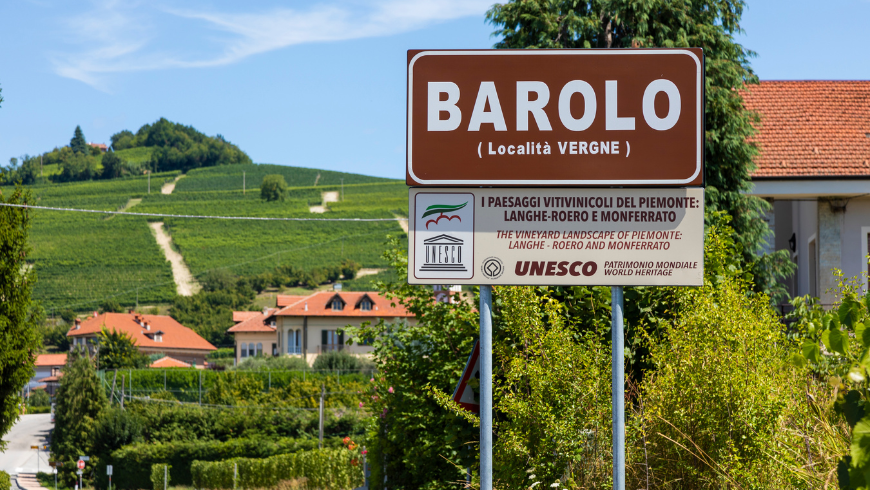
Near Barolo, Monforte d’Alba, Sinio and Serralunga d’Alba, a dense network of trails connects the villages without ever passing along the main road. Mule tracks, local roads and paths once used by farmers to reach their fields are still there today, quiet and waiting for anyone who wants to explore them at a leisurely pace.
Walking through the vineyards means seeing up close the work behind every bottle of Barolo: the orderly rows of vines, the wooden posts and the nets protecting the grapes. The hazelnut groves, on the other hand, are shadier and quieter: the air changes here and the landscape becomes more intimate. And then there are the woods: patches of wild nature that break up the geometry of the cultivated land and remind us that, before becoming a wine landscape, the Langhe were a landscape shaped by hard agricultural work. Following these trails immersed in nature offers the chance to explore the area along the contours of the hills, in a silence broken only by the rustling of leaves.
Tasting wines and hazelnuts while meeting local producers
The Langhe tell their story through what they produce, but the most authentic way to get to know them is by meeting the people who work the land every day. It is not simply about wine tasting, but also an opportunity to listen to the stories of families who have lived here for generations. Entering local farms means discovering the passion, hard work and dedication behind the area’s products.
The region is home to some of Italy’s most famous wines: Barolo, known for good reason as “the king of wines”; Barbaresco, more elegant and delicate; and Dolcetto, less solemn but capable of telling the story of everyday life in these hills. Alongside wine, another protagonist is the IGP Piedmont Hazelnut. It is grown in the hilly areas and is the key ingredient in many local recipes, from gianduia to traditional desserts.
Visiting a local farm or winery often means finding yourself in a cellar with the people who actually produce the wine, listening to how one vintage differs from another and understanding why some vineyards face south while others do not. This is also where aperitifs among the vines come to life: simple moments when a glass of wine is enjoyed alongside the sunset over the hills and the sight of vineyards turning shades of red and gold.
Behind every glass lies a landscape with cultural value even before its agricultural significance. The Langhe were recognized as a UNESCO World Heritage Site precisely because of this interweaving of nature and human work, a balance that can only truly be felt by being there, among the vineyards, rather than simply admiring photographs on a screen.
Discovering the Langhe by bicycle
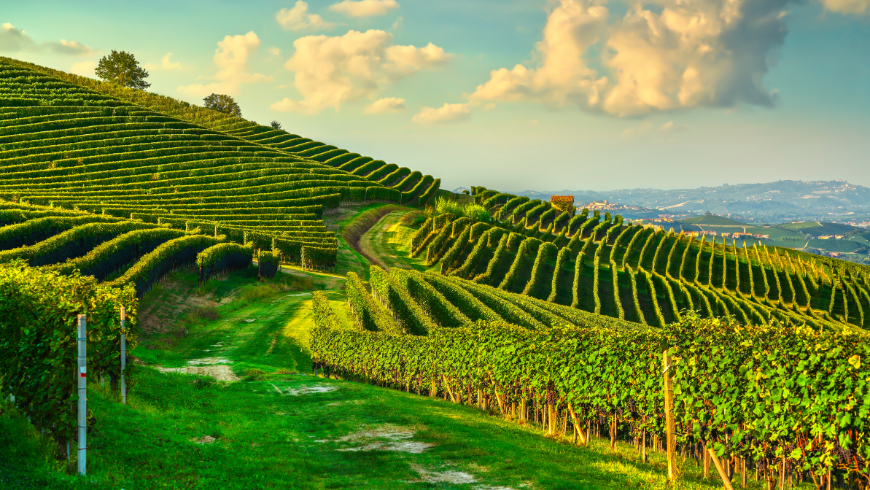
If your legs invite you to embrace the slowest possible pace, two wheels offer the perfect compromise between exploration and a slow rhythm. The Langhe are a paradise for cyclists, thanks to scenic routes designed for every level. In recent years, the area has become increasingly equipped with e-bikes and mountain bikes for rent, designed to tackle the hilly ups and downs without giving up the pleasure of discovery. Several charging points for e-bikes have also been installed throughout the area, making longer routes easier to enjoy.
There is no shortage of scenic routes: unpaved roads winding up through vineyards, breathtaking views of distant mountains, and descents cutting through woods and hazelnut groves. One of the best-known routes is Barolo Viola, an approximately 56-kilometre itinerary through the Langa del Vino and Alta Langa areas, passing through some of the iconic towns of the Barolo region. It is ideal for those who want a complete immersion in the wine-growing landscape in a single day.
Those travelling by bicycle can also rely on the Bike Product Club, managed by the Langhe Monferrato Roero Tourist Board. It is a network of facilities and services designed specifically for cycle tourists, offering information on routes, assistance and rest stops. The Club ensures that cyclists can find tailored services along their journey.
Places not to miss
Grinzane Cavour Castle
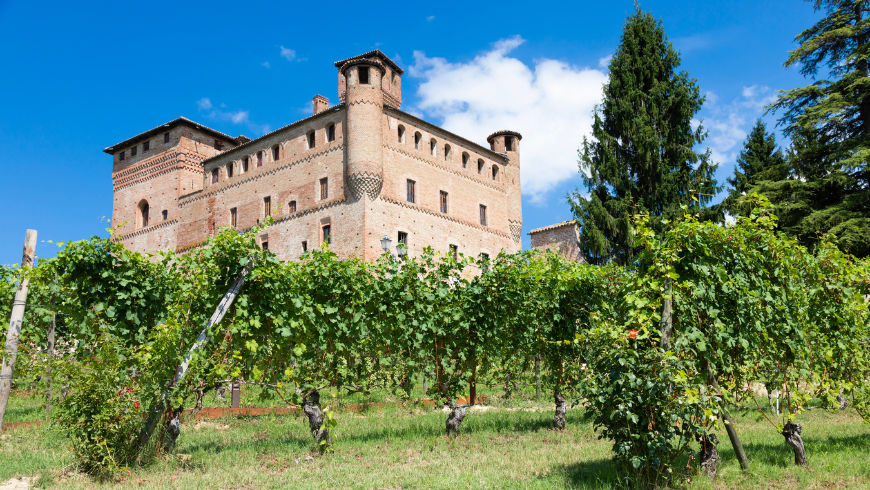
A symbol of the bond between the Langhe and their history, Grinzane Cavour Castle is part of the UNESCO World Heritage Site. Its rooms tell the story of centuries of agricultural and aristocratic life, while the walls offer one of the finest views across the Barolo region. Here, it is possible to glimpse the inseparable connection between historic architecture and the evolution of Piedmontese viticulture.
The Romantic Road of the Langhe and Roero
An approximately 130-kilometre route divided into 11 scenic stages, designed to explore the area’s most fascinating spots at a leisurely pace. It is not a route to complete all at once, but one to spread over several days, letting curiosity guide you rather than the rush to reach your destination. Each stop is a scenic viewpoint where you can pause to reflect and contemplate the beauty of the landscape.
Monviso
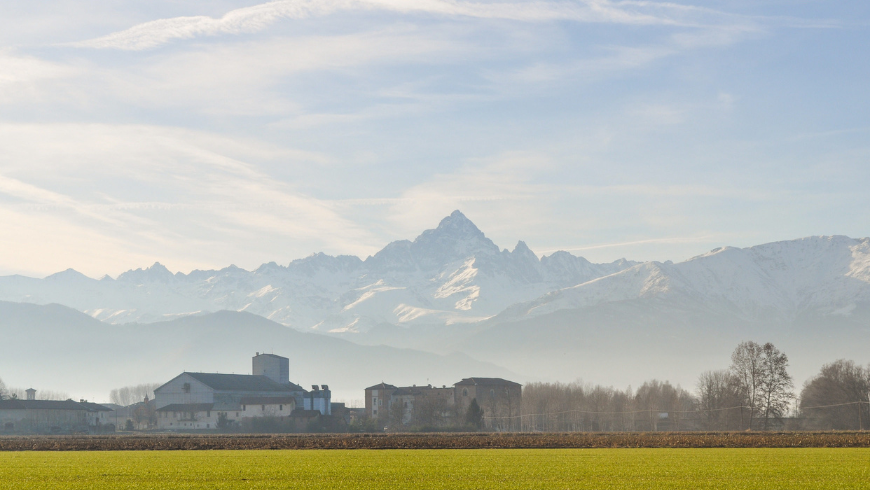
And when you look up, you may notice a majestic presence appearing suddenly behind a bend or at the top of a hill: Monviso. The “King of Stone“, whose unmistakable silhouette marks the horizon on many clear days. It is not unusual to stop just for it, for that silhouette that seems to watch over the hills from afar, reminding us that the Langhe are part of a broader landscape: Piedmont, between plains and mountains.
A region to explore the rest of Piedmont from
The Langhe are also an excellent starting point for those who want to broaden their view to the rest of Piedmont. In less than an hour’s travel, you can reach Turin, with its Savoy history and vibrant cultural life; Saluzzo, a medieval town at the foot of the mountains; Mondovì, with its historic centre spread across two levels; and the Alpine valleys of the Cuneo area, perfect for those looking for mountain air after days among vineyards and hills.
The sea is not so far away either: in just over an hour, you can reach the Ligurian coast, where the landscape changes dramatically, shifting from cultivated hills to cliffs overlooking the Mediterranean.
Where to stay green in the Langhe
Choosing where to stay in the Langhe also means choosing what kind of relationship you want to have with this land. Some accommodations offer authentic and sustainable farm hospitality that celebrates the local area.
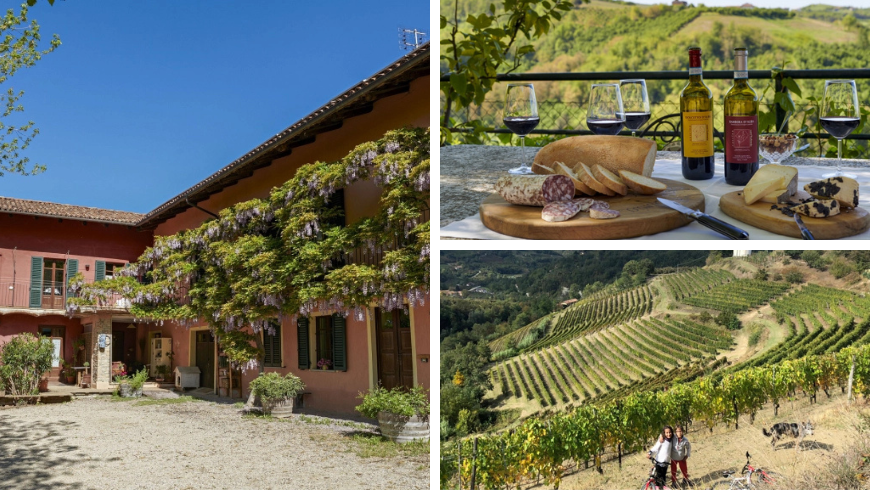
In Sinio, among the hills overlooking Serralunga, lies Cascina Sant’Eufemia, a traditional Langhe farm stay. It is the kind of place you might discover almost by chance, following an unpaved road between the rows of vines. Here, hospitality still follows the rhythm of the seasons: breakfast is made with produce from the vegetable garden and nearby farms, the rooms overlook a landscape that changes colour every month, and it is not unusual to exchange a few words with the people who run the farm about how the harvest or hazelnut gathering is going. It is a stay that does not seek to impress, but leaves a lasting impression precisely because of its simplicity. Their philosophy is all about slow living: discovering the area slowly, on foot. This is complemented by slow food, with tastings accompanied by reflections on the cultural value of local products.
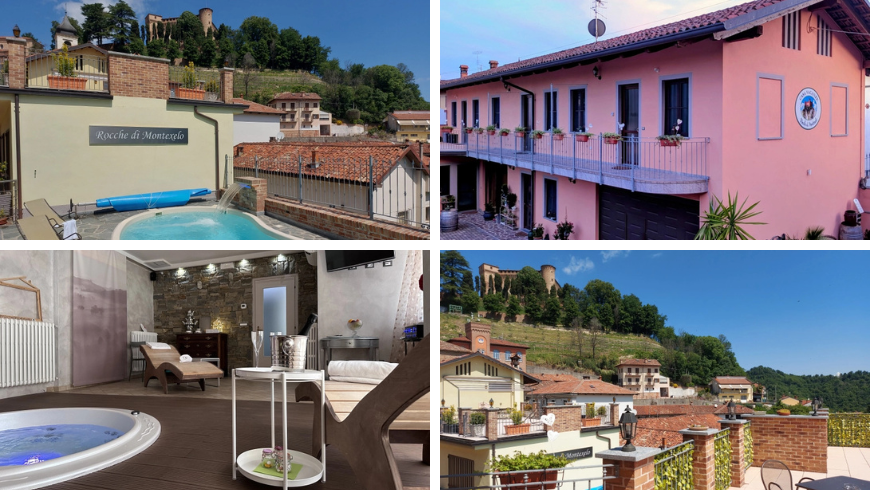
Those who want to discover the wilder borderlands between the Langhe and Roero can head to Rocche di Montexelo, in Monticello d’Alba. This Green Key-certified eco-holiday home features a green swimming pool and private spa. Medieval castles, historic villages, nature trails and food-and-wine itineraries are all just a short distance away. From here, the Langhe can be reached in just a few minutes, while the views across the area, including the famous Roero Rocks, make this an excellent choice in this corner of Piedmont.
An invitation to slow down
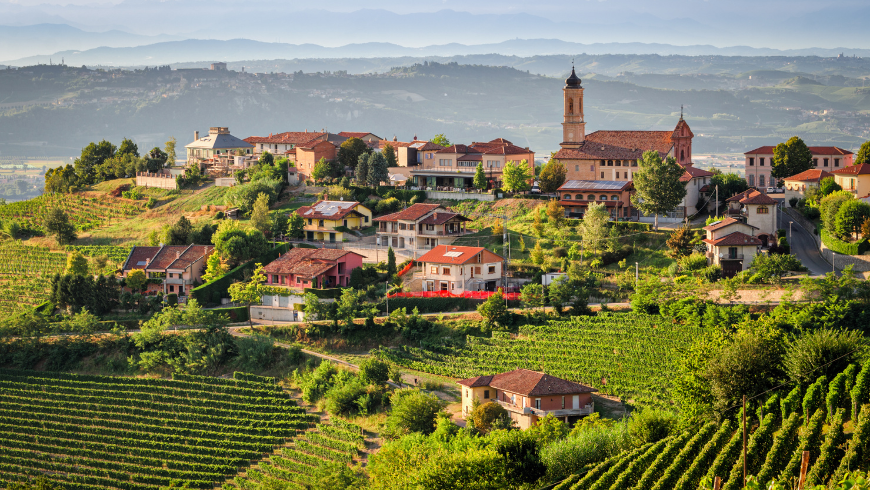
In the end, the Langhe are best discovered on foot rather than by car, in a wine cellar rather than in a tourist restaurant, and in a family-run farm stay rather than in a large resort. This is a land that asks for time, but gives back to those who know how to listen one of Italy’s most authentic landscapes.
Cover image: Photo via Canva Pro