
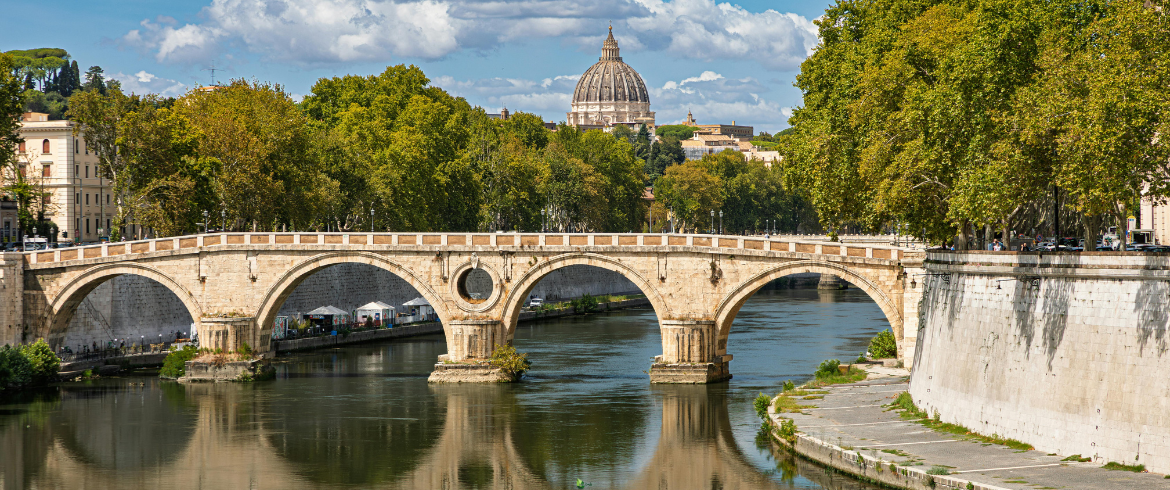
Rome surprises those who are willing to slow down. Most visitors rush from one landmark to another, ticking off an endless list of places to photograph. Yet, just a few streets away from the busiest attractions lies another side of the city. A Rome of quiet courtyards, historic markets, artisan workshops, hidden gardens and neighbourhoods that still tell the story of everyday Roman life.
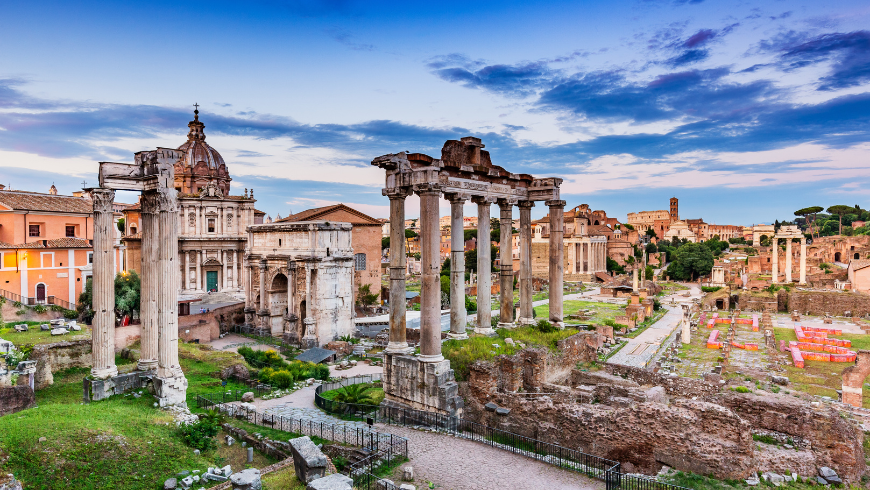
Exploring Rome sustainably means exactly this: changing your pace. Rather than trying to see everything, it’s about experiencing each place more deeply. Walk without rushing, stop at an independent bookshop, choose a traditional trattoria serving local ingredients, take the tram instead of a taxi, or cross a park instead of following the busiest streets.
The Eternal City is much more than the Colosseum, the Vatican or the Trevi Fountain. It is a mosaic of historic districts, lively squares, local markets, elegant villas and creative neighbourhoods, each revealing a different side of Rome. It is a city that rewards those who slow down.
How can you visit Rome sustainably?
Visiting Rome sustainably means walking whenever possible, using public transport when needed, supporting local businesses, carrying a reusable water bottle to refill at the city’s many public fountains, and venturing beyond the busiest tourist spots. It’s a simple way to enjoy a more authentic experience while helping reduce the impact of tourism on the city.
You don’t have to give up Rome’s iconic attractions. Simply experience them differently: arrive early in the morning, explore them at a slower pace and combine famous landmarks with lesser-known corners of the city. You’ll avoid the biggest crowds and discover a far more surprising Rome.
Rome is best discovered slowly
“Slow” is probably not the first word that comes to mind when thinking about Rome. Yet it is exactly this slower pace that reveals the city’s true character. Wander without a fixed destination and you may stumble upon an ivy-covered shrine, a hidden Renaissance courtyard behind an old wooden gate, or a quiet square where elderly Romans still gather for a game of cards.
Rome constantly invites you to pause. To notice the worn cobblestones beneath your feet, listen to the sound of water flowing from the historic nasoni—the city’s famous public drinking fountains—or spend a few peaceful moments on a bench in Villa Borghese instead of rushing to the next attraction.
Travelling slowly also helps spread tourism more evenly across the city. While millions of visitors gather around the same famous squares every day, entire neighbourhoods preserve an equally fascinating historical, artistic and cultural heritage. Walking through Testaccio, Ostiense, the Jewish Ghetto or along the Appian Way offers the chance to discover a different Rome, where everyday life has coexisted with over two thousand years of history.
And when distances become longer, Rome’s extensive network of buses, trams and metro lines makes it easy to reach almost every neighbourhood without relying on a car.
From Campo de’ Fiori to Trastevere: a walk through Rome’s most authentic neighbourhoods
The route is just over two kilometres long, yet it encompasses centuries of history, hidden corners and some of the city’s most charming places. Best of all, there’s no need to use public transport. Simply put on a comfortable pair of shoes and enjoy the pleasure of slowing down.
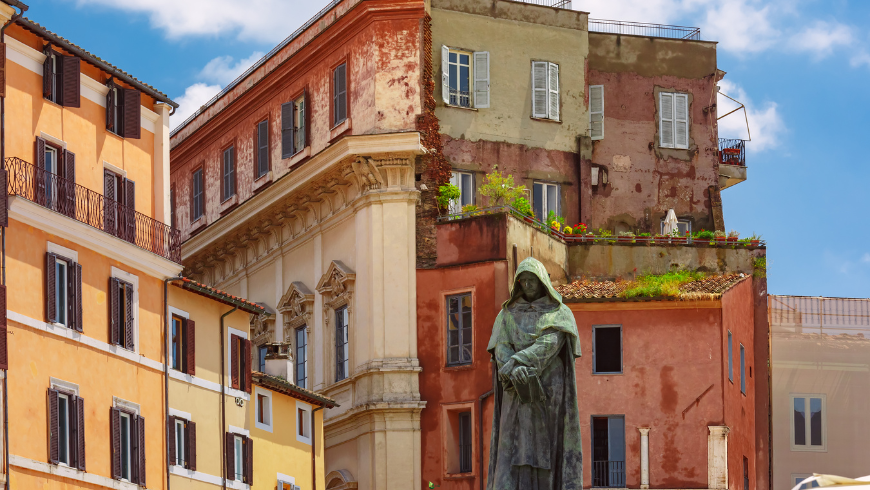
The walk begins in Campo de’ Fiori, one of Rome’s liveliest squares. Every morning, its historic market fills the piazza with stalls selling fresh fruit and vegetables, herbs, spices and local produce, while in the afternoon it becomes a popular meeting place for both locals and visitors. At its centre stands the statue of Giordano Bruno, a reminder of a history that continues to coexist with everyday life.
Leaving the square behind, instead of following the busiest streets, take the narrow lanes leading towards Piazza del Biscione. Many people pass through without noticing it, yet a quick glance upwards reveals historic façades, flower-filled balconies and architectural details that tell the story of a quieter, lesser-known Rome.
A few more steps bring you to the charming Passetto del Biscione, a narrow covered passage where time seems to have stood still. It is one of those hidden places that reminds you how Rome is full of remarkable corners, even where there are no queues or ticket offices.
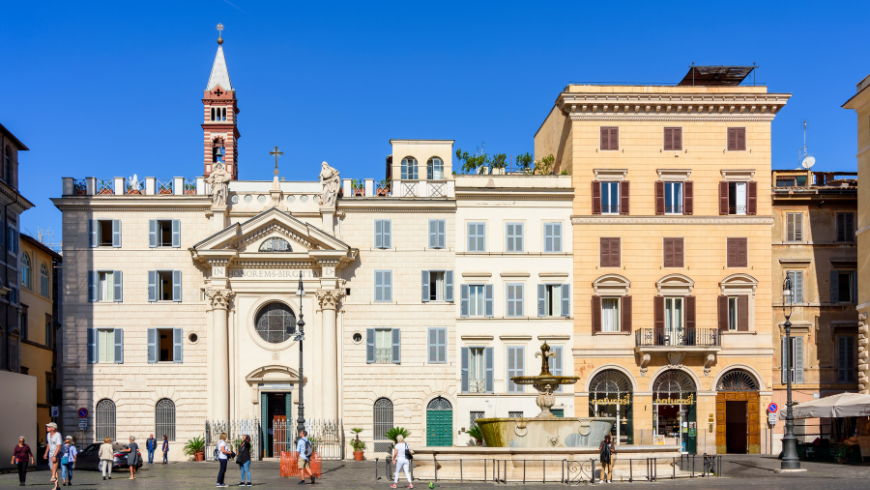
The route continues to Piazza Farnese, one of the city’s finest Renaissance squares. The imposing Palazzo Farnese dominates the space, while two ancient granite basins from the Baths of Caracalla add to its elegance. From here, continue along Via Giulia, one of Rome’s most beautiful streets. Commissioned by Pope Julius II in the early sixteenth century, it still retains an understated elegance, with noble palaces, little-known churches and hidden courtyards tucked behind large wooden doors. Walking at a leisurely pace, you’ll come across small art galleries, artisan workshops and traditional boutiques.
Leaving Via Giulia behind, you’ll arrive in one of Rome’s most fascinating districts: the Jewish Ghetto. Here, the city tells a thousand-year-old story of coexistence, culture and culinary traditions. As you wander through its streets, you’ll find the magnificent Synagogue, historic buildings and some of Rome’s best-known restaurants, where you can sample classic Jewish-Roman dishes such as carciofi alla giudia.
A few minutes later you’ll reach Tiber Island, the small island that has divided the waters of the River Tiber for more than two thousand years. Here, the city’s pace seems to slow. The river flows gently beneath the ancient stone bridges, inviting you to pause for a moment before continuing your walk.
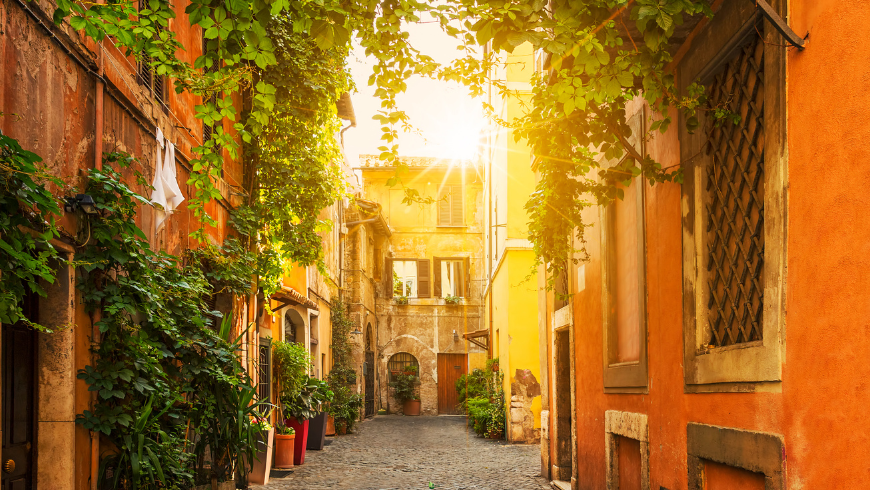
Crossing Ponte Cestio, you finally enter Trastevere, perhaps the neighbourhood that best embodies Rome’s vibrant soul. Its cobbled streets weave between ochre-coloured houses, laundry hanging from the windows and lively piazzas that remain full until late in the evening. Yet Trastevere is much more than one of Rome’s most photographed districts. Venture just a few streets away from the busiest areas and you’ll discover a more authentic atmosphere, filled with artisan workshops, independent bookshops, local cafés and restaurants where Romans still outnumber tourists.
The Rome of Local Markets and Authentic Flavours
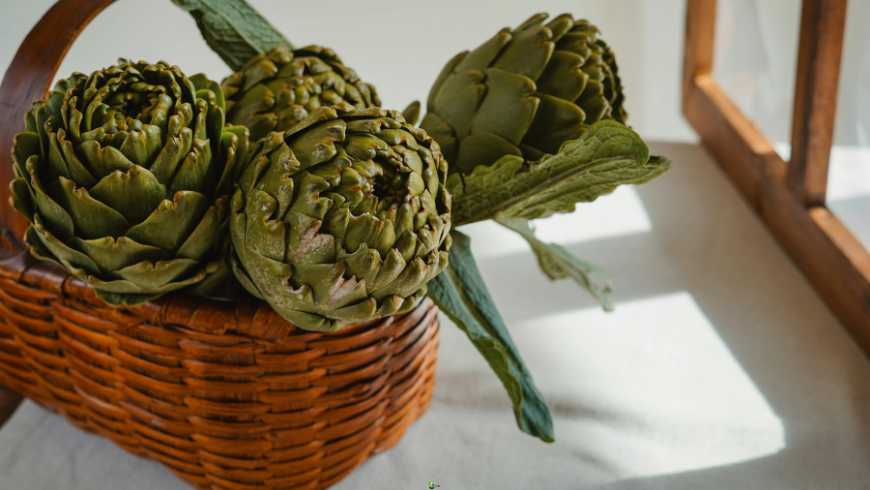
One of the best ways to get to know a city is through its food. Or, even better, by wandering through its markets. This is where Rome reveals its most genuine side: people shopping for their daily groceries, farmers arriving from the Lazio countryside, and recipes that have been passed down through generations.
Choosing to eat at a small neighbourhood trattoria or buying fresh produce from a local market is not only a pleasure for your taste buds. It also supports the local economy, encourages short supply chains and contributes to a more sustainable way of travelling.
If you love good food and everything that revolves around it, don’t miss Mercato Testaccio, considered by many to be the true gastronomic heart of the city. Here, tourists give way to locals, who come every day to buy fresh produce from nearby farms. Alongside the market stalls, you’ll find artisan food shops and small eateries serving some of Rome’s most iconic dishes, prepared with simple, high-quality ingredients.
Another unmissable stop is Mercato Trionfale, just a short walk from the Vatican. With hundreds of stalls, it is one of Italy’s largest covered markets and offers an extraordinary selection of cheeses, freshly baked bread, seasonal vegetables, handmade pasta and many other regional specialities from Lazio.
Taste Rome by following the seasons
Many of Rome’s best-loved recipes originate from the city’s rural traditions and from the ability to make the most of every ingredient, long before sustainability became part of everyday conversation.
During your walk, you might stop for a freshly made supplì, a slice of crispy Roman pizza or a homemade tart from a traditional bakery. But the most authentic culinary experience also means following the rhythm of the seasons.
Spring brings fresh broad beans served with Pecorino Romano cheese. Summer is the season for ripe tomatoes, Roman courgettes and sweet figs. Autumn offers mushrooms, chestnuts and Roman artichokes, while winter celebrates Romanesco broccoli, chicory and hearty traditional soups.
Ostiense and Testaccio: where industrial heritage meets creativity
Anyone who believes Rome is only about ancient ruins and Renaissance squares has probably never explored Ostiense and Testaccio.
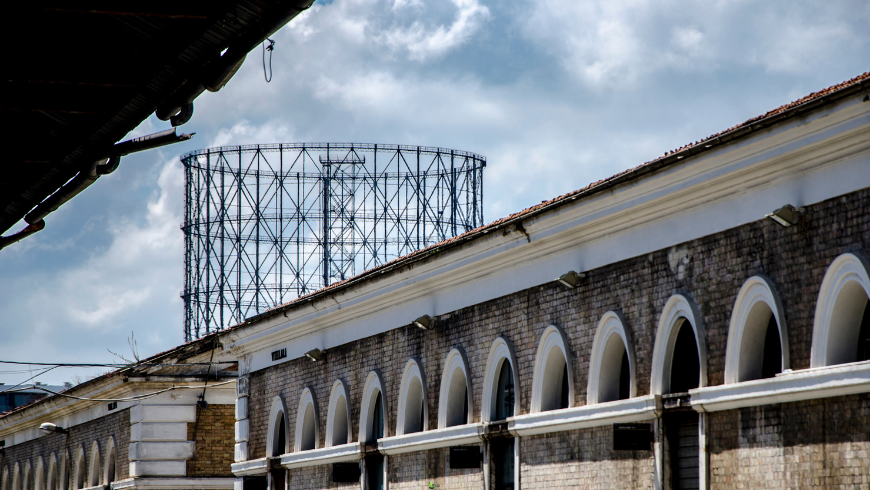
Here the city reveals a completely different identity. Building façades become giant murals, former industrial sites are transformed into museums and cultural spaces, while old factories find a new purpose without losing their historical character.
It is one of the most fascinating areas to explore if you want to discover a more contemporary side of Rome, where sustainability is expressed through the regeneration of historic urban spaces.
From the Pyramid of Cestius to one of Rome’s most peaceful places
A perfect starting point is the remarkable Pyramid of Cestius, built over two thousand years ago as the tomb of the Roman magistrate Gaius Cestius. Inspired by Egyptian architecture, its striking shape feels almost surreal in the middle of the Italian capital.
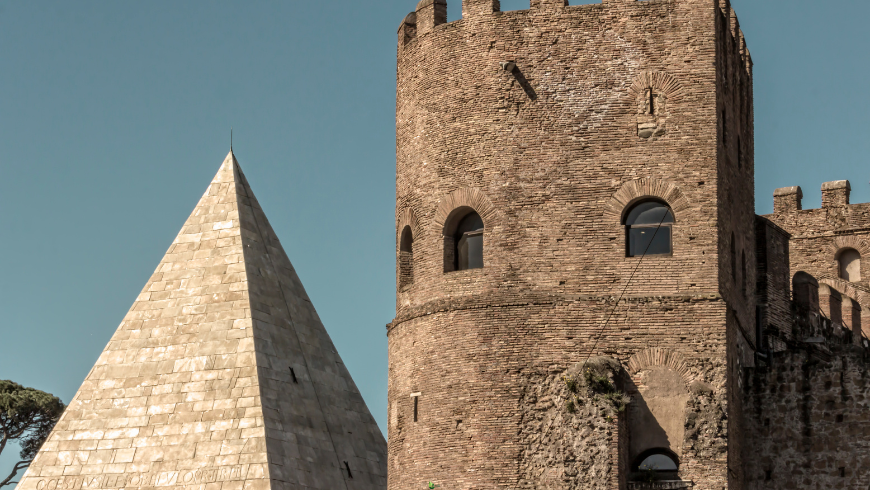
Right beside it lies one of Rome’s most peaceful and atmospheric places: the Non-Catholic Cemetery.
Poets, artists and travellers from all over the world are buried here. Walking among ancient cypress trees, sleepy cats and rose-covered graves offers a moment of tranquillity that feels worlds away from the city’s busy streets. It is a place where nature, art and memory coexist in perfect harmony.
Testaccio: a neighbourhood proud of its roots
Continuing towards Testaccio, you’ll enter one of Rome’s most authentic districts.
Its name comes from Monte Testaccio, an artificial hill created over centuries by the accumulation of millions of broken amphorae once used in the ancient Roman river port. Even today, it stands as a reminder that reuse and resource management were already part of the city’s history in Roman times.
Testaccio has retained its strong local identity. Its squares are still filled with residents, historic bakeries continue to bake bread and pizza using traditional recipes, while family-run trattorias preserve some of the finest examples of Roman cuisine.
Mattatoio: when industrial archaeology becomes culture
One of Rome’s finest examples of urban regeneration is the former Mattatoio, once the city’s main slaughterhouse. For more than a century, it was one of Rome’s most important industrial complexes. Today, it hosts exhibitions, festivals, art installations, cultural events, and educational spaces.
The buildings still preserve much of their original architecture, showing how existing structures can be successfully restored instead of demolished. It is a tangible example of sustainable urban development, where preserving the past creates new opportunities for culture and creativity.
Centrale Montemartini: where ancient sculptures meet industrial machinery
Few museums are as surprising as Centrale Montemartini. Walking inside feels like visiting both a power station and an archaeological museum at the same time. Huge turbines, boilers and industrial machinery stand alongside Roman statues, mosaics and archaeological masterpieces from the Capitoline Museums.
The contrast is extraordinary. White marble sculptures seem to dialogue with iron machinery, creating one of Europe’s most original museum displays.
The Gasometer and Ostiense’s new identity
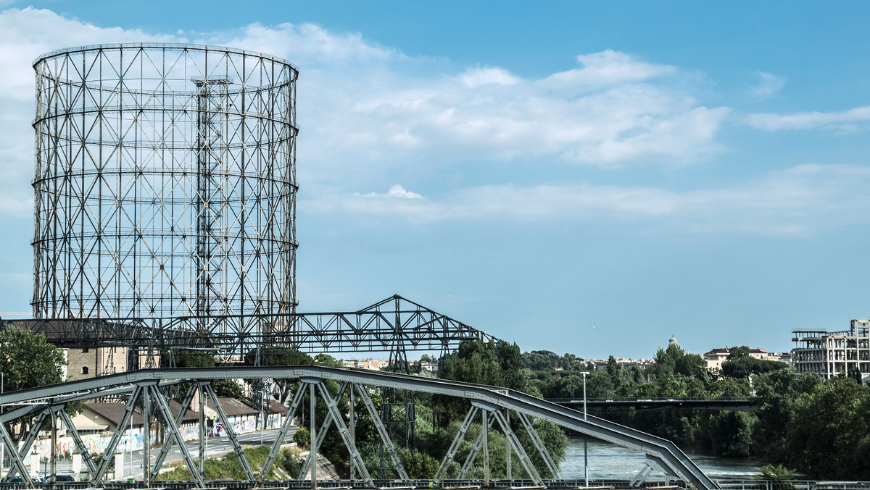
The final stop leads to the iconic Gasometer, now one of the symbols of contemporary Rome. For many years this enormous steel structure was simply a reminder of the city’s industrial past. Today it has become the heart of one of Rome’s most dynamic neighbourhoods.
Around the Gasometer you’ll find innovation hubs, cafés and restaurants housed inside former warehouses, craft breweries, art galleries, creative studios and some of the largest street art murals in the capital.
Take the time to look up. Entire building façades have become giant works of art, transforming Ostiense into a true open-air museum.
A green escape along the Appian Way
Just a few kilometres from the historic centre, the scenery changes completely. The sound of traffic fades away. Ancient Roman paving stones replace the cobbled streets. And time seems to slow down once again.
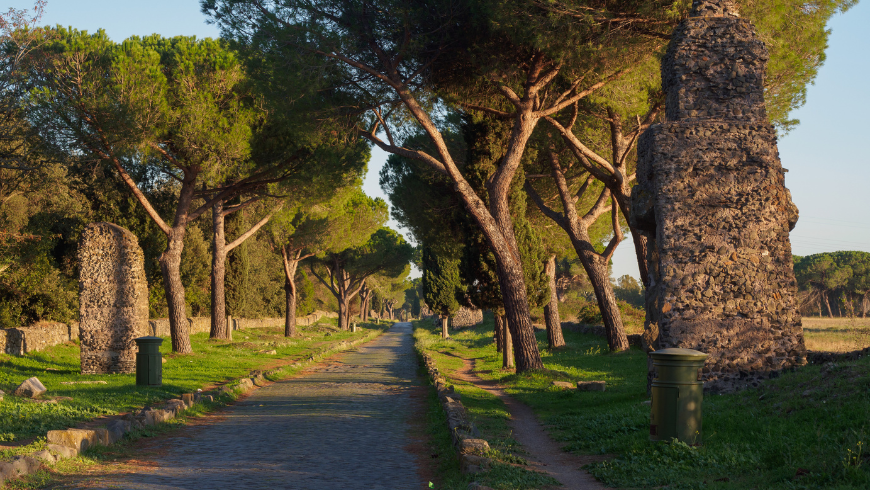
The Appian Way, known since ancient times as the Regina Viarum, is much more than a historic road. It is one of Europe’s largest archaeological parks, where history, nature and slow travel exist in perfect harmony.
Walking or cycling along its route is a unique experience. You can follow the very road travelled over two thousand years ago by merchants, pilgrims, armies and travellers.
The ideal starting point is Porta San Sebastiano, one of the best-preserved gates of the Aurelian Walls. From here, the route winds through open countryside, ancient monuments and green spaces, offering a completely different perspective on the Eternal City.
Along the way, it’s worth visiting the Catacombs of Saint Callixtus and the Catacombs of Saint Sebastian, extraordinary testimonies to the history of early Christianity and of underground Rome. Descending into these ancient tunnels is like stepping back through centuries of history in an atmosphere of silence and wonder.
Continuing along the Appian Way, you’ll reach one of Rome’s most surprising green spaces: the Caffarella Park.
Here, nature has reclaimed the landscape. Meadows, streams, historic farmhouses, grazing sheep and archaeological remains coexist in a setting that feels more like the Roman countryside than a capital city of nearly three million inhabitants.
The route can continue as far as the Park of the Aqueducts, one of Rome’s most spectacular green areas. The majestic arches of the ancient Roman aqueducts stretch across fields and walking paths, creating unforgettable views that change with the light throughout the day.
Visiting the Appian Way also means embracing a more sustainable way of travelling. No car is needed here—just a comfortable pair of walking shoes, a bicycle and the desire to slow down.
Sustainable Rome: How to move
Rome is a vast city, but that doesn’t mean you need a car or taxis to get around. In fact, choosing more sustainable ways to travel often makes it easier to experience the city while avoiding traffic, parking problems and unnecessary stress.
Discover Rome on foot
Many of Rome’s most beautiful places are surprisingly close to one another. Walking remains the best way to discover hidden courtyards, small churches, artisan workshops and charming squares that rarely appear in traditional itineraries.
Use public transport
When distances become longer, Rome’s public transport network makes it easy to reach almost every part of the city. The metro connects many of the main attractions. Buses and trams provide convenient access to neighbourhoods such as Ostiense, Testaccio and the Park of the Aqueducts.
Travelling by public transport helps reduce emissions while contributing to less traffic in the historic centre.
Explore Rome by bicycle
Over the past few years, Rome has expanded its network of cycle paths, particularly along the River Tiber and throughout its largest parks. Cycling along the Appian Way, through Villa Borghese or beside the river offers a completely different perspective on the city.
Where to stay sustainably in Rome
After a day spent exploring historic streets, local markets, parks and museums, choosing accommodation that reflects the same travel philosophy makes the experience even more meaningful.
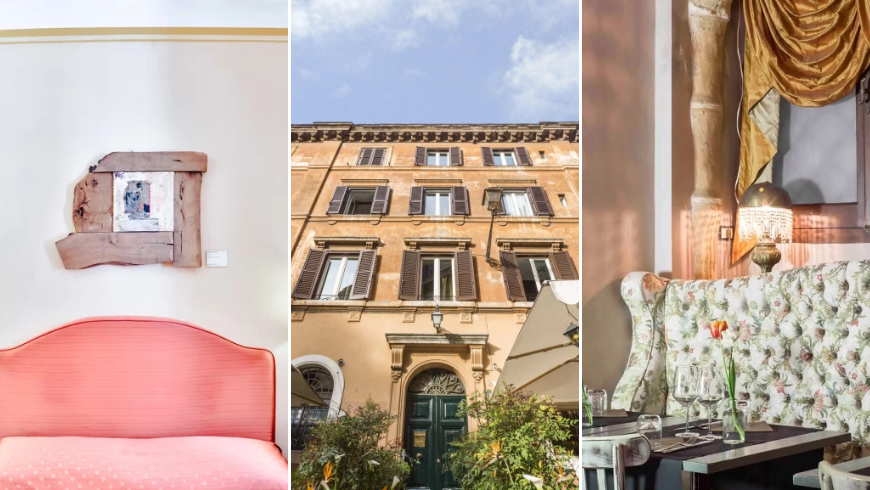
Just a few steps from Campo de’ Fiori, Casa de’ Fiori is housed in a beautifully restored eighteenth-century building in the heart of Rome’s historic centre. Combining history, art and sustainability, it offers a welcoming atmosphere where every detail reflects a commitment to responsible hospitality. Renewable electricity, organic and locally sourced breakfast products, eco-friendly cleaning products, the elimination of single-use plastics and careful waste reduction are just some of the sustainable practices embraced by the property. Its central location also makes it easy to explore much of Rome on foot.
Staying in environmentally conscious accommodation also means supporting a hospitality model that values local communities, promotes responsible resource management and encourages travellers to experience the city with greater awareness.
If you’re looking for more eco-friendly places to stay, browse all the sustainable accommodation in Rome on Ecobnb.
 Casa de' Fiori – Green Hotel in Roma, RM, Lazio, IT


