
Cities are growing fast.
At the same time, buildings are getting taller.
Meanwhile, streets are getting hotter.
As a result, green spaces are often the first thing to disappear…
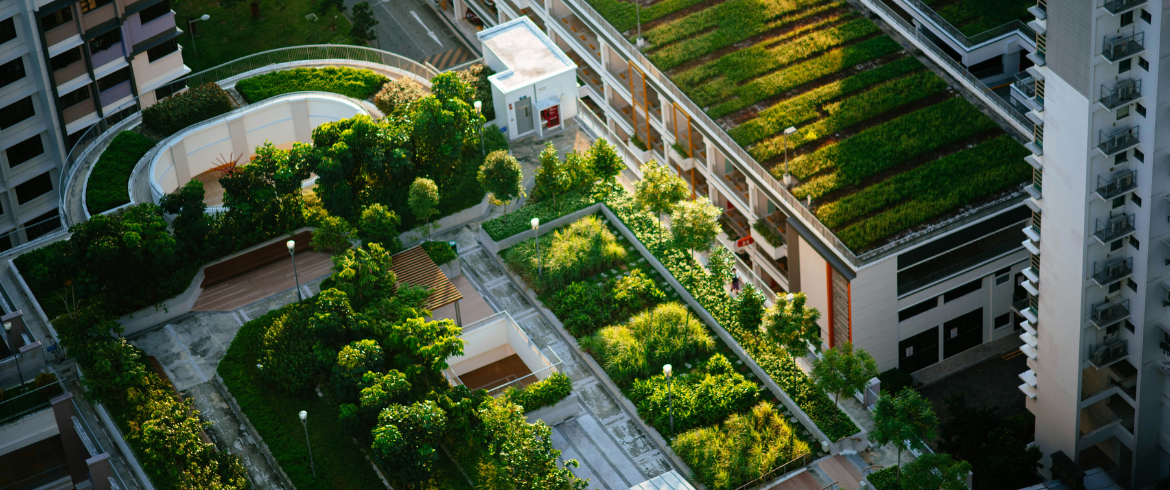
But above our heads, there is still a space full of potential: rooftops. Green roofs in sustainable buildings are becoming essential.
More than a design trend, green roofs create living spaces that support nature, improve comfort, and create better cities and places to stay. In smart cities and eco-friendly hotels, a green roof means a beautiful garden above the street and a breath of fresh air for people and the planet.
Green Roofs in Sustainable Buildings as Living Systems for Cities
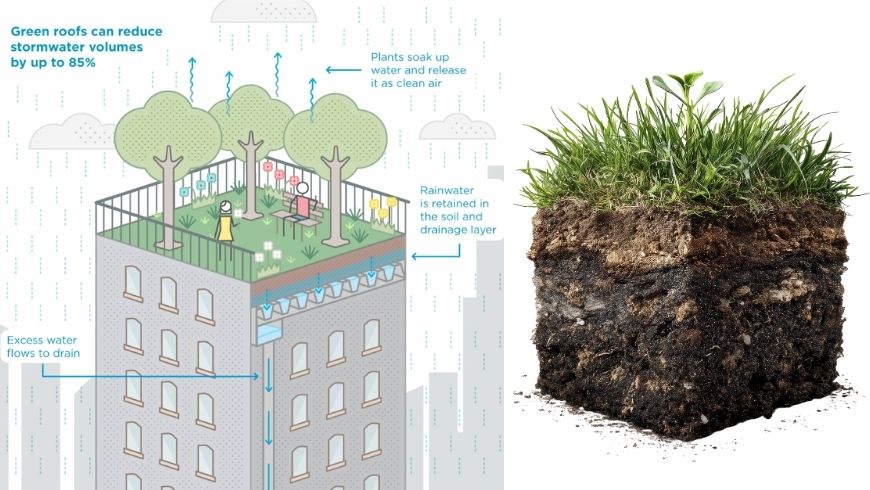
A green roof is not just a roof with plants. It is a civil structure and a small natural system built on top of a building. It includes layers of soil, vegetation, water storage, insect habitat, and drainage pipes, all working together.
In practice, for cities and hotels, investing in green roofs in sustainable buildings is a practical step toward long-term sustainability. Advantages: cool buildings naturally by absorbing sunlight and releasing moisture into the air. At the same time, support biodiversity, offering space for insects, birds, and plants.
Green roofs have many environmental advantages and it can help accommodations become more eco-friendly.
It create comfortable communal spaces, such as rooftop gardens, lawns, or small parks, where people can gather. In hotels or community buildings, guests may relax among flowers, do yoga on a shaded deck, or enjoy breakfast under a blue sky surrounded by plants.
In Europe, green roofs are often part of climate plans to cool cities.
In Australia, the focus is on heat reduction and water efficiency.
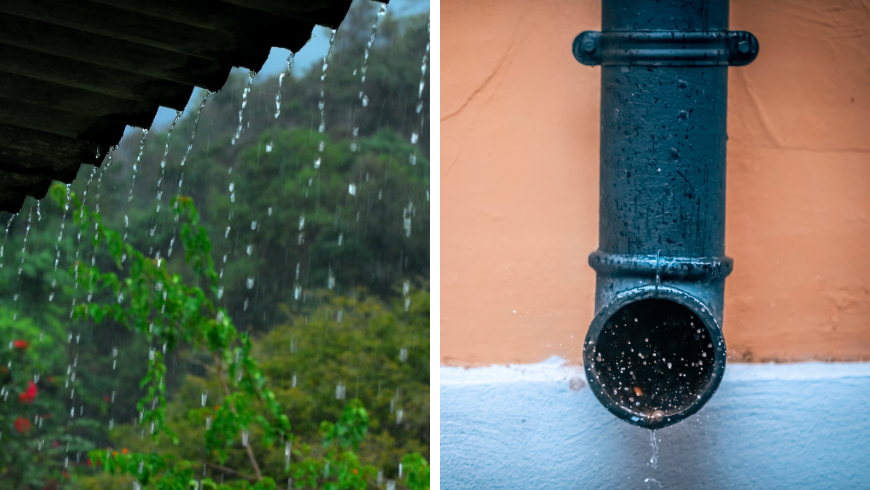
In North America, cities use green roofs to manage heavy rainfall.
Everywhere, they adapt to local climate and rules. That flexibility is what makes them so powerful.
How to Implement Green Roofs in Sustainable Buildings
Many cities now encourage green roofs as part of climate plan, especially to manage heat and rainwater.
As a result, building a green roof is not complicated. But it does require good planning and the right people involved.
The process usually follows clear steps. Each one adapts to local climate, regulations, and the building itself.
1. Start with Water and Structure
Water always comes first.
Before anything is built, it is important to understand local rainfall and climate patterns. This is why involving a civil or drainage professional early is essential.
They calculate how much rain falls during heavy storms. At the same time, engineers study how fast water needs to leave the roof. At the same time, they check how much extra weight the building can safely carry.
To begin with, key factors include:
- Local weather and seasonal rain patterns
- How heavy of a load the building structure can safely hold
- Local codes, regulations or incentives for green roofs
- Community needs (cooling systems, water reuse for toilet flushing, etc.)
These calculations help define:
- Soil depth
- Drainage design
- Pipe location and capacity
For example, cities with heavy rainfall may need deeper drainage layers. Drier regions may prefer thinner systems that store water in the soil.
It is also important to check local building codes. Some cities have rules, guidelines, or even incentives for green roofs.
2. Understanding the Layers of a Green Roof
A green roof is made of several special layers, each with a clear purpose. Together they protect the building and create a stable habitat for plants. Most green roofs include:
- A waterproofing membrane to protect the building
- A root barrier to stop roots from damaging the roof
- A drainage layer, often made of gravel or lightweight stone
- A filter fabric to keep soil out of the drains
- A growing medium, lighter than normal garden soil
The growing medium is key: it’s often a sandy-loam mix that drains well but still retains moisture. For example, a mix might be mostly mineral (sand, clay, pumice) with some organic matter. This special soil layer is usually at least a few centimeters deep so plants can root. Drainage material (like gravel) is placed mostly near drains and gutters so heavy rain can flow out fast. Filter fabric (polyester or polypropylene) goes above the drainage to hold the soil above.
Together, these layers allow the roof to work like a natural hillside, quickly draining rainwater while keeping plants healthy.
When done correctly, using green roofs in sustainable buildings requires thinking beyond aesthetics.
Structure, drainage, soil composition, and long-term maintenance all shape how the system impacts over time.
3. Designing the Roof as a Usable Space
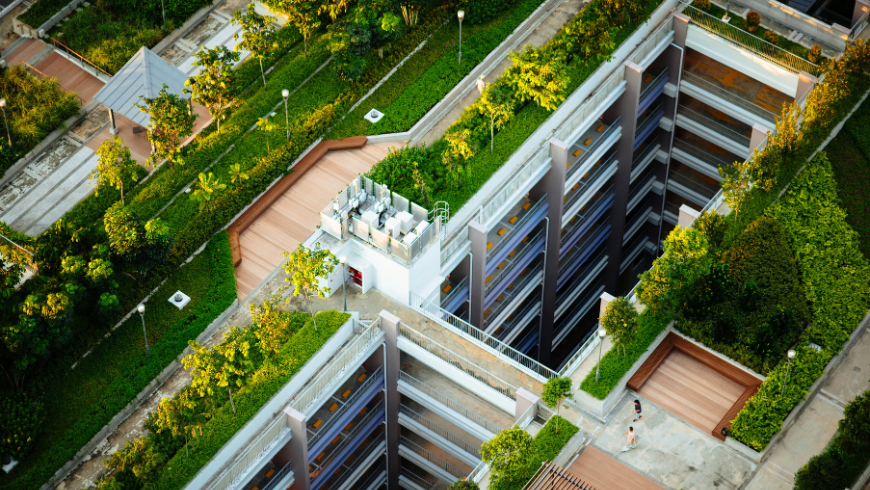
A green roof doesn’t have to be wall-to-wall grass. In fact, many projects mix plants with walkways, decking or seating areas. You might use permeable paving or gravel paths so rain can still go through and set benches or tables in planted areas.
In hotels or guesthouses, think about adding benches, soft lighting, or sail shades to make the rooftop inviting. Small trees or trellises can give spots of shade on sunny days. For example, a rooftop yoga deck might have grass on one side and wooden planks on the other, plus a pergola vine-shade overhead.
The goal is to make the roof both ecological and enjoyable. When you plan how people will use it – walking routes, rest areas, gardens – the space becomes not just technical systems but a delightful outdoor room. Guests might sip coffee among herbs, or gather for evening stargazing by a small fire pit. Good design turns a high-up garden into a highlight of the stay.
4. Final Design and Plant Choices for Green Roofs in Sustainable Buildings
After laying out the structure and paths, it is time to check out final details and choose plants that truly fit your roof’s conditions. Soil depth, water availability, and sun exposure all influence what will grow well. In most cases, drought tolerant, low maintenance plants are the best option. Many green roofs use native or climate adapted species, which need less watering and naturally support local biodiversity, from insects to birds.
Plant choices often change from region to region. On thin, sunny roofs, sedum (stonecrop) and other succulents are very common because they tolerate heat and long dry periods. When the roof has a few inches of soil, it becomes possible to add hardy grasses, wildflowers, or small shrubs, creating a richer and more natural looking landscape.
Climate plays a big role in final decisions. In northern or colder regions, mosses and low growing sedum mixes work well with shallow soil and cooler temperatures. In Mediterranean, arid, or hot climates, plants like thyme, rosemary, and other hardy herbs are often used, as they handle sun and low water well. Local expertise is essential at this stage. A local nursery or landscape designer can help fine tune the plant mix based on rainfall, wind, and seasonal changes. The result is a self sustaining green roof, colorful through the year, that needs very little care.
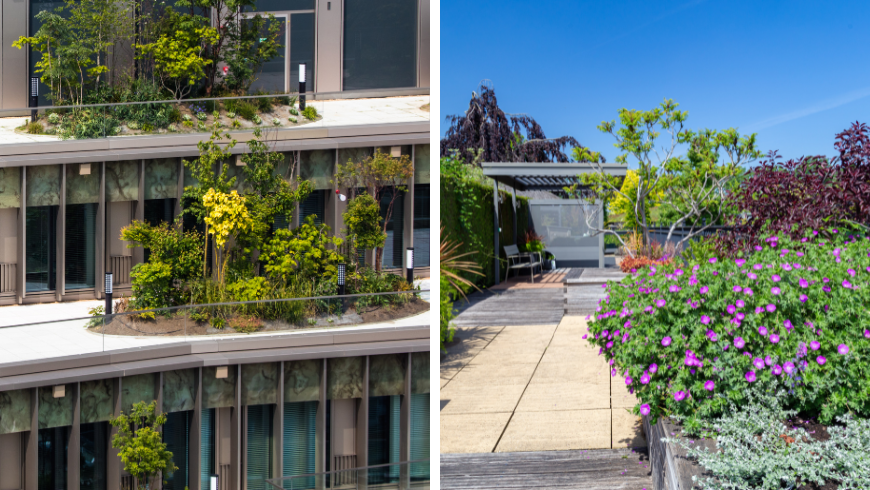
Green Roofs in Sustainable Buildings: Accommodations
In hospitality, implementing green roofs in sustainable buildings offers something especially valuable: usable outdoor space that improves both guest experience and environmental impact.
Many eco-hotels turn their rooftops into shared gardens where guests can relax, read, or practice yoga surrounded by plants. Instead of a blank rooftop or crowded concrete, imagine enjoying a morning coffee on a terrace under potted trees or sunrise yoga on a lawn of wildflowers. These green rooftops help travelers slow down, reconnect with nature and enjoy quiet moments even in the heart of a city.
In addition, green roofs improve a hotel’s indoor comfort. They insulate the building. As a result, the structure acts like a “natural blanket”, reducing energy use for heating and air conditioning. In addition, sound absorption improves indoor comfort.
The result? Better sleep, fresher air, and a sense of well-being during the stay. In practice, many guests report feeling more relaxed and cared-for when staying in buildings with green roof.
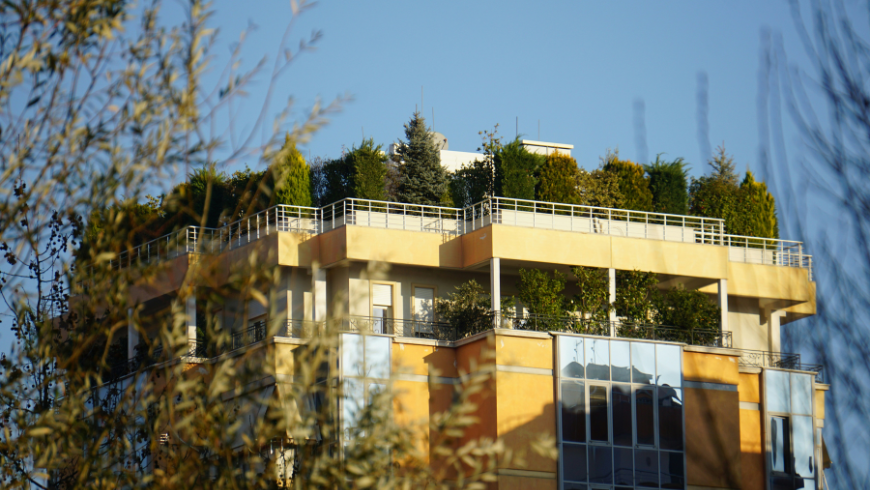
Why Green Roofs Matter for the Future of Urban Tourism
Travelers today increasingly look for experiences that match their values. Cities and hotels that invest in green systtem not only adapt to climate challenges, they signal a commitment to the planet. Green roofs help create cooler, healthier cities and more inspiring places to stay. They remind us that sustainable design can be practical and beautiful. In every step we take on these living rooftops, we see how our cities can give back to nature.
By using green roofs in sustainable buildings, cities and accommodations can create urban spaces that benefit both people and the planet. These living rooftops prove that sustainability can be practical, beautiful, and deeply connected to everyday life.