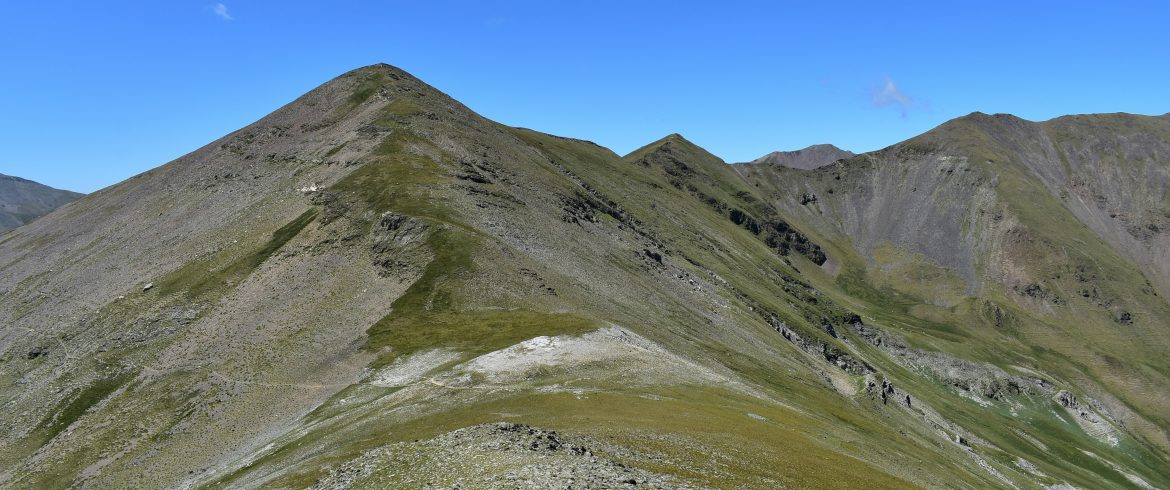
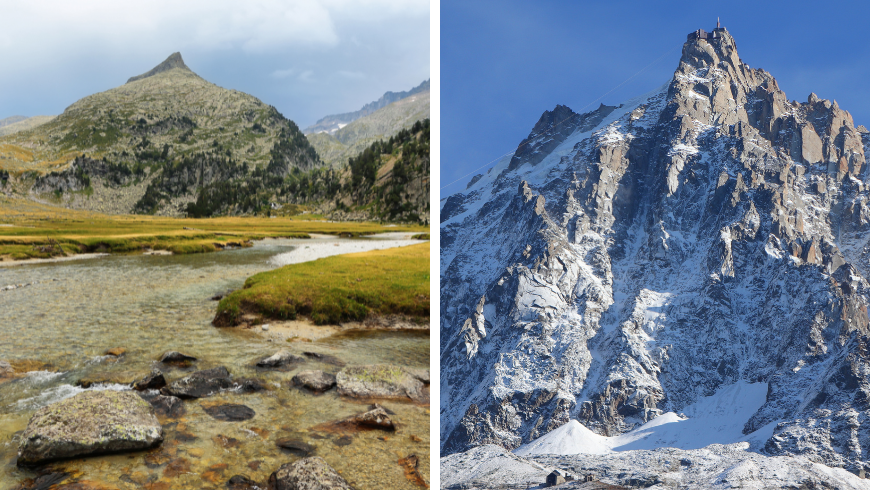
The Pyrenees top out around 3,400 meters at Pico de Aneto. The Alps regularly exceed 4,000 meters with dozens of peaks pushing past 4,500. This 1,000-meter difference fundamentally changes the hiking experience.
You’re not dealing with glaciers on most Pyrenees routes. Altitude sickness rarely becomes an issue. The terrain feels accessible rather than intimidating, even when it’s genuinely challenging.
The Range Is Narrower
The Pyrenees stretch roughly 430 kilometers east to west but only 100-150 kilometers north to south. This creates a different geography than the sprawling Alps. You’re never far from either the French or Spanish side.
This narrowness means weather systems move through faster. It also means you can cross from France to Spain and back multiple times on a single trek. The border isn’t a distant concept—it’s a regular feature of the landscape.
Valleys Run Perpendicular
Unlike the Alps where major valleys often run parallel to the range, Pyrenees valleys mostly run north-south, cutting perpendicular to the mountain chain. This creates distinct valley cultures on both sides and makes east-west traverses more challenging.
You’re constantly crossing ridges and valleys rather than following long valley systems. The terrain forces more elevation gain and loss over distance.
The Infrastructure Is Less Developed
The Pyrenees have refuges and marked trails, but the density is lower than in the Alps. Sections of major routes might go 6-8 hours between huts. Services are more basic, reservations less systematic.
This isn’t a criticism—it’s a different experience. The Pyrenees feel wilder and less managed. You need more self-sufficiency and better planning. For those who want the Pyrenees experience without worrying about sparse infrastructure or remote sections, Pyrenees hiking tours provide guide support and handle logistics in areas where facilities are limited.
The Marking Varies
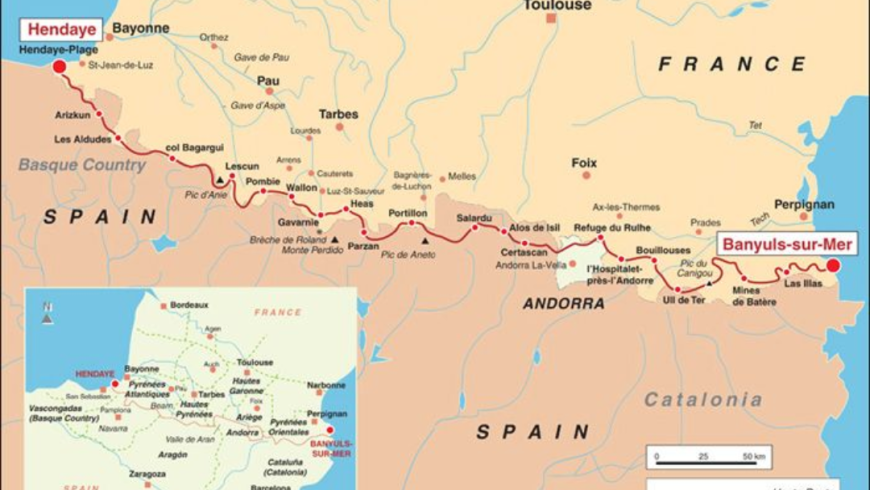
Trail marking in the Pyrenees ranges from excellent to nonexistent. The GR10 (French side) and GR11 (Spanish side) have consistent red-and-white blazes. The Haute Route Pyrénéenne sometimes disappears entirely, requiring navigation skills.
Expect to use map and compass more than you would on well-marked Alpine routes. GPS tracks become helpful rather than optional.
Crowds Are Significantly Smaller
The Pyrenees see a fraction of Alpine tourism. Popular sections of the GR10 might have a dozen hikers daily in summer. Remote sections, you might see no one for days.
This solitude is one of the Pyrenees’ greatest assets. You’re not competing for hut beds, sharing trails with hundreds of others, or feeling like you’re in a mountain theme park. The experience feels more genuine and less commodified.
The Cultural Mix Is Distinct
The Pyrenees straddle France, Spain, and tiny Andorra. But the cultural reality is more complex—Basque Country, Catalonia, Aragon, Navarre, Occitanie all maintain distinct identities. The mountains reflect this diversity.
Food changes dramatically crossing borders. Architecture shifts. Language switches from French to Spanish or Catalan. This cultural variety adds richness that the more homogeneous Alps don’t always provide.
The Basque Influence
In the western Pyrenees, Basque culture dominates both sides of the border. The food, language, and traditions differ noticeably from both mainstream French and Spanish culture. This gives the region unique character.
Weather Is Less Predictable
The Pyrenees sit between Atlantic, Mediterranean, and Continental climate zones. This creates volatile, hard-to-predict weather. Storms build faster than in the Alps. Clear mornings can become afternoon chaos.
The mountains are lower but the weather is often more challenging. Don’t underestimate Pyrenees conditions based on elevation numbers alone.
Vegetation Zones Are Different
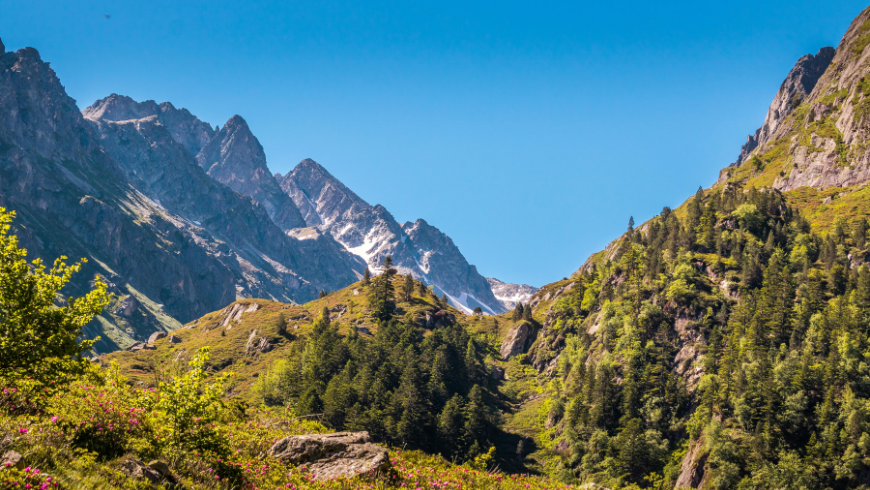
The Pyrenees have more extensive forests at lower elevations than comparable Alpine regions. Beech and oak forests transition to pine, then to alpine meadows. The treeline sits lower than in the Alps, often around 2,200-2,400 meters.
This creates lush, green landscapes even at elevation. The mountains feel softer and more vegetated until you reach the high peaks.
Wildlife Encounters Are Different
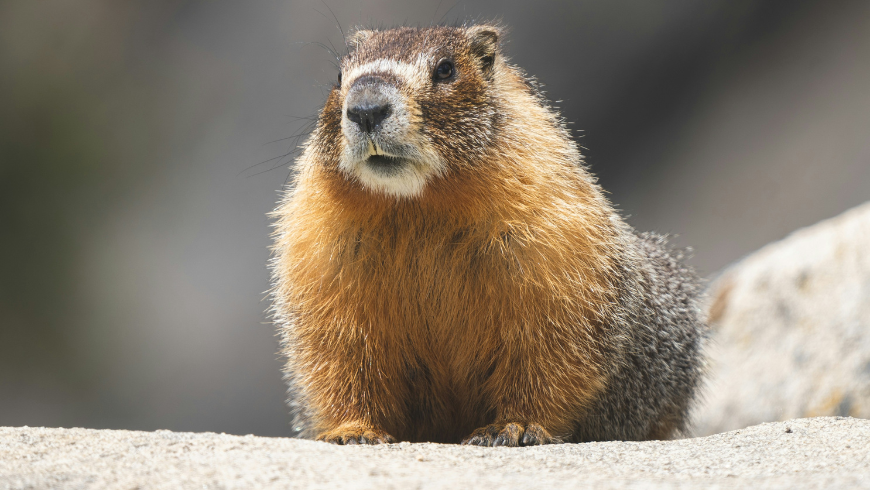
The Pyrenees still have viable brown bear populations, though sightings are extremely rare. Ibex, chamois, and marmots are common. Birds of prey including bearded vultures circle the high peaks.
The wildlife feels less habituated to humans than in heavily visited Alpine areas. Animals behave more naturally because they encounter hikers less frequently.
The Geology Shows
The Pyrenees are primarily limestone and granite, creating different rock formations than many Alpine regions. The limestone produces dramatic karst features, caves, and distinctive pale cliffs. The rock tends to be more fractured and loose.
This affects climbing and scrambling. Routes can be more friable and require different techniques than solid Alpine granite.
Remoteness Is Real
Cell phone coverage in the Pyrenees is spotty at best. Rescue services exist but response times are longer than in the heavily developed Alps. You’re genuinely remote in ways that are increasingly rare in European mountains.
This requires better preparation and more conservative decision-making. The safety net is thinner. Self-reliance matters more.
The Hiking Season Is Similar But Different
The Pyrenees hiking season runs roughly June through September, similar to the Alps. But snow patterns differ. Some passes open later, others earlier. Weather in June can be unstable.
September often provides the best combination of stable weather and fewer people. The season feels compressed compared to the Alps where some areas are accessible May through October.
Multi-Day Routes Work Differently
Classic Pyrenees traverses like the GR10, GR11, or HRP take 40-50 days to complete. This is longer than most Alpine traverses of comparable distance because the terrain is tougher and services are farther apart.
Daily distances tend to be shorter. The hiking is harder relative to kilometers covered. Plan more conservatively than you would for equivalent Alpine routes.
Why This Matters
The Pyrenees offer a different value proposition than the Alps. They’re less convenient, less developed, less crowded, and less expensive. The mountains demand more from you but also give more back in terms of solitude and authentic mountain experience.
If you want efficiency, infrastructure, and certainty, the Alps win. If you want wildness, cultural diversity, and genuine remoteness, the Pyrenees deliver something the increasingly developed Alps struggle to provide.