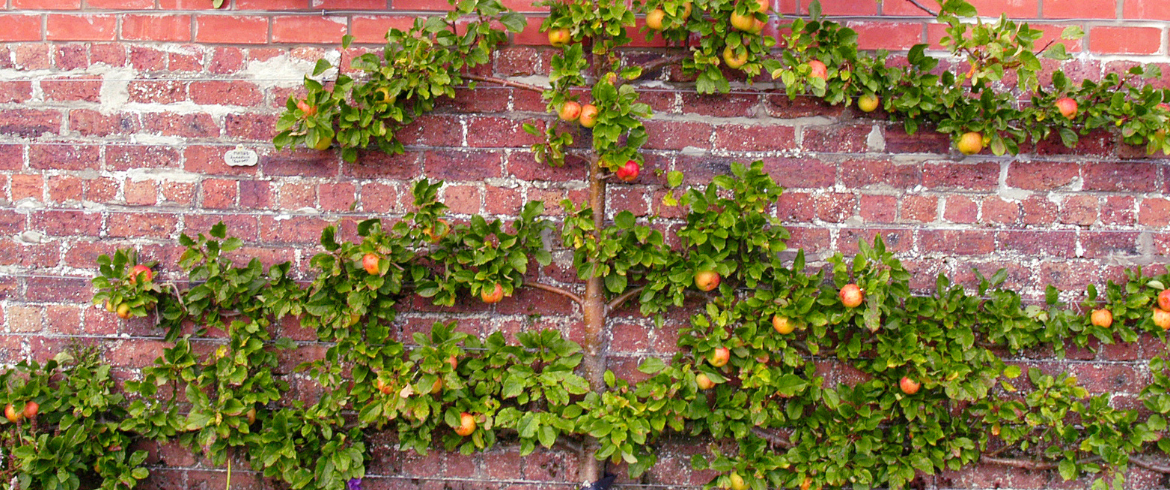
Espalier trees are a tradition worth rediscovering, offering an age-old way to bring architecture and nature together. This growing technique makes the most of walls, gardens and courtyards, using vertical space to create green corners even where ground space is limited.
Espalier trees: an ancient technique worth rediscovering
Known as espalier in Belgium and France, this traditional technique involves training fruit trees to grow flat against a wall or supporting structure. It remains much more widely known and practised in these countries than in Italy.
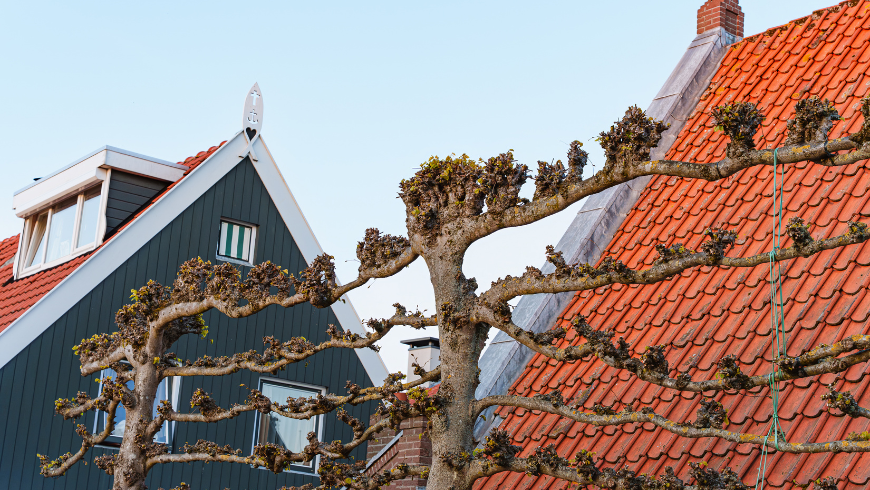
For centuries, espalier growing has offered a clever way to combine fruit production with the available space, making use of walls and local microclimates to help trees thrive.
Historically, the technique was also practised in medieval monasteries, where it helped make the most of enclosed gardens. Over time, it became part of traditional fruit-growing practices across Europe.
One particularly clever feature was training apple and pear trees against south-facing stone walls. The stone absorbed the sun’s warmth during the day and gradually released it at night, helping protect the trees from temperature fluctuations and frost.
The art of green architecture
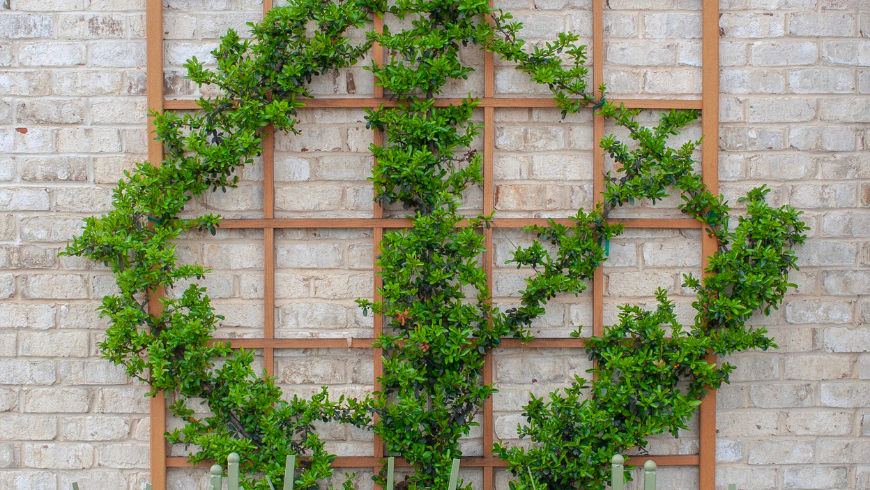
This form of green architecture combines hands-on gardening with respect for natural cycles. It shows how traditional rural communities learned to make the most of local microclimates and readily available materials.
It is a traditional approach to fruit growing in which every branch is carefully trained to become part of the surrounding landscape.
Espalier fruit trees: 5 benefits
Rediscovering espalier fruit trees comes with several benefits.
1. Biodiversity
Fruit trees, even in small courtyards and urban gardens, help enrich biodiversity. Since they grow vertically, they can be cultivated in limited spaces, including large planters.
2. Comfort and energy benefits
A wall shaded by foliage during the warmer months offers both visual and energy benefits.
Greenery softens the hard surfaces of concrete and masonry, introducing a living element that changes with the seasons.
3. An elegant touch for any space
What’s more, an espalier tree trained into a candelabra, fan or palmette shape can transform an ordinary wall or courtyard into a truly elegant space.
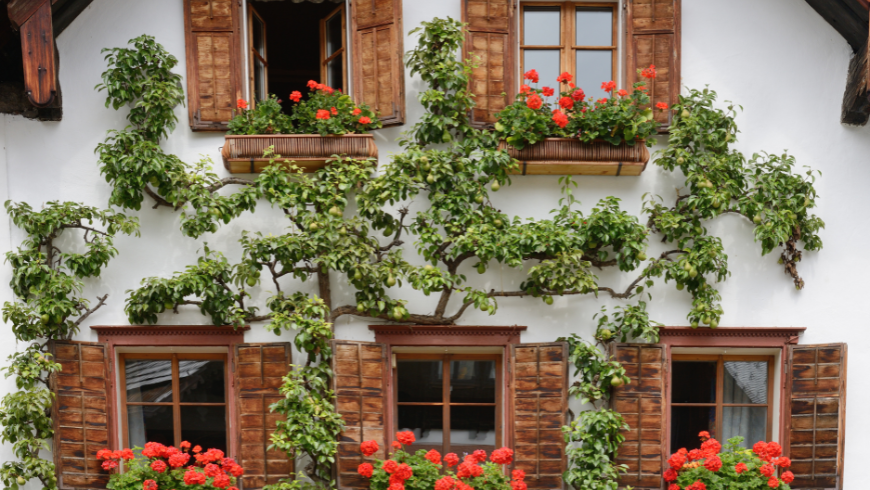
4. The joy of harvesting your own fruit
And what could be more satisfying than picking your own fruit straight from the tree when it is perfectly ripe?
It is a simple, age-old pleasure that reconnects us with the land while providing fresh, seasonal fruit and reducing the need for transportation and packaging.
5. Water conservation and climate resilience
Growing fruit trees alongside walls can be a small but effective form of eco-friendly design.
The tree canopy and the shelter provided by the wall help create shaded, more sheltered microclimates, potentially reducing water evaporation from the soil.
This helps the soil retain moisture for longer and can make irrigation more efficient, especially during the hottest months.
In conclusion: why rediscover espalier trees?
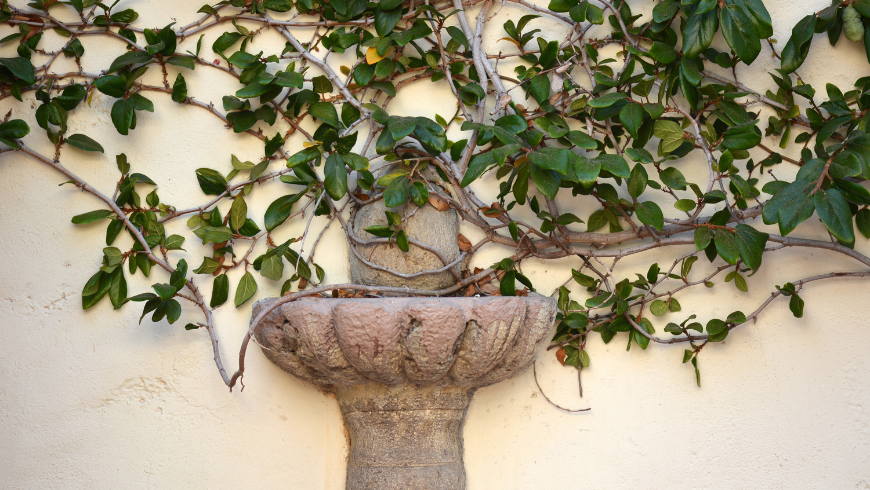
One thing is certain: growing an espalier tree means welcoming a living companion that can adapt even to the space available at home.
If you would like to give it a try, here are two practical tips to get started. If you cannot plant your tree directly in the ground, choose a large, deep planter.
Remember to keep the foliage at a suitable distance from the wall (at least 15 centimetres, depending on the species and training method). Attach the branches to a support structure of an appropriate shape and size to guide their growth.
A south- or south-west-facing wall is generally ideal for many fruit trees, while north-facing walls require species that are better suited to shade.
Rediscovering espalier trees means bringing back a tradition that combines beauty, fruit production and the intelligent use of space.
Cover photo source: Canva Pro