
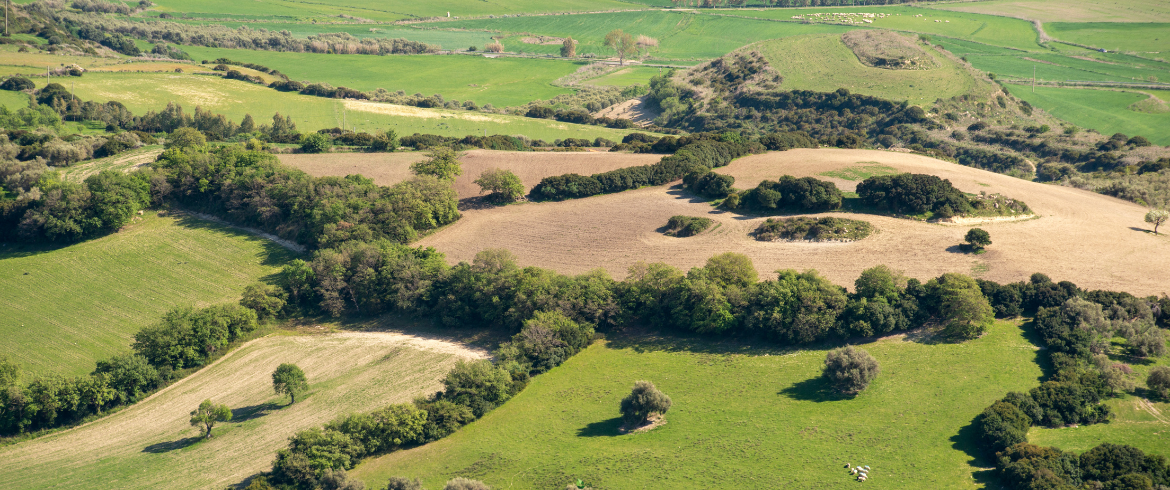
In Marmilla, the landscape changes with the seasons. In spring, the rolling hills are covered with poppies, asphodels and vibrant green wheat fields. Summer turns them into a golden sea, where ripening grain sways in the mistral wind, contrasting with the silvery green of olive trees and the dark basalt rocks. Autumn brings vineyards, olive groves ready for harvest and the scent of rain-soaked earth, while winter reveals a quieter landscape where every hill tells a story millions of years old.
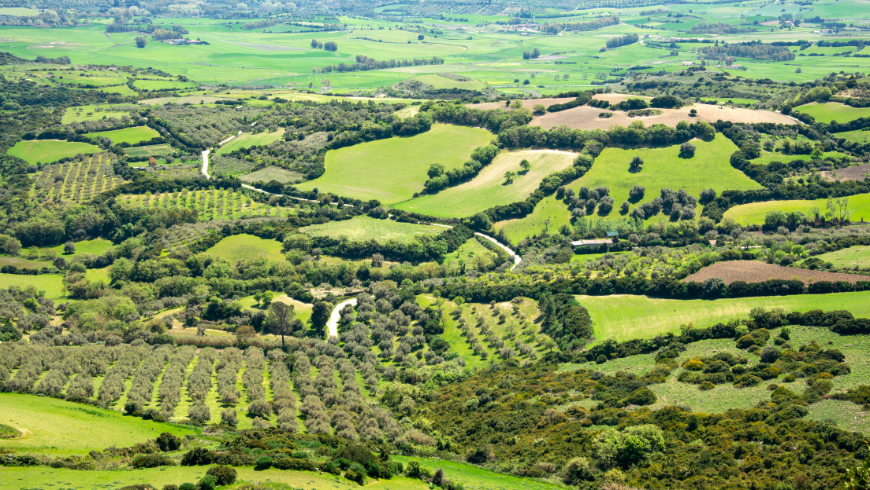
This is a side of Sardinia that doesn’t need spectacular attractions to leave a lasting impression. Instead of crowded beaches and busy resorts, you’ll find small villages, archaeological sites scattered across the countryside, volcanic plateaus and peaceful roads that invite you to slow down. It’s a place that you can best discover on foot, taking time to observe the landscape and follow nature’s rhythm.
Among these hills lies Siddi, a small village in the Marmilla region with an extraordinary archaeological, natural and cultural heritage. Within just a few kilometres you’ll find Nuragic monuments, one of Sardinia’s best-preserved Giants’ Tombs, a volcanic plateau rich in biodiversity and an agricultural tradition that still shapes both the landscape and daily life. It’s the perfect destination for anyone looking to discover inland Sardinia through hiking, archaeology and local food.
Siddi: a small village in the heart of Marmilla
With just over six hundred residents, Siddi is one of the smallest villages in Marmilla, a historic region in central-southern Sardinia known for its soft, rounded hills. The name Marmilla is thought to derive from the Latin word mamilla (“small breast”), referring to the distinctive shape of the surrounding landscape.
Walking through the village, it’s easy to notice the close connection between the community and the land. Olive groves and cultivated fields stretch almost to the edge of the historic centre, while basalt—the volcanic rock that defines much of the area—appears in walls, buildings and historic structures. Life here still follows the rhythm of farming and local traditions, offering visitors a different perspective on Sardinia, away from the island’s busiest destinations.
Siddi is also an excellent base for exploring a lesser-known Marmilla. It goes beyond the famous and still unmissable Su Nuraxi of Barumini and the enchanting Giara di Gesturi with its little horses. From here, you can easily reach archaeological sites, volcanic plateaus and nearby villages that continue to preserve the area’s rural heritage.
Su Pran ‘e Siddi: a volcanic plateau shaped by nature and history
Just outside the village, the scenery changes dramatically. The gentle hills of Marmilla give way to Su Pran ‘e Siddi, a vast basalt plateau created by ancient volcanic eruptions millions of years ago. It is one of the most remarkable geological landscapes in central Sardinia and offers a fascinating insight into the natural forces that shaped the region.
Its unique environment attracted people from prehistoric times. Archaeological discoveries reveal continuous human occupation from the Neolithic period through the Nuragic Age, making Su Pran one of the most significant archaeological landscapes in central-southern Sardinia.
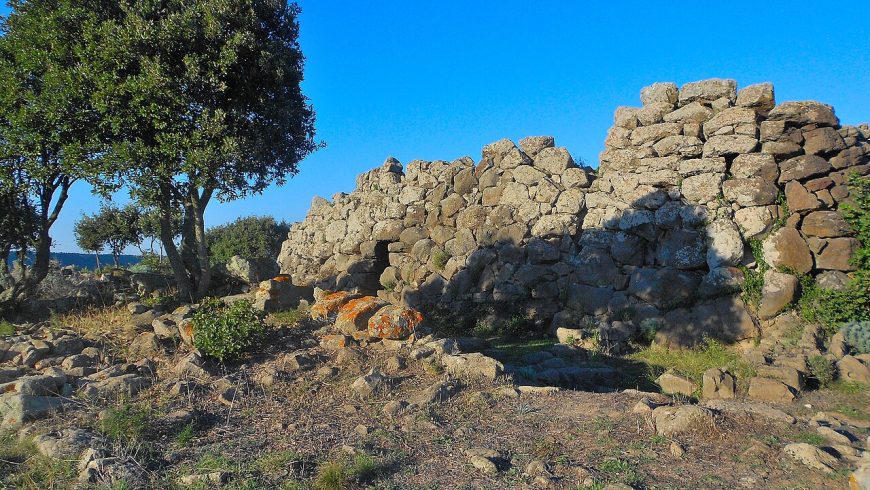
One of the highlights is the Sa Fogaia Archaeological and Nature Park. Here, a trail winds through Mediterranean vegetation to the Nuraghe Sa Fogaia, strategically built to overlook the surrounding countryside. Archaeology blends seamlessly with nature as ancient basalt structures emerge from the landscape, revealing the deep relationship between the Nuragic people and their environment.
Exploring the plateau further leads to more traces of Nuragic civilisation, including one of Sardinia’s most impressive prehistoric monuments. Sa Domu ‘e S’Orcu, a Giants’ Tomb that reflects the close bond between ancient communities and the Marmilla landscape.
Sa Domu ‘e S’Orcu: one of Sardinia’s most remarkable Giants’ Tombs
Among Siddi’s most important archaeological sites is therefore Sa Domu ‘e S’Orcu, one of the best-preserved Giants’ Tombs on the island. Built more than three thousand years ago during the Nuragic Age, it served as a collective burial monument for the local community.
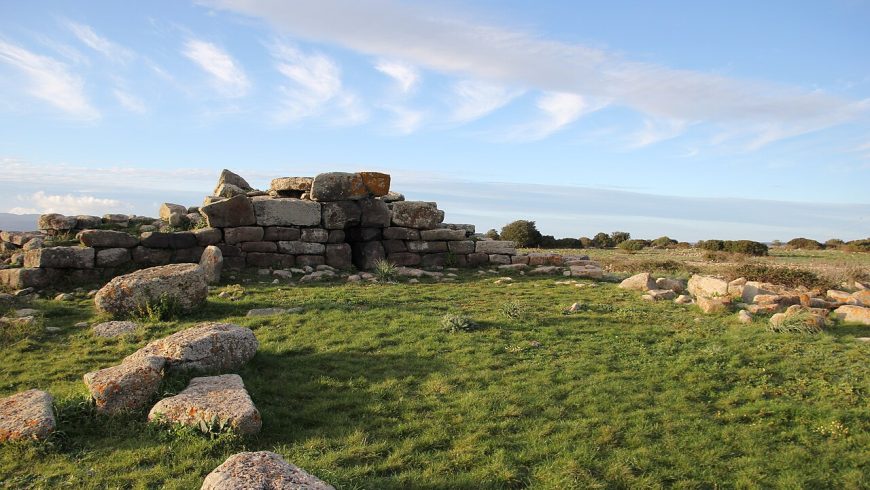
Visitors are immediately struck by its monumental size and by the elegant semicircular forecourt, which remains remarkably well preserved. According to local tradition, such enormous stone structures could only have been built for giants, giving these monuments the name by which they are still known today.
Surrounded by the peaceful Marmilla countryside, Sa Domu ‘e S’Orcu offers a unique opportunity to experience one of the symbols of prehistoric Sardinia in a quiet and evocative setting.
Museums and local traditions
Siddi also tells its story through its traditions. Agriculture continues to play a central role in local life, shaping the Marmilla landscape with wheat fields, olive groves and vineyards.
To better understand this connection between people and the land, visitors can explore the Sardinian Ornithological Museum and the Museum of Sardinian Agri-food Traditions, which showcase the region’s natural environment, history and agricultural heritage.
Throughout the year, festivals and local celebrations provide the perfect opportunity to discover traditional bread, cheeses, extra virgin olive oil, local wines and typical desserts. These products remain at the heart of Marmilla’s culinary traditions and reflect recipes passed down through generations.
Discover Siddi at a slower pace: trails, local flavours and sustainable hospitality
Siddi is a place best explored slowly. Leave the car behind and follow the trails leading across Su Pran, where volcanic landscapes and thousands of years of history come together. Rural paths and tracks connect some of the area’s most important archaeological sites, including Sa Domu ‘e S’Orcu and the Sa Fogaia Archaeological and Nature Park, while offering beautiful views over the rolling hills of Marmilla.
The journey continues at the table. Marmilla’s cuisine reflects its agricultural roots through traditional bread, handmade pasta, sheep’s and goat’s cheeses, extra virgin olive oil, honey, local wines and homemade desserts. Tasting these products is another way to discover the region, following the rhythm of its seasons and local traditions.
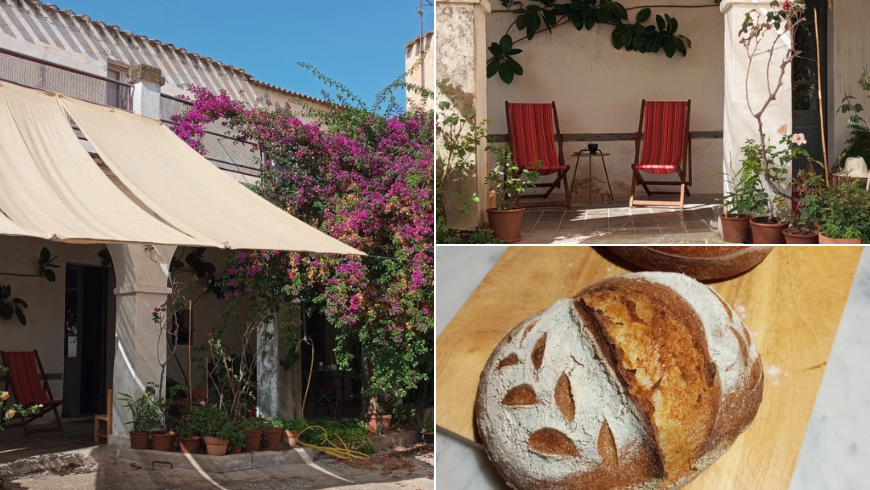
To experience Marmilla at its best, Casa M is an excellent place to stay. Located in the historic centre of Siddi, it offers welcoming and carefully designed spaces, making it an ideal base for exploring the surrounding countryside. From here, it’s easy to reach the area’s archaeological sites, scenic trails and charming villages before returning to relax after a day spent discovering one of Sardinia’s most fascinating inland regions.