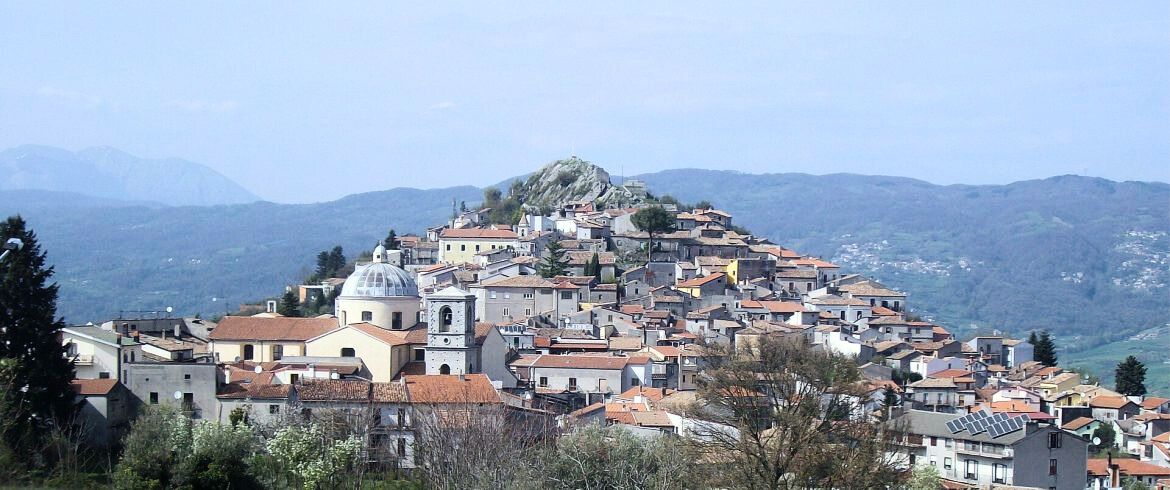
If you’re wondering what to see in Rotonda, let me take you on a discovery of this small village in the heart of the Pollino National Park, which I visited personally during a trip to Basilicata.
In this guide, I’ll share the most beautiful experiences in Rotonda, from unexpected museums to gastronomic experiences rooted in Lucanian tradition.
Exploring Rotonda and the Pollino Park
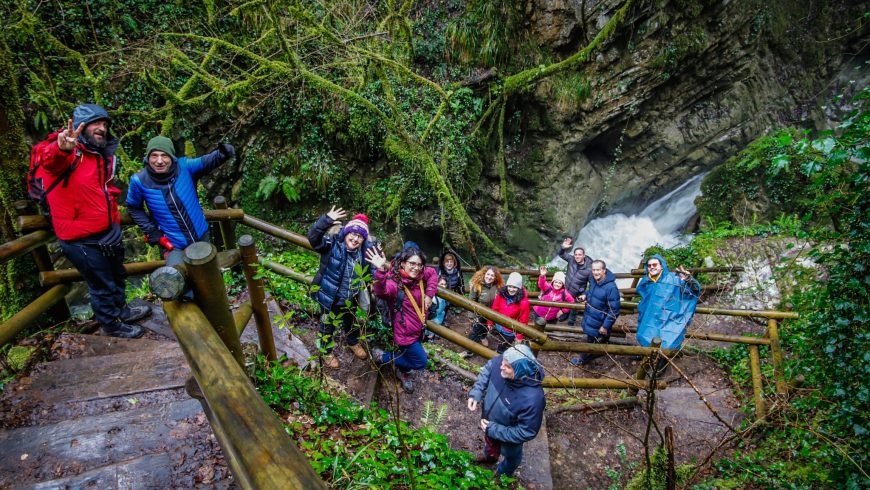
Rotonda is nestled in an extraordinary natural setting: the village lies in the heart of the Pollino National Park, the largest protected natural area in Italy, stretching across Basilicata and Calabria.
I had the opportunity to explore this territory as part of an educational tour promoted by I Viaggi del Milione, organised in collaboration with Marmo Melandro Viaggi and with the support of APT Basilicata. An experience that allowed me to discover Rotonda in depth and with full awareness.
During my stay, I found unique places and authentic experiences. Here are the 10 things to see in Rotonda that you simply can’t miss.
In this article you’ll discover:
- What to see in Rotonda in 1 or 2 days;
- The most interesting museums in the village;
- Gastronomic experiences to try;
- Traditional events of the Pollino;
- Where to stay in a diffuse hotel.
1. The Historic Centre of Rotonda and Piazza Vittorio Emanuele III
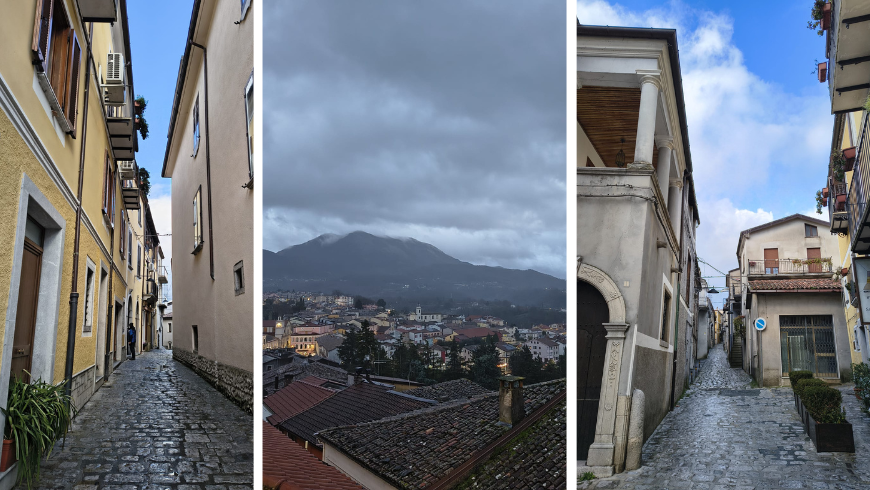
Piazza Vittorio Emanuele III is the beating heart of Rotonda, the gathering place for the town’s social life, where time seems to have stood still.
Among the most important religious buildings are the Chiesa Madre della Natività of the Blessed Virgin Mary. Also, the Church of Our Lady of the Rosary, from which a beautiful view opens over the valley. Strolling through the village’s alleyways, you’ll find evocative glimpses at every corner.
2. The Stonecutter’s Museum and the Belvedere of Rotonda Castle
Walking up through the historic centre, you can climb to the highest part of the village where there is a stunning viewpoint over the Valle del Mercure and the Pollino National Park.
Along the way, you’ll encounter numerous decorated doorways and small fountains carved in local stone. These are a testament to the historic tradition of Rotonda’s stonecutters, which flourished between the 16th and 18th centuries.
Don’t miss the Stonecutter’s Museum, a small and original workshop belonging to Giuseppe di Consoli. He is a master craftsman who transformed stone into fountains, doorways, and unique details throughout the village.
3. The Devil’s Waterfall (or Paraturo Waterfall)
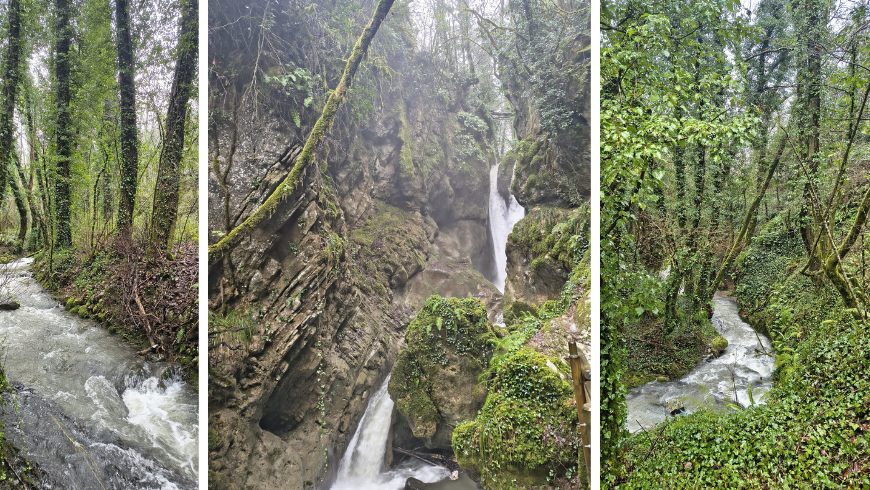
Just a short distance from the village lies the Devil’s Waterfall, also known as the Paraturo Waterfall: a drop of about 15 metres set within a dramatic limestone gorge.
The roughly 4 km round-trip trek passes through environments rich in biodiversity typical of the Pollino. In fact, you can admire ferns, running water, and limestone boulders shaped by erosion. Along the route, you breathe in the unspoilt nature of the Valle del Mercure.
Upon reaching the waterfall, the roar of the water, the scent of moss, and the light filtering through the trees create a perfect spot for a moment of contemplation or a picnic among woods and rocks.
4. MUGEPA – The Geopaleontological Museum of Rotonda
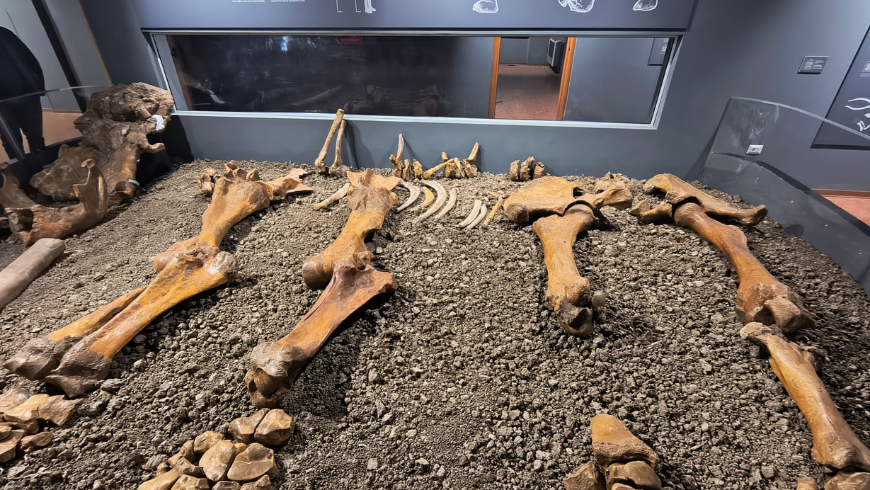
Rotonda holds a surprising geological history: the town was built above a Pleistocene lake, from which numerous fossil remains have been retrieved.
Among the most remarkable are the bones of an ancient elephant, nicknamed Mario after the landowner on whose property it was found. Its bones, along with those of a hippopotamus, are now preserved in the MUGEPA – the Geopaleontological Museum of Rotonda.
A guided visit allows visitors to understand the evolution of the Pollino territory in a simple and engaging way.
5. The Village Museum (MUB) and Local Traditions
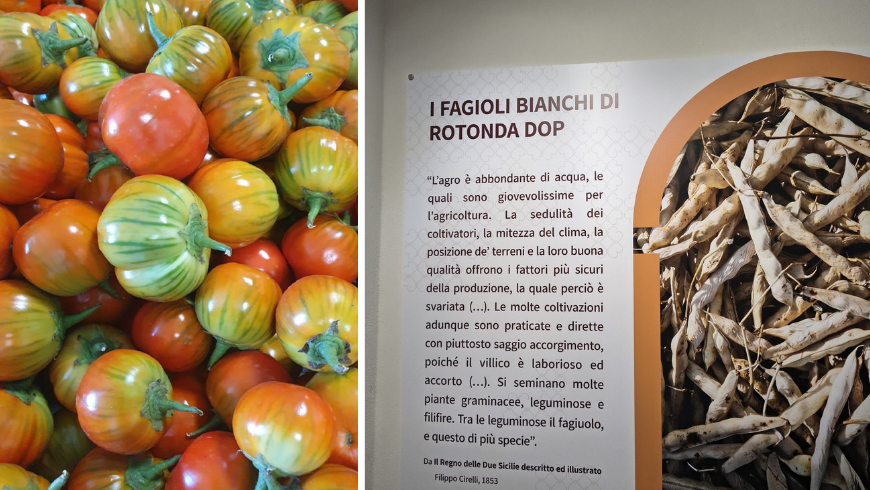
Climbing towards the upper part of the village, you reach the Village Museum, known as the MUB, which houses panels dedicated to local history and traditions.
Here you’ll also discover two PDO (Protected Designation of Origin) gastronomic excellences: the Red Aubergine of Rotonda and the White Beans of Rotonda. The museum also tells the story of one of the town’s most identity-defining events: the Feast of the Fir Tree.
6. The Ecomuseum of the Pollino and the Bosnian Pineù
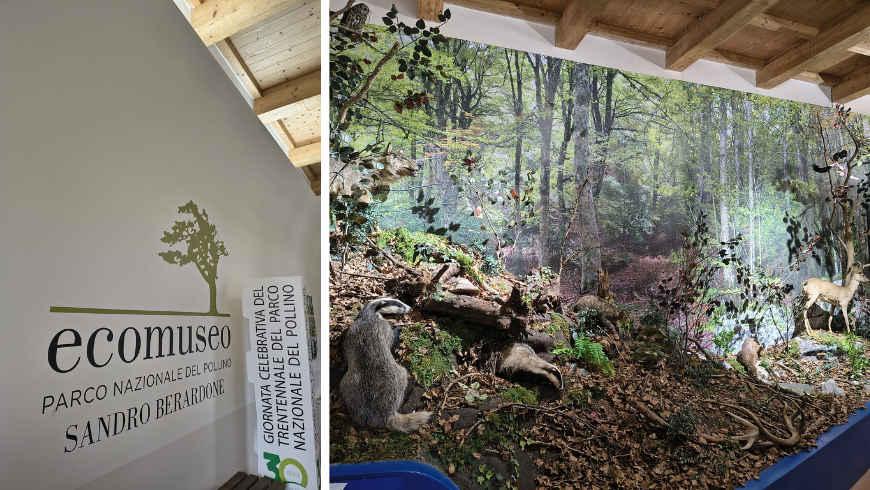
The Ecomuseum of the Pollino is a key resource for understanding the biodiversity of the Pollino. Inside, you can admire the animals and plants that inhabit the Pollino Park, including the magnificent Bosnian Pine (Pino Loricato), the park’s iconic tree and a true natural monument.
Here, among peasant traditions and artisan knowledge, the authenticity that the village of Rotonda has managed to preserve over time leaves a lasting impression.
7. The Feast of the Fir Tree: Rotonda’s Tree Ritual
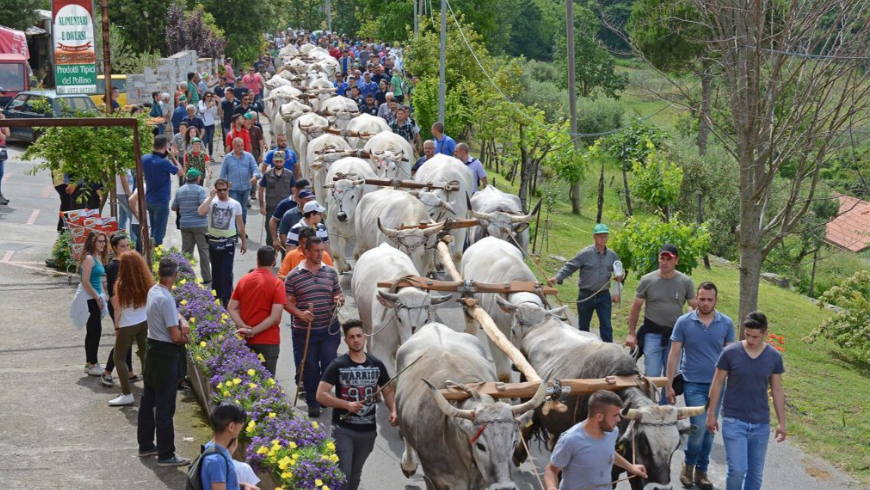
Rotonda is a place rich in traditions, and the most important is undoubtedly the Feast of the Fir Tree. A unique occasion in which the people of Rotonda gather between 8 and 13 June to celebrate the symbolic marriage between a beech tree and a white fir.
A true procession in which the sense of community is at its most alive and people share intense, moving moments. The only assistance available for transporting the trees is that of oxen; the two trees are then intertwined and placed at the centre of the village, where they symbolise the fertility of the earth.
8. Culinary Workshops: Learning to Make Pizza and Lagane
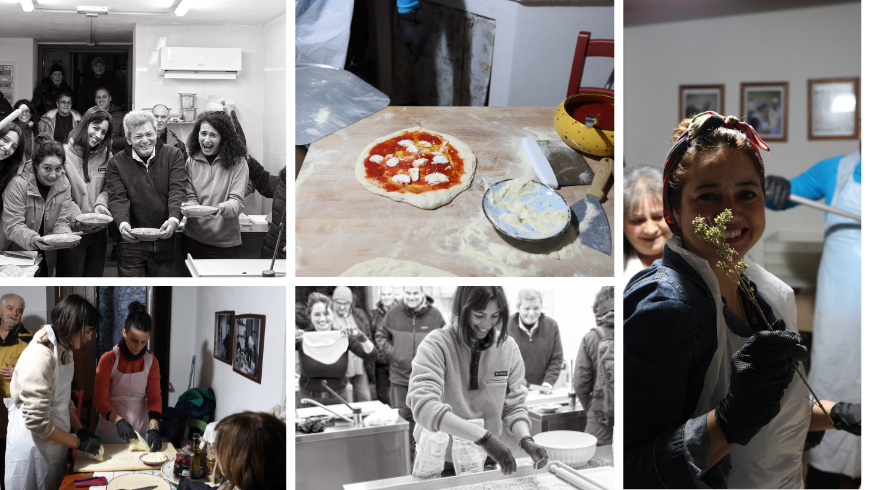
One of the most authentic moments of the trip was taking part in a local culinary workshop. An immersive experience in local culture, where culture and cuisine merge to create something truly special.
Led by cook Maria, who guided us through two truly enjoyable workshops, we learned to prepare traditional pizza and lagane, a type of pasta typical of the area.
We also drew lessons that apply to everyday life: don’t rush to reach the end of things, but take the time to care for the details and arm yourself with patience to achieve results. A bit like making pasta and pizza.
9. Excursions in the Valle del Mercure and UNESCO Beech Fores
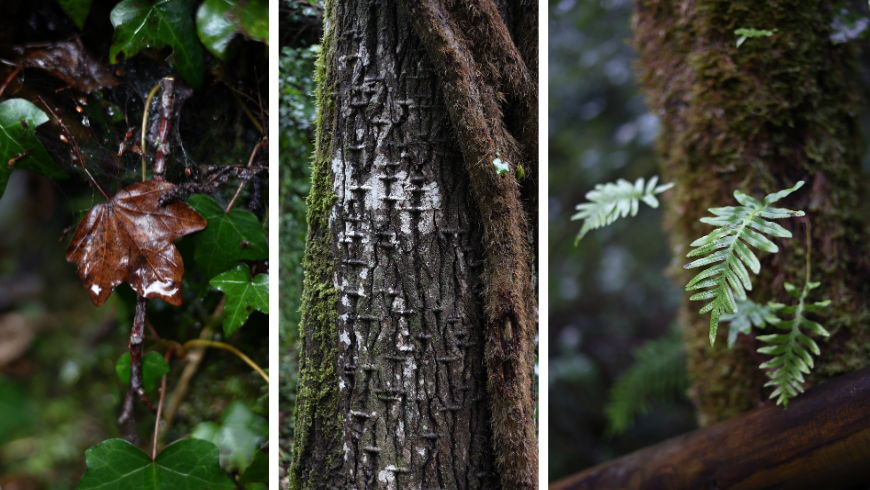
The Valle del Mercure offers a wide range of activities connected to the park and the mountains, designed for slow and responsible tourism. It’s a perfect area for trekking, birdwatching and slow travel.
It is an incredibly rich territory to immerse yourself in, with many different options to choose from, culminating in the majestic ancient beech forest of Cozzo Ferriero, a UNESCO World Heritage Site.
10. Where to Stay in Rotonda: The Diffuse Hotel Experience
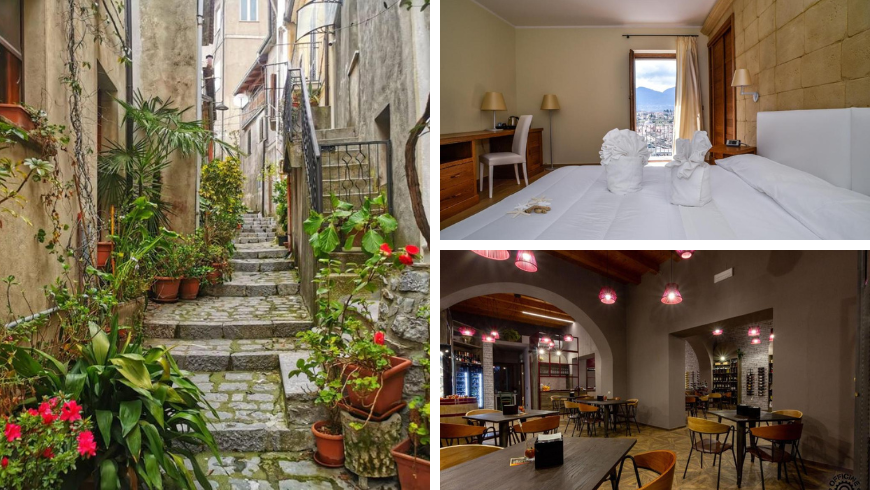
One of the best ways to truly experience Rotonda is to choose a diffuse hospitality accommodation. A model that has allowed historic buildings to be restored and transformed into welcoming lodgings integrated into the urban fabric.
During my stay, I had the chance to sleep in the heart of the Borgo Ospitale, in an apartment overlooking the main square: an experience that truly immersed me in the daily life of the village.
In the square, you’ll find local shops such as L’Antica Macelleria Sola (the Old Butcher’s Shop) and the Cuore Felice bakery, where you can still exchange a few words with the locals and rediscover that human connection that is slowly disappearing in big cities.
This hospitality model is today one of the most interesting examples of sustainable tourism in the Pollino Park, capable of enhancing the architectural heritage without stripping the place of its identity.
Conclusions: Why Visit Rotonda
Rotonda is a village to be discovered and experienced slowly, where human warmth characterises every encounter and nature takes centre stage, making this a place of extraordinary environmental value — one to be cherished and protected.
Cover image: view of Rotonda di Raimondi Luca, via Wikipedia
 Albergo Diffuso il Borgo Ospitale- Rotonda – Green Albergo diffuso in Rotonda, Potenza, Basilicata, IT