
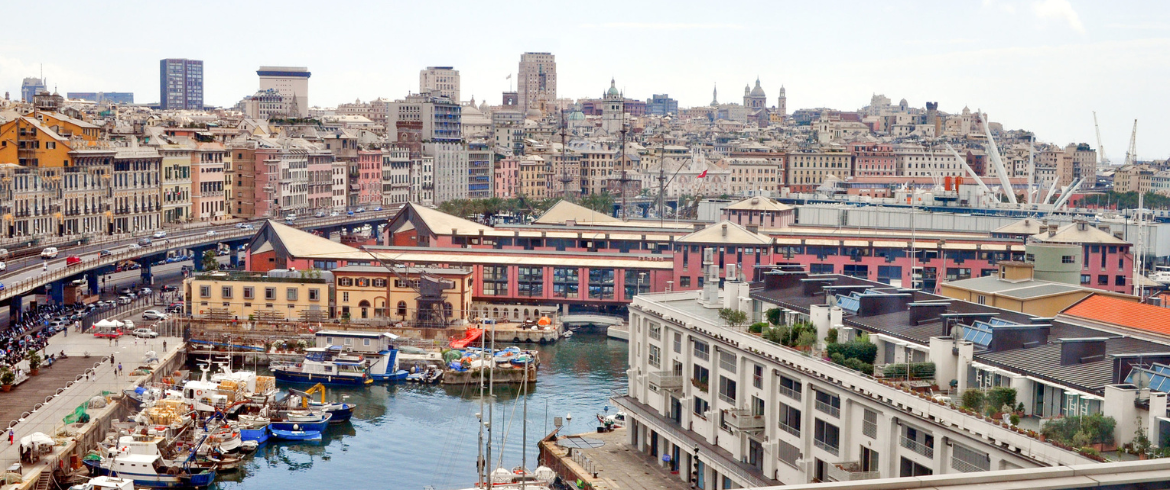
Genoa is a city that does not reveal itself at first glance. Behind the port, the noble palaces and the best-known attractions lies a city of hills, ancient paths, fortifications, gardens and unexpected views.
It is the city that inspired Fabrizio De André, Luigi Tenco, Umberto Bindi, Bruno Lauzi and Gino Paoli, the great singer-songwriters of the Genoese school who portrayed a melancholy place full of contrasts. To truly discover Genoa, you need to slow down, look at it from different perspectives and seek out the places that many visitors overlook.
To really get to know it, it is worth stepping away from the busiest routes and taking a different direction, perhaps towards a hill, an ancient aqueduct or a small village suspended above the city. And if you are looking for a strategic base to explore this lesser-known side of Genoa, you can stay at Ca’ da Levre, on the fifth floor of a historic building with a lift and a 16th-century marble portal, in the heart of Genoa’s historic medieval centre. Here, the beauty of the ancient palaces blends with the lively multicultural life of the “carrugi”, the narrow streets rich in charm and history, lined with artisan workshops, traditional trades and characters who still tell the truest story of the city, just as Fabrizio De André described it.
Which are the most unusual places to discover in Genoa?
Genoa is home to many places far removed from the city’s most touristy image: historic infrastructure, heritage parks, fortifications and panoramic paths that reveal the special relationship between the Ligurian capital, the sea and the mountains. They are perfect for those who want to explore Genoa slowly and be surprised by a city that is much greener and more vertical than one might imagine.
Take the historic rack railway to Granarolo
To start discovering an unusual side of Genoa, take the Granarolo rack railway, one of the historic forms of transport that reflects the city’s extraordinary geography. In just a few minutes, you move from the lower part of the city up into the hills, leaving the traffic behind and completely changing your perspective.
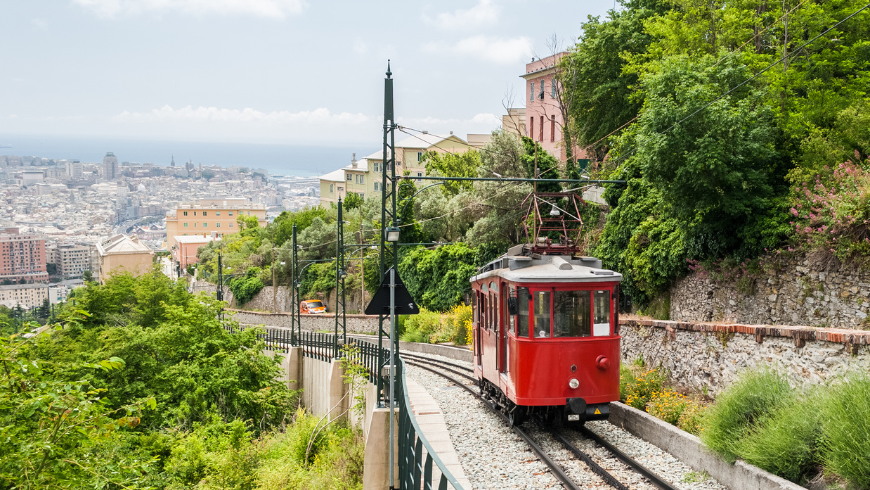
Once you reach Granarolo, it is worth continuing on foot to explore the small village and the surrounding hill paths. Here Genoa looks different: houses are surrounded by greenery, the streets become quieter, and between one path and another you catch glimpses of the sea and the urban landscape below. It is one of the best ways to understand that Genoa is not simply a city by the sea, but a city built between the sea and the mountains.
Walk along the ancient Val Bisagno aqueduct
One of the most surprising walks can be found just behind the city: the route of the historic Val Bisagno aqueduct. Built and expanded over the centuries to bring water to Genoa, the aqueduct now crosses woods, small settlements and rural landscapes just a short distance from the urban centre.
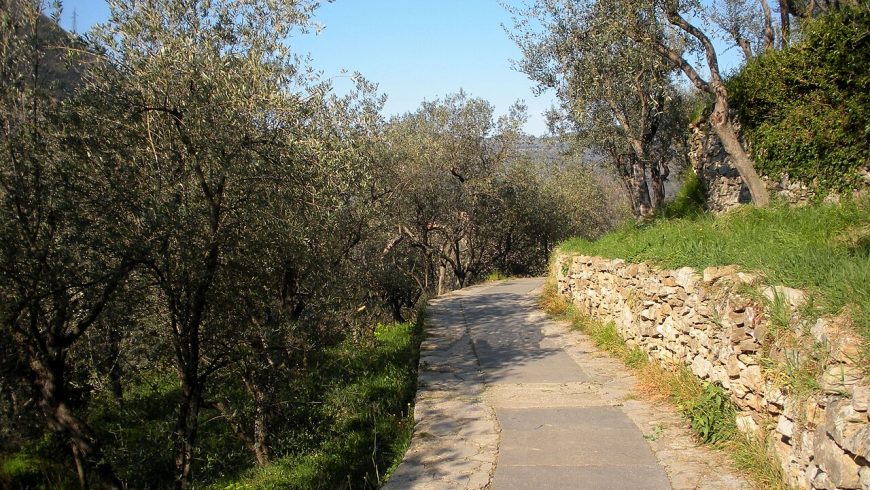
Walking along its ancient route means following a piece of Genoa’s everyday history without stepping into a museum. Aqueduct bridges, stone walls, washhouses and old hydraulic structures appear along the way, while the landscape slowly changes. It is an ideal walk for those who enjoy discovering a place’s less obvious heritage while spending a few hours surrounded by greenery.
Get lost in the romantic park of Villa Durazzo Pallavicini
In Pegli, in the western part of Genoa, lies one of the city’s most surprising places: the historic park of Villa Durazzo Pallavicini. It is not simply a garden to stroll through, but a genuine 19th-century landscape designed as a carefully orchestrated sequence of settings, scenery and architecture.
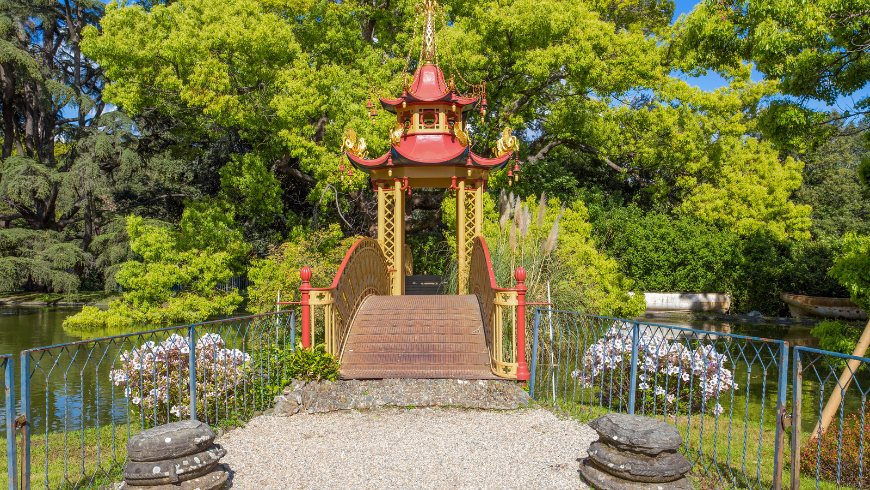
The route passes through woods, lakes, caves, bridges and buildings surrounded by vegetation, creating the feeling of gradually entering a world separate from the city. This narrative structure is precisely what makes the park so fascinating: visiting it is not simply about admiring plants and architecture, but about following a route designed to evoke emotions and wonder.
Walk among the forts on the mountains behind the city
Few Italian cities can boast such an extensive system of fortifications so close to their urban centre. On the hills surrounding Genoa stretches a vast network of forts and defensive walls, built mainly between the 18th and 19th centuries and connected by paths through woods and along ridgelines.
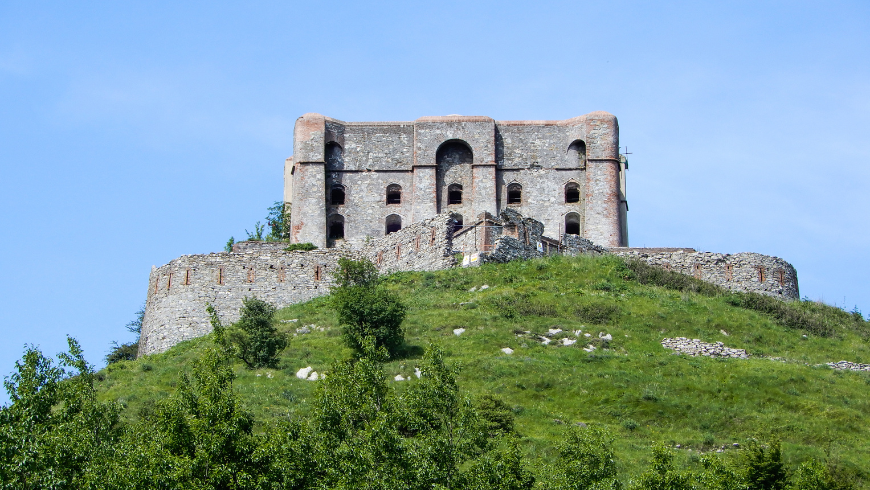
Forte Diamante is one of the most evocative points, but the whole defensive system deserves to be explored slowly. One of the most unusual ways to reach the hills is to take the Genoa-Casella railway and then continue on foot along the hiking paths. The result is an unexpected combination of history, nature and panoramic views: on one side the city and the port, on the other the mountains of the Ligurian Apennines.
Try the lift that first moves horizontally and then rises
In Genoa, even getting around the city can become an unusual experience. The Montegalletto lift, near Genoa Piazza Principe railway station, is based on a particularly inventive system: the cabin first travels horizontally and then changes direction to rise vertically up the hillside.
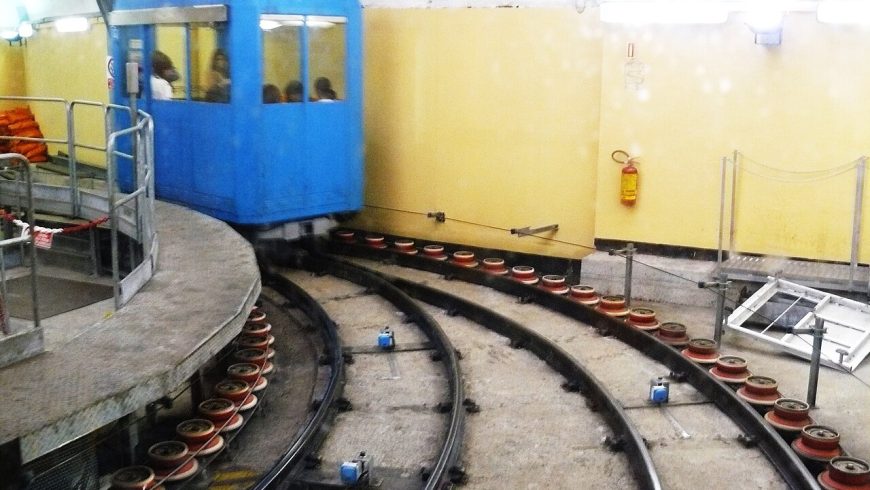
The journey is very short, but it tells an important story about one of the city’s most distinctive features: the need to find ingenious ways of connecting neighbourhoods built across steep gradients. Once you reach the top, you can continue towards Castello d’Albertis and enjoy a different perspective over the city.
Step inside Castello d’Albertis and travel around the world
After experiencing the Montegalletto lift, you can continue towards Castello d’Albertis, on Montegalletto hill. Today the castle houses the Museum of World Cultures and is one of Genoa’s most unusual museums: a Neo-Gothic residence built by Captain Enrico Alberto d’Albertis, a traveller and sailor who collected objects and testimonies from five continents during his journeys.
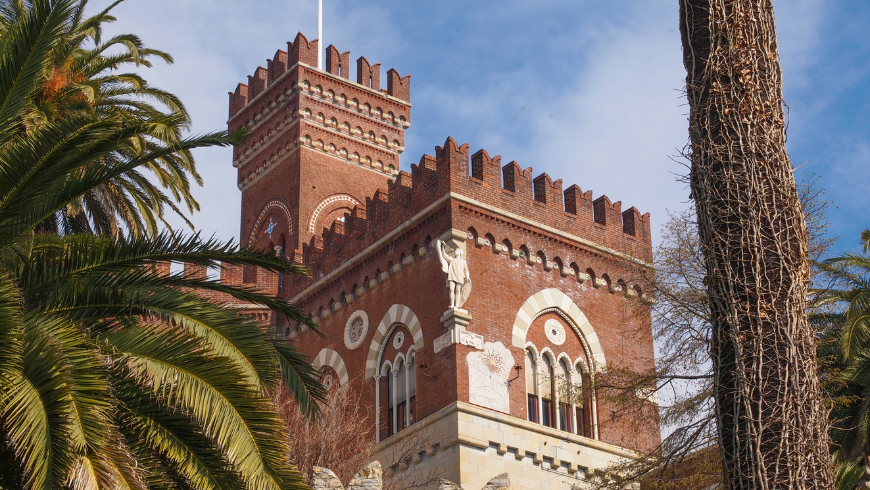
Visiting the museum means literally stepping into the home of a great 19th-century traveller and moving through rooms that preserve maritime influences, cabinets of curiosities and echoes of his journeys. The museum becomes a story of exploration and encounters between cultures, while the castle’s terraces offer a wonderful view of the city and the port.
Reach San Fruttuoso by boat from Genoa, between the sea and the promontory
There is also an experience with a touch of romance and cinema about it: taking a boat and slowly leaving the coast behind, following the sea to the small bay of San Fruttuoso. Some excursions depart directly from Genoa and follow the coast past Nervi, Recco, Camogli and San Fruttuoso; alternatively, you can easily reach Camogli by train and board a boat there for the bay.
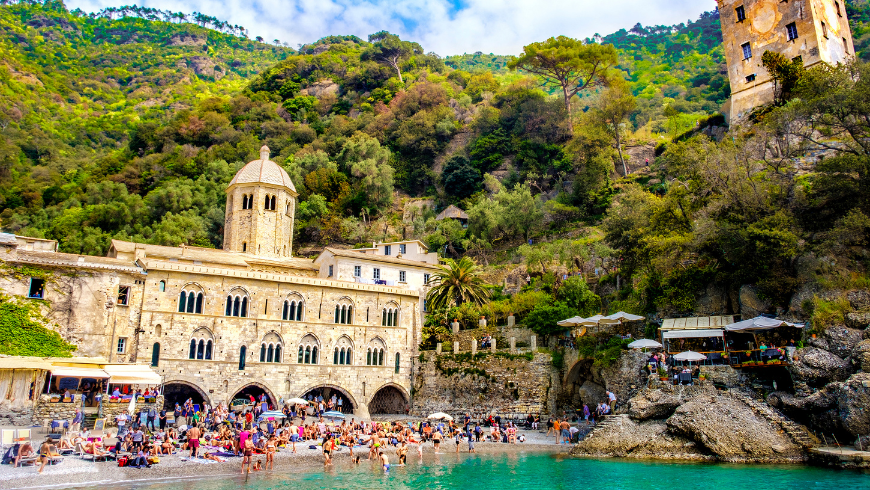
The boat trip is already part of the experience. The coastline, the green cliffs of the promontory and the small seaside villages accompany the journey to San Fruttuoso, where the medieval abbey suddenly appears between the woodland and the sea. Once there, you can visit the abbey, relax in the bay or continue on foot along the trails of Portofino Regional Park.
Step inside the Monumental Cemetery of Staglieno
Can a cemetery become one of the most interesting experiences on a trip? In Genoa, the answer is yes. The Monumental Cemetery of Staglieno is a true open–air museum, with galleries, arcades, chapels and hundreds of monuments that tell the story of Genoese art and society between the 19th and 20th centuries.
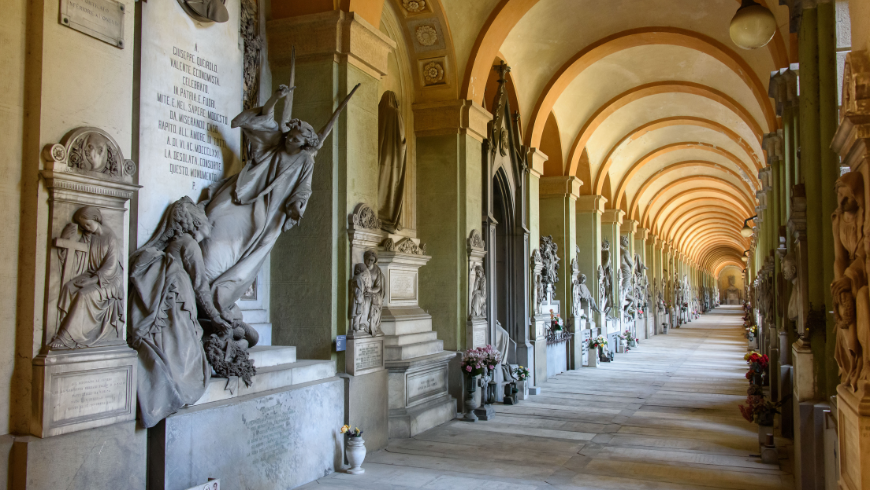
Walking among its sculptures means encountering a different Genoa, the city of wealthy families, entrepreneurs, artists and the figures who helped shape its history. Fabrizio De André is also buried here. The complex can also be explored through guided tours and thematic routes, helping visitors understand the historical and artistic significance of this extraordinary place.
Go up to Righi and look out over Genoa
To complete your journey into unusual Genoa, you need to climb higher still. The historic Righi funicular takes you up into the hills, where paths and trails begin that allow you to quickly leave the noise of the city behind.
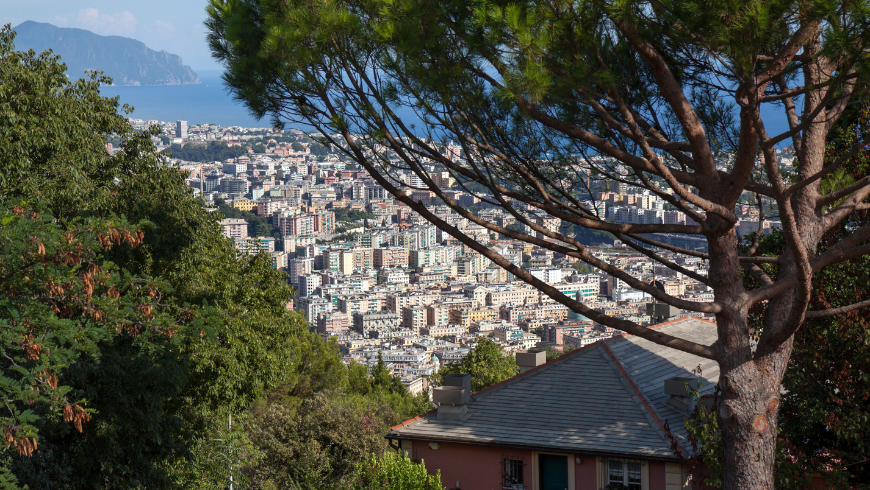
From up here, Genoa’s geography finally becomes clear: the urban centre squeezed between the sea and the mountains, the neighbourhoods climbing the slopes and the port opening towards the Mediterranean. It is an ideal viewpoint from which to understand the city before exploring it again on foot. Above all, it reveals just how much green space lies beyond its busiest streets.
The most interesting Genoa is not necessarily the one that appears first in the guidebooks. There is much more beauty beyond the Aquarium, the noble palaces and the historic centre, with its caruggi.
It is a city that rewards those who slow down and change perspective. From the sea to the hills, from urban neighbourhoods to woods, every climb reveals a new landscape. And perhaps this is the best way to discover unusual Genoa: not simply by looking for what to see, but by allowing yourself to be surprised by what you find along the way.