
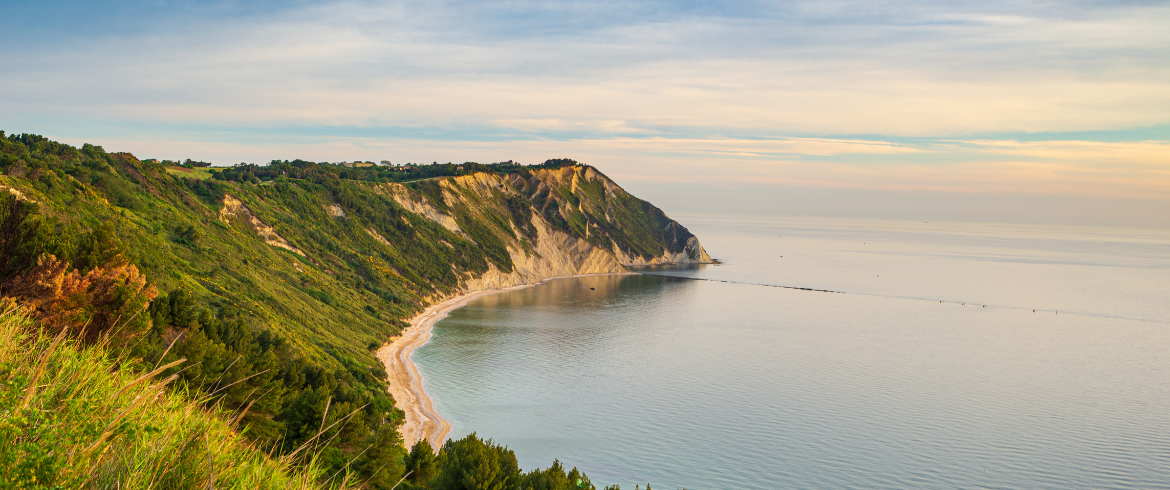
Between the blue of the Adriatic and the green of the hills, the Conero offers a landscape made to be explored without rushing. Roads wind inland, climbing gently towards small villages, quiet squares, local shops, ancient fortifications and viewpoints that suddenly appear around a bend. Here, the sea is always close, but it also gives way to a more intimate side of the region.
The Conero Riviera is famous for its hidden coves, white cliffs and the lush vegetation of the promontory. Yet just a few kilometres inland, another landscape begins to unfold, made up of cultivated hills, theatres, museums and small historic centres. The distance between the coast and the inland is short, but the pace changes: the journey becomes slower, the stops more spontaneous, and each village invites you to stay a little longer.
What are the most beautiful villages in the Conero?
Among the villages and historic towns to discover around the Conero are Numana, Polverigi, Recanati, Offagna, Castelfidardo, Camerano and Osimo. They are very different from one another: some overlook the Adriatic directly, while others are surrounded by the hills inland. Yet all of them offer the chance to experience the area at a slower pace and go beyond the best-known destinations.
Here are seven places to add to your Conero journey, choosing to stay a little longer and letting the landscape set the pace.
Numana, Between Narrow Streets, Sea and Fishing Traditions
If you are looking for a village in the Conero where the sea is still part of everyday life, Numana is one of the first places to visit. The upper part of the town still preserves the atmosphere of the old fishing village, with local stone houses, narrow streets and balconies overlooking the Adriatic. A good place to start is the Costarella, the long staircase connecting the historic centre with the harbour, once used by fishermen. Taking your time, with no particular destination in mind, you will come across the Torre Arch, one of Numana’s landmarks, the Church of the Santissimo Crocifisso and panoramic views over the coast.
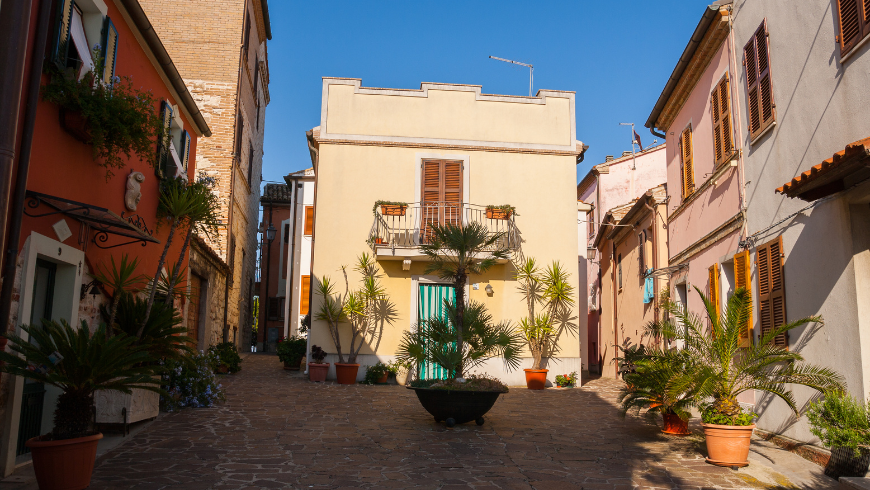
It is also worth spending some time at the harbour, perhaps during the quieter hours of the day, before heading back towards the upper part of town to admire the sea from above. Nearby you will find the Spiaggiola and Spiaggia del Frate beaches, while behind the town the landscape changes, giving way to the hills and vegetation of Conero Regional Park.
Green tip: spend a few hours exploring one of the trails in Conero Regional Park around Numana and Sirolo. You could choose, for example, the Fonte di Capo d’Acqua, trail 314, which starts in Sirolo and lets you discover the landscape of the promontory away from the busiest roads. The park offers a network of trails with information on duration, length and characteristics, making it easier to choose the route that suits you best.
Polverigi, the Small Village Where You Can Truly Slow Down
Among the lesser-known villages of the Conero Riviera, Polverigi is a rewarding detour, especially if you are looking for peace and intimate surroundings.
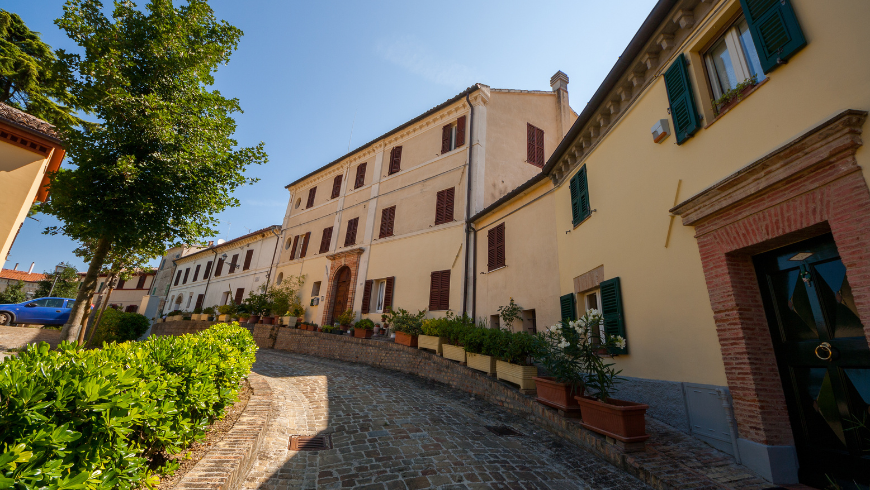
At the heart of the village lies the ancient fortified settlement, known as the Roccolo because of its distinctive circular shape. From here, you can explore the streets of the historic centre and reach Villa Nappi, a historic residence surrounded by a park and tree-lined paths. Polverigi is also connected to contemporary culture and the performing arts: the villa and its grounds host theatre, dance, music and other cultural events.
Green tip: turn your visit into a truly slow stay by spending at least one night at Timeout accanto al bosco, surrounded by greenery. The property offers bicycles, mountain bikes, electric bikes and electric scooters, making it a convenient base for exploring the area without relying on a car. Polverigi is surrounded by hills and rural landscapes that are particularly well suited to slow discovery by bicycle.
Recanati, the Hills Where the “Infinite” Was Born
Recanati is probably the best-known village among those of the Conero. It was the birthplace of Giacomo Leopardi, and his presence can still be felt in the squares, palaces, gardens and streets of the historic centre. Piazza del Sabato del Villaggio, Casa Leopardi, the Torre del Passero Solitario and the Orto sul Colle dell’Infinito form an itinerary where real places and poetic memory come together.
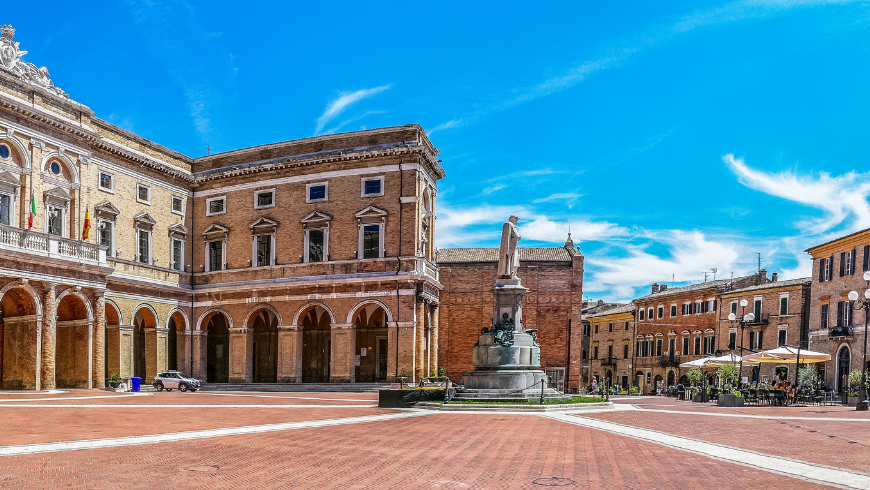
But Recanati is worth visiting beyond Leopardi too. It is a hilltop town overlooking the Marche countryside, with a historic centre rich in architecture and museums. The best approach is not to rush through everything in a single visit: choose a few places and leave yourself time to enjoy the landscape. It is precisely in this connection between the town and its surroundings that Recanati reveals its charm.
Green tip: you can easily reach Recanati by choosing sustainable public transport. Buses town is connect the town with Ancona, Loreto and Macerata, making it possible to reduce the need for a car while travelling around the Conero.
Offagna, a Fortress Overlooking the Hills
Set among the hills near Mount Conero, Offagna seems suspended in its medieval past. The heart of the village is the Rocca di Offagna, built in the mid-15th century on the remains of an older castle. Its keep dominates the surrounding landscape and houses the Museum of Ancient Weapons, while the battlemented walls complete the historic defensive system. Walking through the small centre, reaching the fortress and then stopping to admire the view is a simple way to understand the character of this village.
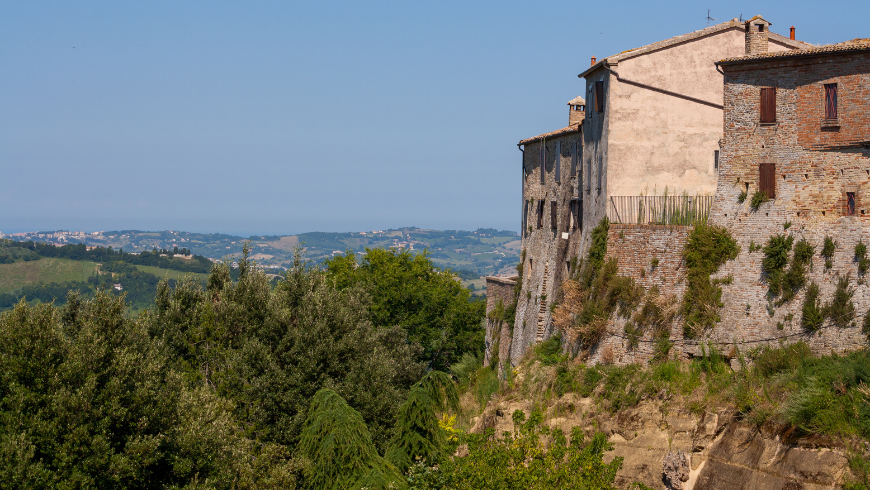
Offagna is also known for its Medieval Festivals, which bring the village back in time through historical reenactments, performances and local traditions.
Green tip: plan your visit to coincide with one of the village’s cultural events or festivals and choose local producers and businesses for your food break, rather than stopping in the more touristy areas of the Riviera. This way, you can help support the local economy.
Castelfidardo, Where Every Street Tells the Story of an Accordion
In Castelfidardo, music is not simply a cultural tradition: it is part of the town’s identity. The village is known around the world as the Capital of the Accordion and has a long craft tradition connected with the making of the instrument. The International Accordion Museum, housed in the Palazzo Comunale, contains a remarkable collection of instruments and tells the story of the craftsmanship behind this tradition.
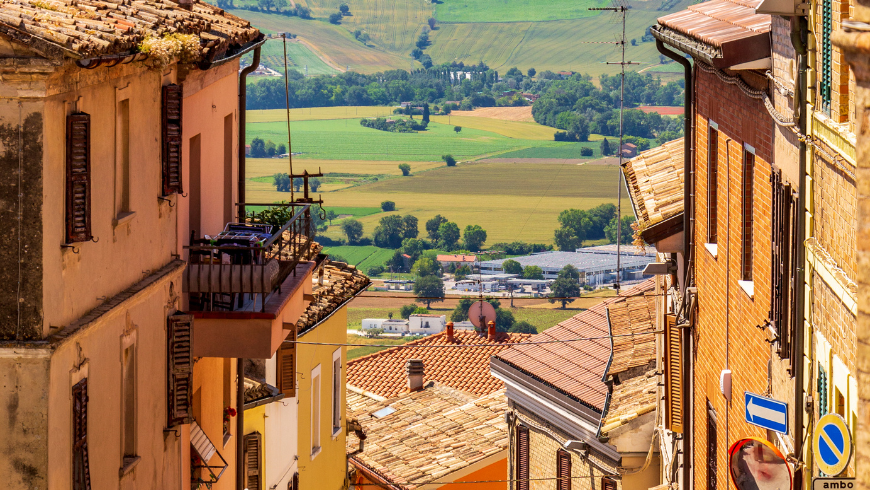
Castelfidardo is also worth discovering for its hilltop historic centre, ancient walls and panoramic viewpoints. From the Giardini di Porta Marina, the view stretches towards the Conero landscape, while the streets of the old town reveal the close connection between the town, its territory and its history.
Green tip: just outside the town centre lies the Selva di Castelfidardo, a protected natural area. Here, several trails allow you to explore this 35-hectare ancient woodland and discover its rich biodiversity.
Camerano, the Village with Another World Underground
In Camerano, you need to look in two directions: towards the hills and beneath your feet. Under the historic centre lies a vast network of underground spaces known as the Grotte di Camerano. The route winds beneath the streets through corridors, rooms, vaulted chambers, columns and decorated spaces. Some areas have been interpreted as possible places of worship, while the caves have served different purposes over the centuries. Their origins and functions are still not fully understood, and this combination of history, theories and mystery is precisely what makes the visit so fascinating.
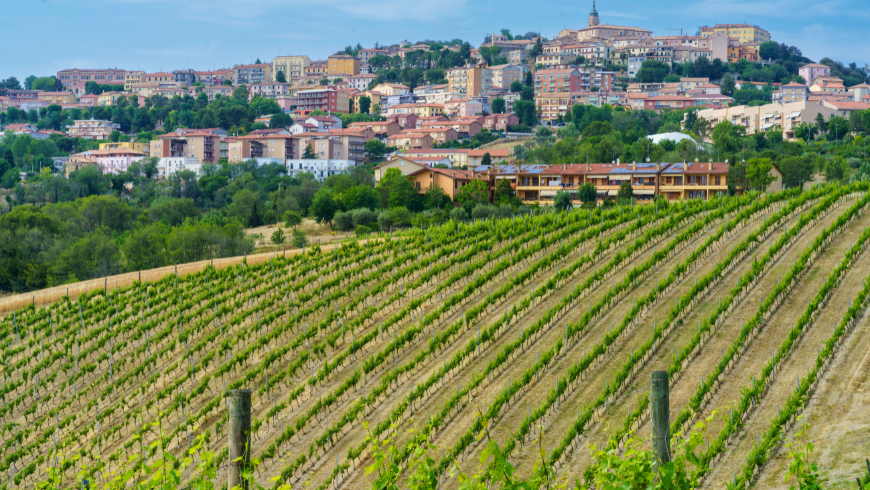
Back above ground, the village invites you to continue exploring its squares and churches. Camerano is also closely connected with Rosso Conero, the wine that reflects an important part of the agricultural landscape of the area. The result is a village where culture, food and wine and the surrounding landscape come together within a small area.
Green tip: make the most of the village’s food and wine traditions by combining your visit to the Grotte di Camerano with a tasting of Rosso Conero, choosing local wineries and producers whenever possible.
Osimo, Between Panoramic Views, Art and Underground Mysteries
Osimo rises in the hills just a few kilometres from the Conero Riviera and is an ancient town of Roman origin, rich in traces of Roman history and later historical layers. It is also known as the City of the “Headless Ones”, because of the twelve headless Roman statues displayed in the atrium of the Palazzo Comunale.
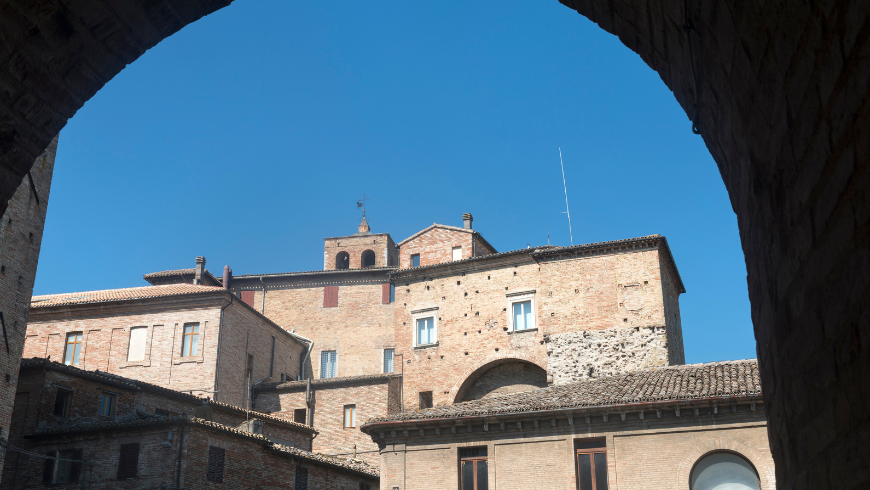
Then there is the underground world. The caves of Osimo form a sort of second city, made up of tunnels and rooms carved into the sandstone. Among the visitable routes are the Grotte del Cantinone, while above ground the Duomo di San Leopardo, Teatro La Nuova Fenice, Santuario di San Giuseppe da Copertino and Giardini di Piazza Nuova are all worth discovering.
Green tip: bring your bike to Osimo too. From the town’s surrounding area, you can reach Campocavallo and the Musone landscape along the cycle and pedestrian route dedicated to sustainable mobility. It is a way to add a stretch through the countryside, fields and waterways to your visit to the historic centre.
Seven villages, seven different ways of telling the story of the same landscape. Numana looks out to the sea and preserves the memory of fishing; Polverigi invites you to slow down among hills and culture; Recanati keeps the landscape of poetry alive; Offagna still bears the mark of its medieval walls; Castelfidardo turns craftsmanship into music; Camerano hides a world beneath its streets; Osimo combines panoramic views, art and mystery. And which one would you choose?