
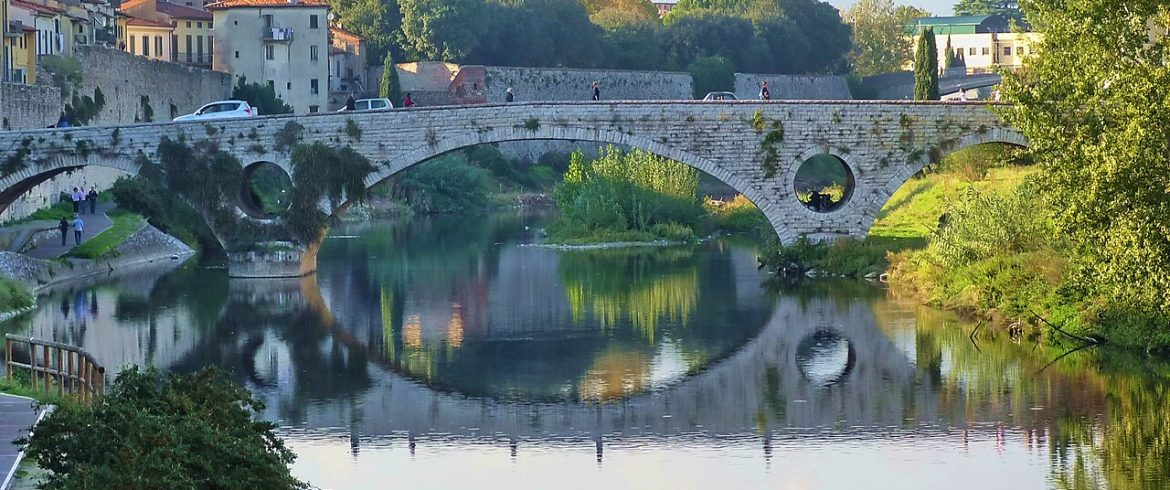
Tuscany is chosen every year by millions of people as a holiday destination. Often, when people think of this region, they immediately picture historic cities, artistic treasures, landscapes, and its renowned food and wine traditions. But Tuscany is much more than that. Did you know that one of the most important textile districts in Europe is located here?
I’m talking about Prato, a city that today also stands out for its projects in sustainable textiles and creative recycling.
As early as the Middle Ages, the city of Prato was known for its wool processing. In the centuries that followed, production evolved into the processing of regenerated wool, also known as “Prato wool,” obtained from textile scraps (known locally as cenci). Over time, the textile district of Prato has continuously adapted to new needs, especially environmental ones.
In this article, we explore four local initiatives between Prato and Pistoia that are working to transform the textile sector in a sustainable and responsible way.
1. Rifò: From Textile Scraps to Clothing, and Back Again
Rifò was founded in Prato in 2017 by Niccolò Cipriani. Inspired by the city’s textile tradition, he decided to reinvent it through a sustainable approach.
The name “Rifò” itself comes from the Tuscan dialect of the verb rifare (“to remake”), reflecting the idea of reworking and giving new life to existing materials.
The company produces clothing made from recycled fabrics. Its main focus is on material selection: fabrics must be natural, biodegradable, and composed of at least 50% recycled fibers. These materials are purchased only from suppliers that guarantee traceability and ethical production chains.
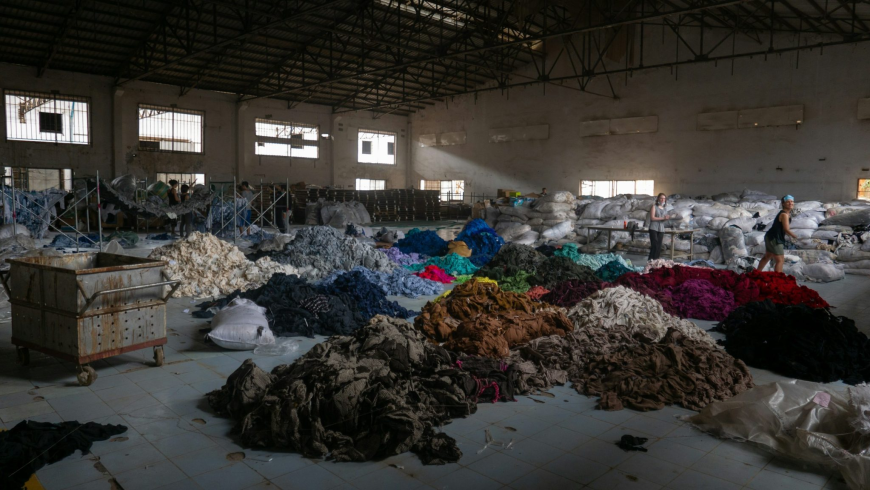
Rifò has also introduced reusable packaging made from textile waste, designed to be easily reused in everyday life. The company also invites people to contribute by donating their used clothing, provided that the garments meet certain requirements and can be reused in the recycling process.
2. Comistra: Regenerated Wool, Yarns and Fabrics
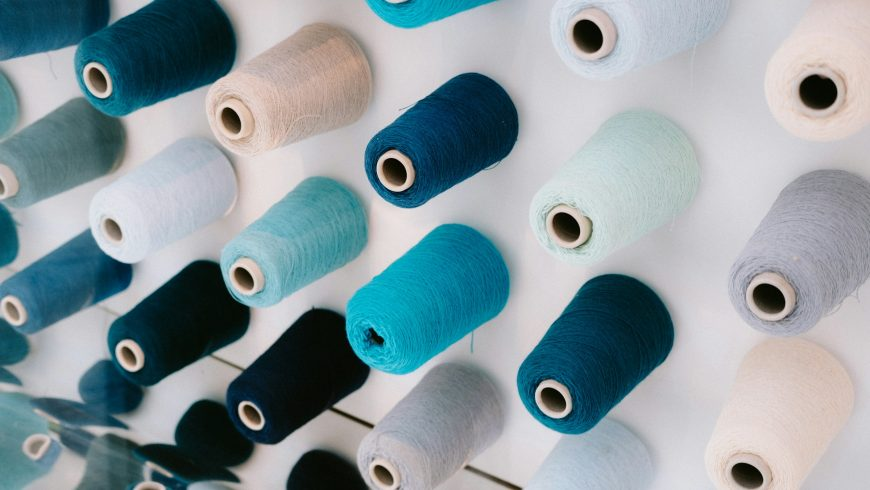
Comistra is a company founded in 1920 in the Prato Textile District, specializing in the recovery and processing of textile scraps to produce regenerated wool, recycled yarns, and high-quality fabrics.
The company operates with a fully integrated production cycle: The process begins with the selection of raw materials, entirely carried out by hand by specialized staff, and continues with the transformation of these materials into new fibrous material, which is then used to produce high-quality regenerated wool.
This production can be considered environmentally sustainable not only because it starts from recycled textile scraps, but also because the company uses a photovoltaic system that supplies energy to power most of its facilities.
3. Corertex: The Consortium for Textile Reuse and Recycling
Corertex is the Consortium for Textile Reuse and Recycling. It was initially founded by eight companies, six focused on reuse and two on recycling, with the goal of supporting the ecological transition promoted by the European Union.
Today, the consortium includes many companies across Italy and beyond the regional level. All members share a common objective: the reuse, recycling, and recovery of textile materials, both pre- and post-consumer.
4. Fody: Sustainability and Inclusion for a Better Future
Fody is a benefit company founded in 2020 and based in Pistoia. The project initially started with the goal of producing life-saving blankets for abandoned animals, using leftover textile materials.
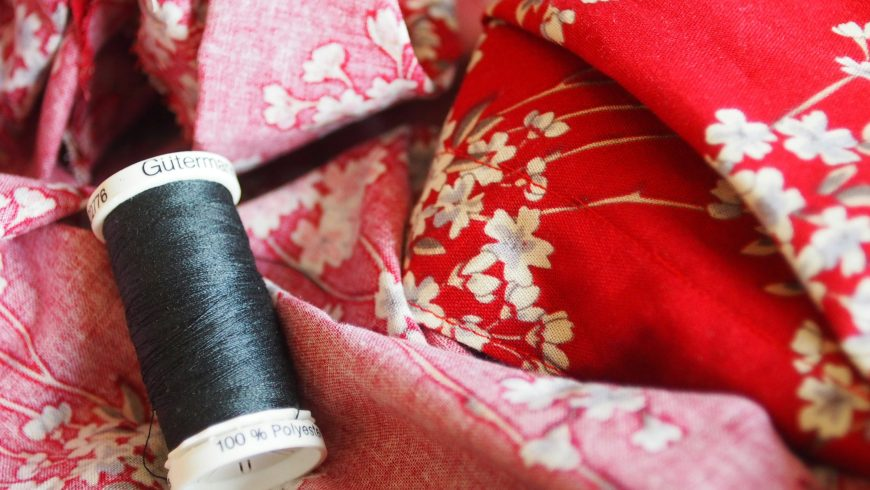
Over the years, the organization expanded its mission to operate in several areas related to sustainability, inclusion, and social development. Today, the program produces a wide range of items, including shopping bags, backpacks, drawstring bags, and beach bags, in addition to the life-saving blankets that are donated both nationally and internationally.
All products are made from textile leftovers recovered from companies, which are then reworked and reused.
Beyond environmental sustainability, the project also focuses strongly on social inclusion. The initiative involves people with intellectual disabilities or individuals in disadvantaged situations, who participate in every stage of production, from cutting and sewing to finishing, quality control, and packaging.
Within this project, innovation, sustainability, and inclusion work together toward a more equitable and responsible future.
Conclusion
Rifò, Comistra, Corertex, and Fody are just a few examples of startups and companies working toward a more sustainable and fair textile industry.
The fashion and clothing sector is often at the center of debate, as it is frequently associated with labor exploitation and poor environmental responsibility. However, initiatives like the ones described here demonstrate that with commitment, collaboration, and inclusion, even this industry can change.
In this context, Prato and Pistoia are already taking steps to transform their key economic sector, building a future and a present that is more sustainable and equitable.


