
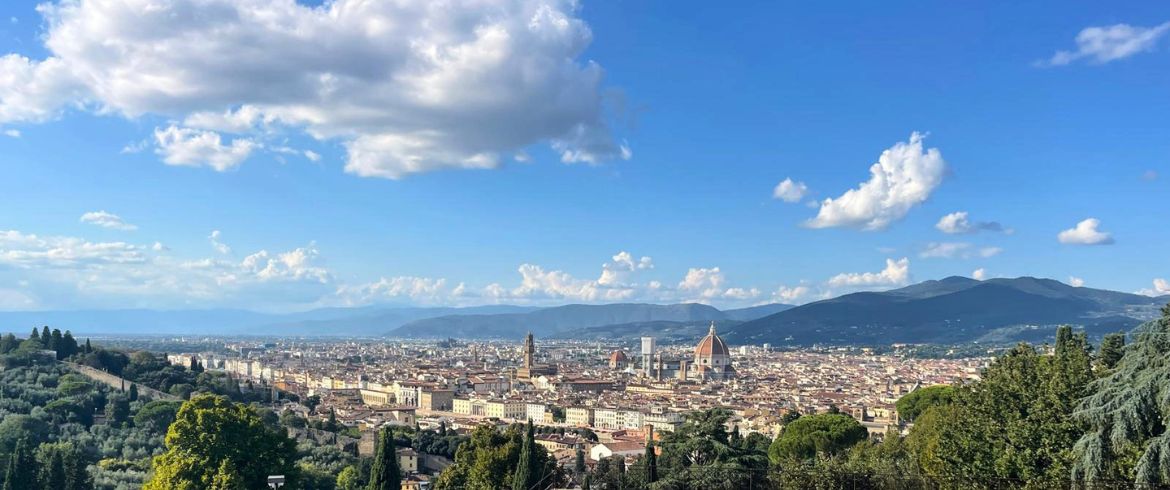
A sunny autumn weekend, a bicycle, and the desire to discover a different side of Florence. From the city’s squares to the Certosa del Galluzzo, via museums, country lanes and panoramic terraces, this itinerary surprised us with its variety of landscapes and experiences.
Florence is a city that never seems to stop surprising you. Even when you think you know it well, all it takes is a change of perspective to discover something new. That is exactly what we did during a sunny autumn weekend, hopping on our bikes and gradually leaving the busiest streets of the city centre behind.
That was the real surprise: in just a few hours, we travelled from Renaissance squares to the banks of the Arno, from museum galleries to little lanes winding through olive groves, eventually reaching an ancient monastery in the hills. And on the way back, we treated ourselves to some of the most beautiful views of the city.
A leisurely cycling itinerary that reveals a different side of Florence, to be enjoyed outdoors, combining culture, nature and pleasant stops along the way. Sometimes, all it takes is a bicycle to discover just how varied the landscape around an art city can be.
First stop: the Museo degli Innocenti and a coffee with a view
Our day began in the heart of Florence, cycling through the city centre to Piazza della Santissima Annunziata, one of the city’s most elegant squares.
This is where you will find the historic Ospedale degli Innocenti, designed by Filippo Brunelleschi in 1419. Today, the complex houses a museum exploring art, architecture and the history of childhood, with a permanent collection and temporary exhibitions well worth visiting.
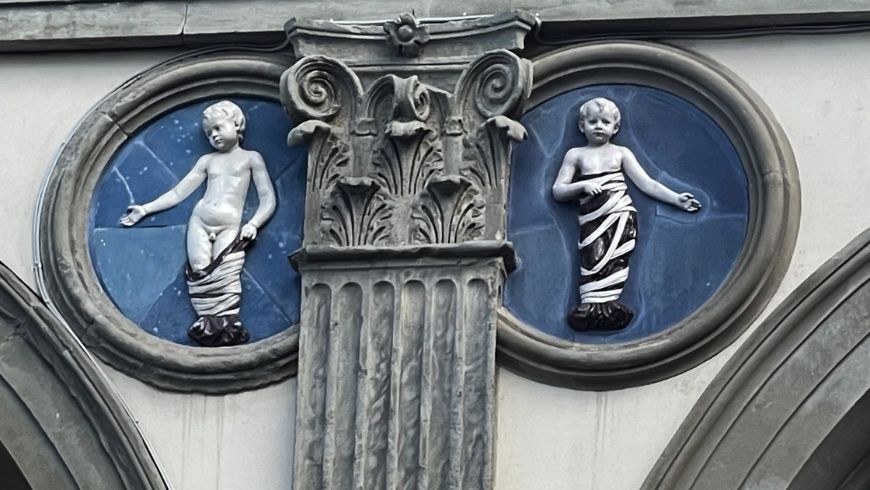
We stopped to see a photography exhibition: a perfect cultural break before getting back on our bikes. This is one of the things that makes cycling in Florence so special: you don’t have to choose between riding and visiting a museum. You can simply do both, following your curiosity.
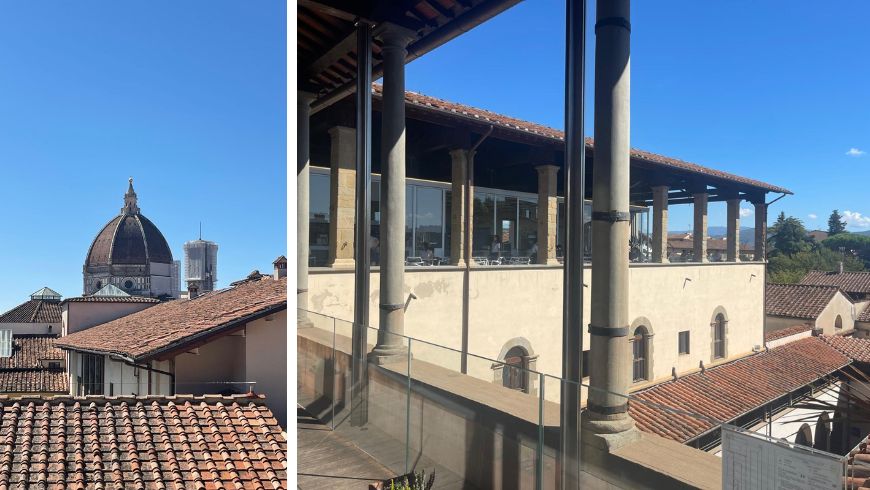
And then there is Caffè del Verone, a stop we recommend even if you are short on time. It is located in the historic loggia on the top floor of the building, once used as a drying area, and features a panoramic terrace overlooking Florence’s rooftops and monuments.
Sitting here for a coffee, with the city spread out before you, is a little luxury to enjoy before setting off again. The café is also accessible to visitors who are not visiting the museum.
Cycling through the historic centre, between squares and riverbanks
After our break, we got back on our bikes and rode through the historic centre. Cycling in Florence means constantly coming across views that make you want to stop: monumental facades, ancient streets, squares that look like theatrical sets, and corners where everyday life blends with the beauty of art.
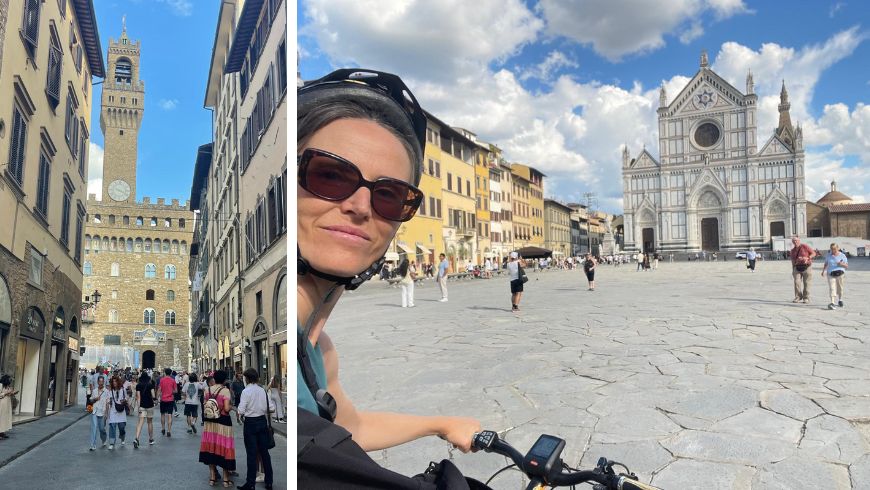
Highlights include Piazza della Signoria, with Palazzo Vecchio and its sculptures, and Piazza Santa Croce, dominated by the facade of the basilica.
Our advice is not to turn your visit into a race. In busier areas, it is best to get off your bike and continue on foot, respecting pedestrian zones and watching out for traffic.
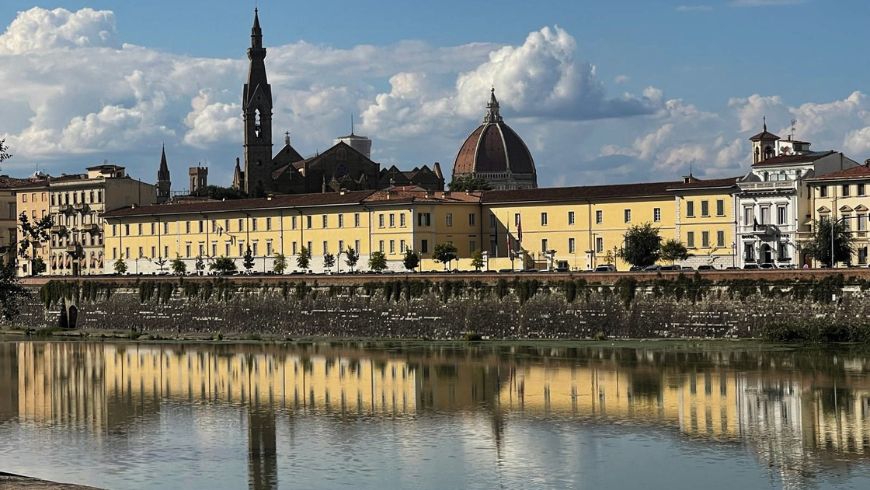
Then the city changes pace. Once we reached the riverbanks, the ride became more relaxed as we followed the Arno, passing bridges, reflections on the water and unusual views that invite you to discover Florence from the Arno, away for a moment from its best-known viewpoints.
From the city streets to the Certosa del Galluzzo
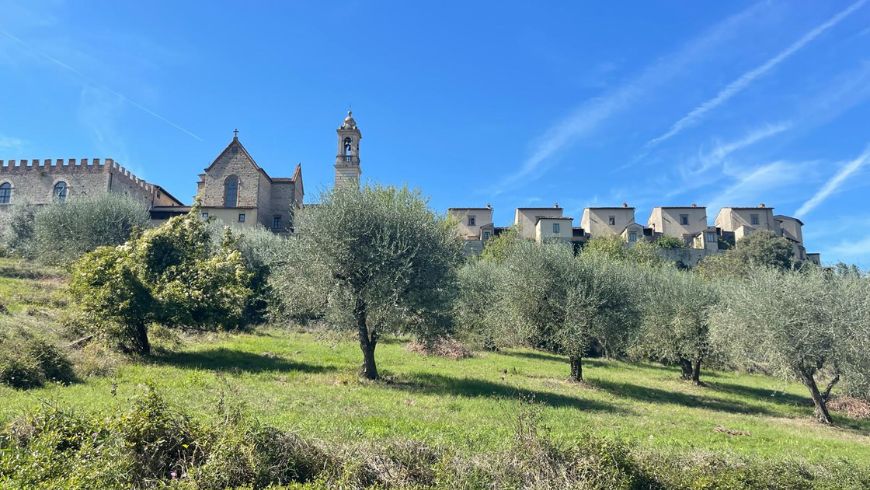
Leaving the city centre heading south, we made our way towards Porta Romana and the Galluzzo district, where the urban landscape gradually begins to change.
This is where the most surprising part of our itinerary begins: Florence seems to recede into the distance as gardens, stone walls, olive trees and hilly roads come into view. It is a landscape that reveals an authentic side of Tuscany, waiting to be discovered along the secondary roads and in the villages surrounding the city.
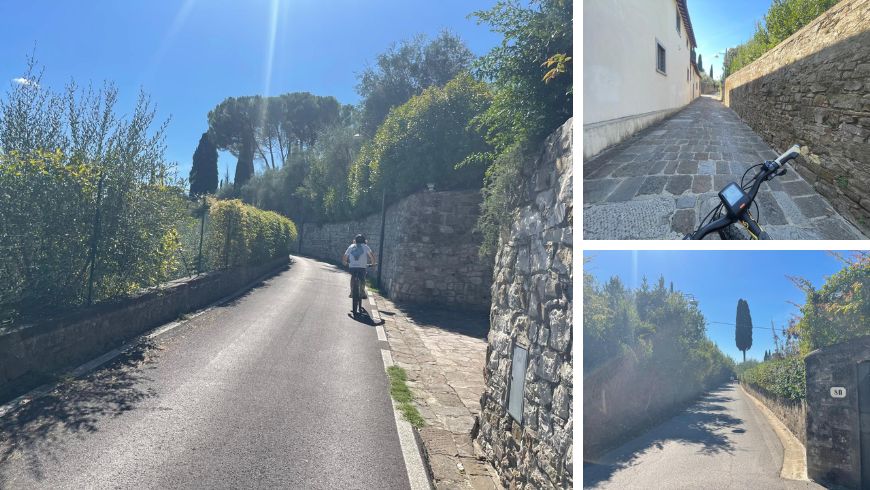
If you are looking for a less busy route, one option is to head towards the Due Strade area and continue along Via del Podestà, a historic road lined with walls and houses. From here, you reach Piazza Acciaiuoli, in the heart of the Galluzzo district, where we came across a lively market.
Our destination was the Certosa del Galluzzo, one of the most fascinating monastic complexes around Florence. Founded in the 14th century at the behest of Niccolò Acciaiuoli, it stands on the summit of Monte Acuto and preserves a rich heritage of art, architecture and spirituality.
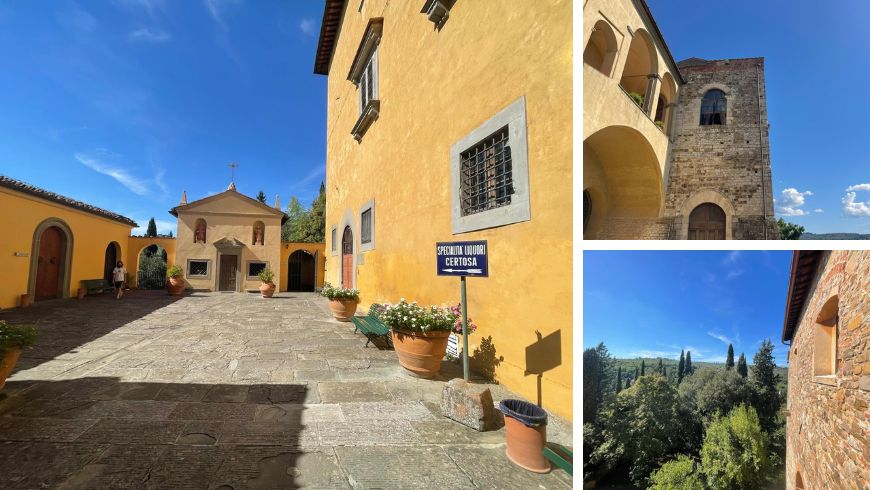
Passing through its walls feels like entering a different world. There are graceful cloisters, monastic spaces, a church rich in works of art and the famous lunette frescoes by Pontormo, painted in 1523 and among the complex’s most precious artistic treasures.
A visit offers the chance to discover a place that often remains off the beaten track, despite being just a few kilometres from the city centre.
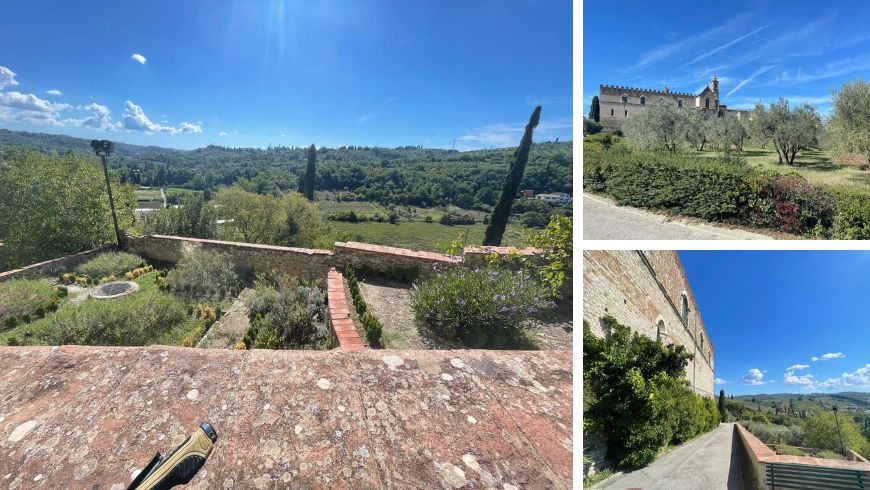
We also loved the setting: surrounded by rolling hills, the Certosa is a wonderful place to stop, enjoy the sunshine and catch your breath before the return journey.
Good to know: the interior can be visited on guided tours lasting around an hour, subject to the schedule set by the community responsible for the complex. Before setting off, check the official Certosa di Firenze website.
The scenic return: San Miniato al Monte and Piazzale Michelangelo
After our visit, the day was far from over. We still had the ride back towards Florence ahead of us, along a route offering some of the city’s most beautiful views.
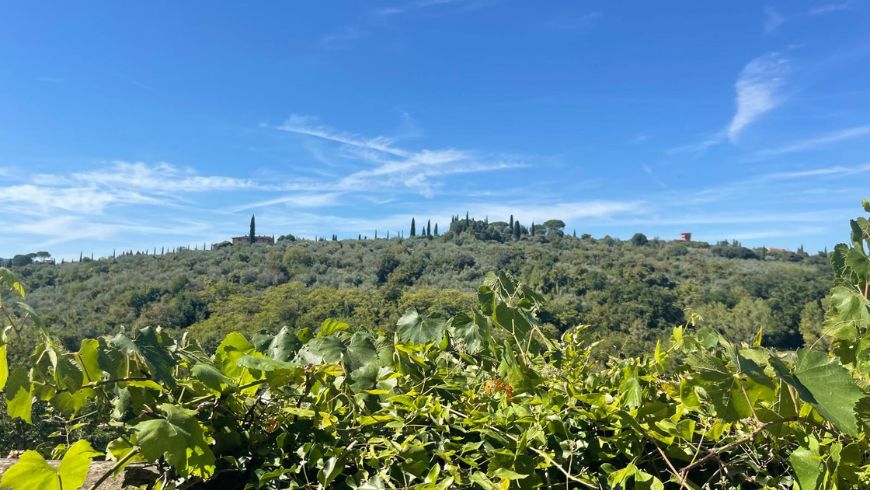
One option for returning from the Galluzzo is to take the secondary roads towards Cascine del Riccio and the surrounding hills, with uphill stretches through olive groves and past stone walls. This is a more demanding alternative, best suited to cyclists who still have energy to spare and are comfortable riding on hilly terrain. An e-bike can make the climbs more manageable.
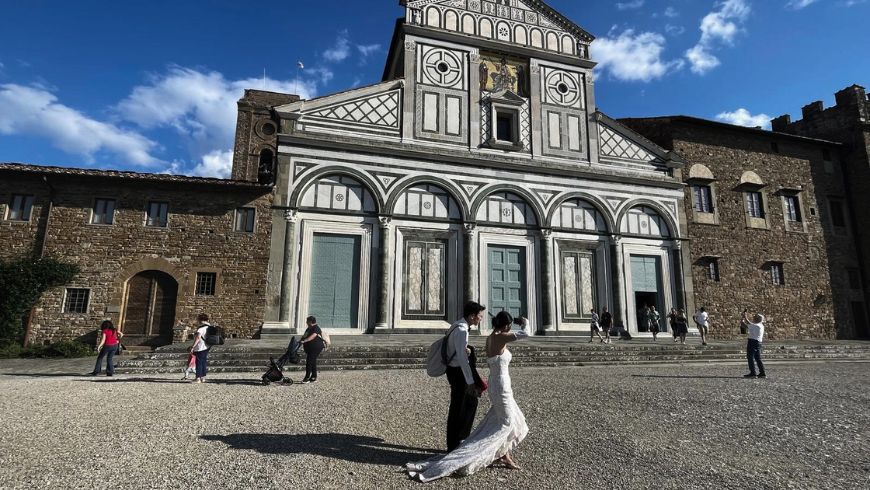
Once you reach the Viale dei Colli area, it is well worth heading towards San Miniato al Monte, one of Florence’s most beautiful basilicas. Its marble facade, peaceful atmosphere and panoramic setting make it a special stop, quite different from the busier places in the city centre.
From here, your gaze takes in the rooftops, towers and domes of the city. It is a viewpoint that allows you to take in Florence as a whole, while also appreciating how close the countryside is.
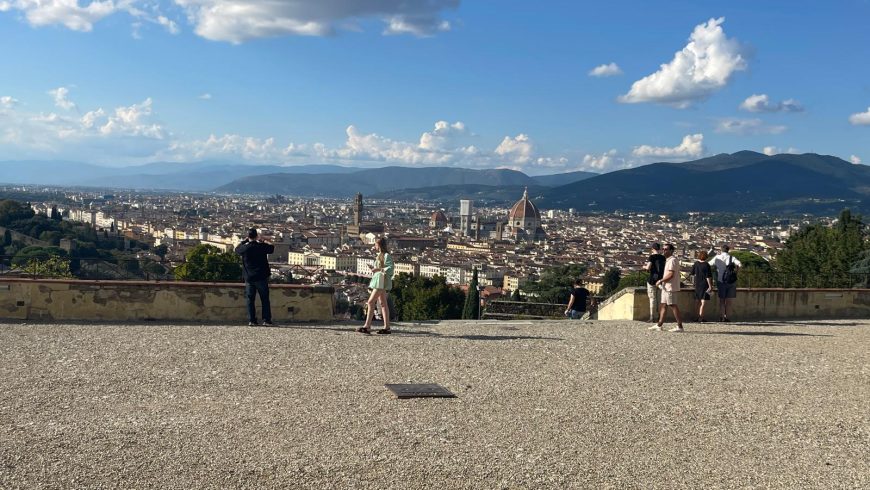
A little further downhill lies Piazzale Michelangelo, the famous viewpoint overlooking the Arno and the historic city centre. It is a popular stop, but remains one of the most moving places to admire the city before heading back down towards the riverbanks.
The descent requires care, especially on steep sections and where pedestrians and traffic are present. Once back in the city centre, however, you will feel as though you have travelled through several different landscapes in a single day.
Florence by bike: a different way to discover the city
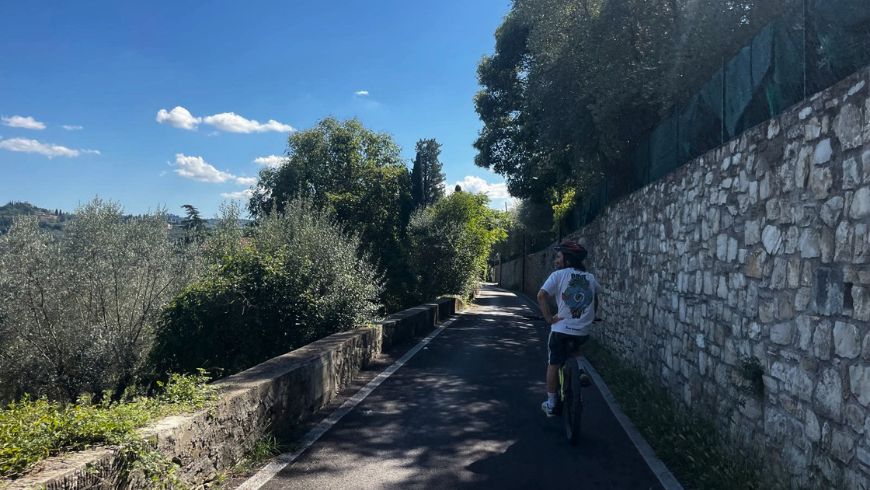
What struck us most was the variety of the experience. On a single itinerary, we encountered art, history, architecture, rural landscapes and city views, without having to travel far.
Cycling allows you to experience the transitions between these different worlds: the noise of the central streets gives way to the flowing river, then to the hill roads and finally to the views from above. Every stop has its own character and its own pace.
It is also a way to experience the city more mindfully, stopping wherever something catches your interest and leaving room for unexpected discoveries. A museum, a panoramic café, an ancient monastery: you do not need to cover great distances to enjoy a trip full of experiences.
For anyone choosing a more sustainable holiday, the bicycle is a great ally, especially when combined with train travel to Florence and an eco-conscious place to stay where you can set off directly on two wheels. Of course, the route requires some planning: not all roads have cycle lanes, and some climbs can be demanding.
But if you enjoy combining culture and nature, discovering lesser-known corners and seeing a city from different perspectives, Florence by bike might surprise you just as much as it surprised us!
For a longer ride: the cycling loop around Florence
If you would like to turn your outing into a full day of cycle touring, you can choose a much longer route: the cycling loop around Florence, part of the Strade Zitte project.
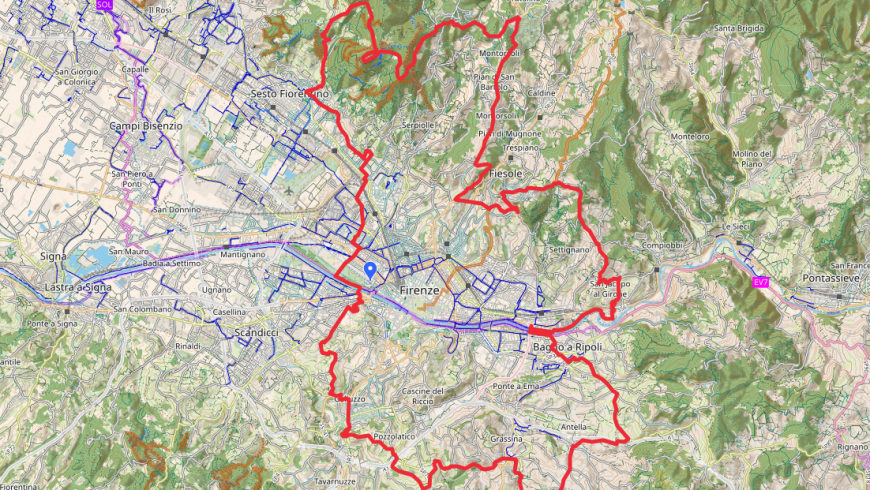
The route described by Visit Tuscany covers around 83 kilometres and is demanding both physically and technically. Starting from Parco delle Cascine, it passes through landscapes and places of great interest, including the Medici villas of La Petraia and Castello, Monte Morello, the Villa Demidoff Park in Pratolino, Fiesole and the Certosa del Galluzzo, before returning to Florence.
The route combines challenging climbs, descents, secondary roads and cycle paths. A road bike is suitable for much of the itinerary, while a gravel bike can be useful on more difficult sections. If you prefer to tackle the climbs with less effort, consider an e-bike, checking its range and the total elevation gain beforehand.
Our advice? If you have a weekend to spare, choose a shorter route and leave yourself time for a visit, a sunny break and a few unplanned detours. In Florence, even a few hours of cycling can become a little journey through different worlds.
Cover photo: Silvia Ombellini
 B&B La Martellina – Green Bed & Breakfast in Fiesole, Firenze, Toscana, IT


