
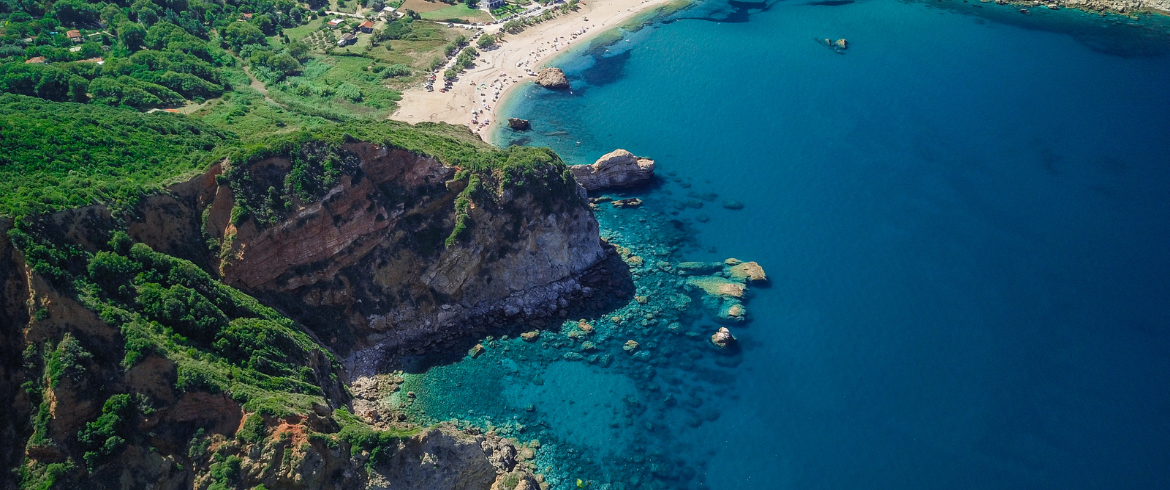
There is the Greece everyone knows, the Greece of white-and-blue islands, crowded beaches in August and sunsets over the sea. And then there is another Greece, greener and more discreet, where mountains stretch almost down to the coast, roads wind through forests and olive groves, and small villages still move at a slower pace, far from the frenzy of the most popular destinations.
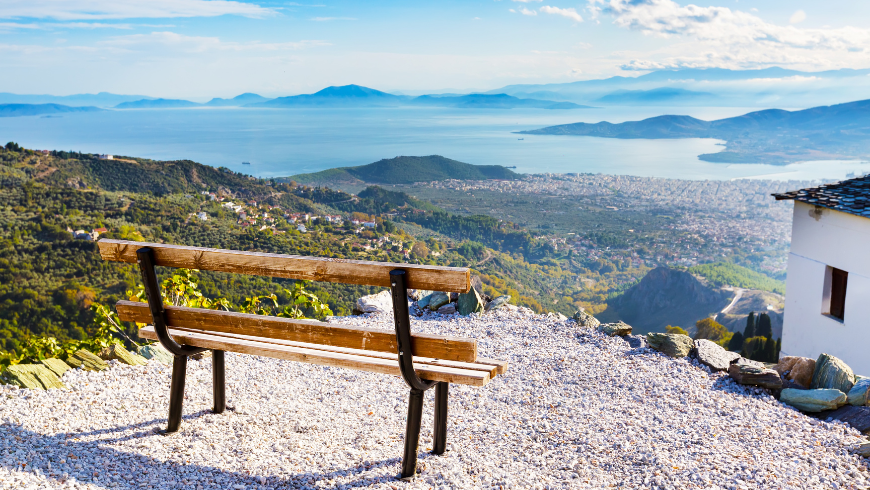
This is Pelion, a peninsula in Thessaly overlooking both the Aegean Sea and the Pagasetic Gulf. It is a surprisingly varied landscape where, within just a few kilometres, forests of chestnut trees give way to beaches, mountain villages to coastal bays. And in the southern part of the peninsula, overlooking the blue Aegean, lies Kastri, a small coastal village where the Mediterranean landscape and everyday life seem to follow a rhythm of their own.
Pelion: Where the Mountains Meet the Aegean Sea
Pelion is a mountainous peninsula in north-eastern Greece, in the region of Thessaly. Its landscape is different from the Greece we normally associate with summer holidays: here, green is the dominant colour.
The slopes of Mount Pelion, which rises to 1,624 metres, are covered with forests, especially chestnut trees, beech and plane trees. Closer to the coast, olive trees, cypresses and Mediterranean vegetation take over. Between the hills, small bays and beaches open up, often reached by scenic roads or ancient paths.
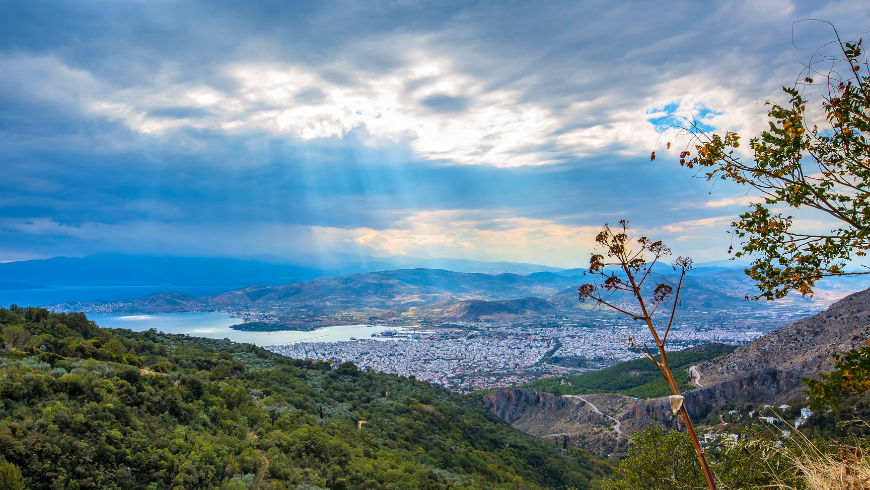
It is precisely this meeting of mountains and sea that makes Pelion so special. You can spend a day walking through the cool forest and, shortly afterwards, find yourself on a beach overlooking the Aegean. Or stop in one of the area’s traditional villages, sit beneath a plane tree and taste some local specialities. And, surprisingly, you can even ski here in winter: on the slopes of Pelion lies the Agriolefkes ski centre, offering unusual views towards both the Pagasetic Gulf and the Aegean Sea.
Pelion is also deeply connected to Greek mythology. According to tradition, this was the land of the Centaurs, and it was here that the centaur Chiron taught some of the most important heroes of Greek mythology, including Achilles and Jason. The Centaurs belong to mythology, of course, but their presence still contributes to the image of a mountain closely associated with nature, forests and herbs.
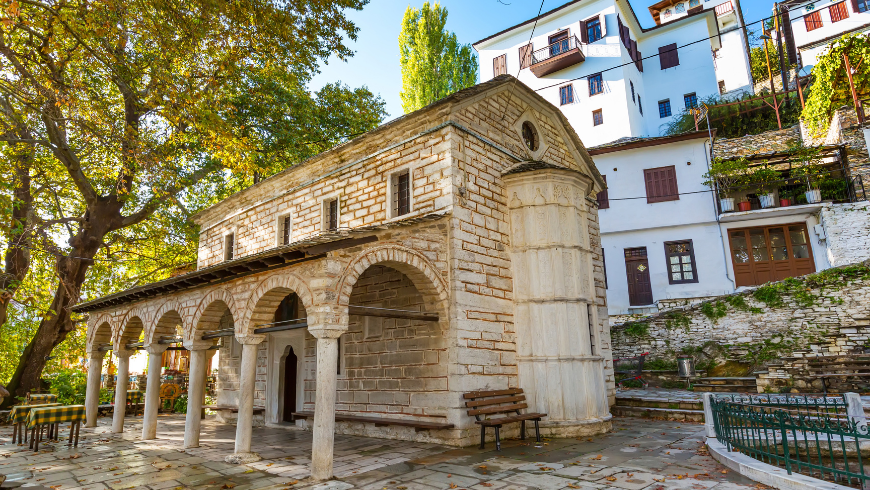
The villages are another defining feature of the landscape. Stone houses, small squares, fountains and cobbled streets climb the mountain slopes. You can visit Makrinitsa, Portaria and Tsagarada, among the best known. Others, especially in the south, retain a smaller scale and a closer connection with life along the coast. And it is towards the south that the landscape changes once again, becoming more Mediterranean and opening directly onto the Aegean Sea.
Kastri: The Small Greek Village Where Time Slows Down
The road through southern Pelion winds between olive groves, hills and views of the sea before reaching Kastri, a small coastal village overlooking a sheltered bay. Here you can forget about mass tourism. You won’t find the succession of large resorts, shops and bars typical of the busiest seaside destinations.
A few houses, a beach surrounded by greenery and the sea stretching out in front of you. Here, the day can truly follow a different rhythm. Kastri Beach combines sand and pebbles and is known for its clear waters. During the summer, people staying in other parts of Pelion visit here, but it retains an intimate and peaceful atmosphere.
It is easy to imagine a day here with no plans. A morning swim, a walk among the olive trees, a simple lunch and a few hours spent in the shade. Then the sea changing colour in the afternoon and dinner as the light slowly fades over the bay.
Things to Do in Kastri and surroundings: Sea, Walks and Local Life
From the village, you can follow the coast towards Platanias, stopping for lunch at a taverna or taking a walk around its small harbour. From there, you can continue towards Mikro, one of the area’s beaches, following a coastal route with beautiful views of southern Pelion.
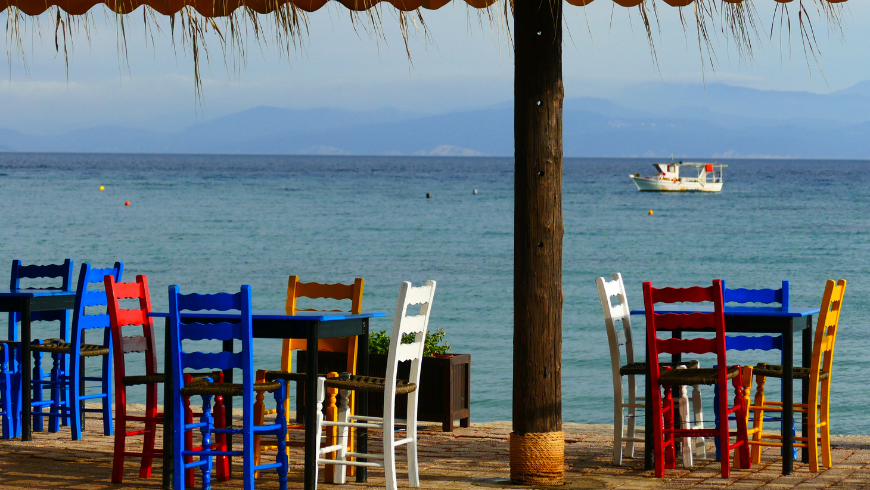
The sea also invites you to explore it. The clear waters around the bay are ideal for snorkelling and activities such as SUP and kayaking, offering a different perspective of the coastline.
For those who enjoy walking, the landscape around Kastri offers paths through olive groves and Mediterranean vegetation. You don’t necessarily need to plan a long hike. Sometimes simply following a quiet country road or a path is enough to find yourself looking out over the sea.
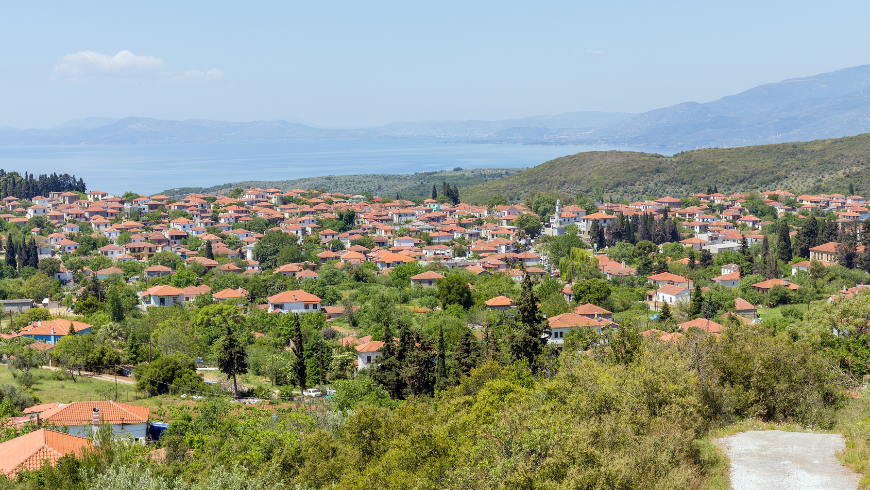
To discover a more everyday side of southern Pelion, it is also worth heading to Argalasti, the area’s main village. Its weekly Saturday market brings together local producers and residents from the surrounding villages.
Where to Stay Eco-Friendly in Kastri: Among Olive Trees, Mediterranean Scents and the Sound of the Waves
Choosing where to stay in Kastri also means choosing how you want to experience the place. Here, a property surrounded by nature makes sense: somewhere where you can continue, after sunset, the same slow relationship with the landscape that defines the day.
This is exactly the spirit of Peli Kastri Guesthouse & Retreats, a small guesthouse directly on the beach and surrounded by an ancient olive grove. The carefully restored house has eight rooms, some with balconies and all with direct or indirect sea views. The interiors combine Greek cotton, handcrafted details and carefully chosen furnishings to create simple, relaxing spaces without losing the character of the place.
Peli Kastri Guesthouse: An Eco-Friendly Retreat by the Sea
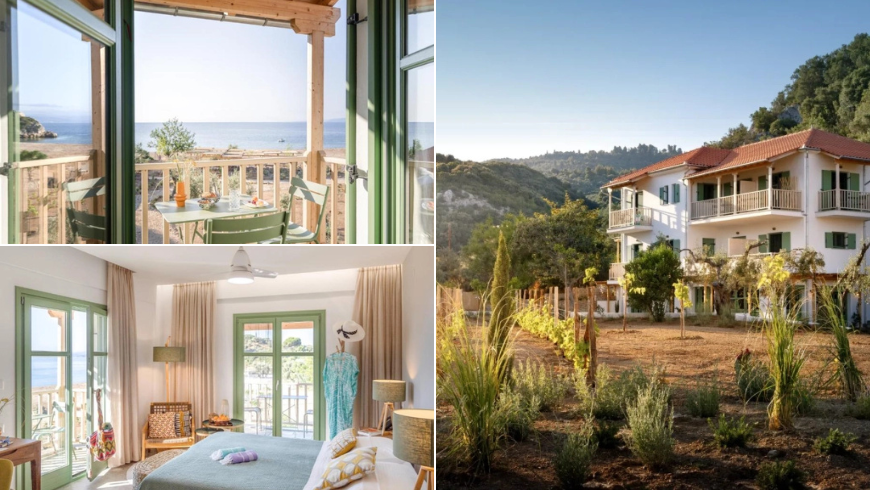
Perhaps the most interesting part, however, is not inside the rooms but outside. Behind the guesthouse lies an ancient olive grove, with shady corners where you can read, rest or simply look out towards the sea. The garden also contains citrus trees and aromatic herbs, while in season you can pick some fruit directly from the trees. At the heart of the olive grove you will find a terrace dedicated to meditation and yoga, overlooking the bay: a space that perfectly reflects the philosophy of this place, where a stay is not only a break from everyday life but also an opportunity to rediscover a slower rhythm.
Another important space is Mazi, which means “together” in Greek. It is the guesthouse’s communal area, where a generous Greek breakfast is served and guests can meet, chat or simply relax. A shaded terrace and a lounge complete the shared spaces.
Sustainability is also part of the way the guesthouse relates to its surroundings. During construction, the hosts minimized the impact on the surrounding environment. Also the guesthouse has its own biological wastewater treatment system. Personal care products are also sourced from local producers.
But there is one detail that perhaps describes Peli Kastri better than any words. The sea is right in front of the house. There is no need to take the car to the beach or search for parking. Just step outside and walk towards the water.
A Restorative Holiday in Southern Pelion
Pelion is not a destination to be ticked off in a few days, but a place to experience slowly. You can alternate a day by the sea with a walk among the olive trees, visit a mountain village or simply stop and take in the landscape.
In Kastri, this rhythm becomes even more apparent. The small size of the village, the surrounding nature and the proximity of the sea invite you to spend a holiday made up of simple things, but experienced fully allowing you to rediscover yourself and regenerate.
How to Get to Kastri and When to Visit
Kastri is located in southern Pelion, around 60–70 kilometres from Volos, the main city in the region. A car is the most convenient way to reach the village and explore the peninsula freely, especially if you want to combine days at the beach with visits to traditional villages and walks.
Another option is to arrive via the island of Skiathos, easily reachable from several European destinations during the summer season. From Skiathos, you can continue by sea towards the Pelion coast; connections and transfers vary depending on the season and sea conditions.
The best time to fully enjoy Kastri and its coastline is summer, when the sea takes centre stage. If you prefer walking and exploring the area in milder temperatures, late spring and early autumn can be an interesting choice and are generally quieter.
Once you arrive, it is worth remembering that Kastri is a small village. Services are limited, so for shopping or a wider choice of restaurants, it is useful to travel to Platanias or Argalasti. These limits need to be taken into account, but they are part of the experience. You come here for the sea, nature and the chance to rediscover a slower rhythm.