
Beyond Bangkok and the Beaches
Most travelers see Thailand through the window of a tour bus – Bangkok, Phuket, maybe a quick stop in Chiang Mai. But beyond the country’s famous destinations, a different kind of tourism is taking root in villages where local communities play a central role in deciding how visitors experience their home.
These community-based tourism (CBT) villages offer a more personal alternative to conventional sightseeing. Rather than simply consuming a destination, travelers can stay with local families, explore traditional landscapes with community guides, learn about local crafts and food, and contribute directly to the places they visit.
In Bang Rong, a mangrove village in northeastern Phuket, residents run boat tours, craft sales, and community-owned eateries – creating opportunities for tourism income to remain within the community while encouraging visitors to discover a very different side of Phuket. The village’s community-based tourism model has also received national recognition through the Responsible Thailand Awards.
In Chiang Rai, the Chiang Saen Social Tourism Community Enterprise and Ban Tha Khan Thong Homestay have both won national Thailand Tourism Awards.
Further south, in Yala province near the Hala-Bala Wildlife Sanctuary, Chulabhorn Pattana 9 has developed its own community-based tourism activities, with younger residents increasingly involved in welcoming visitors and sharing local knowledge.
Other initiatives offer a different but complementary approach to sustainable travel. In northeastern Thailand, Suwan Farmstay gives visitors the chance to experience organic farming, permaculture and rural family life firsthand.
Reaching these places is the tricky part. Public transport rarely goes there, and group tours tend to skip them entirely – mostly because there’s no profit in a village that only fits a handful of guests a week. That’s part of why they’ve stayed authentic.
What Sustainable Travel Actually Looks Like Here
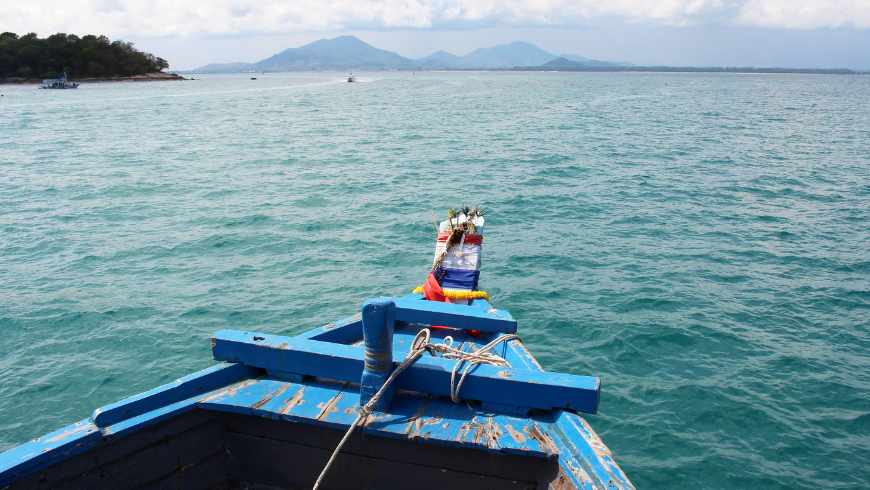
Community-based tourism only works when local residents have a meaningful role in both the decisions and the economic benefits generated by tourism. For travelers, that can translate into simple but memorable experiences: a meal prepared by a local family, a boat trip through a mangrove forest, a craft workshop, or a walk led by someone who has lived in the area all their life.
A few practical choices can make a real difference:
- Book directly with the community or a CBT cooperative where possible. This can help ensure that a larger share of what you spend stays within the destination. Many villages also rotate homestay families so that income – and the responsibility of hosting – is shared more widely.
- Ask before photographing people at work. Weaving, farming, and fishing are livelihoods, not performances. A little respect can make the encounter feel like a genuine exchange rather than a photo opportunity.
- Follow the village’s pace, not your itinerary’s. Harvest season in the north or replanting days in mangrove communities are often tied to weather and tides, not a fixed calendar. Allowing some flexibility can make the experience both more rewarding and less intrusive.
- Buy handmade over mass-produced. Textiles, baskets, and food sold directly by residents can provide a simple way to support local skills and keep tourism spending within the community.
- Dress and behave with local customs in mind – conservative dress away from beach areas, shoes off in homes and temples, and the usual courtesies around monks and religious spaces.
- Skip the sweets-for-kids instinct. It may feel generous, but giving money or sweets directly to children can unintentionally encourage begging. Supporting community initiatives, local schools, or established organizations is generally a more constructive way to contribute.
None of this requires special expertise. The most important thing is to slow down, listen, and allow the community to set the terms of the experience.
Four Ways to Discover Sustainable Thailand Beyond the Main Tourist Routes
One of the strengths of community-based tourism is that it can take travelers away from Thailand’s best-known attractions and into landscapes that rarely appear on conventional itineraries.
Bang Rong: Mangroves and Community Life in Phuket
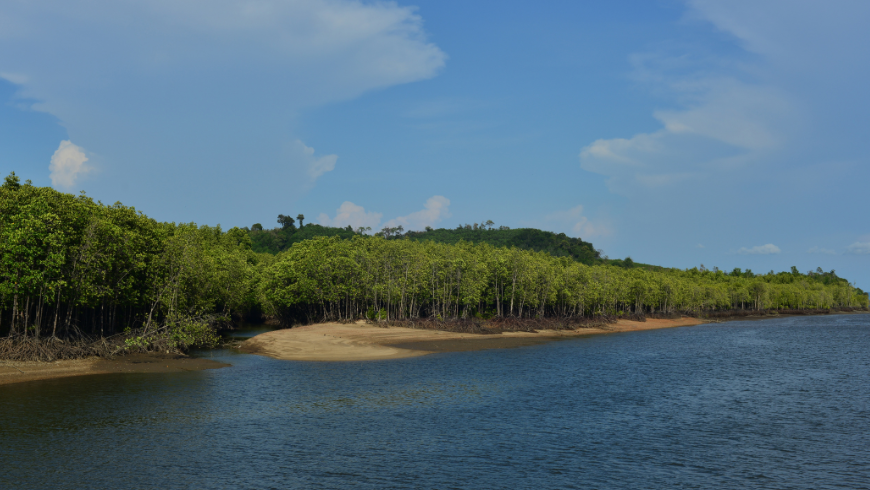
Phuket is usually associated with beaches, resorts, and nightlife, but Bang Rong offers a very different perspective. The village is surrounded by mangroves and coastal ecosystems, and local residents have developed tourism activities around their natural environment and traditional livelihoods.
A community-led boat trip can be a way to explore the mangrove landscape while learning about the people who depend on it. Local food, crafts, and community-run businesses can further connect tourism with the everyday economy of the village.
For travelers staying in Phuket, visiting Bang Rong can therefore be more than a day trip: it is an opportunity to see how tourism can support communities outside the island’s main resort areas.
Chiang Rai: Homestays and Local Experiences
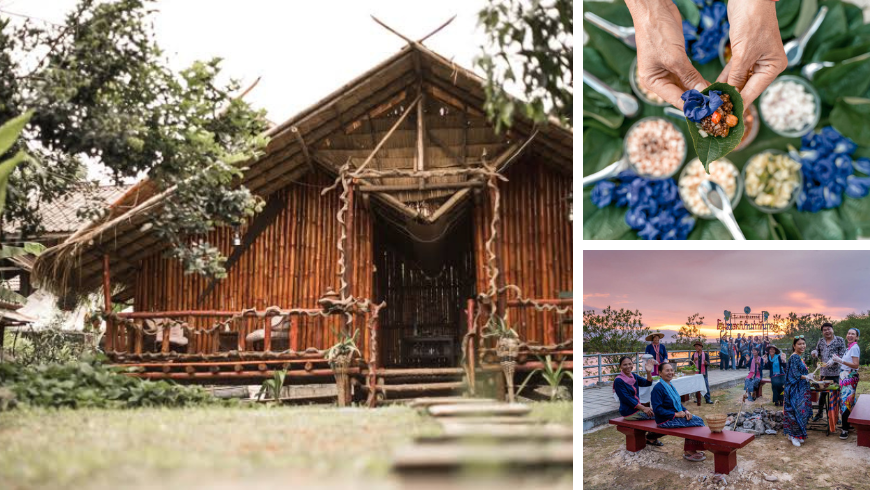
In northern Thailand, community-based tourism can offer a closer connection to rural life and local traditions. The Chiang Saen Social Tourism Community Enterprise and Ban Tha Khan Thong Homestay are examples of initiatives that have received national recognition.
Choosing a community-run homestay rather than a conventional hotel can change the pace of a trip. Instead of moving from one attraction to another, visitors have more opportunities to share meals, learn about local traditions and understand the landscape from the perspective of its residents.
This is also where slow travel becomes particularly meaningful: spending more time in one place can create a deeper experience while spreading tourism income beyond the country’s major cities and resort destinations.
Chulabhorn Pattana 9: Tourism and the Hala-Bala Forest
In Yala province, close to the Hala-Bala Wildlife Sanctuary, Chulabhorn Pattana 9 offers another example of a community developing its own tourism activities.
The area is surrounded by some of Thailand’s richest forest ecosystems, making responsible visitor management particularly important. Community-based tourism here can provide an additional source of income while giving visitors the opportunity to learn about local life and the natural environment.
For travelers interested in nature and conservation, destinations like this highlight an important principle: sustainable tourism is not only about protecting landscapes, but also about ensuring that the people who live alongside them can benefit from tourism.
Suwan Farmstay: Sustainable Rural Life in Isaan
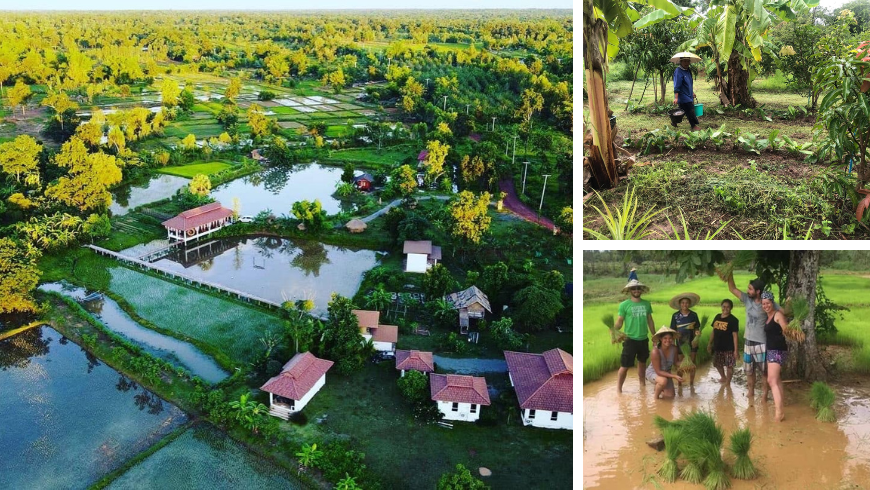
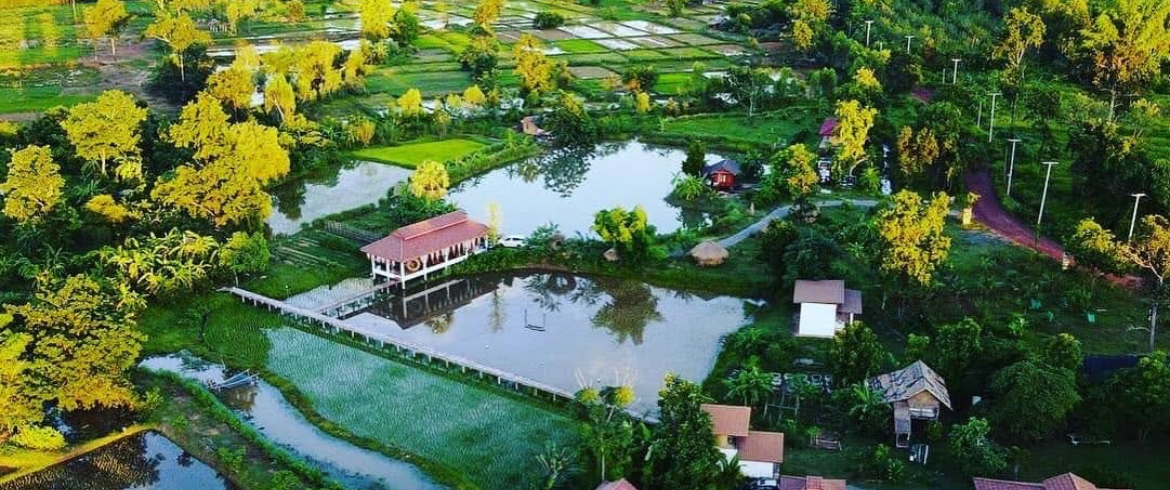
In northeastern Thailand, Suwan Farmstay offers a hands-on approach to sustainable rural tourism. Set on more than three hectares near Nong Khai, the working organic farm combines permaculture, traditional rice paddies, a tropical food forest and natural-material bungalows.
Guests can choose between simply enjoying the peaceful farm and joining daily activities such as gardening, cooking, seed conservation and natural building. Meals are prepared with produce from the farm, while rainwater collection, solar energy and composting are part of its low-impact approach.
For travelers interested in seeing how sustainable practices can become part of everyday rural life, the farm offers a slower alternative to conventional sightseeing. Suwan Farmstay is also listed on Ecobnb.
Getting There: Transport Options for Off-the-Grid Villages
Because most eco-villages sit well outside regular bus and rail routes, transport tends to be the main planning headache. A few common approaches:
- Joining a CBT-arranged tour, where the community itself organizes transport from the nearest town – often the most seamless option, and it keeps another layer of spending local.
- Hiring a local guide or driver, especially in areas like the northern hill country, where roads can be narrow and unfamiliar to visitors.
- Public buses to a regional hub, followed by a short taxi or songthaew ride for villages close enough to a main road.
- Self-driving, which mainly makes sense in areas where public transport genuinely doesn’t reach – a car gives the flexibility to check in with a village a day or two ahead and adjust the route around whatever’s actually happening that week. For travelers choosing this option, arranging a rent a car in Thailand in advance can make it easier to reach more remote communities without losing valuable time to logistics.
Which option makes sense depends entirely on the specific villages on the route – some are a short walk from a bus stop, others genuinely require your own wheels.
Final Thoughts
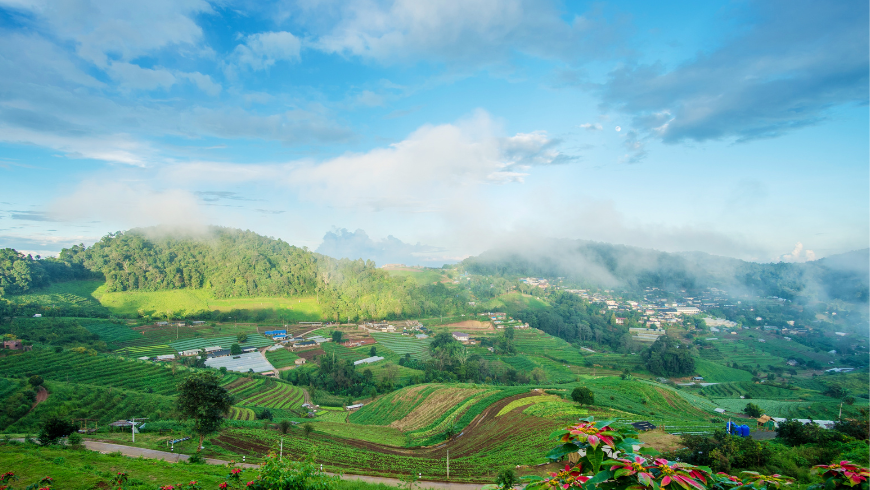
Thailand’s eco-villages aren’t going to show up in glossy brochures anytime soon – and that may be part of their appeal.
Community-based tourism offers a different way of exploring the country: slower, more personal, and more closely connected to the people and landscapes that make each destination unique.
Whether travelers reach these communities by public transport, a locally arranged transfer, a hired driver, or – when necessary – their own car, the goal is not simply to reach another attraction. It is to create a more direct connection between the visitor, the destination and the people who live there.
For travelers willing to trade a little convenience for a more grounded experience, Thailand’s eco-villages offer an opportunity to discover a side of the country that conventional tourism often overlooks – while helping tourism become a source of local opportunity rather than simply a source of visitors.
Cover image: Suwan Farmstay offers a hands-on experience of sustainable rural life in northeastern Thailand.