
New York City spent more than fifty years piling its garbage onto Staten Island. At its worst, Fresh Kills took in 29,000 tons a day, barge after barge, and residents along the West Shore Expressway could smell it with the windows up. Now it’s a park. Kayakers, ospreys, sweeping grassland, the whole postcard, and once every section opens it’ll cover nearly three times the footprint of Central Park.
This keeps happening.
Some of the best new destinations for nature-minded travelers used to be places your parents told you to hold your breath driving past. Getting from then to now takes years of hazardous waste cleanup, done by crews nobody photographs for the brochure.
Three Places That Used to Be Off-Limits
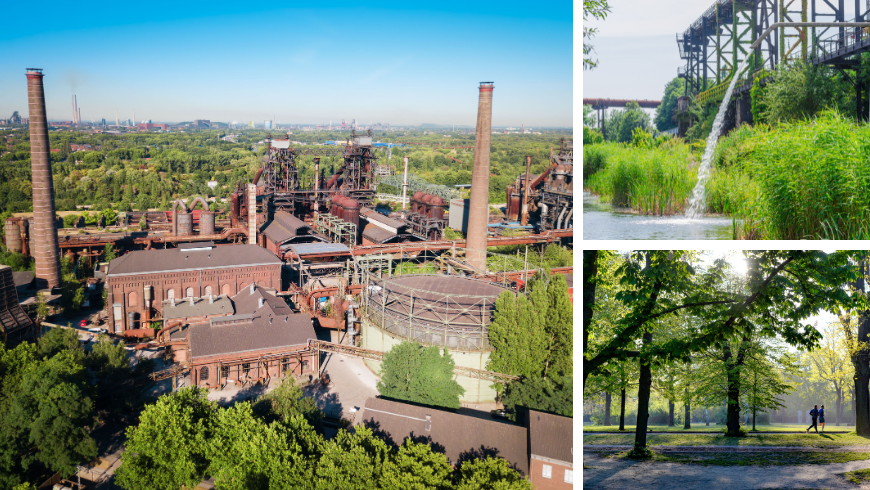
Duisburg, Germany, first. Landschaftspark Duisburg-Nord was a working ironworks until 1985, and when it closed, the designers made a strange call: leave the blast furnaces standing, let the birches grow through the rails. Divers now train inside a flooded gasometer. Climbers work routes bolted into old ore bunkers. At night the whole rusting complex glows pink and green under a light installation, which sounds tacky and somehow isn’t.
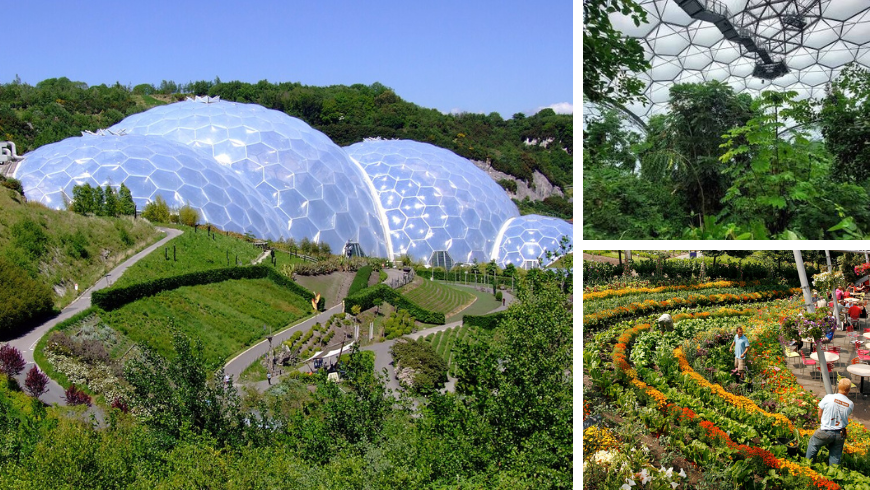
Cornwall’s Eden Project went the other way, building forward instead of preserving back. The site was an exhausted china clay pit in 1998, a crater so bare it had no topsoil at all; they trucked in 83,000 tonnes of the stuff, made partly from composted green waste. Its biomes now hold the largest indoor rainforest anywhere and pull roughly a million visitors a year.
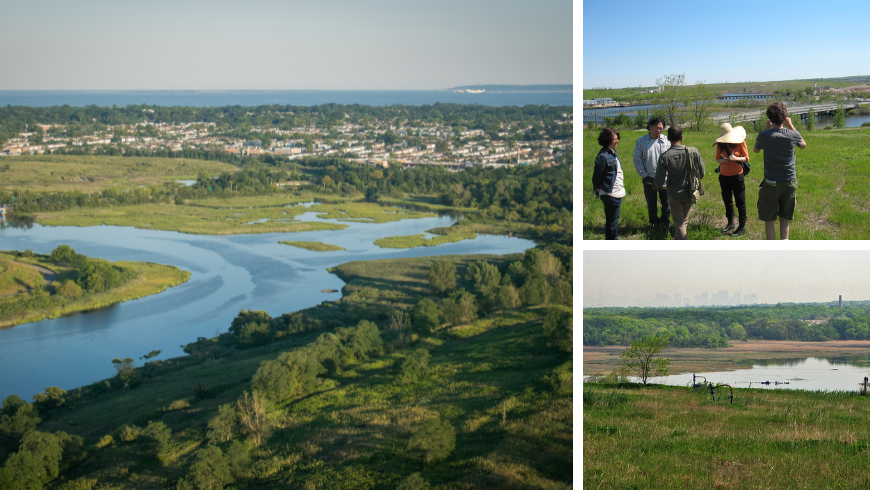
And Fresh Kills? The buried waste sits under an engineered cap, vented for landfill gas, ringed with monitoring wells checked on a rolling schedule while native meadow takes hold overhead. Staff still call the four big hills North, South, East and West Mound, which tells you how recently all this was engineering rather than landscape. Each of these places fits the idea of regenerative tourism, travel that helps a landscape recover instead of merely doing less harm to it.
The Work Nobody Photographs
Before anyone marks a trail, somebody has to deal with what’s in the ground. Heavy metals. Solvents. Asbestos, leachate, drums of who-knows-what from decades back. Slow work, technical, sometimes dangerous, and regulated accordingly.
US workers who handle uncontrolled hazardous waste have to complete hazardous waste operations training before setting foot on a contaminated site. Toxicology, respiratory protection, decontamination, air monitoring. The rule dates back to the cleanup disasters of the late 70s and 80s, when workers went into chemical dumps like Love Canal with little beyond gloves and good intentions, and some of them paid for it with their health.
Why should a traveler care about a worker-safety regulation? Because a site remediated properly, by qualified crews keeping documented records, is a site you can still walk on safely twenty years later. Cheap or rushed cleanups resurface. Sometimes literally, when a cap erodes or contamination migrates toward the creek everyone kayaks on.
The pipeline of candidate sites is enormous. The EPA counts more than 450,000 brownfield sites in the US alone, old industrial and commercial land where contamination complicates reuse. Most will end up as housing or warehouses. A growing share won’t. Those become the wetland boardwalks and trail networks eco-travelers go looking for.
Restoration as a Travel Experience
Destinations that wear their scars openly get a different reaction from visitors. Duisburg-Nord never pretends it was always a park; the furnaces are the attraction. Fresh Kills runs tours that explain the gas-capture system under your shoes. People seem to trust that honesty more than manufactured perfection, or at least they remember it longer.
Policy has been moving the same way. The UN Decade on Ecosystem Restoration, running through 2030, pushes governments to treat degraded land as an asset waiting to be recovered rather than a write-off, and tourism gives that recovery an income stream. Entry fees and overnight stays keep paying for monitoring and habitat work long after the original cleanup budget is spent.
The scenery, for what it’s worth, isn’t the main thing these places offer. The proof is. Stand inside the Eden Project’s rainforest biome, in a pit that was bare rock the year Google was founded, and you leave with a recalibrated sense of what’s recoverable. I’d trade another pristine viewpoint for that feeling.
School groups get it too. Kids visit Fresh Kills and study landfill engineering and grassland ecology in the same afternoon, which no textbook manages as vividly. A few restored sites run citizen science programs, visitors logging bird sightings or water readings that go straight into the monitoring records.
What Travelers Can Do
A few habits make a visit count for more.
Book the tours that cover the remediation story alongside the wildlife; the fees usually go to park operations. Check access first, though. Fresh Kills currently opens mainly through scheduled events, so an unplanned visit can mean a locked gate. Stay near the site if you can, since many of these projects sit in post-industrial towns that need the revenue. And when planning trips more broadly, look for tourism-funded conservation models, because the same logic that revives a landfill also protects a reef that never got damaged in the first place.
One caveat. Not every “reclaimed” site has been through rigorous cleanup, and a location that’s vague about its remediation history, or oddly cagey about why certain areas are fenced, deserves a question or two before you bring kids or a dog.
Damaged Doesn’t Mean Done
The travel industry spent decades selling untouched places, and there are fewer of those left each year. Restored sites point somewhere more hopeful: with serious cleanup, trained crews, patient ecology, and a steady stream of curious visitors, land we wrote off comes back.
The next great eco-destination could easily be a steel mill or a landfill that got a second chance. Hidden beaches are running out anyway.
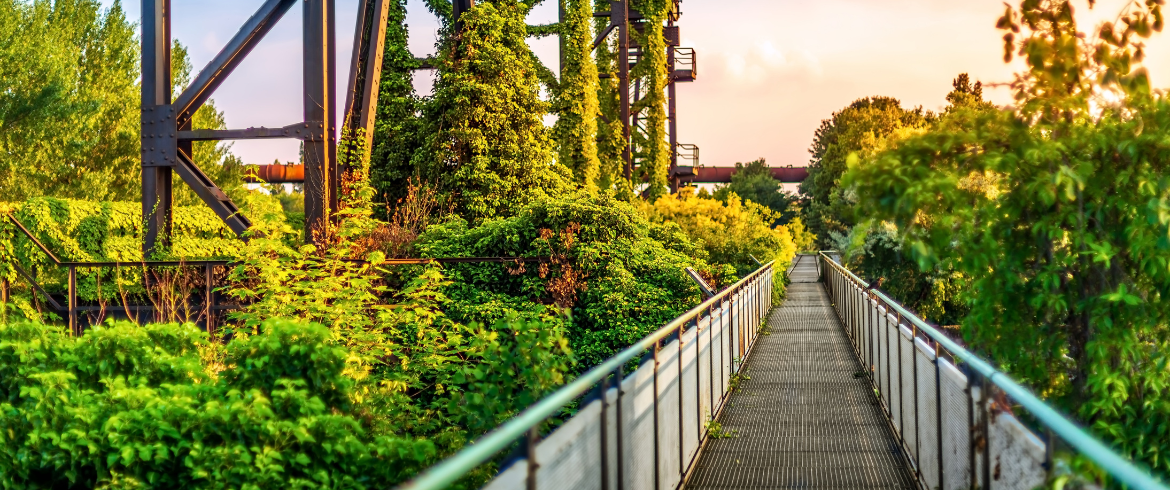
Cover image: Landschaftspark Duisburg-Nord blends industrial ruins with restored green spaces, showing how contaminated sites can find a second life. Photo via Canva PRO