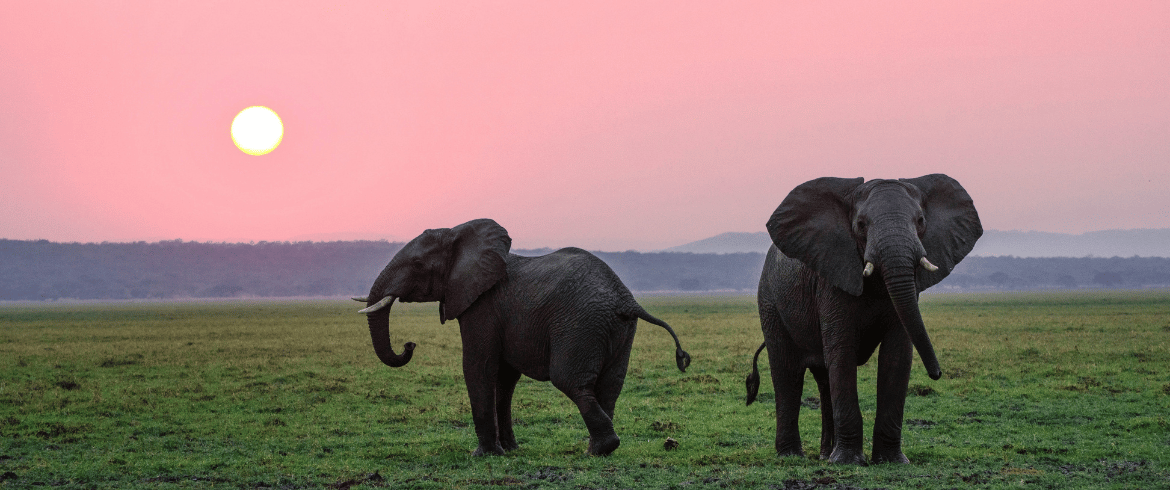
Ethical elephant tourism in Thailand is one of the country’s most talked-about travel experiences. For many travelers, seeing an elephant up close feels magical and unique (a moment they will remember forever!). But behind the smiling photos and kind words, there is a more complex reality. Sometimes we can get confused on what sustainable tourism is, which is normal.
Not all places that call themselves “sanctuaries” protect elephants. And not every experience labeled as a rescue is truly ethical. That is why understanding how elephant tourism works, and how to choose wisely, is essential for travelers who care about animals, people, and the places they visit.
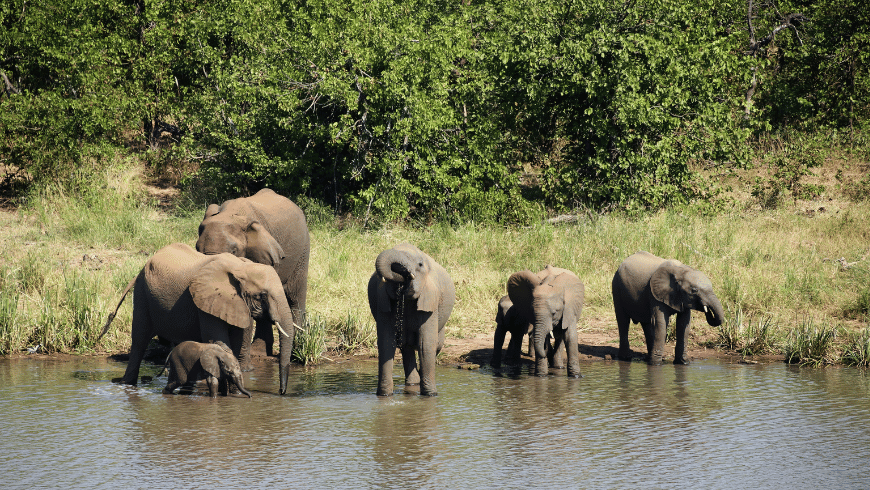
Why Elephant Tourism Is So Popular in Thailand
Elephants have been part of Thai life for centuries. They were used in logging, transport, ceremonies, and cultural traditions. When commercial logging was banned in the late 1980s, thousands of elephants and their mahouts suddenly lost their main source of income.
That is how tourism quickly became the alternative. Today, elephant experiences are promoted everywhere: in jungle camps, natural parks, museum rides, and roadside stops. Elephants have become both a symbol of Thailand and a tourism business.
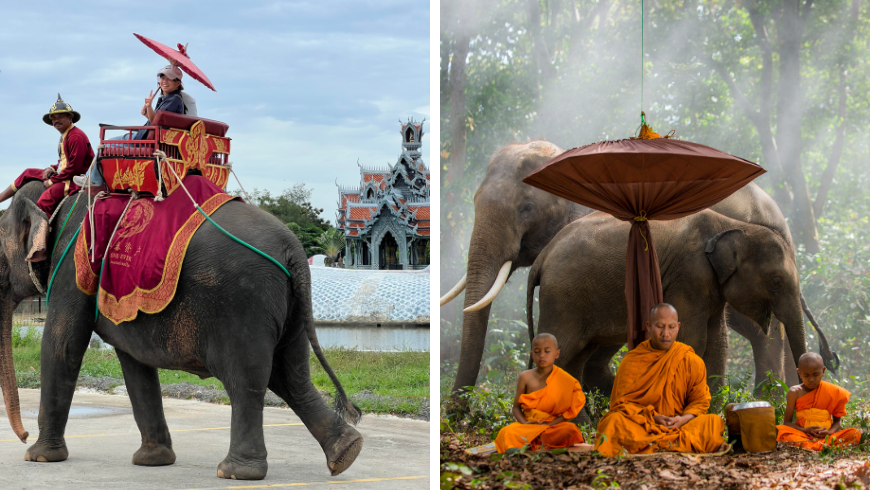
The Problem Behind Many “Sanctuaries”
In Thailand, the word sanctuary is not legally protected. This means any place can use it, even if elephants are poorly treated.
Many projects present themselves as ethical while still using harmful practices. Common problems include:
- Elephants kept in small or restricted areas
- Forced contact with visitors
- Training based on fear and control
- Profit is placed above animal welfare
These experiences may look gentle, but they often cause stress, exhaustion, and loss of natural behavior for the elephants.
What Ethical Elephant Care Really Looks Like
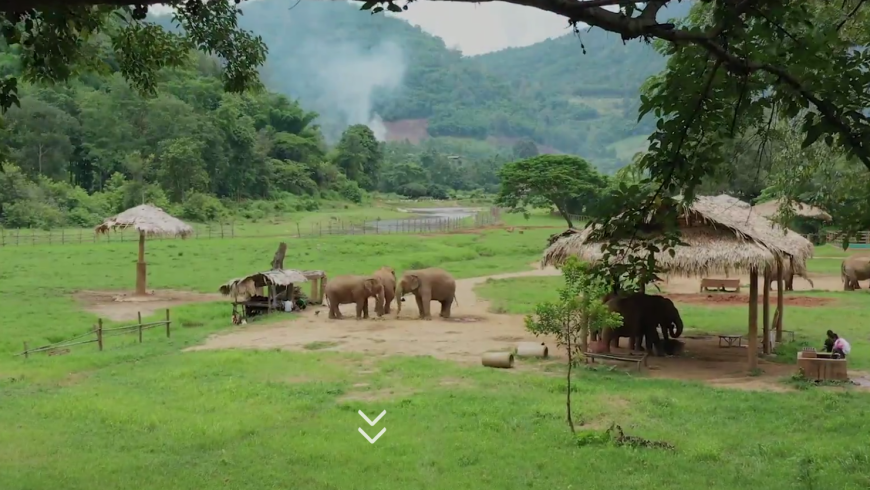
Truly ethical sanctuaries protect elephants and do not put tourists in first place. In responsible projects, elephants are allowed to live like elephants. What usually means:
- No riding, shows, or performances
- No chains or bullhooks
- Large natural areas to move freely
- Time with other elephants
- Minimal and respectful human contact
Visitors observe from a distance. They learn about elephant behavior, conservation, and the individual stories of each animal. Less interaction does not mean less meaning. Often, it creates a deeper and more honest connection. Usually, a little touch, but if done so, small gestures and feeding are possible.
Red Flags Travelers Should Avoid
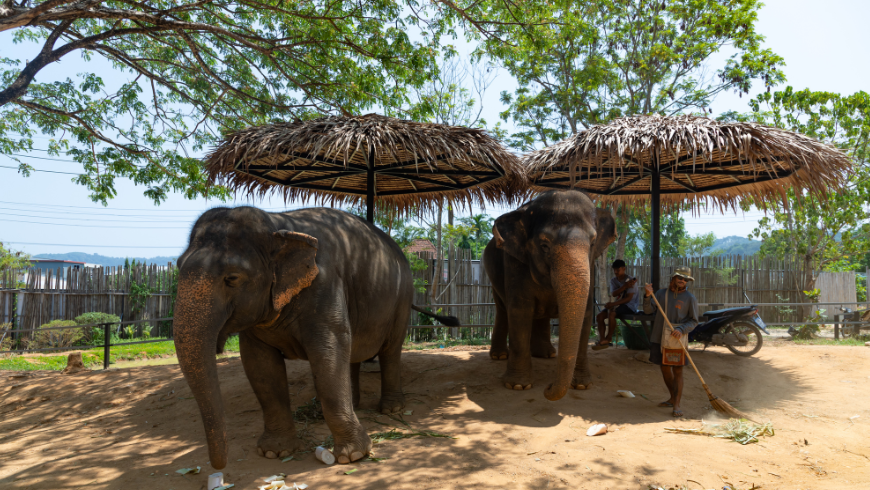
If you see any of the signs below, the experience is likely not ethical:
- Elephant riding, even “bareback”
- Bathing or swimming with elephants
- Elephants doing tricks or shows
- Forced posing for photos
- Chains, restraints, or visible wounds
- Large crowds are touching elephants at the same time
If it feels like entertainment, it probably comes at the elephant’s expense.
How to Choose a Truly Responsible Sanctuary
When it comes to ethical elephant tourism in Thailand, a little research goes a long way. Before booking, look for places that:
- Clearly explain their animal welfare rules
- Limit the number of daily visitors
- Focus on education, not interaction
- Are open about how they use funds
- Are recommended by independent animal welfare groups
Ethical sanctuaries are often quieter and less flashy. They may also cost more, because good care needs space, time, and trained staff.
Trusted Ethical Elephant Sanctuaries in Thailand
The following projects are widely respected for their strong welfare standards and long-term commitment to elephant care:
- Elephant Nature Park (Chiang Mai)
- Boon Lott’s Elephant Sanctuary (Sukhothai)
- Burm and Emily’s Elephant Sanctuary (Chiang Mai region)
By choosing ethical elephant tourism in Thailand, travelers help shift the industry away from exploitation and toward respect, a choice that reflects broader principles of ethical tourism and responsible travel. This way, you will be able to interact more ethically and consciously with the fauna.
Sometimes, the most meaningful travel moments happen when we slow down, observe quietly, and let wildlife live freely.