
Greenwashing or Greenhushing? Why Some Companies Exaggerate (and Others Stay Silent) About Sustainability
Today, sustainability is at the center of many brand stories. From eco-friendly packaging to climate commitments, companies increasingly highlight their environmental values. But behind these messages, reality is not always clear.
Some brands exaggerate their environmental impact to appear more sustainable: a practice known as greenwashing. Others, instead, choose not to communicate their sustainability efforts at all, fearing criticism or scrutiny. This growing phenomenon is called greenhushing.
Understanding the difference between greenwashing and greenhushing helps consumers and travelers navigate sustainability claims more consciously, recognizing authentic commitment and making more informed choices.
Greenwashing vs Greenhushing: The Main Differences
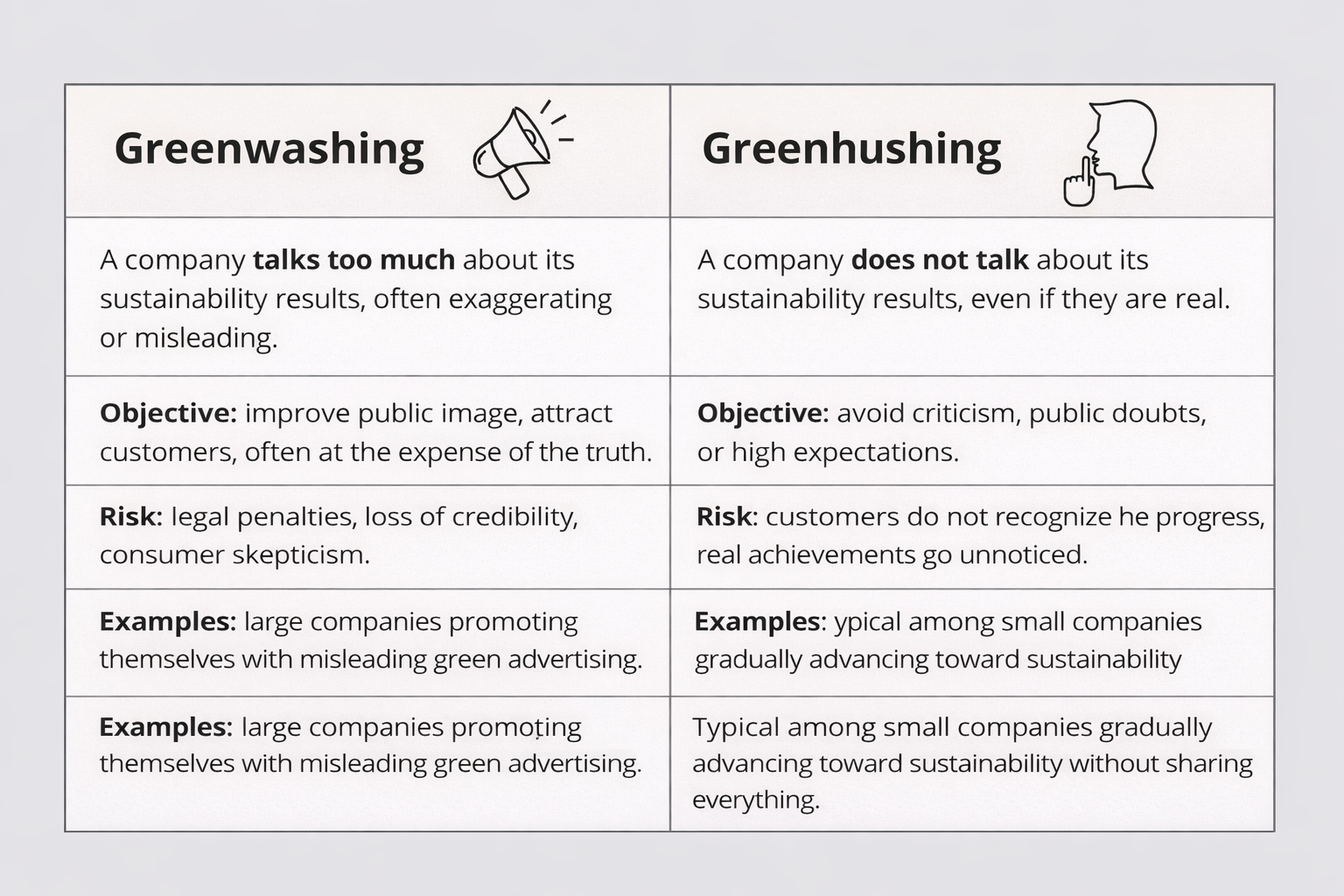
In short, greenwashing means “talking too much and misleadingly,” while greenhushing means “not talking at all”. Understanding these differences helps interpret corporate strategies correctly and distinguish who is truly sustainable. Let’s look at this in more detail.
What Is Greenwashing?

Greenwashing consists of promoting a false or exaggerated eco-friendly image. This strategy makes companies appear more sustainable than they really are. As a result, consumers can be misled.
Concrete examples in Italy:
• ENI (2020): fined by the Italian Competition Authority (AGCM) for advertising EniDiesel fuel as “eco-friendly.”
• Ferrarelle (2011) and Amadori (2019): criticized for misleading advertising regarding animal welfare and sustainability.
• Benetton, Calzedonia, Intimissimi: accused of failing to properly communicate the use of chemical substances and fast fashion practices.
What to avoid to prevent greenwashing
- Being vague or unclear about environmental actions.
- Labeling products as “eco” when they are not.
- Making claims without concrete evidence.
- Claiming sustainability based on a single minor achievement.
- Presenting compliance with banned materials as a merit.
Accommodation providers can also fall into greenwashing: promoting a hotel as “eco-friendly” without certifications or genuinely sustainable practices can mislead travelers.
How can you identify and avoid greenwashing in tourism? Read our in-depth article!
What Is Greenhushing?
Greenhushing, literally “green silence,” is the opposite approach: companies, especially SMEs, do not communicate their sustainable achievements, even when they are real.
In many cases, they fear public skepticism after years of greenwashing scandals. Therefore, they prefer not to communicate their progress too early.
Why some companies choose silence
- Public skepticism: After years of greenwashing, consumers tend to doubt any sustainability claim. Some companies prefer not to communicate their achievements rather than risk being perceived as misleading.
- Costs of ecological transition: Many SMEs move step by step toward sustainability. Communicating too early may shift attention to what has not yet been achieved, rather than highlighting real progress.
The paradox is that in some cases, despite being sustainable, these companies risk not receiving recognition. However, this strategy can be cautious and functional, especially for businesses undergoing gradual change.
How to Communicate Sustainability Credibly

First of all, sustainability must be real.
Secondly, results should be communicated clearly and transparently.
• Sustainability reporting: From 2024, many companies in Europe have certified tools compliant with CSRD standards, which require publishing detailed reports on environmental and social impact.
• Transparent communication: Sustainability reports should be supported by clear messaging across social media, newspapers, TV, or radio, backed by data and credible sources.
• Honesty and gradual progress: Companies should not fear communicating small sustainability steps, as long as they are real and verifiable.
Mini Checklist for Effective Green Communication
- Show verifiable data.
- Communicate gradual progress, not “miracle” results.
- Avoid exaggerations or unrealistic promises.
- Support official reports with simple and clear messaging.
Read the in-depth article: How to communicate sustainability effectively.
Quick Glossary: Other Green Marketing Terms

- Greenwashing = talking too much in a misleading way.
- Greenhushing = not talking at all about sustainability achievements.
- Greencrowding = overwhelming the brand with excessive information to hide weak environmental actions.
- Greenlighting = emphasizing a single positive achievement while ignoring negative aspects.
- Greenwishing = making sustainability claims without realistic means to achieve them, risking the opposite effect.
Knowing these concepts makes it easier to spot real sustainability and avoid greenwashing, helping you make smarter choices as a consumer or traveler.


