

The greener version of a trip is usually the fiddlier one to book. The small, sustainable guesthouses often aren’t on the big platforms and travelling by public transport usually involve multiple tickets. These all arrive as emails, scattered across months of inbox by the time you leave.
Many careful travellers print the lot only to bin it in a hotel room. We’ve found that sorting the inbox first is what makes sustainable travelling smoother and makes going paperless stick.
Email admin has a footprint too
It’s worth being honest about the scale. The International Energy Agency puts global data centre electricity use at around 415 terawatt-hours in 2024, about 1.5% of world consumption, and expects it to more than double by 2030. Clearing out old newsletters won’t shift that number.
The less you rely on paper as a backup, the fewer boarding passes, maps and confirmations you print and bin in a country that has to deal with them. Going paperless only works if you trust yourself to find things, and most people print precisely because they don’t.
Keep everything in one place you control
The simplest change is putting every booking through a single email address, instead of whichever one happened to autofill. One account and one search box with the flight, ferry and bike hire all sitting one search away.
It also means you can find things offline. Most apps keep recent messages on the device, so a confirmation you opened before you left is still readable when there’s no signal at all. That’s the difference between walking through a barrier and standing at it frantically refreshing in the hope that a bar of signal finds you.
Filing as you go helps more than a clear-out at the end. Using a folder for each trip, made when you book the first night, saves the panic later down the line.
Documents count as luggage
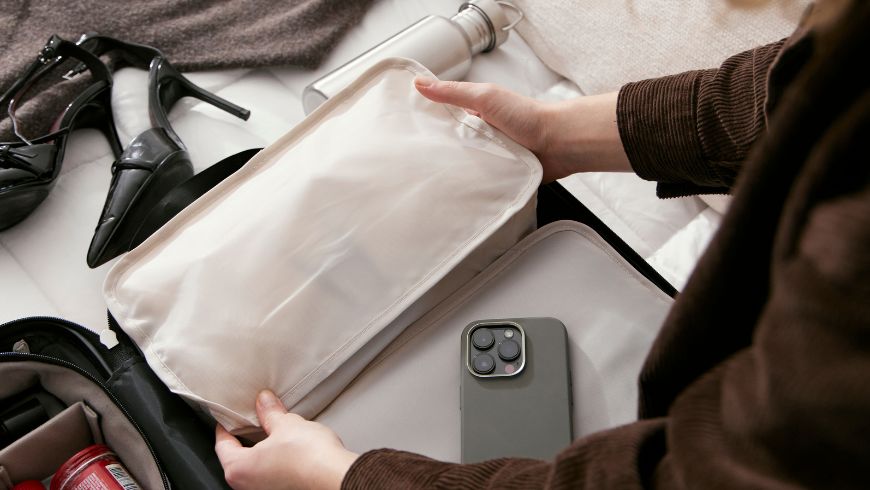
Packing light is a habit that extends well past clothes. Ecobnb’s own guide to packing green makes the point that a green trip starts the moment you begin planning and travel documents belong in that thinking. A folder of printed confirmations is a small stack of paper that isn’t entirely necessary, with the right planning.
Screenshot the essentials, like the hotel address, booking reference, and check-in window, the night before you go. Screenshots work without signal and without paper.
Who else reads your itinerary
There’s a subtler point underneath all this because travel messages are unusually revealing.
They show where you’ll be, when your home is empty, what you paid, and who you’re with. Free inboxes have historically funded themselves by reading that kind of data to sell advertising, which is why encrypted accounts that nobody scans have become easy to find and cheap to run.
If you already choose where you stay on ethical grounds, it’s a consistent question to ask of the company holding your itinerary. It costs nothing to move the travel side of your life somewhere more private, even if the rest stays where it is.
Nobody starts planning a trip because they’re looking forward to the admin. But an hour spent deciding where things land is the difference between arriving relaxed and arriving in search of a printer.
Cover image: photo via Canva PRO